Every brand that rents a humanoid robot asks the same question before signing: what is the actual unitree g1 roi? In 2026, our operators have run the G1 across brand activations at auto shows, tech summits, and retail pop-ups, and the answer depends entirely on what you choose to measure. Below is the cost model we use, built on the metrics that actually move brand budgets.
Table of Contents
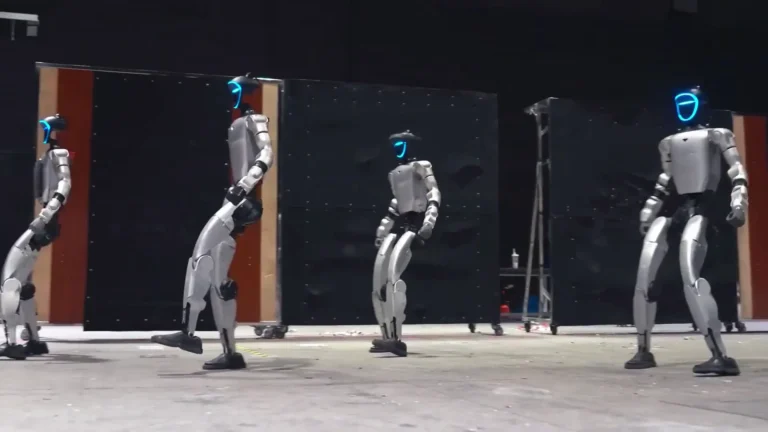
Dancing at Web Summit Lisbon
Unitree G1 — At a Glance
- 127 cm tall | 35 kg
- 41 degrees of freedom
- Five-finger dexterous hands
- 2-hour operational battery
- Onboard NVIDIA Jetson Orin
- Available to rent from $299/day
What You Should Know
Before running any ROI calculation, get these fundamentals in place. Misunderstanding what the G1 actually does at an event is the fastest way to set the wrong KPIs and declare failure on an activation that actually worked.
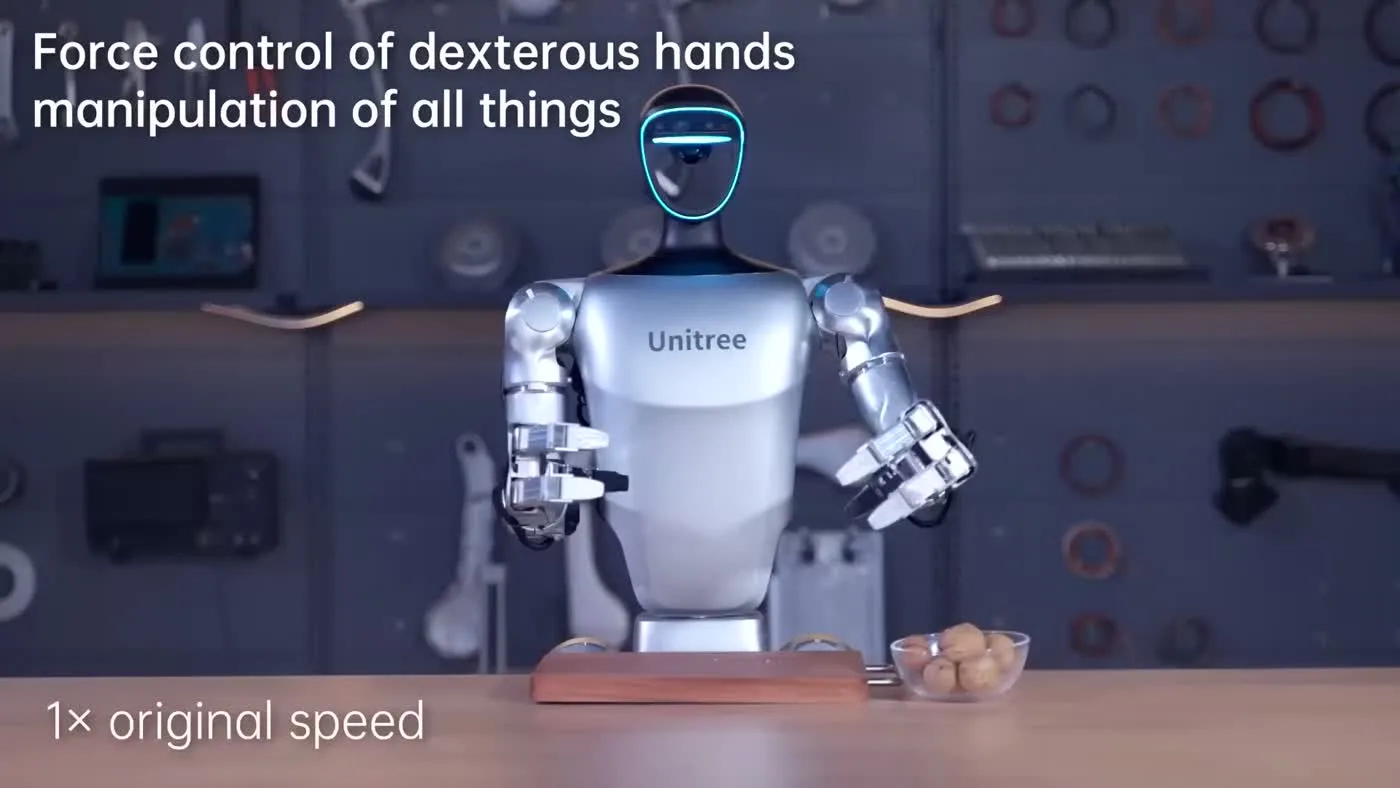
- The G1 stands 127cm tall, weighs 35kg, and has 41 degrees of freedom. It moves in ways that stop people mid-stride, which is the core attention mechanism brands are paying for.
- Battery life is 2 hours per charge. Multi-hour activations require rotation planning or a battery management strategy.
- Self-Service Rental starts from $299/day with a 3-day minimum. Full-Service Event pricing requires a quote because staffing, travel, and configuration vary by event.
- ROI for brand activations is not a single metric. It spans foot traffic, dwell time, earned media impressions, social content generated, and lead capture volume.
- The G1 is not an autonomous sales agent. It is an attention anchor. Brands that build their activation workflow around that fact see the strongest returns.
- For a direct look at what the G1 does across different event formats, our brand activations breakdown covers four real deployments.
- ROI calculations require a baseline. If you have no data on your current booth foot traffic or social reach, set measurement benchmarks at your next event before you add the robot.
How Brands Measure Robot ROI
Most brand activation budgets are justified on one of four metrics. The G1 affects all four, but not equally, and the weight you assign each depends on your broader campaign goals.
Foot Traffic and Dwell Time
A humanoid robot creates a physical pull that banner stands and digital displays cannot replicate. Event marketers consistently report that robot-anchored booths hold visitors longer than conventional setups. According to reporting from BizBash, dwell time is one of the strongest predictors of post-event brand recall. Longer dwell means more time for your staff to qualify leads, demonstrate products, and capture contacts. If you track average time-on-booth and leads per hour, those are the two numbers that a G1 deployment moves most directly.
Organic Social Content
People film the G1. This is not speculation; it is observed behavior at every activation we run. A visitor who films a 15-second clip and posts it generates earned reach with zero additional spend. For a trade show or product launch, the aggregate value of that organic content scales with your audience’s network size. Event Marketer has covered how shareable experiential moments outperform paid social in brand lift studies. The G1 is one of the clearest generators of that shareable moment in the 2026 event market.
Lead Volume and Quality
At trade shows and B2B conferences, the robot changes the first conversation. Instead of a cold pitch, your rep is answering what does this do from someone who walked over voluntarily. That shift from cold approach to warm inquiry affects close rates downstream. Brands that measure cost-per-qualified-lead find the robot’s ability to draw traffic changes the denominator in their favor. The trade show robot rental guide covers setup patterns that maximize lead capture.
Brand Recall and Earned Media
If a journalist, blogger, or industry analyst covers your event, the robot is often the visual anchor in their write-up. That earned media placement carries implied credibility that paid placements do not. Brands entering new markets or launching products in crowded categories use the G1 partly for this reason: it gives press something novel to write about. Quantifying earned media value requires tracking coverage and applying a cost-equivalent for equivalent paid placements, a methodology most PR teams already use for press mentions.
Cost Per Impression vs Traditional Marketing
The strongest argument for G1 ROI at brand activations is cost-per-impression compared to alternatives. Here is how the math frames up across common spend categories.
What You Are Paying For
Self-Service Rental starts from $299/day with a 3-day minimum. Full-Service Event packages where ZMProbots provides trained operators and full setup require a quote. The comparison point is what you would otherwise spend to generate equivalent impressions and dwell. The robot is a line item within the broader activation budget, not the entire budget.
Trade Show Booth Context
Floor space at major B2B conferences is expensive before you add display materials, staffing, or promotional items. In that context, a multi-day G1 rental is a marginal addition that changes what your booth produces. If the robot converts more visitors to booth stops, the cost-per-lead figure drops proportionally. That is the arithmetic brands are running when they book a second or third event after the first. The robot rental for events guide covers the full cost structure across event types.
Digital Ad Benchmarks
According to research from IEEE Spectrum and event industry analysts, experiential activations generate significantly lower cost-per-recall than equivalent digital display spend. Paid social and search can drive clicks, but recall rates for in-person branded experiences are consistently stronger. The G1 sits at the high end of the experiential attention spectrum: it is genuinely novel, physically present, and generates both in-person and social content simultaneously.
Benchmarking Your Own Numbers
If your team runs cost-per-impression calculations on paid media, apply the same methodology to your event spend. Take total activation budget (booth, robot, staff, materials) and divide by estimated impressions: foot traffic multiplied by dwell rate multiplied by social reach of content generated. Compare that number to your current paid social or display CPM. Brands that run this calculation often find the robot’s contribution changes the blended CPM of the entire activation significantly.
When the Math Works and When It Does Not
Not every brand activation justifies a humanoid robot rental. The cost model only closes when the event format and audience match what the G1 actually produces. Here is where the math works, and where it breaks.
When It Works
Trade shows, auto shows, tech expos, and retail pop-ups in high-traffic locations give the G1 the audience density it needs. The attention-generating effect compounds when there are enough people passing by to create social proof, because others stop when they see others stopping.
Product launches, rebrands, and market entries where press coverage is a primary goal make strong cases for the G1. If a journalist covering your booth is the target outcome, the robot gives them something to photograph and write about. The product launch guide covers how to structure activations for press impact.
A 3-day minimum rental makes most sense at multi-day events where the robot earns its cost across all three days. When a single qualified lead is worth thousands of dollars, the cost of drawing more leads through better booth traffic justifies a higher activation budget. The operator briefing for events covers how B2B teams structure their setups.
When It Does Not Work
Board meetings, internal conferences, and invitation-only gatherings have limited audiences and no organic social reach potential. The G1’s ROI model relies partly on the breadth of impressions, and small closed audiences limit that upside significantly.
If you have no way to track booth traffic, leads, or content reach, you cannot calculate ROI after the fact. The robot may perform well, but you will have no data to bring back to budget discussions. Set up measurement before you book.
Some teams book the G1 because it seems impressive without tying it to any specific campaign objective. Without a defined role in the activation workflow, the robot becomes expensive decoration. Define the job first: traffic anchor, content generator, press hook, or lead qualifier.
For the full rent-vs-own decision framework on cost structure, the G1 total cost of ownership guide and the payback period analysis are the two most relevant reads.
People Also Ask
- How do you calculate ROI for a robot at a brand activation?
Start with your total activation cost: booth space, robot rental, staffing, materials. Measure outputs: booth visitors, leads captured, social content generated and its reach, any press coverage. Divide total outputs by total spend using the same unit you use for other marketing channels. Cost-per-lead and cost-per-impression are the two most common denominators. Without baseline data from prior events, the first activation sets your benchmark for future comparisons.
- What is a realistic cost for renting a Unitree G1 for a brand activation?
Self-Service Rental starts from $299/day with a 3-day minimum. Full-Service Event deployments where ZMProbots provides trained operators require a quote. The total activation cost at a trade show will also include booth space, displays, and staff, making the robot a line item within a larger budget rather than the whole budget.
- Does the Unitree G1 actually increase booth traffic at trade shows?
Consistently, yes. A humanoid robot creates physical curiosity that static displays do not. The effect is strongest in competitive floor environments where attendees are making moment-to-moment decisions about where to spend time. The G1’s 127cm height and 41-DOF movement are visible from distance and draw initial attention. Whether that traffic converts to qualified leads depends on how the activation is staffed and what the robot is doing at the booth.
- How does humanoid robot event spend compare to paid social advertising?
Direct comparison requires applying the same measurement methodology to both channels. Experiential activations tend to produce stronger brand recall per dollar than equivalent digital display spend, based on event industry research from sources like Event Marketer and BizBash. The additional organic content generated at robot activations (visitor videos posted to social platforms) creates earned media that paid campaigns do not produce. The combined impression value often makes the event spend competitive even at higher absolute cost.
- What kind of events see the best Unitree G1 ROI?
High foot traffic environments with competitive booth floors, strong press presence, or social-media-active audiences produce the best returns. Tech expos, auto shows, product launches, and B2B trade shows in categories with high deal values consistently justify the spend. Events with small fixed audiences, no measurement infrastructure, or no clear role defined for the robot in the activation workflow are the least likely to show strong ROI.
The Bottom Line
Unitree G1 ROI for brand activations is real, but it is conditional. The robot earns its cost when the event format produces high foot traffic, the activation is designed to generate organic content, and the team has the measurement infrastructure to track what changes. When those three conditions are met, the cost-per-impression math for a G1 deployment competes favorably with traditional paid placements and outperforms static booth materials on brand recall. When those conditions are missing, you are paying for novelty without a mechanism to convert it into measurable return.
If you are building the case for a robot at your next event, start with your measurement baseline and your campaign objective. Then look at robot rental for events to understand what a full-service deployment includes and what the Self-Service option requires from your team.