If you are weighing unitree g1 vs r1 in 2026, the answer is not always the more powerful machine. Both are real humanoid robots from Unitree, and our team has worked with the G1 extensively. The R1 costs a fraction of what a G1 sells for, and for certain applications that gap matters more than any spec sheet difference.
Table of Contents
Soccer Field Vision Demo
Unitree G1 — At a Glance
- 127 cm tall | 35 kg
- 41 degrees of freedom
- Five-finger dexterous hands
- 2-hour operational battery
- Onboard NVIDIA Jetson Orin
- Available to rent from $299/day
What You Should Know
Before picking between these two robots, a few facts will save you from a bad decision.
- The Unitree G1 and the Unitree R1 are both products from Unitree Robotics, but they target different buyers at very different price points.
- The G1 (standard) retails around $13,500 for the base model and up to $70,000 for enterprise configurations. The R1 starts at $5,900 per unitree.com.
- Lower price on the R1 reflects real trade-offs: fewer degrees of freedom, lower payload, shorter battery life, and a smaller physical footprint.
- The G1 is the robot ZMProbots deploys for events, brand activations, and professional demonstrations. The R1 is not currently in our rental fleet.
- If you are renting for an event, the G1 is the practical option. If you are buying for a university lab with a limited budget, the R1 deserves a serious look.
- Neither robot is a toy. Both require an operator with some technical background and a clear plan for the deployment environment.
- Unitree ships both models internationally, with phased delivery timelines that shift depending on configuration and region.
Specs Side by Side
All G1 figures are from ZMProbots approved facts. R1 figures are sourced from unitree.com.
| Spec | Unitree G1 | Unitree R1 (standard) |
|---|---|---|
| Height | 127 cm | 123 cm |
| Weight | 35 kg | 27-29 kg |
| Total DOF | 41 | 26 |
| Arm payload | 3 kg per arm | 2-4 kg (varies by posture) |
| Battery life | ~2 hours | ~1 hour |
| Charge time | ~45 minutes | Not published |
| Top speed | 2 m/s | Not published |
| Shoulder width | 45 cm | Narrower than G1 (per unitree.com) |
| Min doorway | 80 cm | Not published |
| Hands | BrainCo Revo 2 dexterous hands | 4-5 DOF per arm (varies by model) |
| Starting price | $13,500 (base) / $70,000 (enterprise) | $5,900 (R1 standard, per unitree.com) |
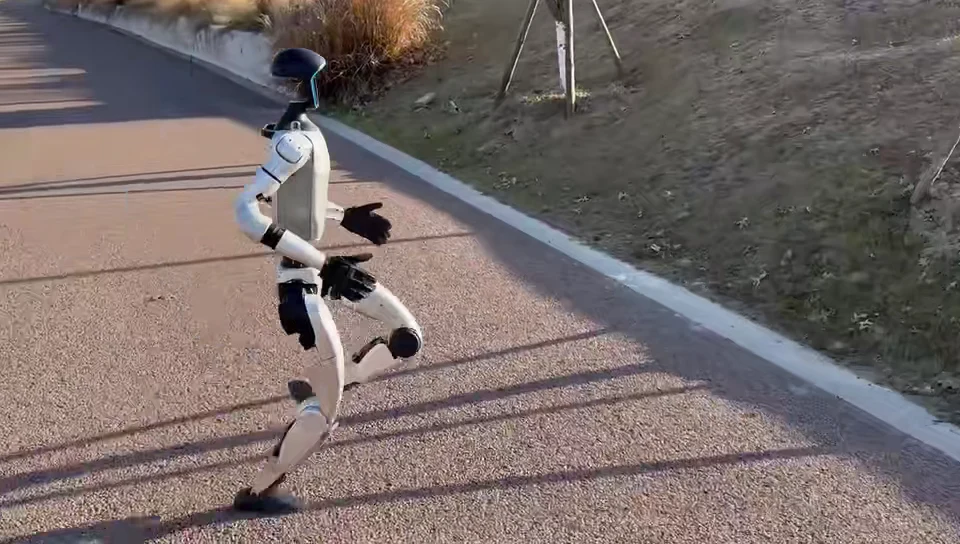
The G1 wins on almost every performance metric. The R1 wins on price and weight. For anyone who needs a humanoid that can move through a crowded venue for two hours, the G1 is the only practical choice. For a team running controlled indoor experiments on a tight grant budget, the R1 is worth considering. See the full G1 vs every humanoid comparison for context on where both sit in the broader market.
Which Robot Fits Which Use Case
The right robot depends entirely on what you are trying to accomplish. These two machines are not interchangeable.
Choose the G1 for live events and professional demonstrations
The Unitree G1 was built for real-world deployment. Its two-hour battery means you can run a full event without a mid-session swap. At 35 kg it is heavy enough to feel substantial on a show floor, and its 41 degrees of freedom give operators enough range to perform expressive, crowd-pleasing movements. The BrainCo Revo 2 hands can interact with props, hand items to guests, and execute fine motor tasks on stage.
Choose the G1 when the venue is large or unpredictable
Events involving trade show floors, conference halls, or outdoor spaces put pressure on battery life and structural confidence. The G1 handles those environments better than a robot designed for a 10×10 lab bench. If you are planning a humanoid robot for events, the G1 is the appropriate tool.
The R1 makes more sense for research and education
A university lab that wants to run gait experiments, test onboard AI models, or build custom control software will find the R1 easier to justify on a departmental budget. At ,900 for the standard unit, a lab can buy two R1s for the cost of one G1 base model. The R1 EDU variant is specifically designed for academic environments, with developer-friendly software access according to Unitree documentation at unitree.com.
The R1 is better in tight controlled spaces
At 123 cm tall and 27-29 kg, the R1 is physically easier to handle. One person can move it without assistance. In a robotics classroom or small demo booth, that matters. A one-hour battery is enough for a classroom session or a scripted short demonstration, though any extended public engagement will require a battery swap or a second unit.
Neither robot is a drop-in replacement for the other
If someone is quoting you the R1 as a cheaper alternative for a trade show keynote, push back. The battery and DOF limitations will show up at exactly the wrong moment. Conversely, if a research team needs a platform for controlled indoor trials and does not need two hours of runtime, the G1 capabilities are more than they will actually use. The G1 vs H1 comparison covers a similar question about over-specifying a robot for a given role.
Cost and Practical Considerations
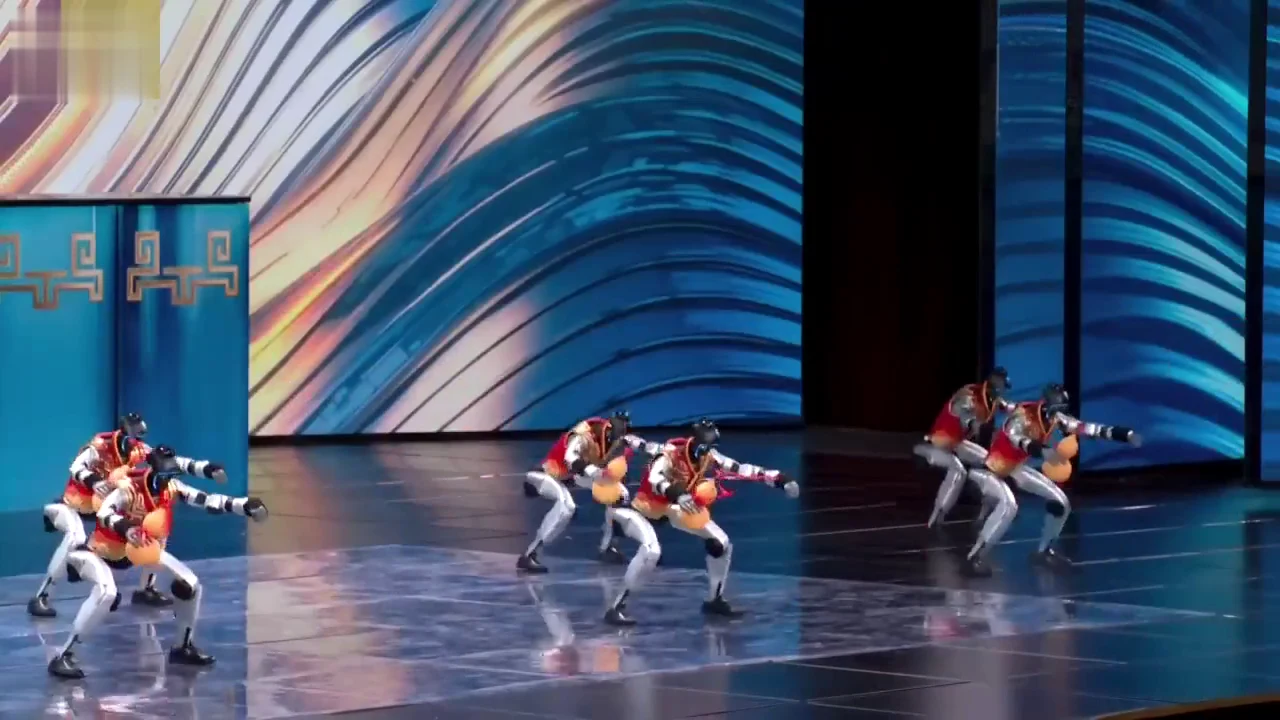
Purchase price is only one number. The full picture includes shipping, operator training, maintenance, and the cost of downtime when something goes wrong at the worst possible time.
The R1 price advantage is real but conditional
At $5,900 (standard R1 per unitree.com), the R1 looks like a bargain next to the G1. That gap closes faster than expected once you add shipping from China, customs fees, and any accessories or developer hardware you need to get the robot actually working for your use case. The R1 AIR at $4,900 strips the configuration down further – 20 DOF versus 26, monocular camera instead of binocular – so verify which model you are actually pricing. IEEE Spectrum has noted that robot purchase costs rarely tell the full ownership story.
For events, renting the G1 beats buying the R1
If you need a humanoid robot for one event, two events, or even a dozen events per year, humanoid robot rental is the cost-efficient path. You get a fully operational G1 with operator support, without the capital outlay, storage requirements, or maintenance responsibility that come with ownership. See the robot rental for events guide for a breakdown of how the numbers work for different event frequencies.
Maintenance and support access differ
Unitree has a growing developer support infrastructure, but the G1 has a significantly larger user community at this point. That means more documented fixes, more third-party integrations, and more people who have already solved the problem you are about to encounter. The R1, being newer, has thinner community depth. That is not a dealbreaker for a well-resourced engineering team, but a small lab that relies on community forums for troubleshooting should factor it in.
Battery logistics are different between the two robots
The G1 runs for approximately two hours on a single charge with a 45-minute recharge time. The R1 runs for approximately one hour. Unitree markets the R1 battery as quick-release, which in theory lets you hot-swap for extended sessions – but that requires purchasing spare batteries and planning the swap procedure into your workflow. For controlled research sessions that run under an hour, it is a non-issue. For a full-day event, it becomes a real operational consideration.
Physical size affects deployment logistics
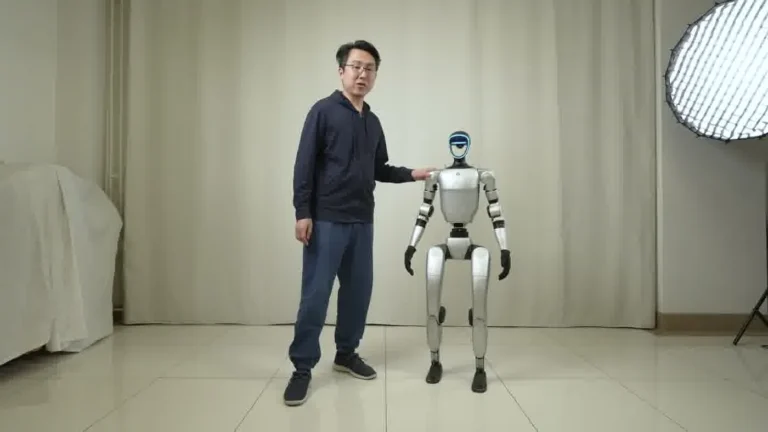
The G1 45 cm shoulder width and 127 cm height means it reads as a full humanoid presence in a room. That is what you want for a brand activation or keynote. The R1 at 123 cm is similar in height but noticeably lighter. In a crowded venue, the difference between a 35 kg robot and a 27 kg robot matters for transport and setup. In a lab, the R1 is simply easier to move between rooms without help.
People Also Ask
What is the difference between the Unitree G1 and R1?
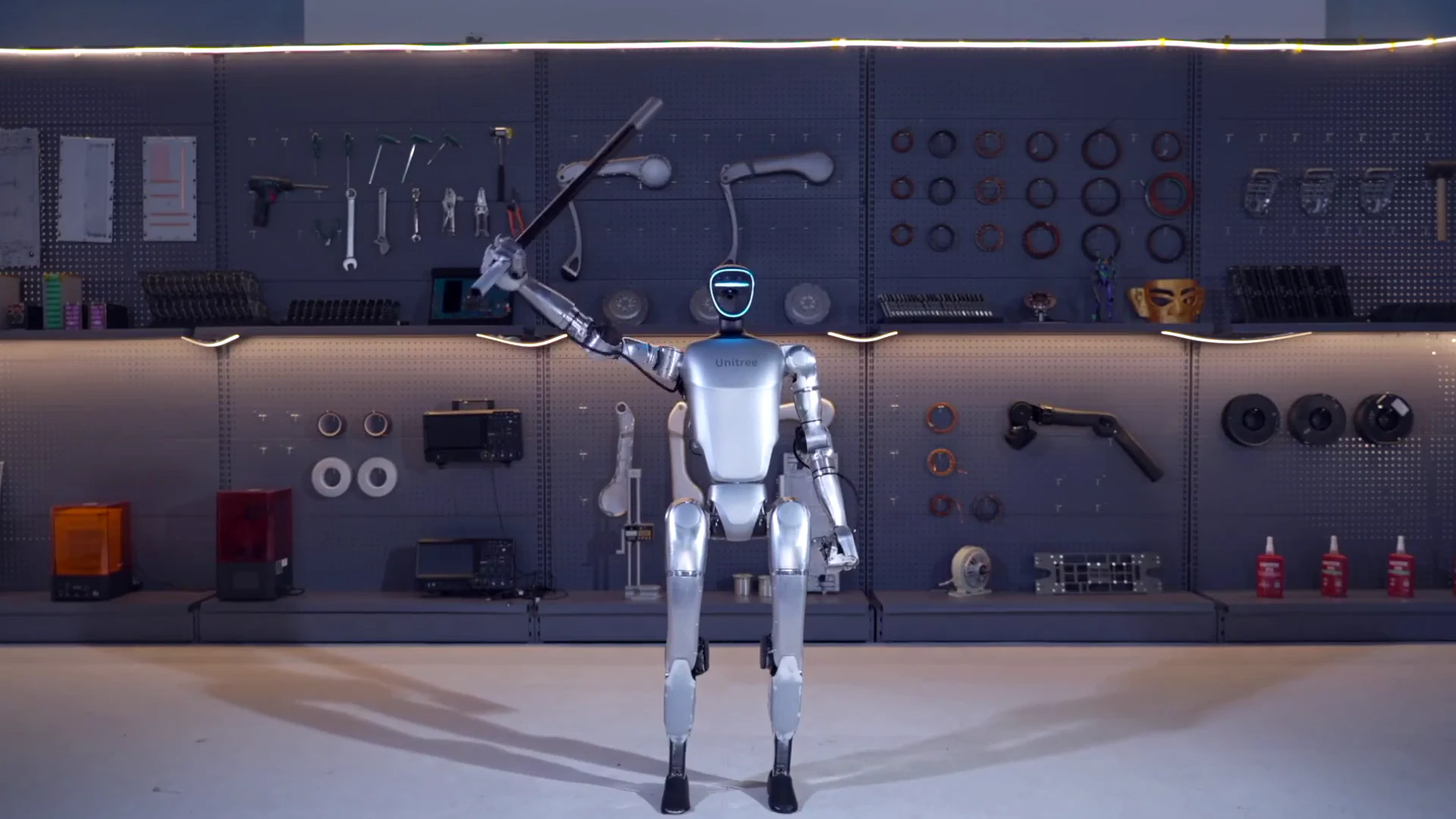
The G1 is Unitree’s higher-performance humanoid: 35 kg, 127 cm tall, 41 degrees of freedom, two-hour battery, and BrainCo Revo 2 dexterous hands. The R1 is a newer, lighter robot at 27-29 kg and 123 cm tall, with 26 DOF (standard model) and approximately one hour of battery life. The G1 is built for demanding real-world deployments. The R1 targets research and education buyers with a lower entry price, starting at $5,900 per unitree.com.
Is the Unitree R1 worth buying over the G1?
It depends on your use case. For a university lab running controlled experiments on a limited budget, the R1 is a rational purchase. For a business renting a robot for events, product launches, or public demonstrations, the G1 is the better machine – and renting it removes the capital commitment entirely. The R1’s one-hour battery and lower DOF count are real constraints in high-engagement environments.
How much does the Unitree R1 cost?
The R1 AIR starts at $4,900. The standard R1 is $5,900. The R1 EDU pricing is available on request from Unitree. These are pre-sale purchase prices from unitree.com, not rental rates. Shipping, customs, and accessories add to the total landed cost depending on your region.
Can the Unitree R1 be rented for events?
The R1 is not currently available for rent through ZMProbots. Our fleet runs the G1, which is the more capable platform for event use. If you need a humanoid robot for a conference, trade show, or brand activation, the G1 Self-Service Rental starts from $299/day. Full-Service Event deployments with an operator are available by quote.
Which Unitree robot has more degrees of freedom?
The G1 has 41 degrees of freedom. The standard R1 has 26 DOF, and the R1 AIR has 20. More DOF translates directly to more expressive and capable motion – the G1 can perform a wider range of gestures, interact with objects more naturally, and handle physical tasks that require fine coordination. For demonstrations where the robot’s movements need to impress an audience, the G1’s DOF advantage is visible and meaningful.
The Bottom Line
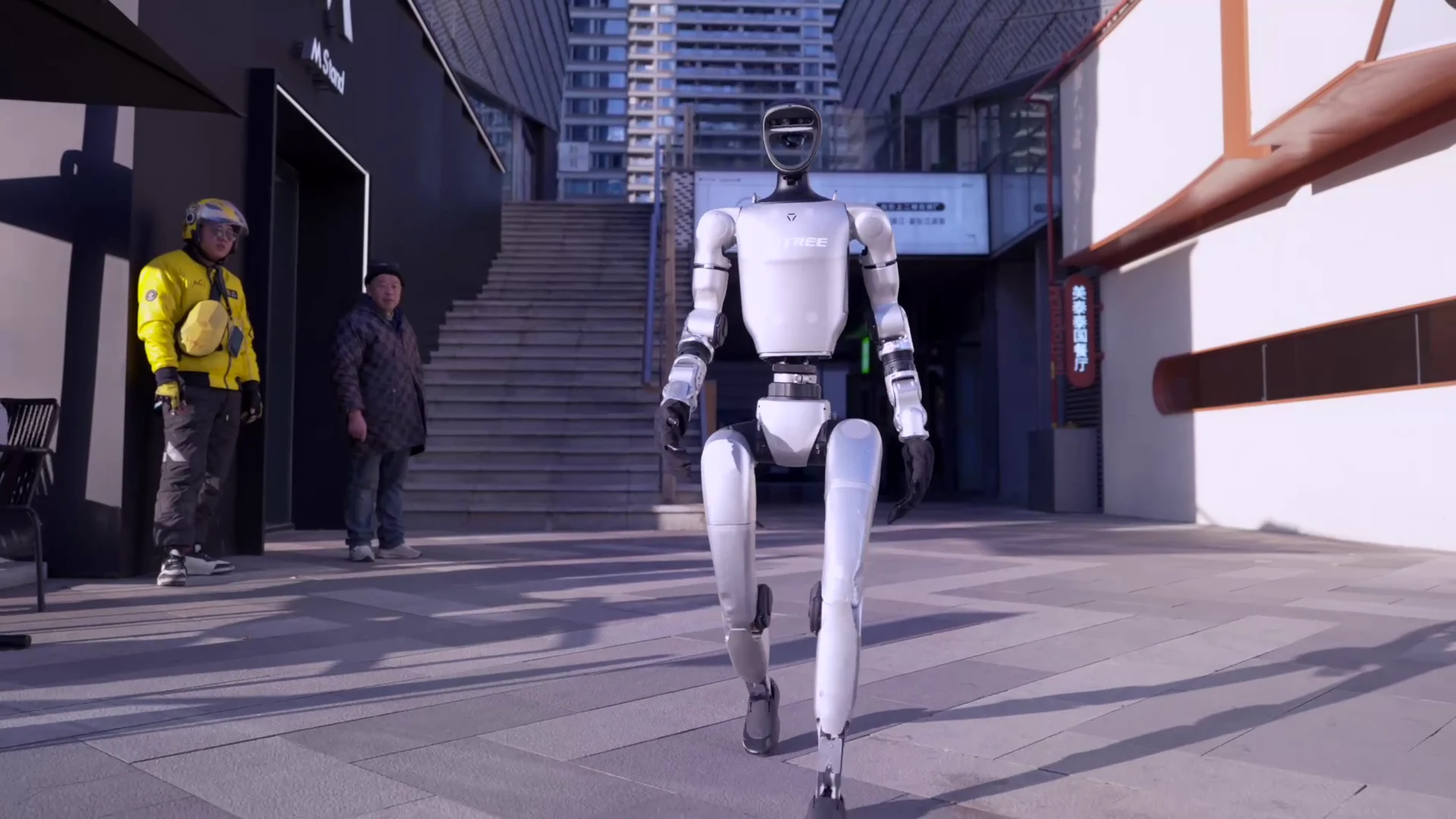
The G1 is the better robot for most professional applications. It runs longer, moves with more precision, and holds up in the kinds of environments where performance actually matters to an audience. The R1 is the better robot when budget is the primary constraint and the deployment is controlled – a classroom, a small demo lab, or a research project that does not need two hours of continuous runtime.
If you are buying, clarify your use case before committing. If you are running an event, robot rental for events gets you a G1 without the ownership overhead – and the G1 is the robot your audience will actually respond to. Renting also lets you scale up or down by event without a capital commitment. That is usually the smarter path for businesses that need a humanoid a few times a year rather than every day.