If you are shopping the unitree g1 vs atlas debate in 2026, our team has run this comparison dozens of times for clients who want the real numbers, not the hype. Both robots are genuinely impressive. They solve completely different problems at completely different price points.
Table of Contents
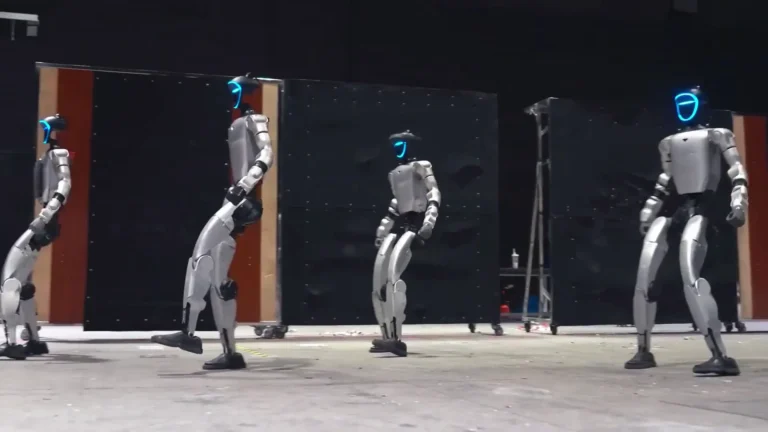
Showroom One Leg Dance
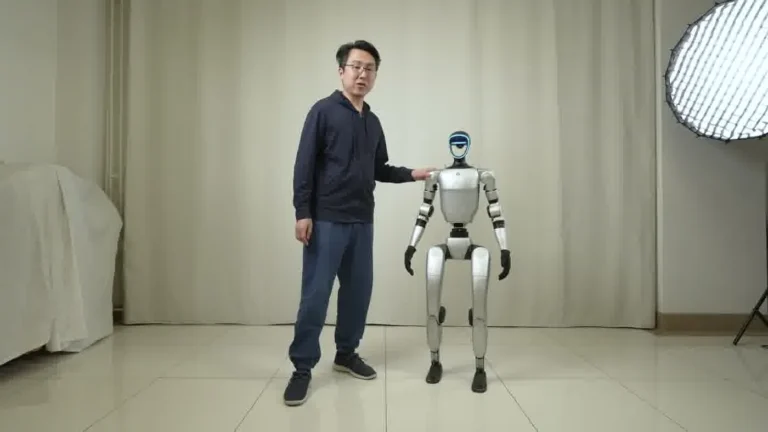
Unitree G1 — At a Glance
- 127 cm tall | 35 kg
- 41 degrees of freedom
- Five-finger dexterous hands
- 2-hour operational battery
- Onboard NVIDIA Jetson Orin
- Available to rent from $299/day
What You Should Know
Before diving into specs and use cases, here are the facts that matter most for anyone considering either robot for an event, demo, or research program.
- Atlas is not rentable. Boston Dynamics does not offer Atlas through any public event rental program in 2026. If you have seen a vendor advertising Atlas rentals, that is not the actual Atlas HD or electric Atlas.
- The G1 is purpose-built for human environments. At 127 cm tall and 35 kg, it fits through standard 80 cm doorways and operates safely alongside people. Atlas at 89 kg requires significantly more clearance and operational control.
- Payload tells the real story. Atlas carries up to 50 kg, which reflects its industrial and warehouse research focus. The G1 carries 3 kg per arm, which is more than enough for product demos, object handoffs, and event interactions.
- Battery runtime differs sharply. The G1 runs approximately 2 hours on a 9000 mAh pack and recharges in roughly 45 minutes. Atlas runtime data is not publicly disclosed for 2026.
- Purchase price puts them in different categories. The G1 starts at $13,500 for the base configuration and $70,000 at the enterprise tier. Atlas is estimated at approximately $420,000 and is not available through standard commercial sales channels.
- Degrees of freedom matter for fluid motion. The G1 has 41 DOF; Atlas has 56 joints. More joints give Atlas greater range of motion for industrial manipulation tasks.
- For event planners, only one robot is actually bookable. The G1 is available for humanoid robot rental through operators like ZMProbots. Atlas is a closed research platform.
These differences are not marketing spin — they reflect the physical, financial, and logistical realities of each platform in 2026.
Specs Side by Side
These are the verified 2026 specs for both robots based on manufacturer data and publicly disclosed technical documentation.
| Spec | Unitree G1 | Boston Dynamics Atlas |
|---|---|---|
| Height | 127 cm | ~150 cm (estimated) |
| Weight | 35 kg | 89 kg |
| DOF / Joints | 41 DOF | 56 joints |
| Arm Payload | 3 kg per arm | 50 kg total |
| Top Speed | 2 m/s | Not publicly disclosed |
| Battery | 9000 mAh, ~2 hr runtime, ~45 min charge | Not publicly disclosed |
| Shoulder Width | 45 cm | Not disclosed |
| Minimum Doorway | 80 cm | Requires wider clearance |
| Hands | BrainCo Revo 2 dexterous hands | Custom Boston Dynamics end effectors |
| Purchase Price | From $13,500 (base) / $70,000 (enterprise) | ~$420,000 estimated, not commercially available |
| Event Rental | Available — from $299/day | Not available for public rental |
Sources: Unitree.com product specifications; IEEE Spectrum robotics coverage. Atlas purchase price is an industry estimate; Boston Dynamics does not publish list pricing.
Which Robot Fits Which Use Case
The right choice depends entirely on what you are trying to accomplish. These two robots were built for different worlds.
When the G1 Makes Sense
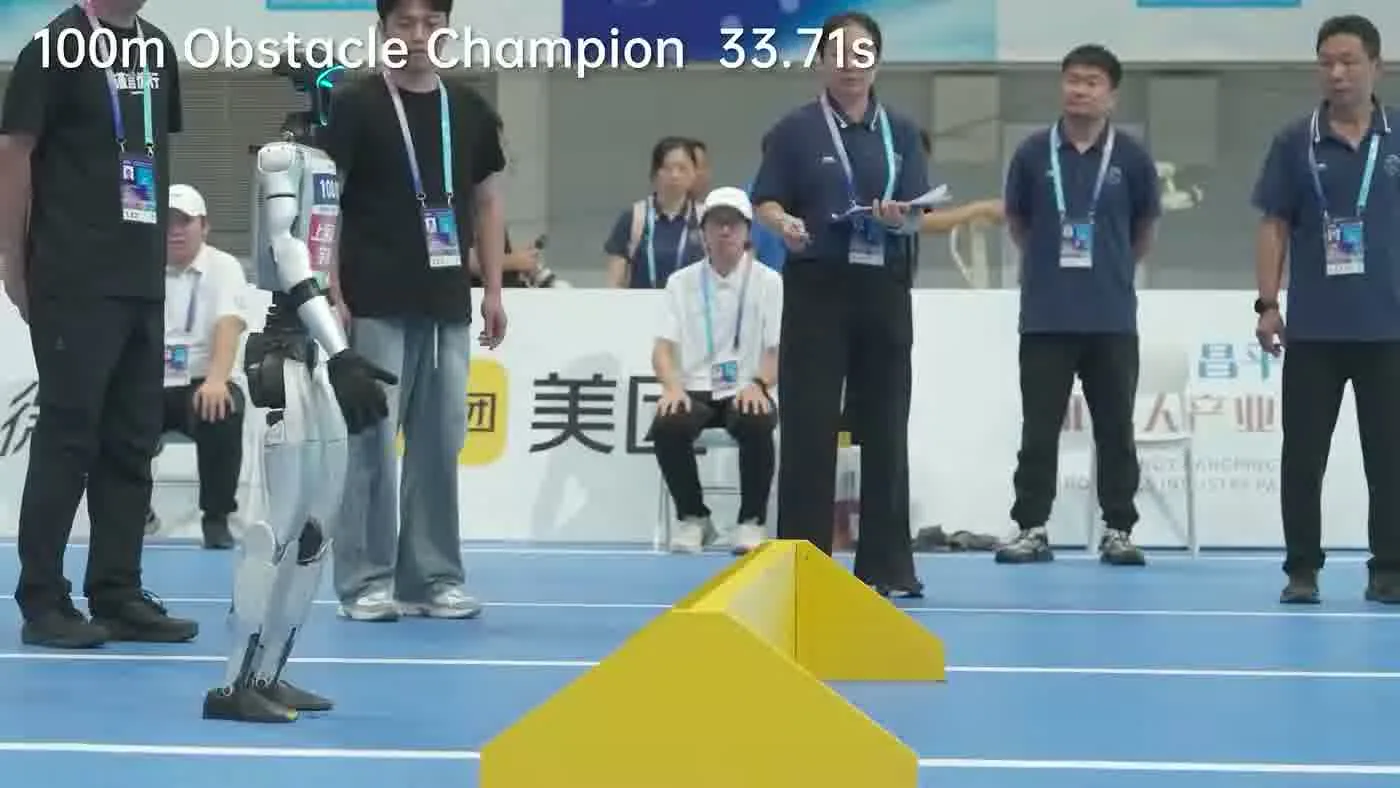
The G1 is designed to operate in human-scale environments — conference halls, retail floors, trade show booths, university labs, and corporate event spaces. Its 35 kg frame, 127 cm height, and 80 cm minimum doorway requirement mean it fits everywhere a person fits.
Event planners book the G1 because it is genuinely interactive. The BrainCo Revo 2 hands allow it to pick up objects, hand items to guests, wave, and perform scripted product demos. It walks at up to 2 m/s, which is enough to pace alongside staff without looking stiff. Battery runtime of approximately 2 hours with a 45-minute recharge cycle means a full event day is manageable with basic scheduling.
Research labs at universities book it because the 41 DOF platform is programmable, relatively affordable, and already proven in academic settings. It is the kind of robot you can actually get your hands on. For a deeper look at G1 capabilities, the complete G1 guide covers what operators have found in real deployments.
When Atlas Makes Sense
Atlas is not an event robot. Boston Dynamics built it to solve industrial manipulation problems at scale — moving heavy parts in factories, navigating uneven terrain under load, performing high-force tasks that a 35 kg consumer-tier robot cannot physically do.
Its 50 kg payload capacity and 56-joint architecture make it relevant for automotive assembly research, logistics automation studies, and defense-adjacent programs. Atlas is estimated at approximately $420,000 and is not sold through commercial channels. If you are a well-funded research institution exploring industrial robotics, Atlas is a platform worth following closely. TechCrunch and IEEE Spectrum have both covered the Boston Dynamics industrial deployment roadmap in detail.
For most event organizers, brand activation teams, and university research programs working with a real budget, Atlas is simply not an option. It is not for sale, not for rent, and not designed for public-facing interactions.
Comparison Posts vs This Match-Up
The G1 has been compared to a wide range of other humanoid platforms in 2026 — including the Unitree H1, AgiBot A2, and Figure 02. The G1 vs every humanoid breakdown goes deeper on where the G1 stands in the broader market. Atlas is generally excluded from those comparisons because it competes in a different tier entirely.
Cost and Accessibility
Price tells you a lot about what each robot is actually for. These are not competing products aimed at the same buyer.
G1 Pricing: Three Ways to Access It
The G1 has a published, publicly accessible price structure. The base configuration starts at $13,500 — a number that puts it within reach of well-funded university labs, startup robotics teams, and serious individual researchers. The enterprise configuration runs $70,000, which includes expanded capabilities and commercial-grade support.
For teams that do not need permanent ownership, rental is the practical path. Self-Service Rental starts from $299/day for qualified operators. Full-Service Event booking — where ZMProbots provides an operator on-site — is available on a quote basis. The full breakdown of humanoid robot costs covers what each access model actually includes versus what it excludes.
The G1 is also available across four regions: US, Canada, UK, and EU. That geographic footprint matters for event planners running multi-city programs. See the robot rental for events guide for regional logistics and pricing context.
Atlas Pricing: Not a Real Market
Atlas pricing is estimated, not confirmed. Industry analysts and robotics coverage from outlets like MIT Technology Review have pegged the Atlas program at approximately $420,000 per unit, though Boston Dynamics does not publish a price sheet. The robot is not sold through distributors, resellers, or commercial channels.
For practical purposes, Atlas has no rental market. Vendors advertising Atlas rentals are either misrepresenting what they have or are operating promotional agreements with Boston Dynamics under controlled conditions — not open event bookings.
Total Cost Thinking
If you are running an event, a conference activation, or a university demo program, the cost comparison between G1 and Atlas is not really a comparison at all. The G1 has a defined rental market with real operators and transparent pricing. Atlas does not. The G1 specs breakdown and the humanoid robot rental FAQ are the two most useful starting points for anyone doing budget planning in 2026.
People Also Ask
These are the questions we see most often from teams comparing these two robots.
Can you rent a Boston Dynamics Atlas robot?
No. Boston Dynamics does not offer Atlas through any public rental program as of 2026. The robot is a research and development platform used by select institutional partners. Any vendor claiming to rent the actual Atlas should be asked for documentation of their partnership with Boston Dynamics. The G1 is the rentable humanoid robot with publicly available daily rates and operator programs in the US, Canada, UK, and EU.
Is the Unitree G1 comparable to Atlas in capability?
They are comparable in the sense that both are full humanoid robots capable of walking and arm manipulation. Atlas outperforms the G1 on raw payload (50 kg vs 3 kg per arm) and joint count (56 vs 41). The G1 outperforms Atlas on accessibility, cost, and practical event suitability. For event use cases, the G1 is the more capable platform because Atlas cannot actually be deployed at events. For the specs detail, see our G1 specs breakdown.
How much does a Boston Dynamics Atlas cost vs the Unitree G1?
Atlas is estimated at approximately $420,000 and is not commercially available for standard purchase. The G1 starts at $13,500 for the base configuration and $70,000 at the enterprise tier. For most buyers, the G1 is the only realistic option. For teams who do not need permanent ownership, G1 rental starts from $299/day.
Which robot is better for a trade show or corporate event?
The G1, without question. It weighs 35 kg, fits through standard doorways, runs for about 2 hours per charge, and has a defined operator network with Full-Service Event booking available. Atlas has never been deployed at a commercial event and is not available for booking. The humanoid robot for events guide covers what to expect from a G1 event deployment.
What is the top speed of the Unitree G1 vs Atlas?
The G1 has a published top speed of 2 m/s. Boston Dynamics has not released official top speed data for the current electric Atlas in 2026. Earlier hydraulic Atlas versions reached approximately 1.5 m/s in testing environments, but the electric Atlas is a different platform with different performance characteristics.
The Bottom Line
The unitree g1 vs atlas comparison in 2026 is less a head-to-head race and more a study in two completely different robotics markets. Atlas is a high-payload research platform built for industrial environments, priced out of reach for most teams, and not available for public event rental. The G1 is a compact, event-ready humanoid with transparent pricing, a real rental market, and a growing operator network across four regions.
If you need a robot for a trade show, product launch, university demo, or corporate event, the G1 is the only option that is actually bookable. Start with robot rental for events to see what a deployment looks like and what operators include in Full-Service bookings.