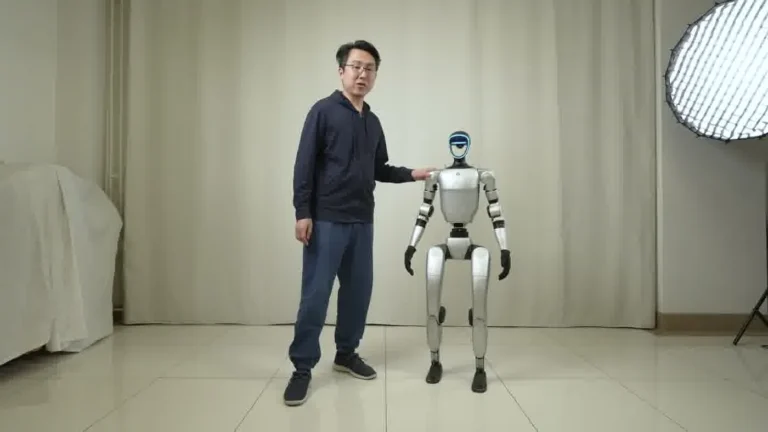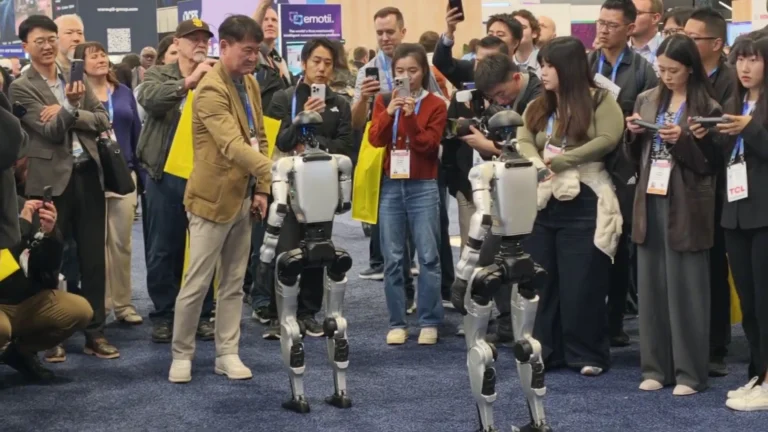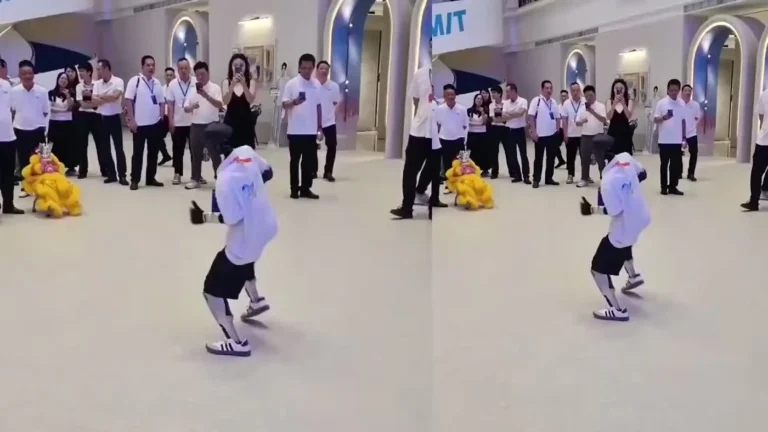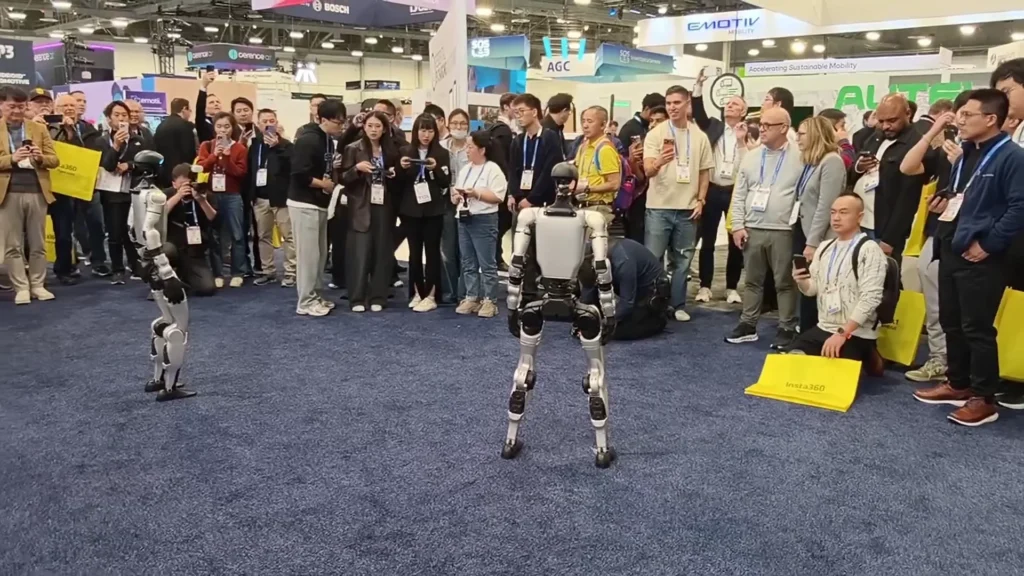
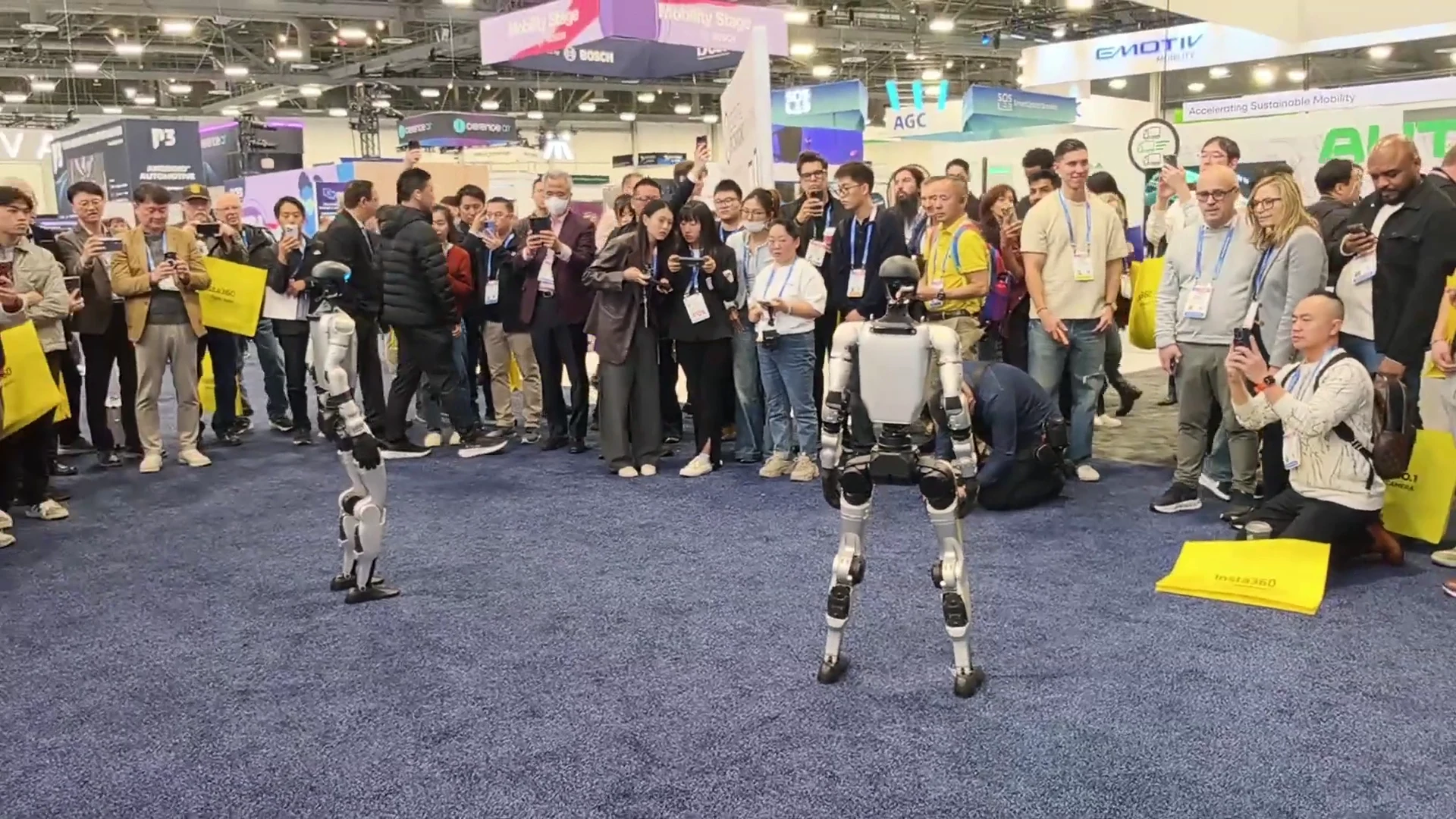
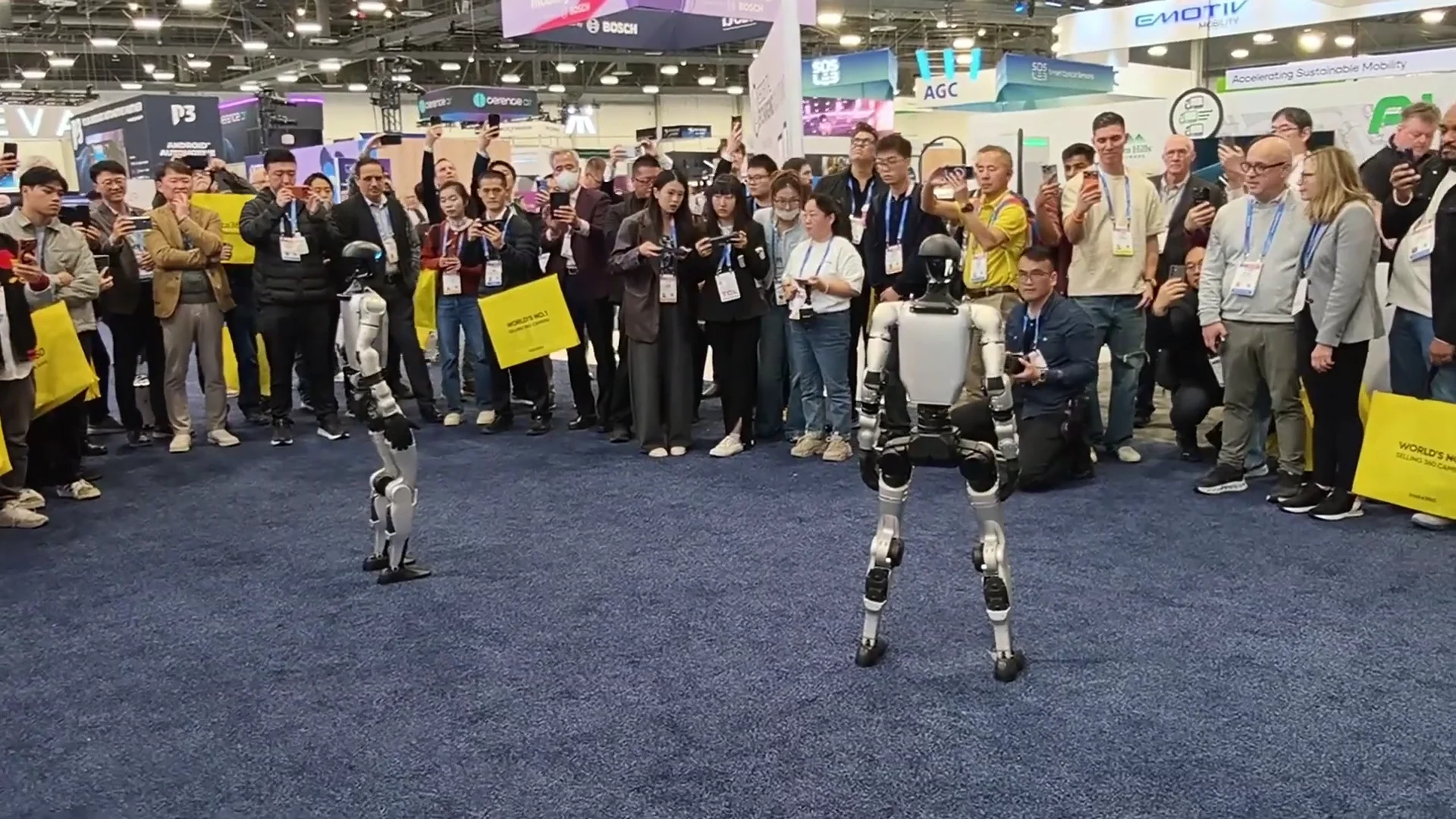
Detroit, January 2026. Three robots on an auto show floor. Polished concrete, production-level LED rigs, four-day run. Day one, hour two: the G1 started losing traction on hard corners. We added rubber traction pads — twelve minutes, no further incidents.
Table of Contents
This post is built from setups we’ve run and setups other exhibitors have brought back to us for next time. Ten configurations, real floors, real problems solved.
Flexibility Beyond Limits
What Trade Show Teams Actually Need to Know
What You Should Know
- Convention center power is often shared across booths — request a dedicated circuit for robot charging.
- Wifi at large shows is unpredictable; the G1 runs demo loops in autonomous mode without a live connection.
- Polished concrete floors require traction pads — this is the most common day-one fix across all trade shows.
- Plan two battery cycles per 8-hour show day: the Unitree G1 runs roughly 2 hours per charge under continuous demo use.
- Booking lead time for a Full-Service Event varies by region — check operator availability at least two weeks out for major shows.
Three logistics layers trip trade show teams most often: floor power, network reliability, and shift planning. Miss any one and booth performance suffers, usually on day one.
Power: convention venues typically provision 15-amp circuits per booth increment. The Unitree G1 draws roughly 1,000W peak during active charging. Shared circuits across neighboring booths cause voltage drops during morning rush. Request a dedicated drop, confirm it in writing with the venue, and bring a quality surge protector as standard.
Network: many large conventions sell bandwidth by connection. Budget for a dedicated mobile hotspot as operational backup. The G1 runs its demo loop autonomously without a live uplink — autonomous mode handles short blackouts cleanly. Remote operator override does require a stable connection, so if you’re running supervised demos, the hotspot is not optional.
Battery shift: the Unitree G1 delivers approximately 2 hours of continuous operation per charge, per Unitree’s published specifications. For an 8-hour show day, that’s three to four swap windows. Build them into the schedule before the day starts, not during a queue. The Unitree G1 walking demo post breaks down what booth visitors actually observe during a live session.
Ten Trade Show Booth Configurations That Delivered Results
These are drawn from real deployments — named events where available, configuration type where specifics are confidential.
1. Pharma Product Launch — Boston, September 2025
Two Unitree G1 robots, one operator, three-day booking. Activation floor, 400 expected attendees, demo loop every 20 minutes. The client needed the robots to hand off branded product samples and pause for photos. Setup: standard delivery position, operator-managed interaction windows. No floor issues. Wifi handled by venue. Zero incidents across 24 robot-hours.
2. Auto Show Floor — Detroit, January 2026
Three robots (two Unitree G1), two operators, four-day run. Primary task: robot presence alongside drivetrain displays to signal innovation positioning. Polished concrete required traction pads from day two. High-traffic corridors meant operator proximity at all times during floor hours. Robots ran continuous six-hour on-floor shifts with mid-day swap breaks.
3. Consumer Electronics Pavilion — Large Convention Center Floor
Single G1, one operator, five-day booking. Primary function: static greeting and live Q&A facilitation at a tech hardware booth. The booth team scripted a 4-minute interaction loop. Floor type: carpet over concrete — no traction issue. High ambient noise required operator to stay within 3 meters for reliable command response.
4. Fashion Brand Activation — New York, February 2026
Single robot, one operator, five-day booking. The client requested a custom vinyl skin application for brand identity. Interaction mode: photo mode — preset poses, stable hold for 5–10 seconds, assisted by operator. High social media output. Floor: event carpet, no issues.
5. Retail Grand Opening — Midwest Shopping Center
Single G1, one operator, two-day run. Robot stationed at the entrance greeting visitors and directing them to departments. Short interaction window (60–90 seconds per guest) managed by operator scripts. Ambient light was high and consistent — no sensor interference. Setup time: under one hour from delivery.
6. Financial Services Summit — Chicago
Single G1, one operator, two-day conference. Primary use: session break engagement. Robot was positioned in the networking corridor between breakout rooms. 15-minute demo windows per break, then standby. Power was hotel-grade — single outlet, sufficient. Zero floor issues on carpeted conference space.
7. Healthcare Technology Conference — Multi-Day Exhibition
Single G1, one operator, three-day booking. The client needed demos accessible to attendees in wheelchairs — the robot was positioned on a raised platform with clear sight lines. Interaction was observational (demonstration only, no physical hand-off). Room was climate-controlled; temperature was not a factor. Visitor engagement ran 90+ minutes per session without fatigue complaints.
8. University Research Exhibition — Academic Conference
Single G1, one operator, one-day booking. The event audience was technical — researchers, graduate students, faculty. The operator ran an extended Q&A format rather than scripted loop. Attendees asked about joint actuation, sensor arrays, and training data. The operator handled questions; the robot demonstrated specific movements on request. Different crowd, different pacing — highly engaged, slower throughput.
9. Content Studio Brand Activation — Los Angeles
Single G1, two operators (one technical, one interaction lead), three-day shoot. Primary function: photo booth mode for a brand content campaign. Robot held branded props and maintained positions for camera. Lighting rigs were close-range and high-intensity — no sensor issues observed. This format generates the highest per-hour engagement count of any setup we’ve run.
10. Entertainment Product Launch — Las Vegas
Two G1 robots, two operators, two-day event. Audience participation format: robots competed in scripted challenges with crowd voting. High-energy format required operator presence within arm’s reach at all times. Convention floor was mixed surface — carpet tiles over concrete, occasional seam — one robot flagged a surface irregularity on day one; operator walked it manually over the transition. No falls.
For a broader breakdown of event formats and activation types, see why brands rent humanoid robots and what drives the decision.
The Logistics That Always Come Up
Across all ten of these setups, three practical questions come up at every pre-event call. Here are the direct answers.
What floor type is safe? Carpet is easiest — consistent grip, low reflection. Polished concrete is manageable with traction pads. Wet surfaces, loose mats, and raised transitions are the ones to flag ahead of time. If your show floor has a stage, ramp, or threshold, confirm the exact specs with us before booking.
What power access does the robot need? One standard outlet (15-amp minimum) per robot for charging during breaks. The Unitree G1 does not need to be connected to power during operation. Plan one charging window per two-hour demo block. If your booth doesn’t have a dedicated outlet, get it added to your floor order before move-in day.
Does the operator need a separate pass? Yes. Operators need full exhibitor or vendor access for the duration of the booking — not general admission. This is the most-overlooked item on every first-time trade show robot booking. Confirm operator credential requirements with your show organizer at least one week in advance.
For a full checklist on what to prepare before a humanoid robot for events arrives on-site, that post covers pre-event prep from a different angle. And if you’re evaluating lead time for your specific region, robot rental near me covers how same-day and short-notice delivery works.
How to Book Trade Show Robot Rental
Trade show bookings fall under Full-Service Event for most exhibitors — you tell us the show, the dates, and the booth goals, and we handle operator dispatch, shipping, and on-floor presence.
Self-Service Rental (from $299/day) is available if your team has a trained operator and wants to manage the robot independently for longer multi-day runs. Most trade shows are not the right context for first-time self-service — the floor environment is too variable.
Lead time matters for major shows. CES, NRF, SXSW, and auto shows in Detroit and Chicago book up early. If your show is within four weeks, review current availability now — last-minute bookings for high-traffic events are possible but not guaranteed.
The booking process is fully online. No phone calls required. All details — floor type, power access, operator pass logistics — are collected during the booking flow so we can confirm the setup before shipping.
See the full trade show robot rental page for availability by region and how to start a Full-Service Event booking. If you’re comparing rental duration options first, multi-day humanoid robot rental walks through the tradeoffs.
For additional context on how the robot performs across different event types, IEEE Spectrum’s coverage of Unitree Robotics gives a useful external perspective on the hardware.
People Also Ask
How much does it cost to rent a robot for a trade show?
Self-Service Rental starts from $299/day for multi-day bookings. Full-Service Event pricing (operator included) is quoted per event based on days, region, and setup requirements. Get a price via the event rental page.
How long can the Unitree G1 run on a trade show floor?
Approximately 2 hours per charge under continuous demo mode. For an 8-hour show day, plan two to three battery swap windows. Charging takes roughly 45 minutes per cycle using standard AC power.
Do I need a dedicated operator for a trade show booth?
For Full-Service Event bookings, yes — an operator is dispatched and included. For Self-Service Rental, your team manages the robot after a setup session with our technician. Most trade show environments call for Full-Service due to crowd density and variable floor conditions.
What floor types work for a humanoid robot at a trade show?
Carpet and flat concrete are the most reliable surfaces. Polished concrete requires traction pads (supplied on request). Wet surfaces, raised thresholds, and loose floor mats require advance review. Flag your venue’s floor plan during booking.
Can I use the robot for interactive demos with attendees?
Yes. Common formats include scripted demo loops, photo mode with held poses, product hand-offs, and greeting sequences. The operator manages attendee proximity and interaction windows throughout the show day.
How far in advance do I need to book for a major trade show?
Two weeks minimum for most shows. For high-demand events (CES, NRF, major auto shows, SXSW), four to six weeks is safer. Book as soon as your booth space is confirmed.
Can the robot wear branded clothing or a custom wrap?
Vinyl skin wraps are supported for Full-Service Event bookings. Fabric overlays (vests, branded t-shirts) work on a case-by-case basis depending on the robot’s range of motion for the planned demo. Confirm during the booking flow.
The Bottom Line
Trade show robot rental is a logistics problem as much as a novelty play. The booths in this post worked because the teams thought through power, floor type, and operator access before the show opened — not after the first incident.
The Unitree G1 handles the environment well when the setup is right. Polished concrete gets traction pads. Shared power gets a dedicated circuit. Operator passes get requested two weeks out. These are small details with large consequences on a crowded show floor.
If your next trade show has a booth large enough for a 1.27-meter Unitree G1, the mechanics of making it work are straightforward. The planning is what separates a clean run from a scramble.
Robot rental for events is available in the US, Canada, UK, and EU — see the booking page for current regional availability and Full-Service Event pricing.