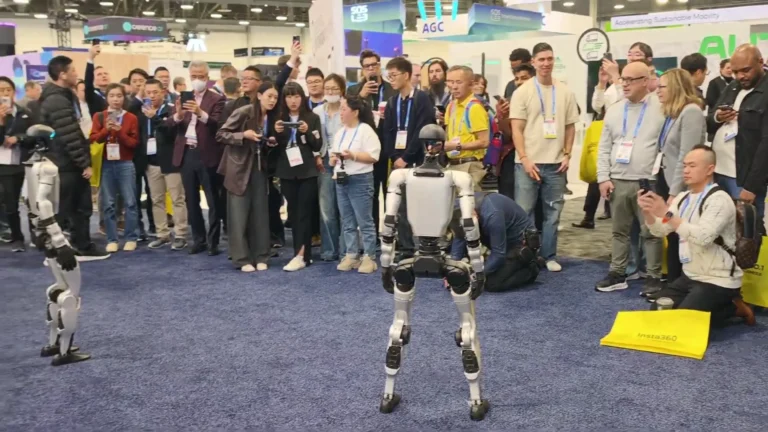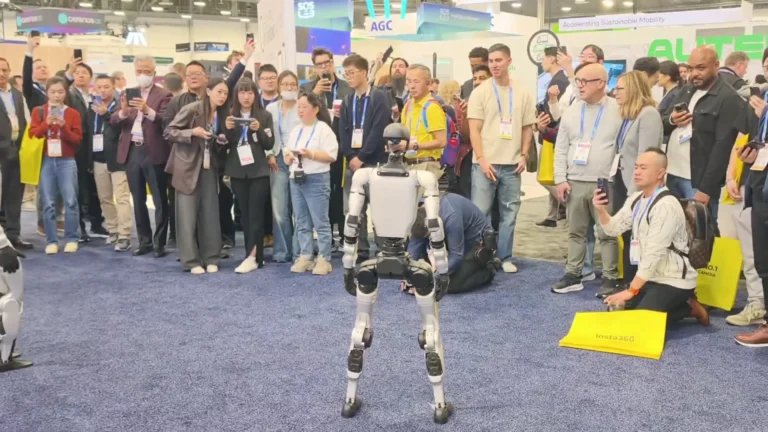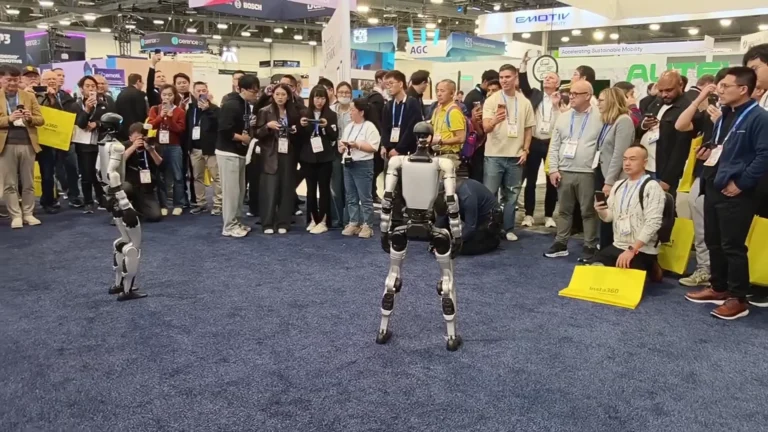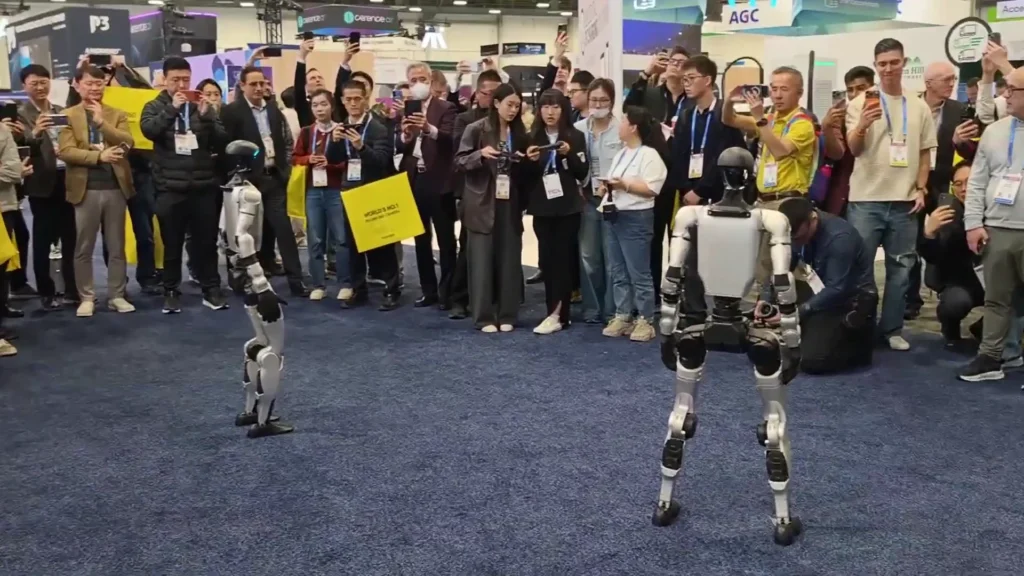
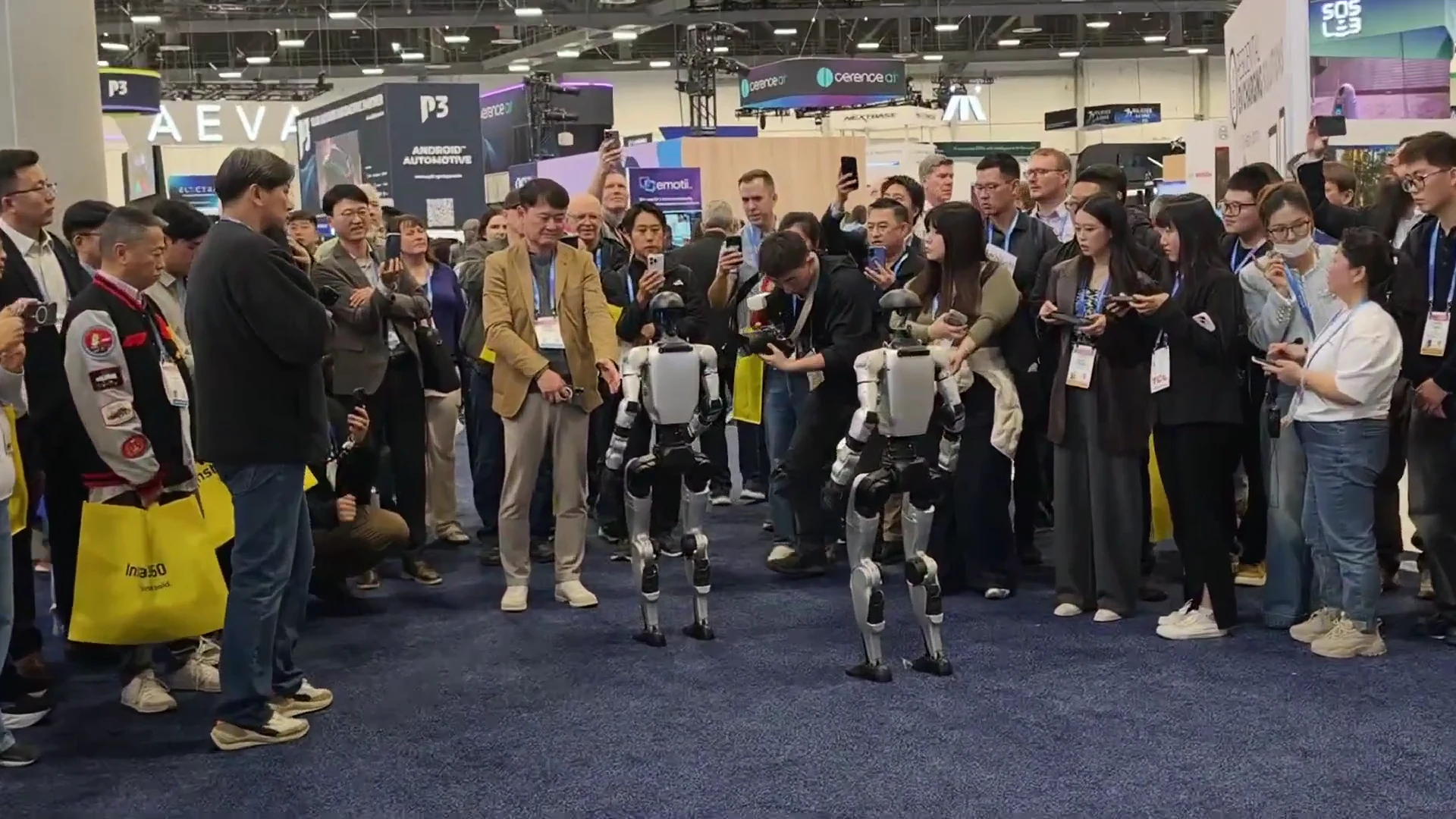
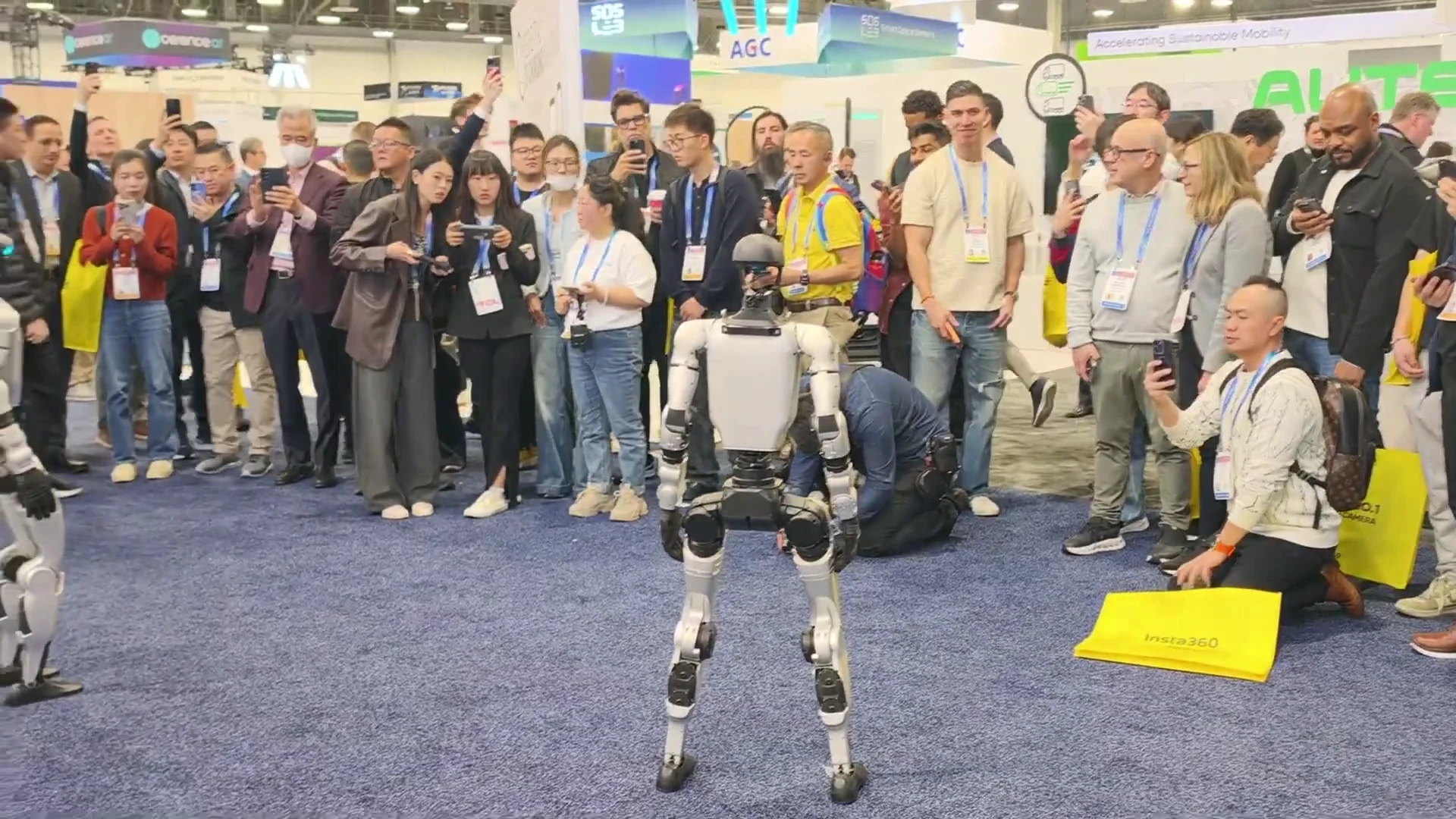
Convention center power is always borderline. We learned that at CES 2026 in Las Vegas — four robots, three operators, five days, spare batteries on day two. That’s what robot hire for exhibitions looks like.
Table of Contents
What You Should Know
- Two service tiers: Self-Service Rental (multi-day) and Full-Service Event (operator-dispatched)
- Venue must provide power, wifi, and a clear demo zone
- Self-Service Rental starts from $299/day; Full-Service Event quoted on request
Unitree G1 at CES 2026 — Live Booth Demo
Two Ways to Book a Robot for Your Exhibition
ZMProbots is a humanoid Robot-as-a-Service platform. We rent one product, the Unitree G1, and we offer it through two service tiers. Pick the one that matches your team.
Self-Service Rental
A multi-day rental where your team operates the robot. This works for exhibitions running across many days, content shoots that need the robot on standby, R&D programs, or any show where you have someone on staff with robotics or AV-tech experience. Optional Pro Setup & Training is available before your first show. Self-Service starts from $299/day; for booking-length tradeoffs, the multi-day humanoid robot rental guide breaks down the tiers.
Full-Service Event
A short event booking where a trained ZMProbots operator is dispatched to the venue and runs the robot for you. Most exhibition booths choose this tier because trade-show schedules are punishing and a tired operator is a robot on the floor. Standard for activations across one to a few consecutive days. Pricing is custom per event — request a quote on the robot rental for events page.
What’s in the Package
Both service tiers ship the same core kit, with the operator option being the main difference.
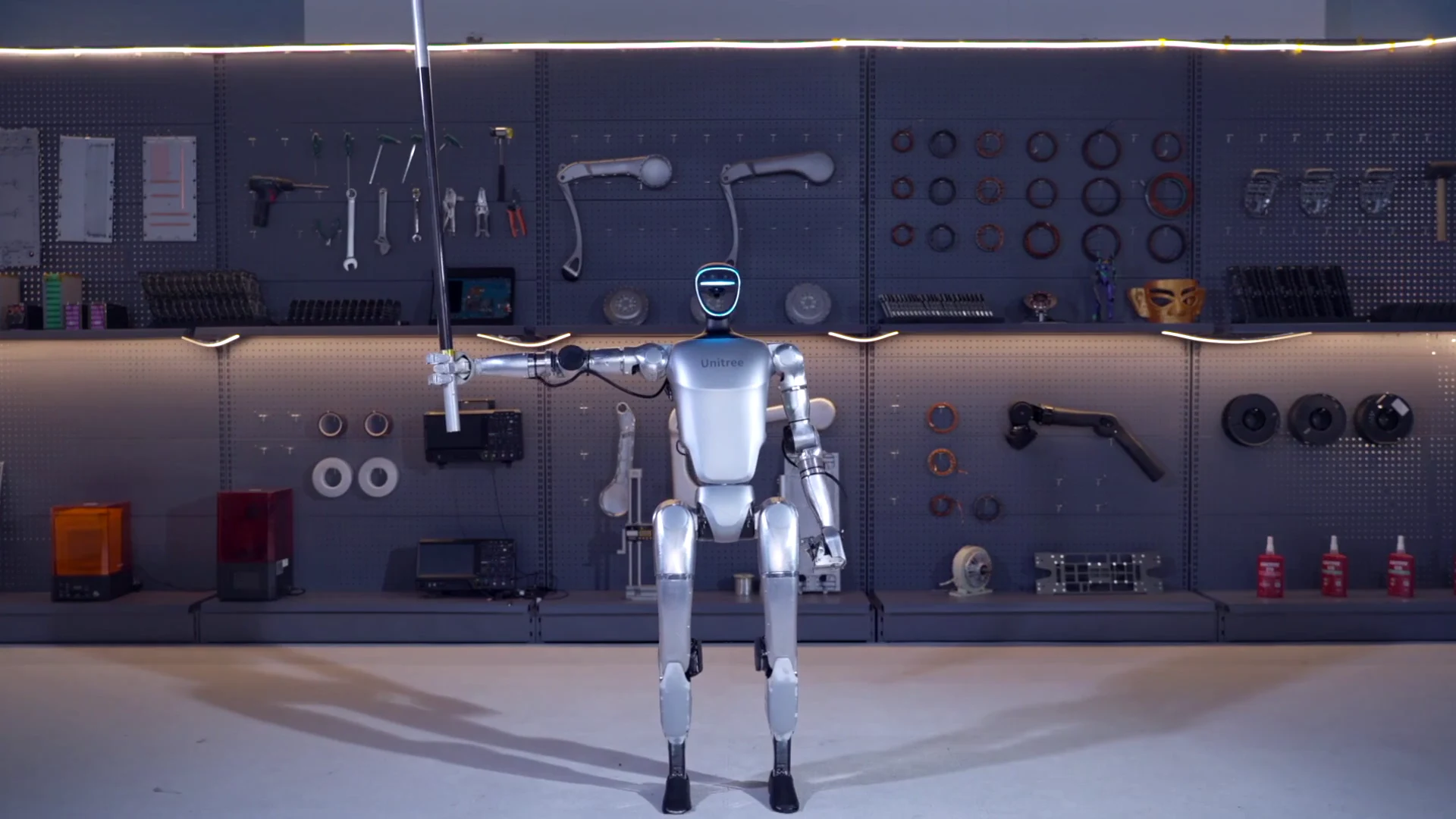
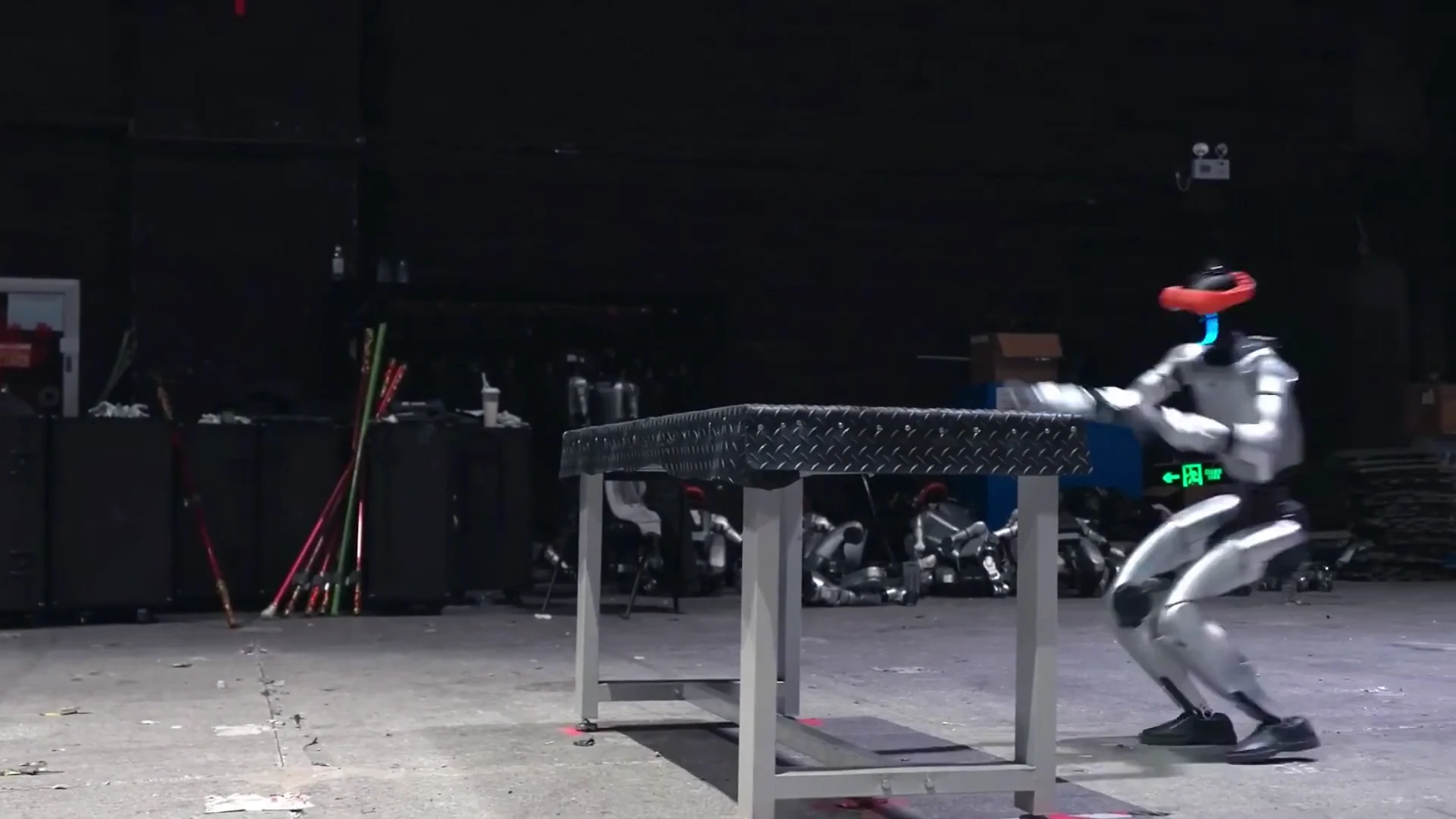
The robot is the Unitree G1 — a humanoid with 41 degrees of freedom, BrainCo Revo 2 Basic five-finger dexterous hands, NVIDIA Jetson Orin 16G compute (100 TOPS), 3D LiDAR with depth camera, and a quick-release 9000 mAh battery (roughly two hours of active runtime). It walks, gestures, runs scripted segments, and handles photo poses with attendees.
The setup gear includes a charging station, the optional Setup Gantry, the soft transit case, and the operator tablet. Delivery and collection are included in the rental across our four served regions: United States (48 contiguous states), Canada, the United Kingdom, and Europe. For more on booking pricing, the humanoid robot rental cost guide covers the full breakdown.
Every booking includes a Refundable Deposit, returned on clean return, and ZMP Protection — our included damage-cover that caps accidental-damage exposure at the deposit during Approved Use. For specifics on either, the rental landing page and the dedicated ZMP Protection page have the current detail.
What Your Venue Must Provide
This is the part nobody mentions in the booking confirmation. Your booth has to support the robot or the demo will not run cleanly.
Power
Two or three dedicated outlets at the booth. Convention center electrical is shared across booth blocks and the load drops every time your neighbor fires up an LED wall. Bring a surge protector. The Pfizer Boston activation in September 2025 ran clean on three dedicated outlets. CES, by contrast, is borderline every year.
Wifi
A 5 GHz network for the operator tablet. Most large convention centers offer paid event wifi — buy it. Public wifi tends to collapse under attendee load. If wifi fails, the robot continues in autonomous mode for short stretches but scripted segments stop until the link comes back. We learned that at the Miami wedding in June 2024, where the venue had patchy wifi and we ran the robot autonomously for most of the night.
Floor and Demo Zone
Carpet is fine. Concrete is fine if it is not polished. Polished concrete (showroom floors, some auto-show booths) needs traction pads under the demo zone — we learned this at the Detroit auto show in January 2026. Glass and wet floors are not approved. Plan a clear demo zone of at least three meters by three meters with a meter of buffer for visitor approach. Standard exhibition booth-design guidance from Exhibitor Magazine lines up well with our requirements.
Secure Overnight Area
A locked back-of-booth zone for the robot, charging station, and gantry. Convention centers are generally safe, but a high-value humanoid should not sit on the carpet in a public hall.
Setup Day: Truck to First Demo
Setup day starts with truck unload and ends when the booth opens to attendees. Here is the sequence we use across our exhibition deployments.
- Truck arrival. The driver and one ZMProbots crew member unload the soft transit case (robot), the Setup Gantry, batteries, and the operator kit. Most convention centers require a freight-elevator booking — confirm yours has one open in your move-in window.
- Booth power and network check. Plug in the charging station, run a continuity test across the outlets, connect the operator tablet to the event wifi.
- Robot calibration. The robot stands on the Setup Gantry while the operator runs joint calibration, balance check, and the LiDAR map of the demo zone.
- Demo loop programming. Your scripted segments — the brand intro, the photo handoff, the give-aways, whatever you booked — are loaded onto the operator tablet. A typical exhibition booth runs four to six segments in rotation. Industry guidance from BizBash on activation cadence aligns with this.
- Operator briefing with your team. The operator walks your booth staff through what to do during demos, what to do if a child runs into the demo zone, how to call a soft stop, where the spare battery is.
- Dry-run demo. Full loop, no audience. We catch lighting issues, sight-line problems, audio gaps. Adjust as needed.
- Booth opens. First public demo of the day.
For more on what visitors actually experience during a live walking segment, the Unitree G1 walking demo breakdown covers it shot by shot.
Running the Booth: Demo Loop and Battery
Once the show floor opens, the robot runs on a clock. Most exhibition booths set a demo loop every 20 minutes — we used that cadence at the Pfizer Boston launch in September 2025, where 400 expected attendees moved through the booth across three days. Anything tighter and battery life becomes the bottleneck.
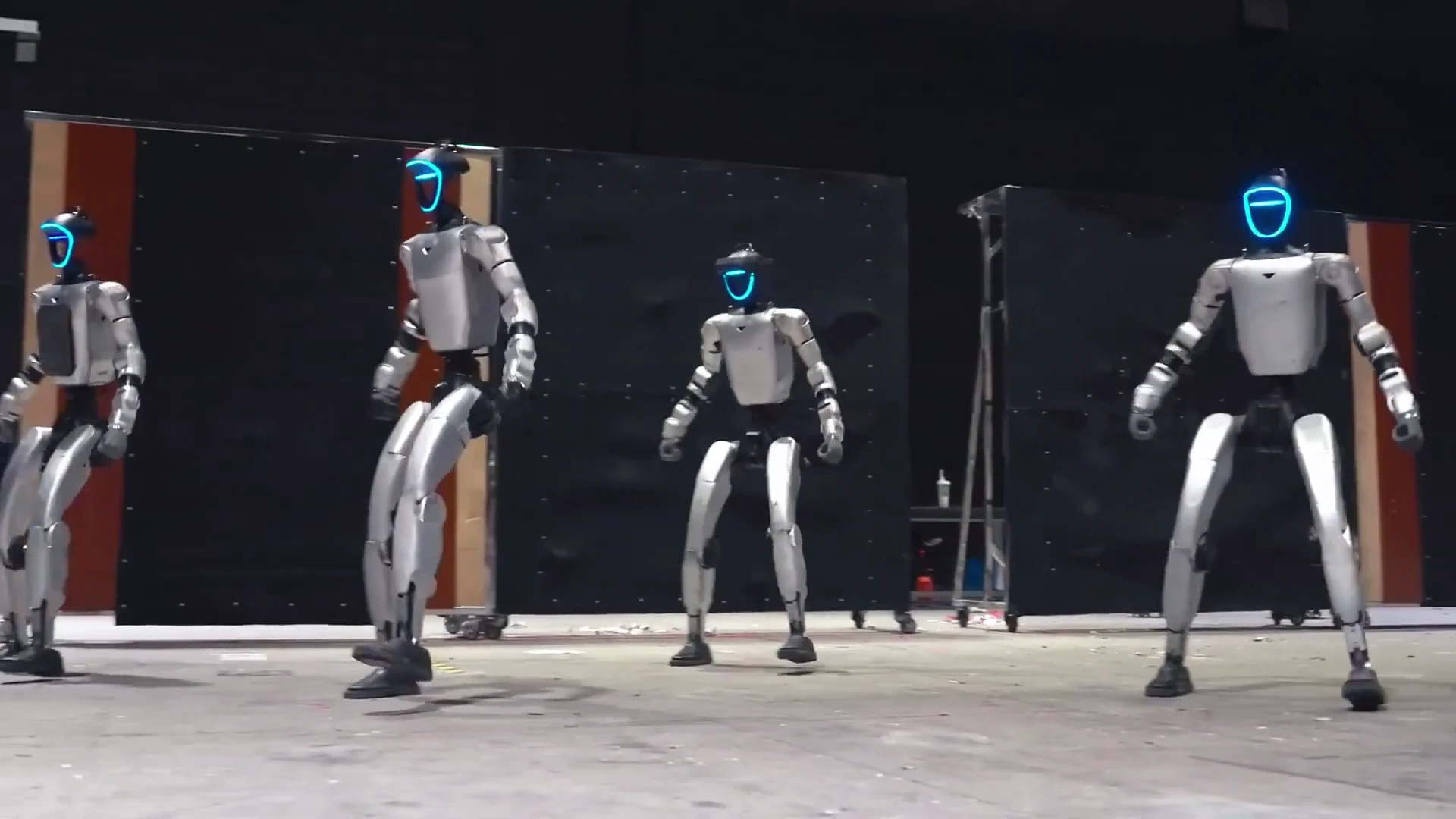
A two-hour battery handles roughly five or six full demo cycles before needing a swap. The Extra Battery add-on gives you a second cell so you swap during a quiet stretch instead of stopping the booth. The CES 2026 deployment ran four robots across five days on rotated battery cycles — convention center power was borderline and the spare cells made the difference. For broader service-level details on event bookings, the humanoid robot for events piece is the right read, and the questions to ask before you book guide covers planning.
Handover Record
Every shift change between operators, or between operator and your booth staff, is logged. Battery cycles, demo count, any soft stops, any visitor incidents. This is part of the rental contract — useful if a recurring issue shows up. The Handover Record also protects your Refundable Deposit when the robot ships back.
Soft Stops
Your booth staff can hit a soft stop on the operator tablet at any moment. The robot freezes mid-pose, audio mutes, lights dim. You will use this. Plan for it.
People Also Ask
Which service tier should I book for an exhibition?
If your team has prior robotics or AV-tech experience and the show runs across many days, Self-Service Rental works. If the show is shorter or you want a trained ZMProbots operator running the robot on the floor, book Full-Service Event. Most exhibition booths choose Full-Service.
How far in advance should I book a robot for an exhibition?
As early as your show date allows. Lead time varies by region and service tier. Same-week bookings are sometimes possible but cost more in shipping. The exact windows are on the relevant landing page for each service tier.
Can I rent more than one robot for the same booth?
Yes. Multi-robot bookings are common at major exhibitions. They run as parallel rentals on the same dates and require an additional operator per pair. Use the contact form for multi-unit quotes — it is reviewed case by case.
What happens if the robot stops working during the show?
Field repairs cover most issues — battery swaps, joint recalibration, network reconnect. If a hardware fault makes the robot unusable, ZMProbots dispatches a replacement unit from the nearest regional hub. Show-floor downtime is logged in the Handover Record.
Is there a deposit?
Yes. A Refundable Deposit applies to every booking and is refunded in full on clean return. The amount is on the rental landing page and adapts per region. ZMP Protection (included with every booking) caps your accidental-damage exposure at the deposit.
Do I need a permit to display a humanoid robot at a trade show?
Most US, UK, and European convention centers do not require additional permits beyond the standard exhibitor agreement. A few venues require an electrical safety check on power-draw equipment — confirm with your show’s exhibitor services desk.
Can the robot speak in different languages?
Yes. Scripted audio loops are recorded in the language and voice you specify at booking. Real-time speech is operator-cued. We have shipped exhibition bookings in English, Spanish, French, German, Italian, and Mandarin.
The Bottom Line
Robot hire for an exhibition is mostly logistics. The booth power, the wifi, the floor type, the operator handover, the demo cadence, the spare battery. The robot itself is a Unitree G1 — capable, predictable, on-spec. It will do what you booked it to do, and the parts that go wrong are usually venue-side.
If your team has prior robotics experience and your show runs multi-day, Self-Service Rental works. If you want a ZMProbots operator on the floor, book Full-Service Event. Either way: book early, confirm power and wifi with the venue, plan for an extra battery.
Start your booking on the humanoid robot rental page.