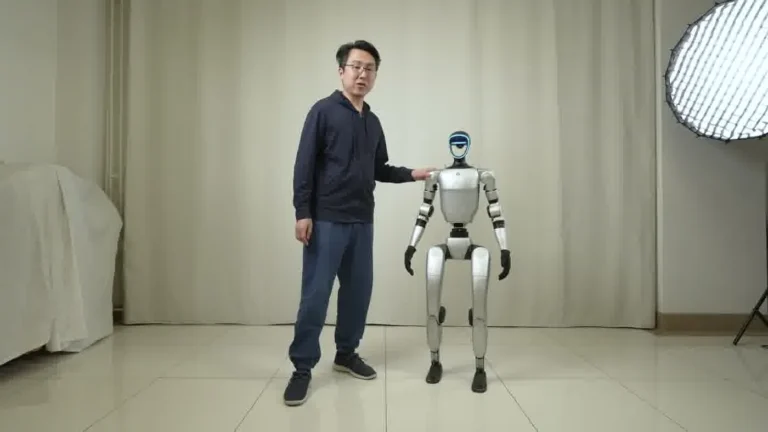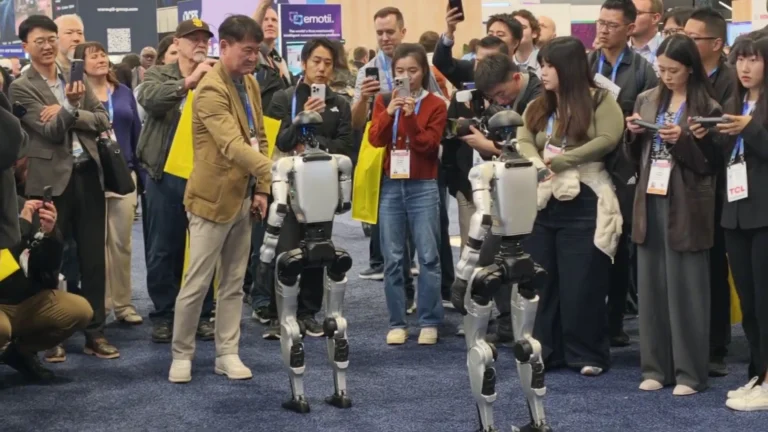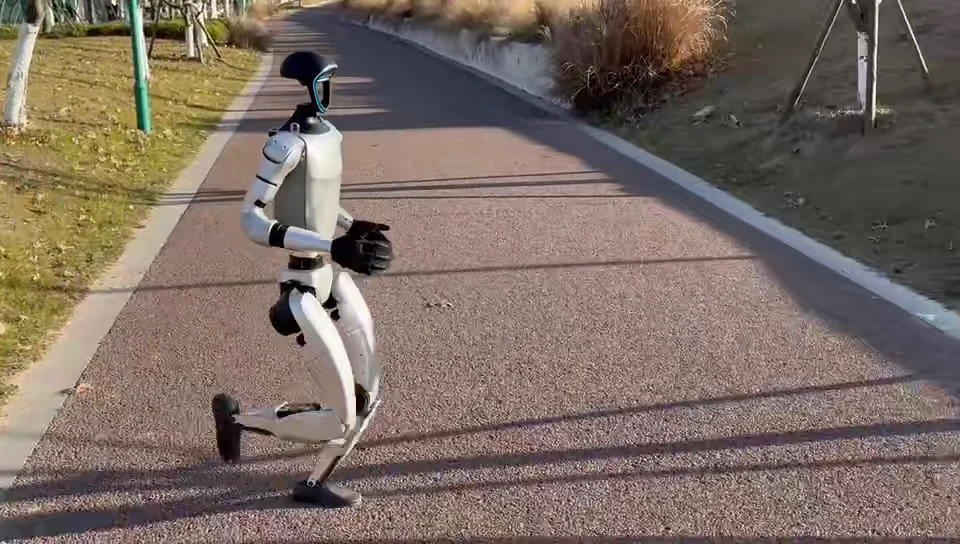
In 2026, the Unitree G1 costs approximately $70,000 in the US. The Unitree G1 buy vs rent events question that most event teams face comes down to one number: how many robot activations do you run per year?
Table of Contents
- The Purchase Price Is Not the Total Cost
- The Frequency Threshold: Where Buying Starts to Make Sense
- What Owning the G1 Actually Requires
- What Renting Actually Costs at Different Deployment Volumes
- The Decision Table: Rent or Buy
- Who Should Buy and Who Should Rent
- What You Should Know
- People Also Ask
- The Bottom Line
This post breaks down both sides for event marketing teams and brand agencies making this decision in 2026.
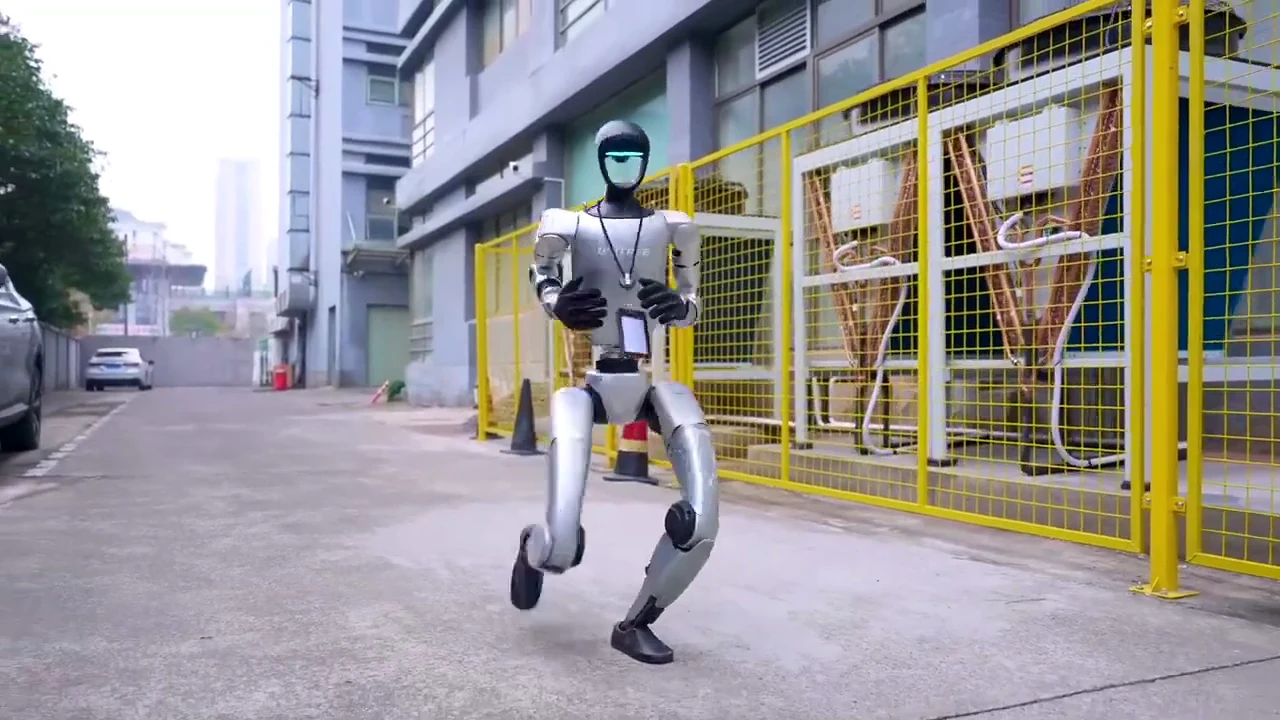
Unitree G1: AI-Driven Capability
The Purchase Price Is Not the Total Cost
The Unitree G1 is priced at approximately $70,000 on the US market (approximate US market price with sales tax). That covers the robot hardware. It does not cover what comes after.
A purchased G1 requires storage between events — either a climate-controlled facility you already have, or one you pay for. It requires transport to and from each event: a dedicated vehicle or freight service capable of handling a 35 kg robot in a transit case. It requires maintenance, since a working robot at 400-attendee events accumulates wear on joints, motors, and surface components. And it requires a trained operator — either an in-house hire or a third-party contractor — every time it runs.
None of those costs appear in the $70,000 purchase price. According to IEEE Spectrum’s coverage of commercial robotics adoption, total cost of ownership for enterprise robotics typically runs 1.5–3x the hardware acquisition cost over a 3-year period, depending on deployment frequency and maintenance complexity. For a humanoid robot used in public-facing event environments, that upper range is realistic.
The rental model wraps these costs differently. A Full-Service Event booking includes operator dispatch, transport, and ZMP Protection base coverage as part of the booking. A Self-Service Rental includes delivery, collection, and the Pro Setup & Training window before handover. Neither requires a capital outlay or ongoing infrastructure to maintain the asset between uses.
The Frequency Threshold: Where Buying Starts to Make Sense
The core question is: at what annual deployment frequency does ownership become cheaper than renting?
Self-Service Rental pricing starts from $299/day with a 3-day minimum. At the base rate, a standard 3-day activation costs roughly $900. Run 20 activations per year at that rate and you’ve spent many thousands of dollars on rental fees alone — before add-ons. Over 4 years, total rental spend approaches the purchase price of the hardware.
But that comparison ignores what ownership costs during those same 4 years: storage, transport, maintenance, and operator costs. For event teams that already have those infrastructure components in place — a facility with climate control, a vehicle capable of transporting the robot, an in-house trained operator — the ownership economics improve significantly. For teams that don’t, ownership’s apparent advantage erodes quickly.
The practical frequency threshold for most event teams falls between 10 and 20 activations per year. Below 10 activations annually, renting is almost always more cost-effective when you factor in total ownership overhead. Above 20 per year, with existing infrastructure, ownership may pencil out — but the break-even period is still 3–4 years from purchase date, during which the robot ages and newer models emerge.
For a full breakdown of how the cost math changes over 12 months and longer periods, the Unitree G1 rental cost guide covers the rate tiers and what drives quote variance.
What Owning the G1 Actually Requires
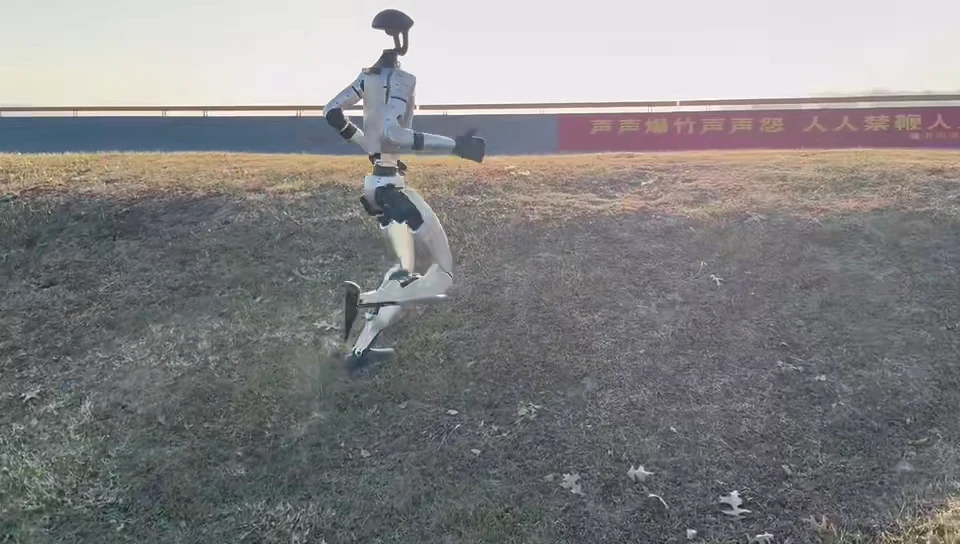
The event teams most likely to benefit from owning a G1 are the ones who have already solved the three main infrastructure problems: storage, transport, and operator continuity. Most event teams haven’t.
Storage
The G1 in its transport case requires a secure, climate-controlled space. Humidity, temperature swings, and physical vibration all affect joint calibration and motor performance over time. A dedicated storage facility — or a dedicated climate-controlled room within an existing one — is not optional for a robot that will run at professional events. If you don’t currently have this, factor the cost of acquiring or leasing it into your ownership calculation.
Transport
The robot and its transport case weigh 35 kg combined and require careful handling during loading and transit. A standard cargo van works, but the robot must be secured against movement. Long-distance shipping adds freight costs and transit risk — a robot shipped coast-to-coast multiple times per year accumulates handling exposure that a rental robot, managed by ZMProbots logistics, doesn’t. For teams doing multi-city activations, owned-robot transport costs can become significant.
Operator continuity
A purchased G1 needs a trained operator for every deployment. For Full-Service Event bookings, ZMProbots dispatches a certified operator — that’s included. For an owned robot, you either hire someone with G1 certification, train an existing staff member, or contract a third party per event. None of these are free, and operator continuity is fragile: if your trained person leaves, you have a robot you can’t safely run until someone new is trained.
Maintenance and updates
Unitree publishes firmware updates for the G1 periodically. Mechanical maintenance — joint wear, motor servicing, surface component replacement — requires either in-house capability or a service contract. The robot’s basic warranty period is 8 months for entry configurations and 18 months for the EDU tier. After warranty, repair costs are your responsibility. Owners also carry their own asset protection arrangements — that coverage is not provided by ZMProbots for owned hardware.
What Renting Actually Costs at Different Deployment Volumes
The rental tier structure for the Unitree G1 starts from $299/day on the Self-Service tier, with a 3-day minimum. Multi-day bookings move to lower daily rates. Full-Service Event pricing is separate and quote-based — it includes operator costs as part of the booking.
At low activation volumes (1–4 events per year), annual rental costs are modest compared to ownership overhead. No storage costs, no transport overhead, no operator employment. Each booking includes delivery, collection, and ZMP Protection base cover.
At medium volumes (5–10 activations per year), annual rental spend climbs. At this range, the conversation shifts from pure cost comparison to capability comparison: a rental includes the most current robot configuration, operator expertise, and logistics handling. An owned robot at 18 months old is behind Unitree’s current firmware and showing wear on high-frequency components.
At high volumes (10+ activations per year), owning becomes more financially attractive — but only if the infrastructure conditions are already in place. Event teams at this activation volume often have agency-level operations with multiple clients, which changes the business model entirely. Owning a G1 for multi-client event use introduces different considerations around availability scheduling and client rate structures.
According to BizBash, event technology costs — including experiential robotics — are increasingly factored into brand activation budgets as a line item rather than a one-off expense, a shift that makes rental models more compatible with standard event budget planning cycles.
The Decision Table: Rent or Buy
Here is a direct comparison across the variables that matter for event teams:
Capital outlay
Rent: None. Pay per booking.
Buy: ~$70,000 upfront (approximate US market price with sales tax). Capital tied up for the asset life.
Deployment flexibility
Rent: Available across 48 US states, Canada, UK, and EU. No logistics overhead per event.
Buy: You handle every logistics decision. Multi-city activations require active transport management.
Operator
Rent: Full-Service Event includes operator dispatch. Self-Service Rental includes Pro Setup & Training.
Buy: You source and retain a trained operator. If that person leaves, operations stop until someone new is trained.
Technology currency
Rent: ZMProbots maintains its fleet to current firmware. You get the current configuration at every booking.
Buy: You own the configuration you purchased. Firmware updates require technical management. Within 18–24 months, newer G1 configurations will be available.
Between-event cost
Rent: Zero. You pay only for active booking days.
Buy: Storage, maintenance, asset protection, and operator retention costs continue regardless of how many events you run.
For event teams whose core business is brand activations rather than robotics, the rental model removes every operational responsibility except running the event itself. For teams where robot ownership genuinely aligns with their infrastructure and deployment volume, the buy decision is worth modeling over a 3-year horizon with all-in ownership costs included. The humanoid robot ownership cost page covers the full purchase path for teams ready to commit to that decision.
Who Should Buy and Who Should Rent
The answer is rarely absolute. Most event teams are somewhere in the middle, and the right approach depends on factors beyond deployment frequency.
Likely to benefit from buying
- Event agencies running 15+ robot activations per year across multiple clients
- Companies with existing robotics infrastructure — storage, transport, trained technical staff
- Research institutions or universities that need continuous access for curriculum or R&D (the operator’s briefing for events covers what sustained deployment looks like operationally)
- Brands with a long-term robot ambassador program requiring the same robot across 2+ years of activations
Likely to benefit from renting
- Brand teams running 1–8 robot activations per year without dedicated robotics staff
- Event producers who need a G1 for a specific campaign window and don’t have off-peak use for the asset
- Teams running multi-city activations where transport logistics would add significant cost and complexity to ownership
- Anyone who wants operator support included without building an internal technical function
The middle path
Some teams rent for 2–3 years first, build internal familiarity with the robot’s operational requirements, and then evaluate ownership with that experience in hand. This is often the most rational path: you learn what deployment costs before committing $70,000 to an asset you’ll operate for years. The humanoid robot ownership cost page covers the full purchase path for teams ready to evaluate that commitment.
What You Should Know
Before committing to either path, confirm these facts:
- Purchase price: ~$70,000 (approximate US market price with sales tax). This does not include storage, transport, operator costs, or maintenance after the warranty period.
- Rental minimum: 3 days, starting from $299/day on the Self-Service tier. Full-Service Event pricing is quote-based and includes operator dispatch.
- Break-even threshold: Typically 10–20 activations per year, depending on your existing infrastructure. Without storage, transport, and operator solutions already in place, ownership costs significantly more than the purchase price suggests.
- Technology shelf life: The G1 you buy today is the G1 configuration available today. Unitree has shipped updated configurations continuously since the G1 launched in 2024. A rental always reflects current fleet maintenance; owned hardware ages in place.
- Operator dependency: Every deployment of an owned G1 requires a trained operator. This is a personnel risk, not just a cost — operator turnover stops your activation program until training completes on a replacement.
- Regions: ZMProbots delivers to 48 US states, Canada, UK, and EU member states. If your activations span multiple countries, the logistics overhead of owning and shipping internationally can offset purchase cost benefits at moderate deployment volumes.
People Also Ask
How much does the Unitree G1 cost to buy?
Approximately $70,000 in the United States (approximate US market price with sales tax). This is the hardware cost only. Storage, transport, operator training, and maintenance are additional and ongoing costs that add substantially to total ownership cost over a 3-year period.
At what usage frequency does buying a G1 make sense for event teams?
For most event teams without existing robotics infrastructure, the break-even point is typically 15–20 activations per year over 3+ years. Below that threshold, the combined cost of ownership makes renting more cost-effective on a per-event basis.
What does a Unitree G1 rental include for event teams?
A Full-Service Event booking includes the robot, operator dispatch, transport, and ZMP Protection base cover. A Self-Service Rental includes the robot, delivery, collection, and a Pro Setup & Training window before handover. Neither requires upfront capital or between-event maintenance.
Can I rent the Unitree G1 for a single day?
Self-Service Rental has a 3-day minimum. Single-day bookings are available as Full-Service Event engagements, which are operator-dispatched and quote-based. Pricing for single-day events is available through the event rental booking page.
What happens if an owned Unitree G1 needs repair?
After the warranty period (8 months for base configurations, 18 months for EDU), repair costs are the owner’s responsibility. Parts and service may require direct engagement with Unitree or authorized service partners. ZMP Protection base cover applies only to rental bookings, not owned hardware.
Is the Unitree G1 available to buy in Europe and the UK?
Yes, through Unitree’s international distribution network. Pricing varies by region due to import duties, currency, and reseller margins. ZMProbots operates rental services across the EU and UK for teams who prefer not to manage local import and compliance on a purchased unit.
The Bottom Line
For most event teams in 2026, renting the Unitree G1 is the financially rational choice — not because buying is always wrong, but because the true cost of ownership includes line items that don’t appear in the purchase price. Storage, transport, operator continuity, and maintenance all add up before the robot pays for itself.
The teams for whom buying makes sense have usually already solved those infrastructure problems. They’re running 15+ activations per year with a trained operator on staff and a clear multi-year deployment roadmap. For everyone else, a rental model keeps capital available and removes logistics overhead.
The complete Unitree G1 guide covers the robot’s specifications. The operations playbook covers how event teams manage deployments end-to-end.