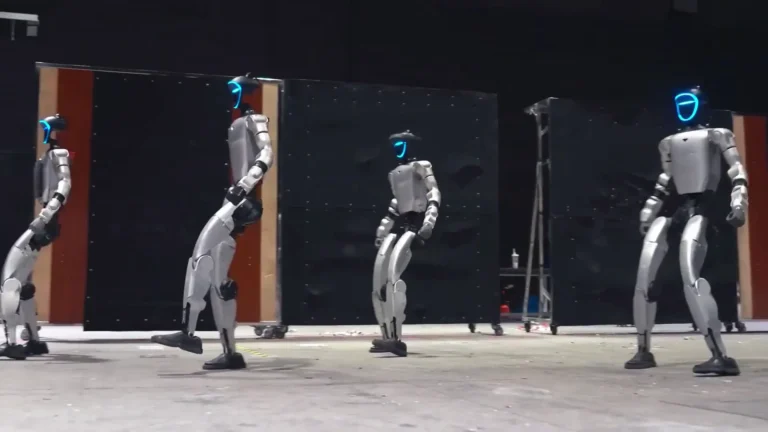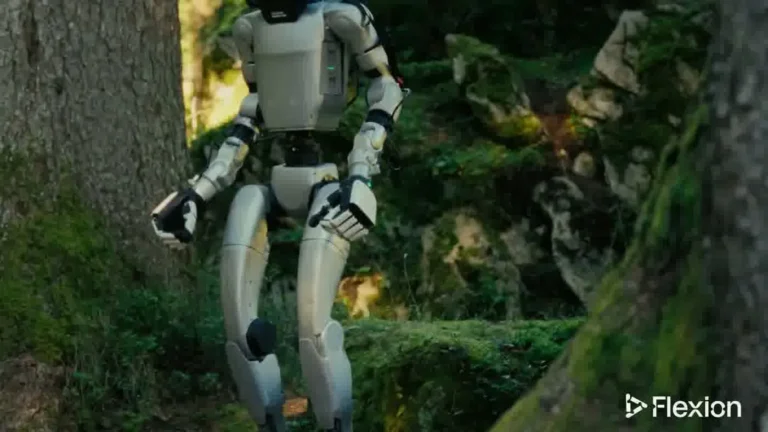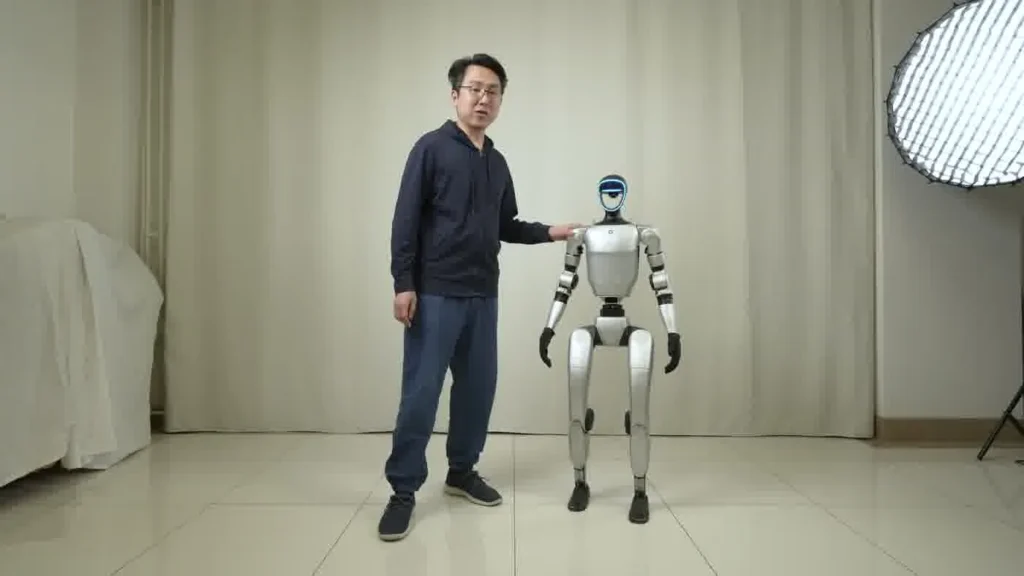
We have watched the humanoid robot cost conversation play out the same way in 2026: a buyer focuses on the purchase price, signs the agreement, and then discovers that the number on the spec sheet was the beginning of the financial picture, not the end. Our goal here is to surface the maintenance categories that do not appear in most sales decks, so buyers can ask the right questions before committing to a $70,000 piece of precision equipment.
Table of Contents
Kung-Fu at the Temple
What You Should Know
- Maintenance costs for humanoid robots follow the same logic as precision industrial equipment
- High-DOF robots (like the G1’s 41 joints) have more wear points than simpler machines
- Battery packs have a finite charge cycle count — replacement is a recurring cost
- Software updates from the manufacturer may require hardware compatibility checks
- Sellers price maintenance separately, and quotes vary by contract type and usage volume
- When you rent, maintenance is included in the rental cost — you pay nothing extra for upkeep
These six points define the frame for everything that follows. The Unitree G1 is a serious piece of precision engineering — 41 degrees of freedom in the Enterprise configuration, 35kg of weight on a 127cm frame, with actuators at every joint doing real mechanical work during each deployment. Precision equipment requires precision maintenance. The question is not whether maintenance costs exist, but how large they are relative to your usage pattern and who is responsible for managing them.
For buyers who want the full total cost of ownership picture, our post on humanoid robot total cost covers the complete acquisition-through-operations picture across the G1’s expected service life. The current post focuses specifically on the maintenance layer that most sellers do not surface in the sales process.
Joint and Actuator Maintenance
The G1 has 41 degrees of freedom in its Enterprise configuration. Each degree of freedom corresponds to a joint — and each joint contains actuators that do mechanical work every time the robot moves. In normal operation, that is thousands of movement cycles per deployment day across the full joint set. Over time, those cycles accumulate wear.
What Wear Looks Like in a High-DOF Robot
In precision mechanical systems, wear does not happen evenly. The joints that see the most load — typically the hips, knees, and ankles in a bipedal robot — accumulate wear faster than the joints in the hands or wrists that handle lighter loads. This means a maintenance program for the G1 cannot be a single uniform schedule applied equally to all 41 joints. It requires monitoring usage patterns at the joint level and prioritizing service on the highest-stress components.
Unitree publishes technical documentation for G1 operators at unitree.com. The specific service intervals are documented there. What is not in the sales materials — and what sellers rarely mention — is that following those intervals requires either in-house technical staff who are trained on the platform or a service contract with a qualified provider. Neither comes free.
Lubrication and Inspection
Joint lubrication is the most routine maintenance task in any high-DOF robot. Applied correctly and on schedule, it extends actuator life significantly. Applied incorrectly or skipped, it accelerates wear in ways that show up as expensive component replacements later. The technical requirements for correct lubrication on the G1 are specific to the actuator type at each joint — different joint families use different lubricant specifications. A maintenance technician who is not familiar with the platform will default to a one-size approach that is likely wrong for at least some of the joints.
Actuator Replacement as a Long-Term Cost Category
Even with correct lubrication and inspection schedules, actuators eventually wear past the point where maintenance extends their life. Actuator replacement is a capital cost that buyers in the sales process rarely think about because it feels distant. It is less distant in high-usage scenarios — demonstration environments where the robot runs multiple hours per day, seven days a week, accumulate cycles significantly faster than a robot used for occasional corporate events. The usage profile should be the first input into any maintenance cost estimate.
Our post on inside a humanoid robot’s components covers the G1’s mechanical architecture in detail — useful reading for anyone who wants to understand which components are doing the most work in a standard deployment scenario before estimating service requirements.
Battery Replacement Cycles
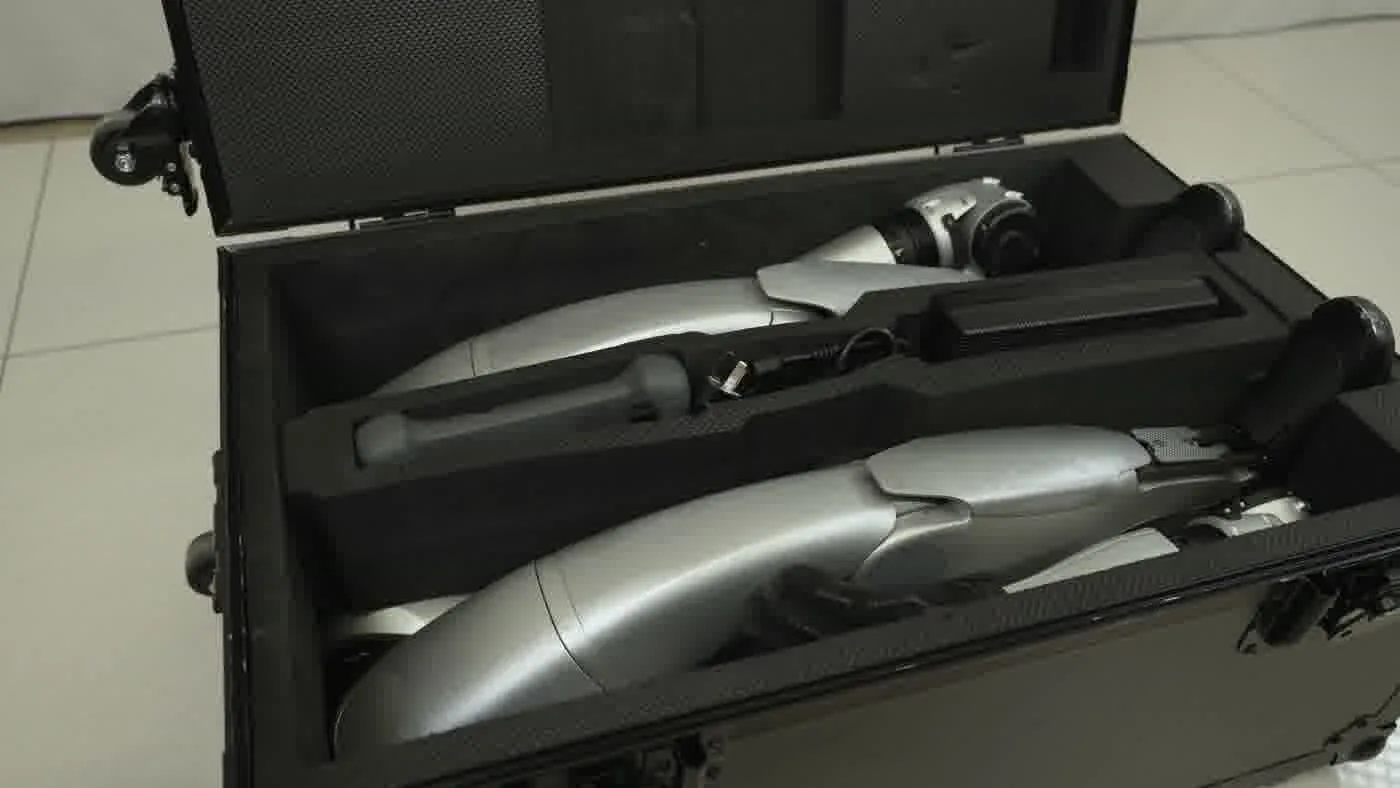
The G1 runs on a 9,000 mAh battery pack with a two-hour runtime under normal operating conditions. A full charge takes approximately 45 minutes. In a full-day deployment scenario, that means three to four charge cycles to keep the robot operational across an eight-hour event. Those cycles add up.
What Charge Cycles Do to Battery Capacity
Every lithium battery pack has a finite number of charge cycles before capacity begins to degrade meaningfully. The exact cycle count at which the G1’s battery pack reaches a service threshold is not publicly documented by Unitree — so we will not cite a number here. What is well-established in battery chemistry is the pattern: capacity degrades gradually over the early portion of a battery pack’s life, then accelerates as the pack approaches end-of-service. A robot that was delivering two hours of runtime at the beginning of ownership will deliver less at some point in the future — and the rate at which that happens depends heavily on charging practices and operating temperatures.
For deeper context on the G1’s power system, our post on Unitree G1 battery life covers runtime, charging, and the operational implications of battery management in deployment scenarios.
Replacement as a Budgeted Line Item
Battery replacement is not an emergency expense — it is a predictable one. Buyers who understand this from the start budget for it as a recurring capital cost rather than discovering it as an unwelcome surprise when runtime drops below operational requirements. The frequency of replacement depends on deployment intensity. A robot running multiple full charge cycles daily will reach battery service thresholds faster than one used occasionally. This is a useful data point to have before finalizing the business case for purchase.
Charging Practices and Battery Health
How batteries are charged matters as much as how many times they are charged. Consistent deep-discharge cycles (running the pack close to zero before recharging) stress lithium packs more than partial-cycle charging. Temperature during charging affects degradation rates. These are not exotic battery science concepts — they are the same considerations that apply to any high-capacity lithium system. But in the context of a $70,000 robot, the cost of incorrect charging practices is worth taking seriously as part of operator training from day one.
IEEE Spectrumhas covered battery technology developments in robotics applications extensively — their reporting provides useful context for understanding where battery performance is heading and what buyers can reasonably expect from next-generation systems as the technology matures.
Software and Firmware Updates
Unitree releases firmware updates for the G1 that address performance, stability, and capability. Applying those updates sounds straightforward. In practice, it is a maintenance task that most buyers significantly underestimate before they are in it.
The Hardware Compatibility Problem
Firmware updates on complex robotic systems are not the same as updating a phone application. A new firmware version may assume hardware configurations or component revisions that require verification before the update is applied. Running a firmware version that is mismatched to the hardware configuration can produce unstable behavior — at best, performance degradation; at worst, movement faults that require factory support to resolve. Pre-update hardware compatibility verification is a step that takes time and requires someone who understands the platform at a technical level.
Who Does the Work?
In-house buyers need either a staff member with firmware update competency on the G1 platform specifically, or a service agreement that covers update application by a qualified provider. Neither option has zero cost. A staff member who can manage G1 firmware updates is a specialized hire. A service agreement that covers updates is a line item. Both are legitimate choices — the point is that the choice should be made intentionally, not discovered after the first update notification arrives.
Our post on the Unitree G1 specs for 2026 covers the current hardware configuration in detail, which is the baseline for any compatibility assessment before a firmware update is applied.
Software Updates vs. Capability Expansion
Some Unitree updates are maintenance releases — stability fixes, minor performance tuning, security patches. Others introduce new capabilities or behavior modes that require operator re-training to use correctly. Treating every update as a transparent background task misses the training dimension. A capability expansion that changes how the robot responds to commands or handles edge cases in autonomous operation requires the operator team to understand what changed and adjust their workflows accordingly. That is a recurring time investment that does not show up in any seller’s quote.
For teams evaluating whether to buy or rent specifically because of the software and firmware maintenance burden, our comparison of Unitree G1 total cost of ownership vs. rental puts this in the context of the full financial picture. The maintenance sections there quantify the operational overhead in a way that is useful for building the business case either way.
TechCrunch has tracked Unitree’s software release cadence and robotics software tooling over time — context that is useful when estimating how frequently update cycles are likely to require attention.
People Also Ask
What maintenance does a humanoid robot require?
Humanoid robots require joint lubrication at regular intervals, actuator inspections to catch wear before it becomes component failure, battery pack monitoring and eventual replacement, and firmware updates applied with hardware compatibility verification. The specific intervals and requirements vary by robot model and usage intensity. For the G1, Unitree documents the technical requirements — the service overhead comes from staffing the expertise to execute them correctly and consistently.
How much does it cost to maintain a humanoid robot?
Specific maintenance costs depend on usage intensity, contract structure with the manufacturer or a service provider, and whether the buyer handles maintenance in-house or outsources it. We do not quote a dollar figure here because the range is wide enough that any single number would be misleading. What we can say is that buyers should ask for a maintenance cost estimate — broken down by category — before signing a purchase agreement. A seller who cannot provide that breakdown is not giving you the full humanoid robot cost picture.
Does renting avoid maintenance costs?
Yes. When you rent the G1 from ZMProbots — either Self-Service Rental from $299/day or Full-Service Event — maintenance is entirely our responsibility. Joint service, battery management, firmware updates, and component replacement are all handled on our side. You pay the rental rate and use a maintained robot. You do not carry any of the service overhead. For teams that want the technology without the operational responsibility, humanoid robot rental is the direct path.
How long does a humanoid robot battery last before replacement?
The G1’s 9,000 mAh battery has a two-hour runtime per charge under normal operating conditions, with a 45-minute charge time. The number of cycles before capacity degrades to a replacement threshold depends on charging practices and operating environment — Unitree does not publish a specific cycle count in public documentation. As a practical matter, buyers in high-intensity deployment scenarios should build battery replacement into their multi-year cost model from the start rather than treating it as an unknown future expense.
Should I buy or rent a humanoid robot given maintenance costs?
The right answer depends on deployment frequency, in-house technical capacity, and how you value operational certainty. Our post on for-sale vs. rental decision walks through the full decision framework with the maintenance layer included. For teams running infrequent or event-based deployments, rental almost always wins on total cost. For teams with high deployment frequency and the technical staff to manage service in-house, purchase can make sense — but only if the maintenance costs are budgeted correctly from day one.
The Bottom Line
The humanoid robot cost quoted in a sales conversation is the purchase price. The maintenance costs that accumulate over the robot’s service life — joint lubrication and actuator service, battery replacement cycles, firmware update management — are real, recurring, and rarely surfaced before the agreement is signed.
Buyers who go in with a clear view of all four cost categories are in a better position to negotiate service agreements, plan technical staffing, and build accurate multi-year budgets. If you are at the point where the full cost picture matters, our page on how to buy the Unitree G1 covers the purchase process and the maintenance questions most buyers do not raise until after signing. We also cover when not to buy for teams still deciding between purchase and rental.