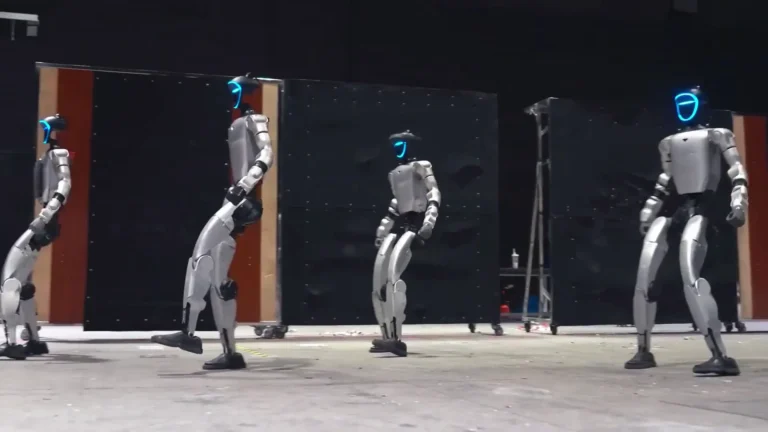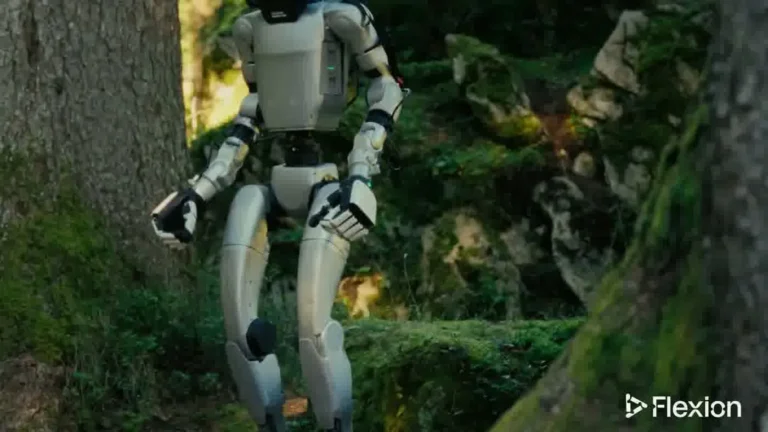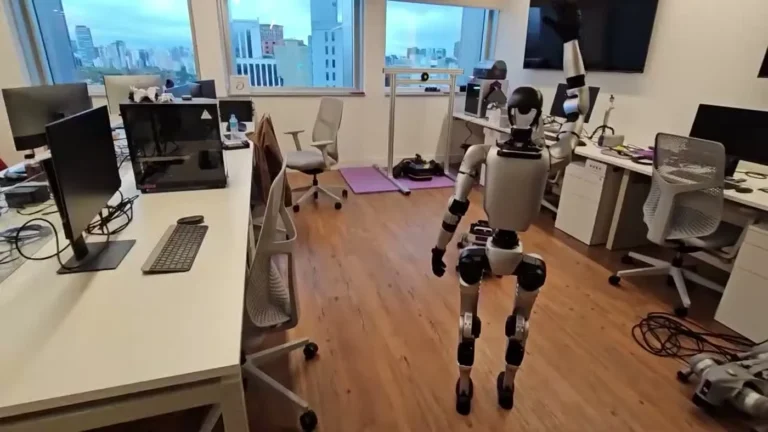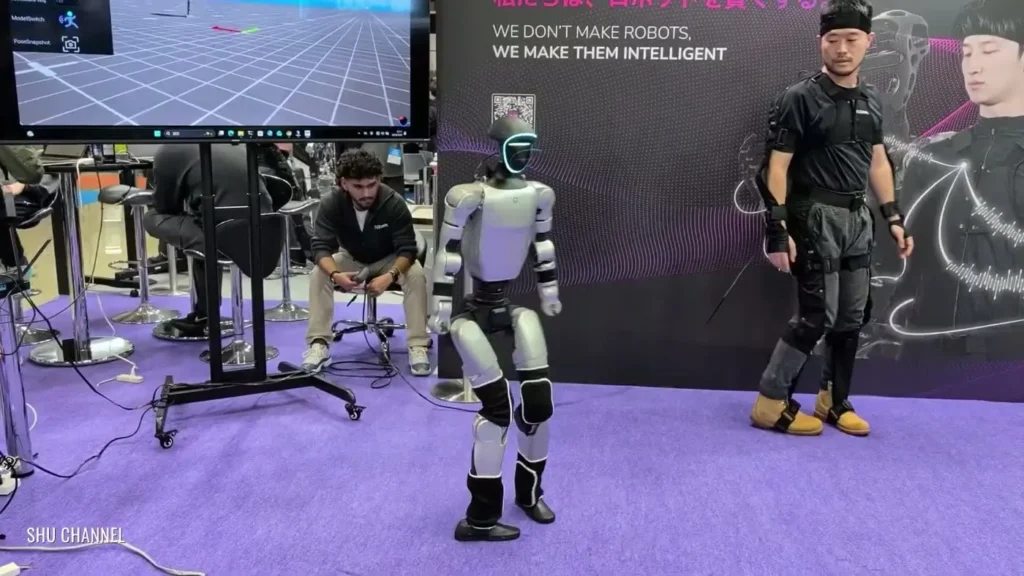
When our customers ask about unitree g1 vs h1 for a 2026 event or demo, the conversation always starts the same way: size matters — but it is not the only thing that matters. The G1 and H1 are both Unitree humanoids, but they were built for different jobs, and choosing the wrong one is an expensive mistake.
Table of Contents
City Street Walk
Unitree G1 — At a Glance
- 127 cm tall | 35 kg
- 41 degrees of freedom
- Five-finger dexterous hands
- 2-hour operational battery
- Onboard NVIDIA Jetson Orin
- Available to rent from $299/day
What You Should Know
Before choosing between the G1 and H1, these are the key facts that matter most for anyone evaluating both robots for a rental, event, or deployment decision.
- The Unitree G1 stands 127 cm tall and weighs 35 kg; the H1 stands approximately 180 cm tall and weighs approximately 47 kg — nearly one and a half times the G1 in both height and mass.
- The G1 has 41 degrees of freedom; the H1 base model has 18 DOF (10 leg, 8 arm), giving the G1 far more dexterous motion capability across its joints.
- The H1 is faster on flat ground — top speed 3.3 m/s (per Unitree) vs the G1 at 2 m/s — making it stronger for locomotion-focused demos where covering distance matters.
- The G1 is equipped with BrainCo Revo 2 dexterous hands with a 3 kg arm payload, enabling genuine object manipulation; the H1 base model uses simpler gripper arms with limited hand dexterity.
- The G1 requires a minimum 80 cm doorway (45 cm shoulder width); the H1 at roughly 180 cm tall needs considerably more clearance and is not well suited to standard office or retail corridors.
- ZMProbots rents the Unitree G1 — not the H1. Our humanoid robot rental service covers both Self-Service Rental (from $299/day) and Full-Service Event options.
- The G1 enterprise edition retails at $70,000 to purchase; the H2 commercial variant is priced at $40,900. Rental sidesteps that capital commitment for either path.
The sections below go deeper on each of these points, starting with a direct spec comparison table.
Specs Side by Side
The table below uses verified figures. G1 data comes from ZMProbots approved specs. H1 data comes from the official Unitree H1 product page.
| Spec | Unitree G1 | Unitree H1 |
|---|---|---|
| Height | 127 cm | ~180 cm |
| Weight | 35 kg | ~47 kg |
| Degrees of Freedom | 41 DOF | 18 DOF (base) |
| Top Speed | 2 m/s | 3.3 m/s |
| Battery | 9,000 mAh, ~2 hr runtime, 45-min charge | 15 Ah / 864 Wh, quick-swap capable |
| Arm Payload | 3 kg per arm | Not rated for manipulation tasks (base model) |
| Primary Use Case | Interaction, dexterity, tight-space demos | Locomotion speed, open-floor presence |
For a deeper breakdown of the G1 hardware, see the Unitree G1 complete guide. IEEE Spectrum has also covered the evolution of legged robots in a useful context for comparing performance claims across generations.
Which Robot Fits Which Use Case
The specs table tells you what each robot can do. This section tells you which one to pick for a specific job.
Trade shows and corporate events
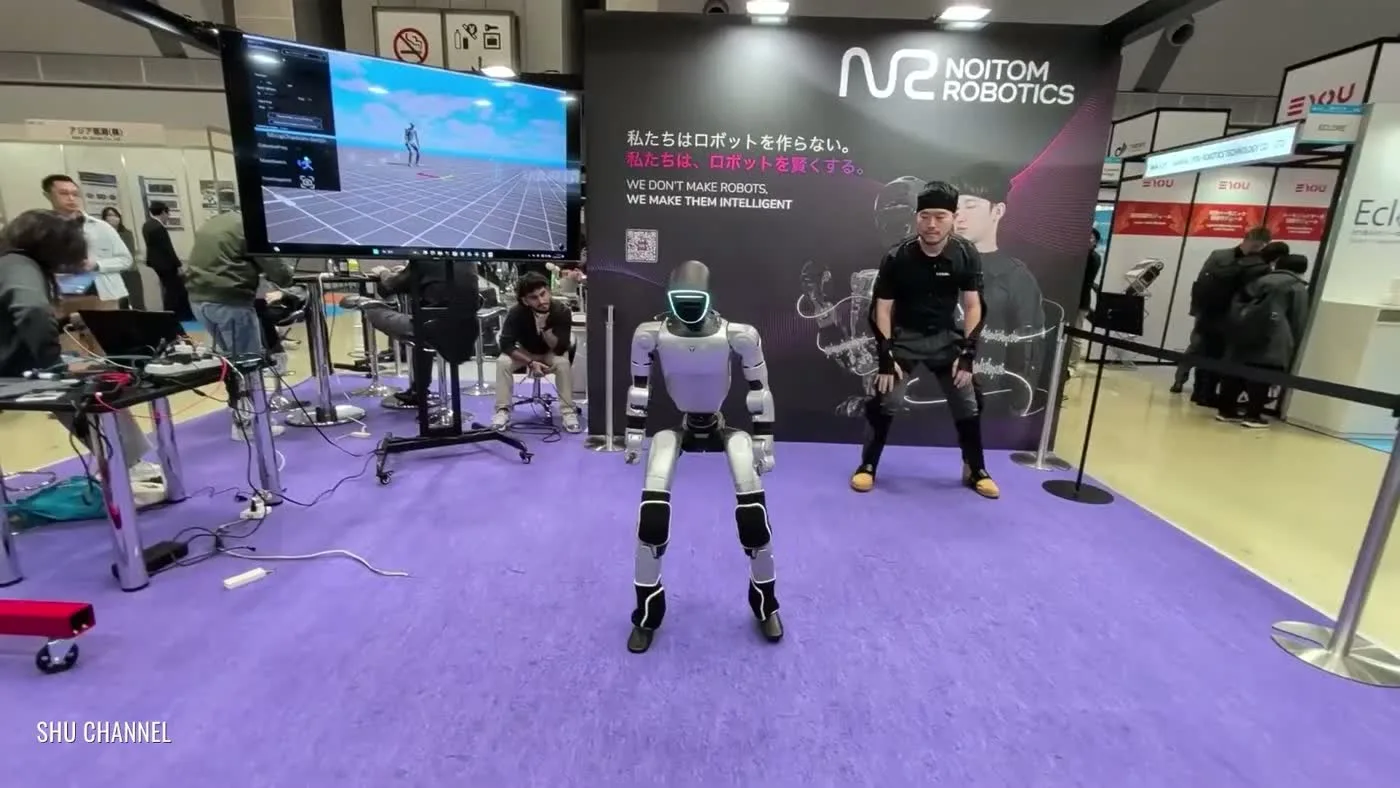
The G1 wins here, and it is not close. At 127 cm, it fits naturally in booth spaces — people can approach it at eye level, watch the hands move, and engage without feeling physically overwhelmed. The BrainCo Revo 2 hands let it do things that stop foot traffic: picking up a product sample, pointing at a screen, shaking hands. The H1 at 180 cm and 47 kg is a presence, but it is better suited to wide-open expo halls than a 10×10 booth. For details on how to set up a G1 at events, the humanoid robot for events guide covers venue prep and operator logistics.
Locomotion and speed demonstrations
The H1 is the right call if your brief is pure mobility drama — a robot running across a stage, jogging across an open plaza, or showing off agility at 3.3 m/s. MIT Technology Review has noted that speed benchmarks in humanoid robots are increasingly a competitive differentiator, and the H1 was built with that priority in mind. The G1 tops out at 2 m/s, which is still impressive in person, but the H1 commands a different kind of attention when raw locomotion is the show.
Retail, hospitality, and indoor activations
The G1 again. Narrow aisles, standard doorways (minimum 80 cm), carpet, and crowds of unpredictable people all favor a smaller robot with fine motor control. The H1 would need significantly wider clearances and a well-defined safety perimeter. See how one operator handled a Unitree G1 retail activation for a real-world case. The robot rental for events 2026 post covers safety perimeter planning across venue types.
Research and university demos
Both robots have appeared in academic settings, but the G1’s 41 DOF and open SDK make it a stronger platform for manipulation research. The H1 has historically attracted locomotion researchers. If you are running a public-facing demonstration rather than a lab session, the G1’s smaller footprint and crowd-friendly scale reduce the logistical overhead considerably.
Rental Availability and Booking
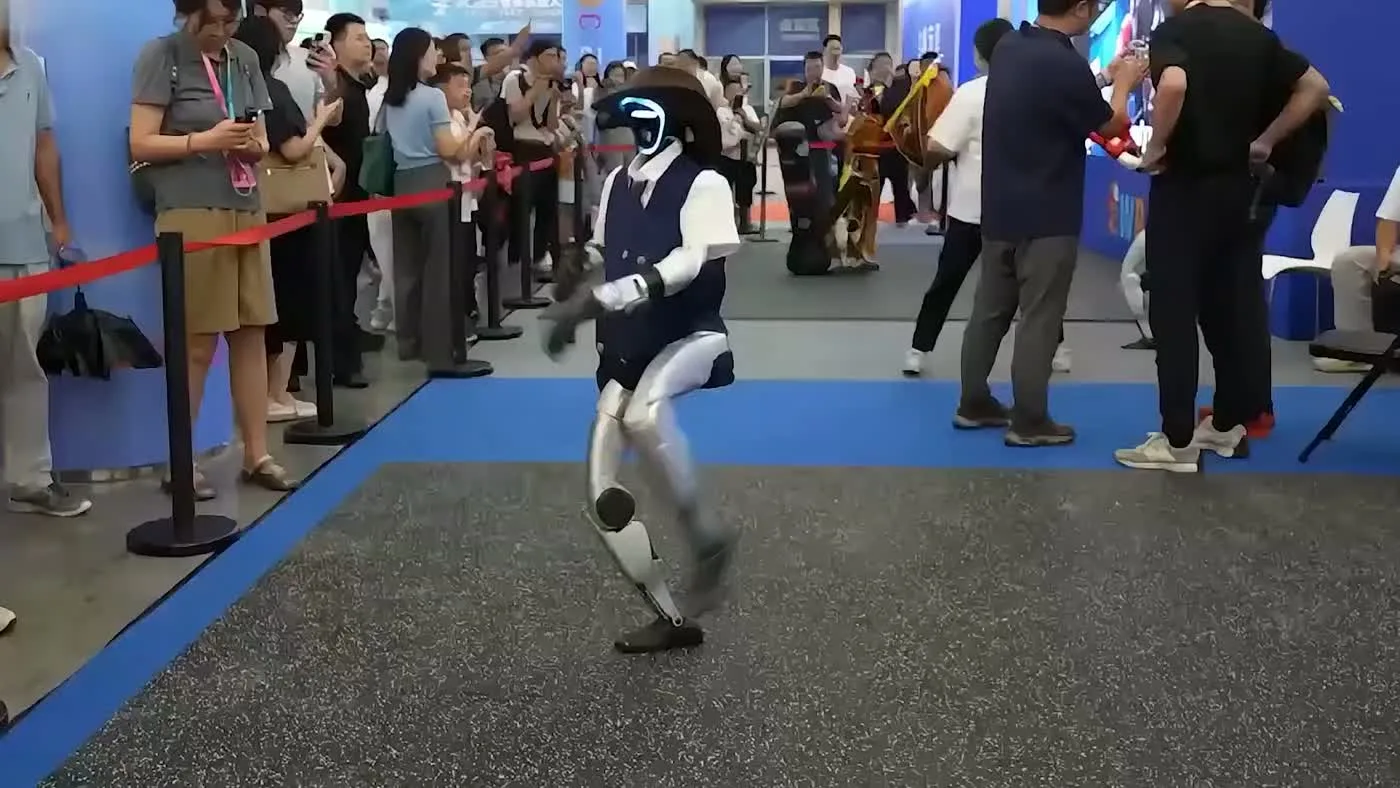
ZMProbots rents the Unitree G1. The H1 is not currently available for rental through our platform. That is not a gap — the G1 covers the overwhelming majority of event and commercial use cases that renters bring to us, and it does so at a scale and profile that works in most real-world venues.
Self-Service Rental
Starting from $299/day with a 3-day minimum. You receive the robot, the controller, and a pre-deployment checklist. Your operator runs the session. This tier suits experienced robotics teams, production companies with on-site technical staff, or university researchers who want hands-on time with the platform. See the G1 rental cost breakdown for what is and is not included at each tier, including shipping logistics and operator certification requirements.
Full-Service Event
A ZMProbots operator runs the robot at your event. Pricing is based on scope, location, and duration — request a quote. This option is the right fit for brand activations, product launches, and public demos where the client does not want to manage the technical side. For common questions about booking, minimums, and what to expect on delivery day, the humanoid robot rental FAQ covers the most frequently raised issues.
Regions
We operate across four regions: United States, Canada, Great Britain, and the EU. Availability varies by region and date. Lead times for Full-Service bookings are longer than Self-Service, particularly for international events, so planning ahead matters.
What about renting an H1?
The H1 is not on our fleet. If a customer specifically needs the H1 for a locomotion benchmark or a head-to-head research comparison, that is a conversation worth having — but for the vast majority of event and commercial briefs, the G1 does the job better in the spaces where people actually work. Its size, weight, and dexterity profile match what venues and audiences expect from a humanoid robot demonstration far more reliably than a 180 cm platform would.
People Also Ask
Is the Unitree H1 better than the G1?
It depends on the task. The H1 is taller, heavier, and faster (3.3 m/s vs 2 m/s), which makes it better for open-floor locomotion demonstrations. The G1 has more degrees of freedom (41 vs 18), dexterous hands, and a much smaller footprint, making it the stronger choice for interaction-heavy events, tight indoor spaces, and manipulation demos.
Can you rent a Unitree H1?
ZMProbots does not currently offer H1 rentals. Our fleet is built around the Unitree G1, which covers the majority of commercial and event use cases. If you have a specific H1 requirement, get in touch — but in most scenarios the G1 is the practical choice for events and demonstrations.
What is the top speed of the Unitree H1?
The H1 reaches 3.3 m/s according to Unitree’s official product specifications, which they claimed as a world record at the time of the robot’s release. The G1 tops out at 2 m/s.
How tall is the Unitree G1 compared to the H1?
The G1 stands 127 cm (about 4 ft 2 in). The H1 stands approximately 180 cm (about 5 ft 11 in). The height difference is significant for venue planning — the H1 approaches adult human scale, while the G1 is compact enough for most indoor environments without requiring special clearances beyond an 80 cm doorway.
Which Unitree robot is better for events?
For most events — trade shows, brand activations, retail pop-ups, product launches — the G1 is the better fit. It is crowd-friendly in scale, has dexterous hands for interaction, and fits through standard doorways. The H1 suits large-scale outdoor or arena demos where physical presence and locomotion speed are the brief.
The Bottom Line
The Unitree G1 and H1 are not rivals — they are tools built for different jobs. The H1 is a locomotion platform: tall, fast, designed to cover ground and command attention in open spaces. The G1 is an interaction platform: compact, dexterous, with 41 degrees of freedom and hands that can actually hold things. For the event and commercial use cases that drive most rental demand — trade shows, activations, indoor demos, campus tours — the G1 is the right robot. If you are planning a demo and want to understand which configuration and service tier fits your brief, robot rental for events is the starting point.