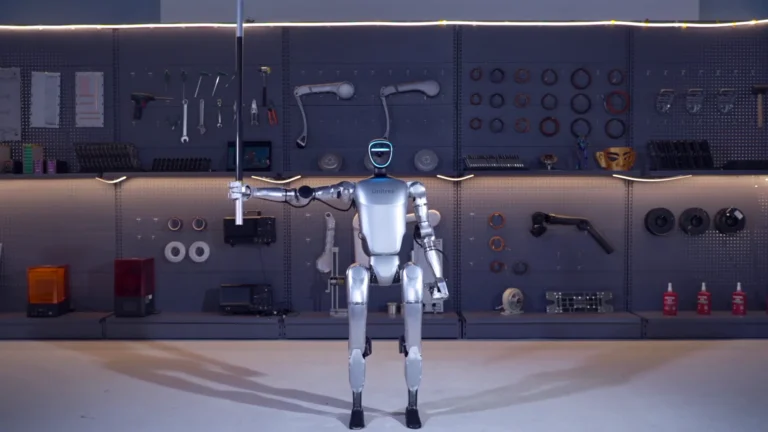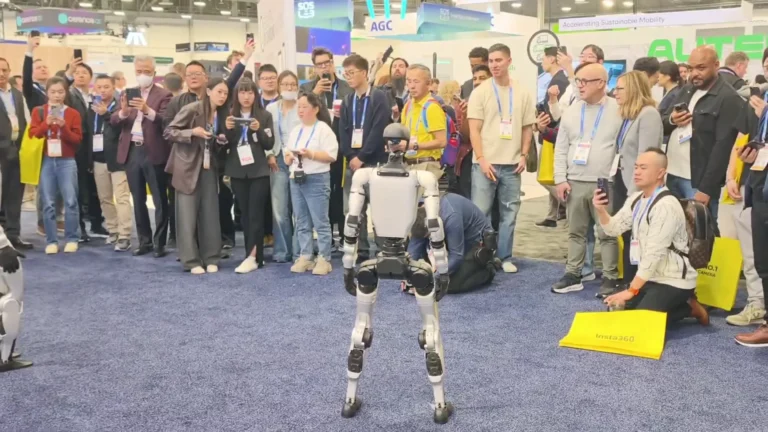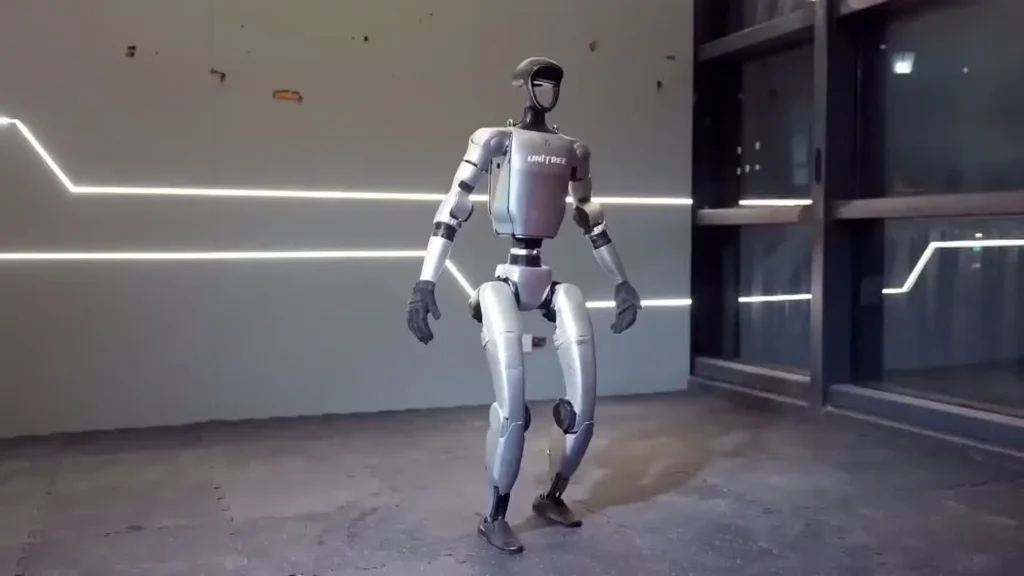
In 2026, our team runs unitree g1 retail activation deployments in shopping malls, flagship stores, and pop-up retail events across all four of our service regions. The pattern is consistent: we position the G1 in a high-traffic zone, the operator manages crowd interactions, and shoppers stop to watch, ask questions, and photograph the robot. That dwell time is the activation’s primary deliverable. The organic social content shoppers create is the second.
Table of Contents
At the UFC Press Day
What You Should Know
- Retail activations typically run 4-6 hours per day with rotation breaks for charging
- The G1 draws significant foot traffic — plan the activation zone for crowd management
- Shopping center management requires advance notice and usually a venue walkthrough
- Full-Service Event is standard for retail — the operator handles crowd interaction
- Multi-day activations (3+ days) can use Self-Service tier with trained in-store staff
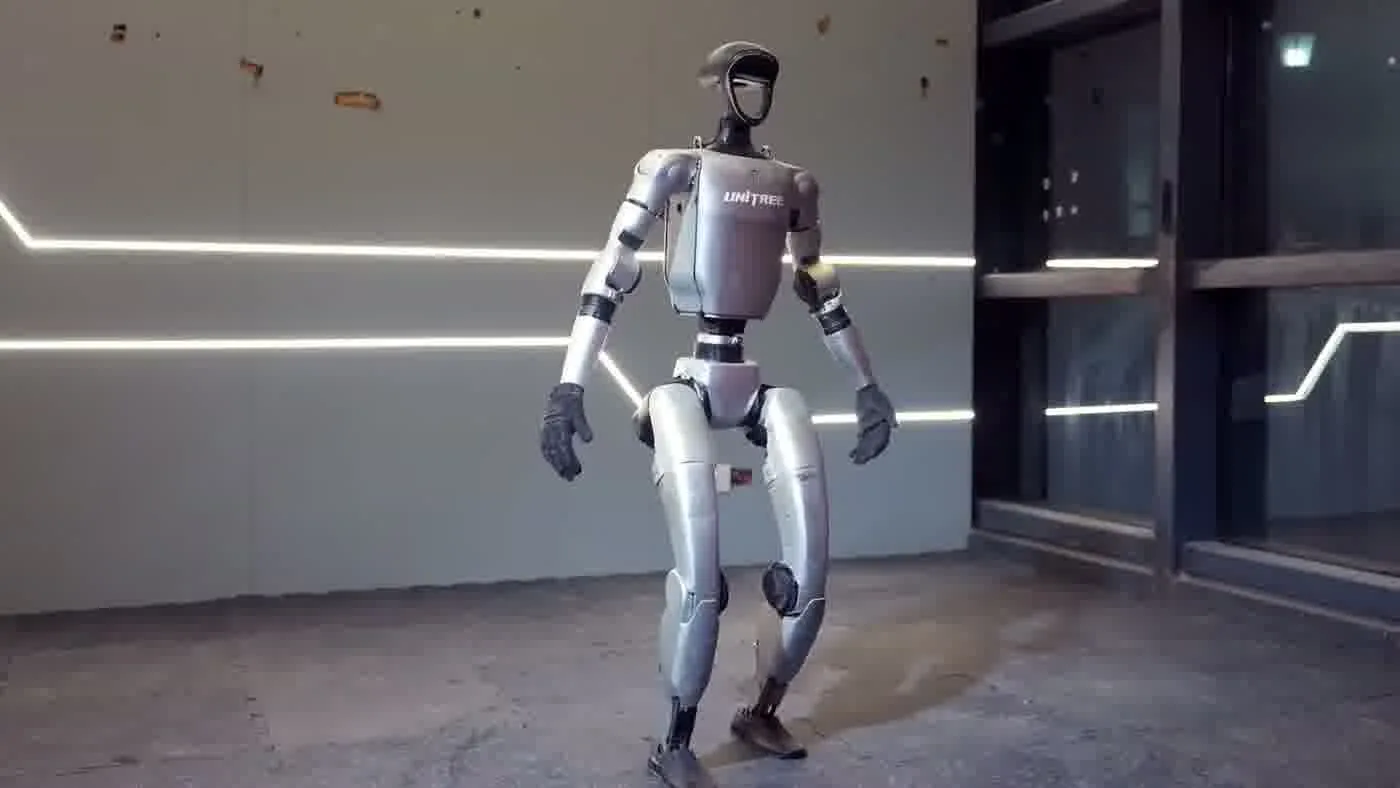
The G1 is 127cm tall and weighs 35kg — noticeable in any retail environment but compact enough to fit in standard aisle widths and store entrances without special clearance. Its 2-hour battery means a full activation day typically runs two or three operating cycles with 45-minute charge breaks in between. For brands planning their first unitree g1 brand activation, these operational rhythms are the first thing to plan around — not the last.
How Retail Activations Work
A standard retail deployment starts with positioning. The G1 goes where foot traffic already exists — atrium crossings, store entrances, beside a featured product display, or at the mouth of a pop-up event space. The operator does not place the robot in a corner and hope people find it. Position drives everything: the crowd geometry, the sightline from approaching shoppers, the photograph angle, and the operator’s ability to manage interaction safely.
Operator Role in Retail
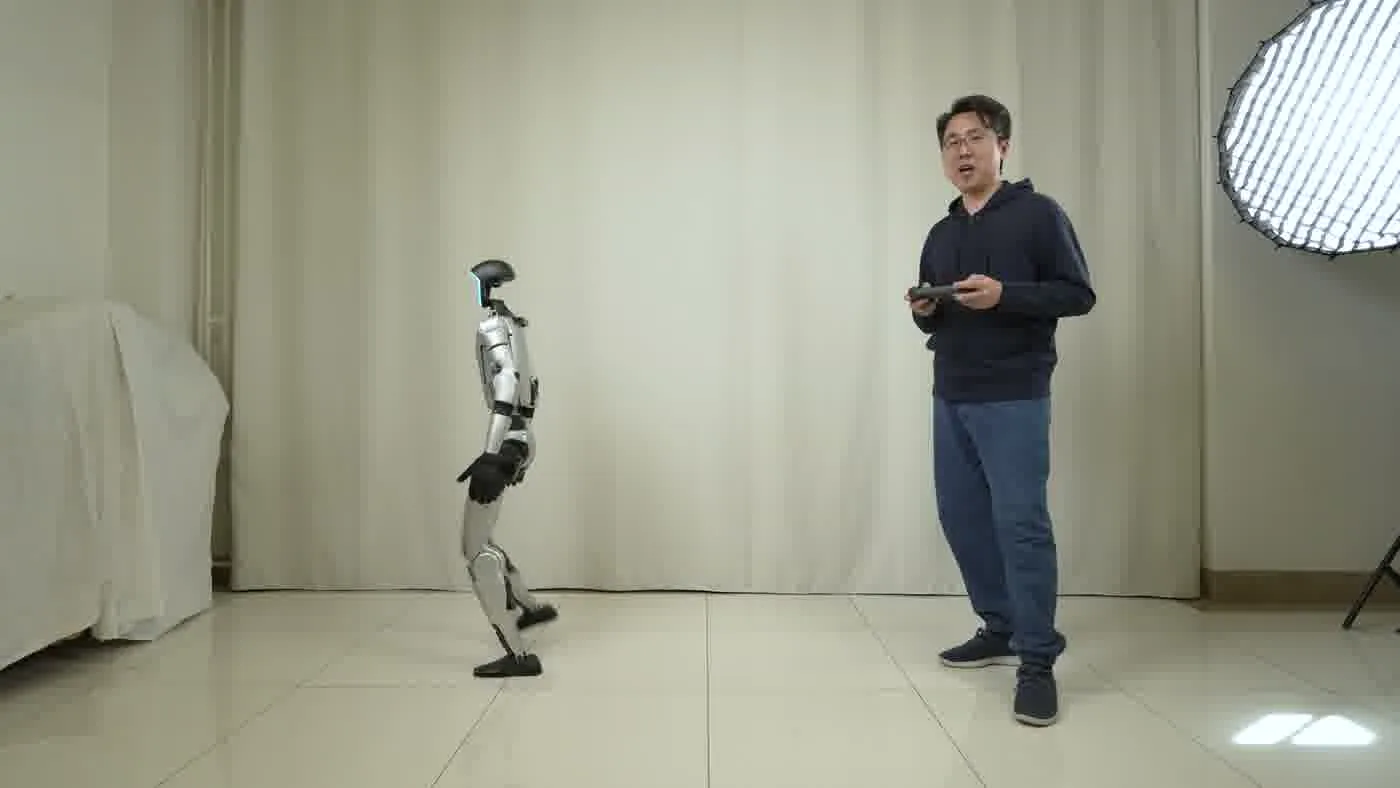
In a retail environment, the ZMProbots operator does three things simultaneously: runs the G1 through gesture and interaction sequences, manages the crowd forming around the robot, and watches for conditions that require a pause — a stroller moving into the activation zone, a child attempting to grab the arm, a floor surface change the robot is not positioned to handle. This is why Full-Service Event is the standard for retail. The interaction density in a busy shopping center is higher than most corporate event environments, and it is less predictable.
What Shoppers Do
The behavioral pattern is consistent across retail environments. A small group stops first — usually 2-4 people who notice the robot from a distance. They approach, photograph, sometimes speak to the operator or reach toward the G1. That group becomes a signal to other shoppers that something worth stopping for is happening. Within two or three minutes of the first group forming, a larger crowd builds. In a high-traffic mall atrium, that crowd can reach 30-50 people before the initial group disperses.
The dwell time extension is real and measurable. Shoppers who would have walked through the activation zone in 15 seconds instead spend 3-5 minutes in it. For brands with adjacent product displays or nearby retail space, that time extension translates directly to product exposure. The event industry publication Event Marketer has documented this pattern across multiple types of experiential activations — robot deployments follow the same behavioral mechanics.
Content Creation Opportunities
Shoppers photograph and film the G1 at nearly every retail activation. This organic content creation is one of the primary reasons brands choose retail over trade show environments for first-time deployments — the audience is general public rather than industry professionals, and general-public content tends to reach a broader social audience. Our post on why people film humanoid robots breaks down the specific behavioral triggers that drive this — useful context for any brand planning to make content capture part of the activation brief.
Shopping Mall vs Flagship Store
These two retail environments look similar on a brief — “we want the robot at our store” — but they operate very differently from a logistics standpoint.
Shopping Mall Deployments
A mall deployment means working in a shared space managed by a property owner who is not your client. That property owner has their own rules about what can happen in common areas, how it can be set up, and what advance notice is required. In practice, most regional and super-regional malls require a formal request to the marketing or events team, a vendor documentation package on file, and often a walkthrough of the activation space before approval is granted. Lead time for mall common-area approval is typically 2-4 weeks. Same-week activation requests in mall common areas almost never clear.
Power access in mall common areas varies. Some atriums have flush-mounted floor outlets; others require a cable run from a perimeter retail unit. We scope this in advance and bring appropriate cable management for whichever setup the space requires. The G1’s 45-minute charge cycle means the cable run is in use for significant portions of the activation day — it needs to be managed safely, which means no exposed cable across pedestrian paths.
Flagship Store Deployments
A flagship store deployment is operationally simpler in most respects. The client controls the space, so there is no third-party property approval process. The store team already knows the floor plan, power outlet locations, and customer traffic patterns. Setup is faster, the operator has more flexibility to adjust robot position mid-activation based on where foot traffic is actually moving, and the brand backdrop integration is easier to execute because the store’s own visual environment is already brand-consistent.
The trade-off is foot traffic volume. A flagship store in a prime retail location has significant walk-in traffic, but it is self-selecting — people who were already coming to the store. A mall common-area activation catches shoppers who were heading somewhere else entirely. For brands where the goal is new-audience reach, the mall environment typically produces a broader exposure profile. For brands where depth of engagement with existing customers matters more, the flagship environment is often the better choice.
The broader why brands rent humanoid robots post covers the decision framework for different activation contexts — retail is one of several environments covered there in detail. The experiential marketing trade publication BizBash also publishes useful coverage of retail activation trends, including how brands are differentiating experiential executions from standard in-store marketing.
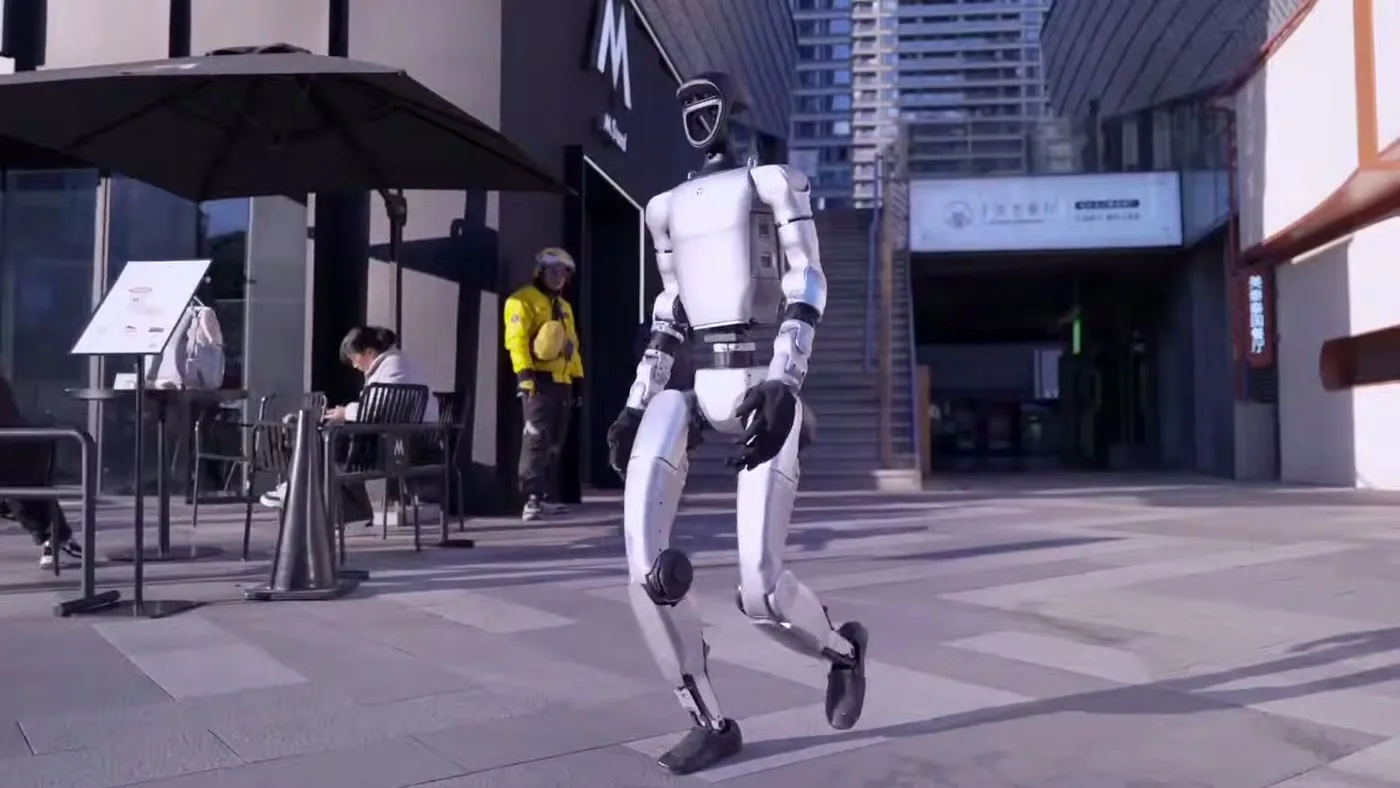
Making the Activation Content-Rich
A retail activation that produces only foot-traffic dwell time is a partial win. Brands that plan the content layer in advance get substantially more value from the same activation day. Here is what that planning looks like in practice.
Designated Photography Zone
The single most effective content optimization for a retail activation is establishing a designated photography position. This means identifying one spot in the activation zone where the lighting is good, the background is brand-consistent, and the framing works in vertical phone format — the format nearly every shopper uses for social content. When this position is obvious — slightly set apart from the main activation area, with good sightlines and a clear background — shoppers use it without prompting. The resulting images are more consistent in quality than random crowd shots, and they look better when shoppers post them.
Brand-Integrated Backdrops
A branded step-and-repeat or a clean brand-logo display positioned behind the G1 appears in every shopper photograph. This is standard practice for red-carpet and launch events — it works identically well in retail. The backdrop does not need to be elaborate: a clean branded banner at the right height and distance from the robot’s default position is sufficient. Every organic post that includes the backdrop carries the brand visual without any additional production cost.
Social Handle Visibility
The brand’s social handles and any activation hashtag should be visible in the activation zone — on the backdrop, on a small standing display, or on the operator’s materials. Shoppers who want to tag the brand in their posts will do so if the handle is visible. If it is not visible, most will not search for it. This is a detail that takes five minutes to plan and meaningfully increases the volume of tagged posts the brand receives from the activation.
Video Capture Protocol
If the brand wants owned video content from the activation — not just shopper-generated content — the video capture position needs to be planned before setup. A stationary camera on a tripod at the edge of the activation zone, aimed at the G1 and the crowd forming around it, captures the social proof moment that is difficult to recreate in a controlled production environment. The authenticity of real shoppers reacting to the robot in a retail setting is something a staged video shoot cannot replicate. The Unitree G1 rental operations playbook covers how we set up capture positions for different deployment types.
For brands approaching this as part of a broader event marketing program — not just a single retail activation — the robot rental for product launches post covers how retail activations fit into a multi-touchpoint launch strategy. The technical context for why humanoid robots generate this level of organic content response is covered in depth at IEEE Spectrum, which has published extensive reporting on human-robot interaction in public and commercial spaces.
People Also Ask
How long does a Unitree G1 retail activation typically run per day?
Most retail activations run 4-6 hours of active deployment per day. The G1 has a 2-hour battery cycle, so a full activation day includes two to three operating periods with 45-minute charge breaks in between. The charge breaks are typically scheduled during lower-traffic periods — mid-morning before peak hours, or early afternoon. Our operator manages battery rotation as part of the Full-Service Event scope.
Does ZMProbots handle mall management approvals?
We advise on the approval process and provide the documentation mall management typically requires — including operator credentials and a general vendor certificate on file — but the formal approval request is submitted by the client or their event agency, since the commercial relationship with the property is theirs. We flag this requirement early in the booking process and provide a standard documentation package to speed up the approval. Lead time of 2-4 weeks for mall common-area activations is standard.
What is the difference between Self-Service and Full-Service for retail?
Full-Service Event includes a trained ZMProbots operator for the full activation day — this person manages crowd interaction, runs the G1 through its sequences, handles battery rotation, and responds to any operational issues. This is the standard model for retail because retail crowd dynamics are less predictable than a controlled event environment. Self-Service Rental — from $299/day with a 3-day minimum — is available for multi-day in-store activations where the client has a trained staff member who has completed G1 operator certification.
Can we use the G1 in a pop-up retail event outside a permanent store?
Yes. Pop-up retail events are one of the most common retail deployment types we run. The activation works in any space with adequate floor area for the robot and a safe crowd perimeter — typically 3×3 meters minimum for the activation zone itself. Power access is the main variable to confirm in a pop-up environment. Our team can work with both hardwired power and portable battery solutions for charge rotation, depending on the venue.
How does a retail activation fit into a broader marketing campaign?
A retail activation works as a standalone awareness event or as part of a multi-channel campaign. Brands running product launches often use a retail activation to generate organic social content during launch week — shopper posts and videos reach audiences the brand’s own channels do not. The activation can be coordinated with paid social amplification, in-store promotional material, and PR timing. The humanoid robot for events post covers how activations fit into broader event program planning.
The Bottom Line
A Unitree G1 retail activation delivers two things a standard in-store promotion does not: extended dwell time in the activation zone and organic social content at scale. Shoppers stop because the robot is worth stopping for. They photograph because the moment is worth sharing. The brand gets foot traffic extension, earned media, and a content library from a single activation day.
Planning makes the difference. Mall common-area approvals take 2-4 weeks. Power access needs scoping in advance. The photography zone, backdrop, and social handle visibility take minutes to plan and meaningfully change the content output. These are the details our Full-Service Event team handles on every retail deployment. The place to start is our robot rental for events page — fill in your activation date, venue type, and region to begin the conversation.