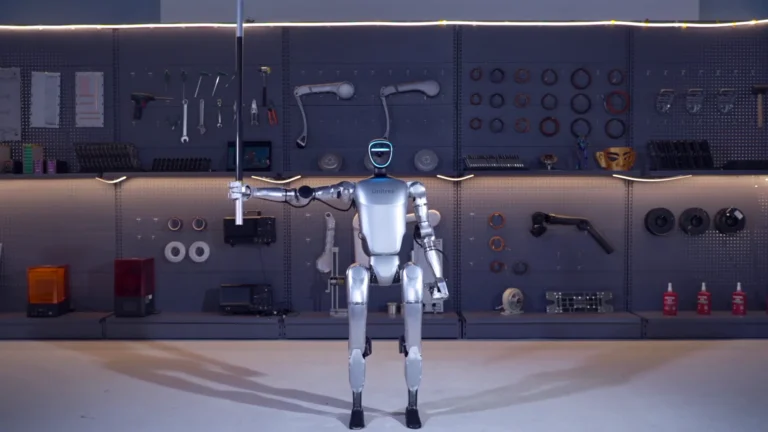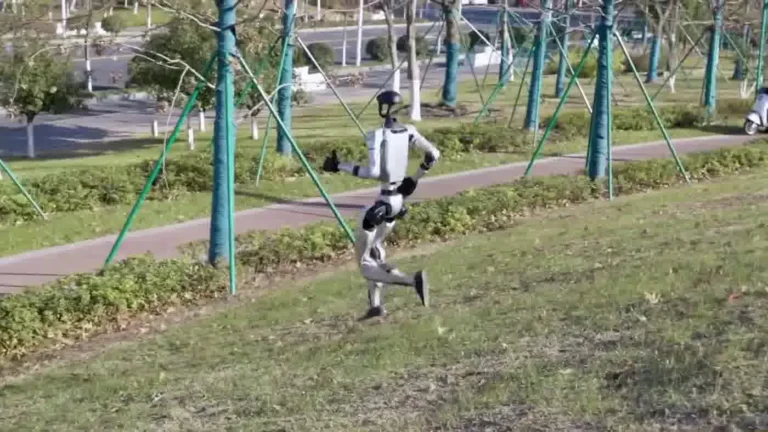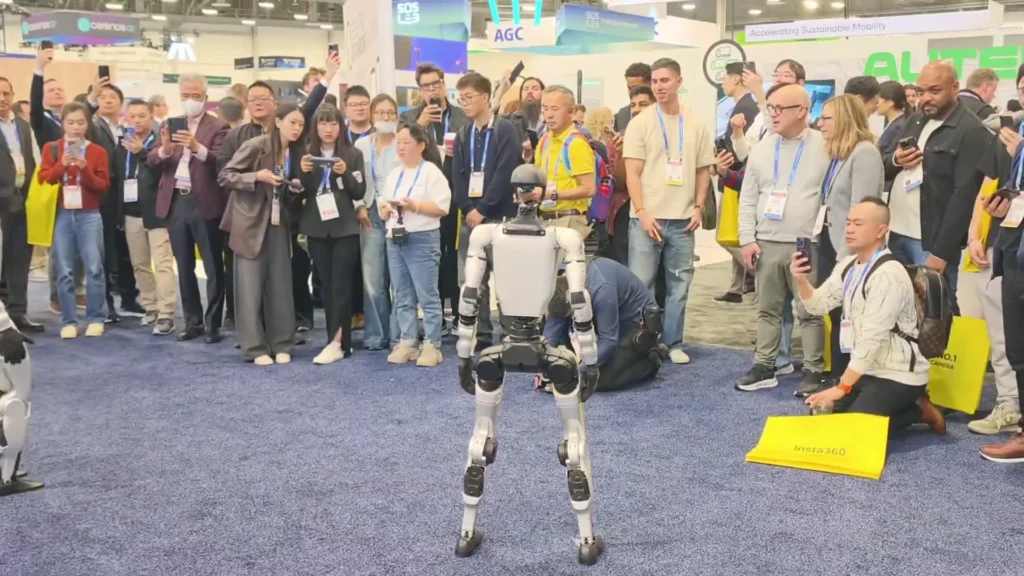
Our robot rental operation in Las Vegas in 2026 covers everything from trade shows on the Strip to brand activations at hotel ballrooms and outdoor pop-ups. Las Vegas is one of our busiest markets — CES, NAB, and AWS re:Invent alone keep us deployed here more than almost anywhere else in the United States.
Table of Contents
Hands-On at Web Summit Lisbon
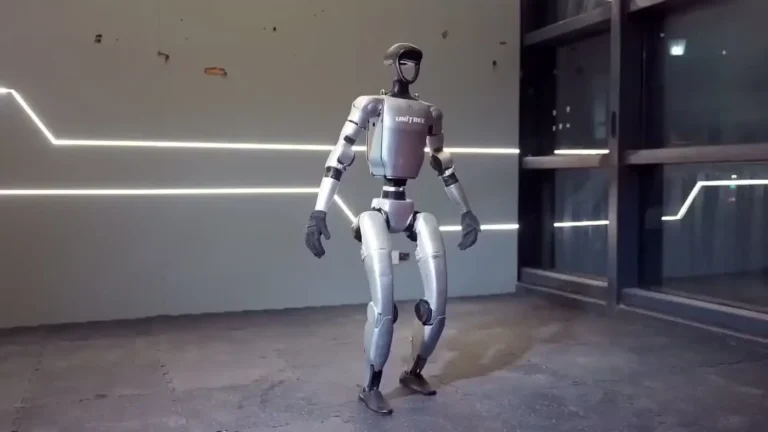
Unitree G1 — At a Glance
- 127 cm tall | 35 kg
- 41 degrees of freedom
- Five-finger dexterous hands
- 2-hour operational battery
- Onboard NVIDIA Jetson Orin
- Available to rent from $299/day
What You Should Know
- Las Vegas is one of our highest-volume deployment cities for robot rental
- Convention venues like the LVCC have specific exhibitor rules about moving technology displays
- Hotel ballroom bookings need venue coordination for power and loading dock access
- Trade show booth robot rental in Las Vegas typically uses the Full-Service Event tier
- Advance booking for CES, NAB, and other major shows is 4-8 weeks minimum
These points come directly from our operator experience running the G1 at Las Vegas events throughout 2025 and into 2026. Each one represents a friction point we have seen first-hand — and that we now build into every Las Vegas booking from the start. For a broader look at how trade show logistics work across venue types, the trade show robot rental guide covers the full picture beyond Las Vegas specifically.
CES: What Robot Rental Looks Like at the World’s Biggest Tech Show
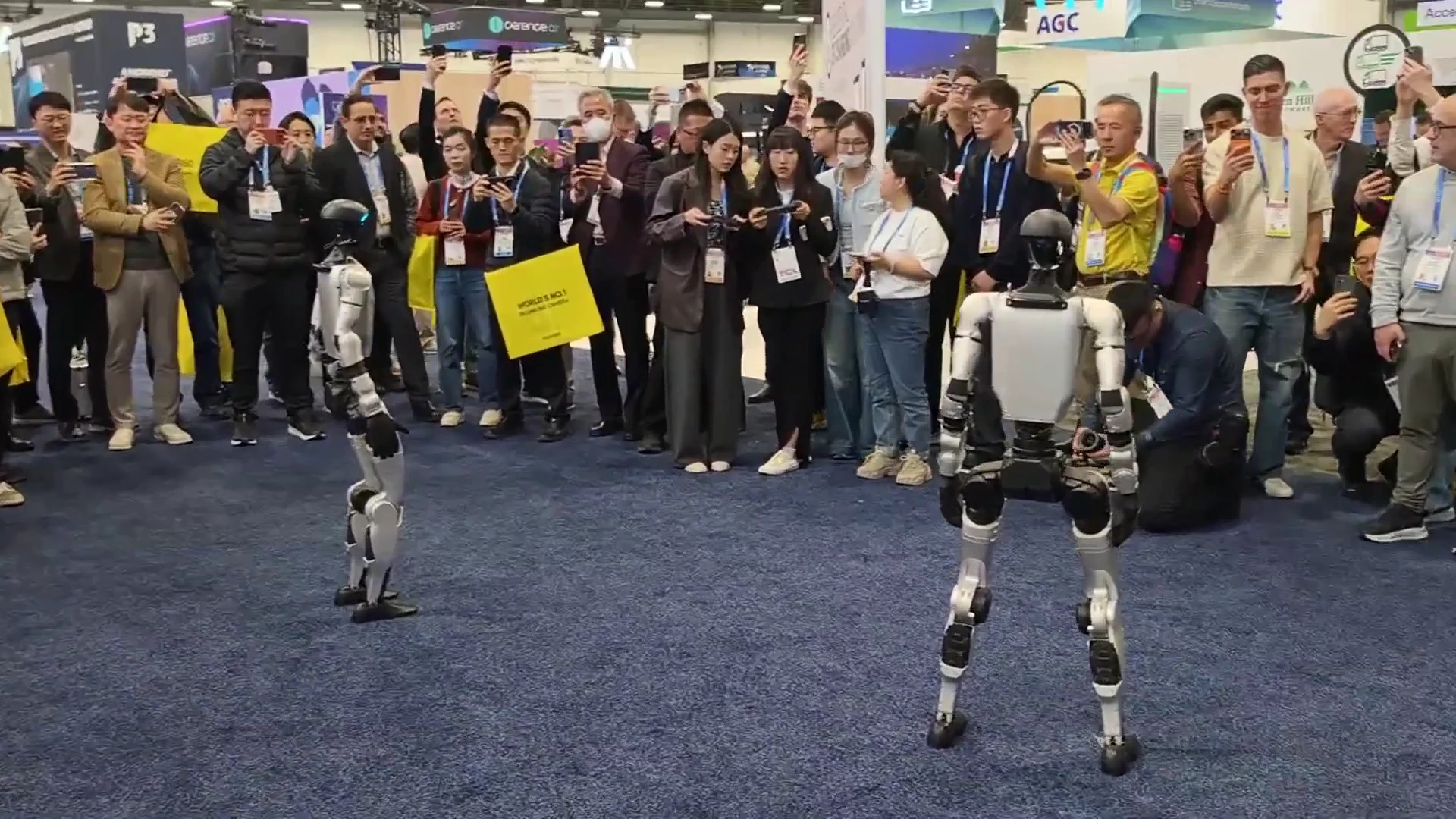
CES is the most complex robot rental environment we operate in. The Las Vegas Convention Center during CES week runs on a schedule so compressed that a single load-in problem can cost you half your first operating day. Here is what our team does to make sure that does not happen.
Load-In and Credentialing
Every member of our operator team working CES needs a valid exhibitor badge — not a press pass, not an attendee badge. We sort this with the client at least three weeks before the show opens. The LVCC has freight elevator windows during setup days that fill quickly; if you are in a hall with a second floor or basement storage, you need to book your window in advance through the exhibitor services portal. We handle this coordination for all Full-Service Event bookings.
Power at the LVCC
The G1 runs on a 2-hour battery cycle. At a full-day CES booth, that means three to four charge rotations across a standard 8-hour show day. Most LVCC booths above a certain square footage include a power drop — but the circuit location relative to your booth position matters. We scope this in the booth layout review before CES setup week begins. A charge station at the back of a 1,000 square-foot island booth means the robot is off the floor for 45-60 minutes per cycle. A charge station at the perimeter of a smaller inline booth can be invisible to attendees entirely.
Attendee Interaction on the Convention Floor
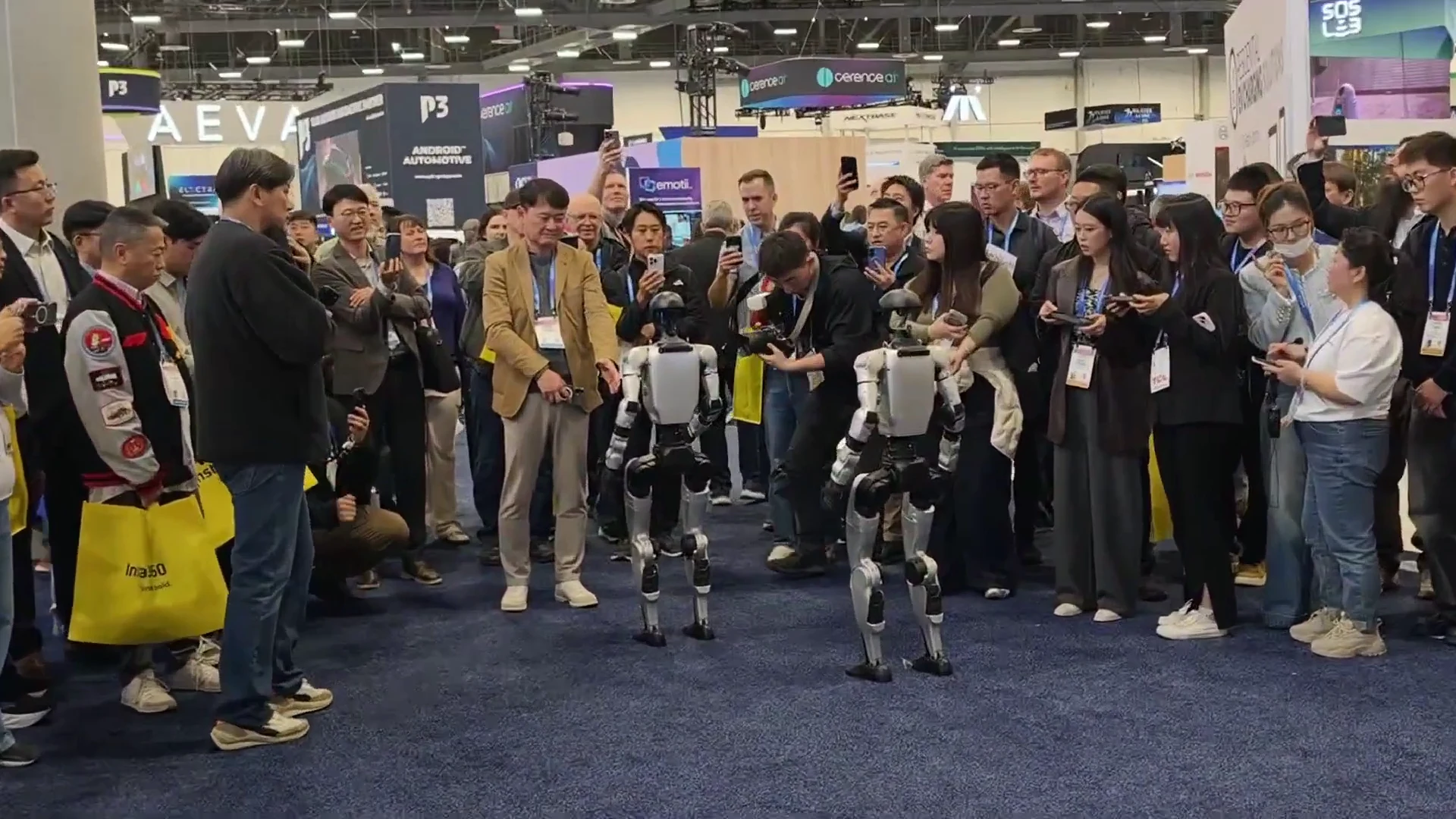
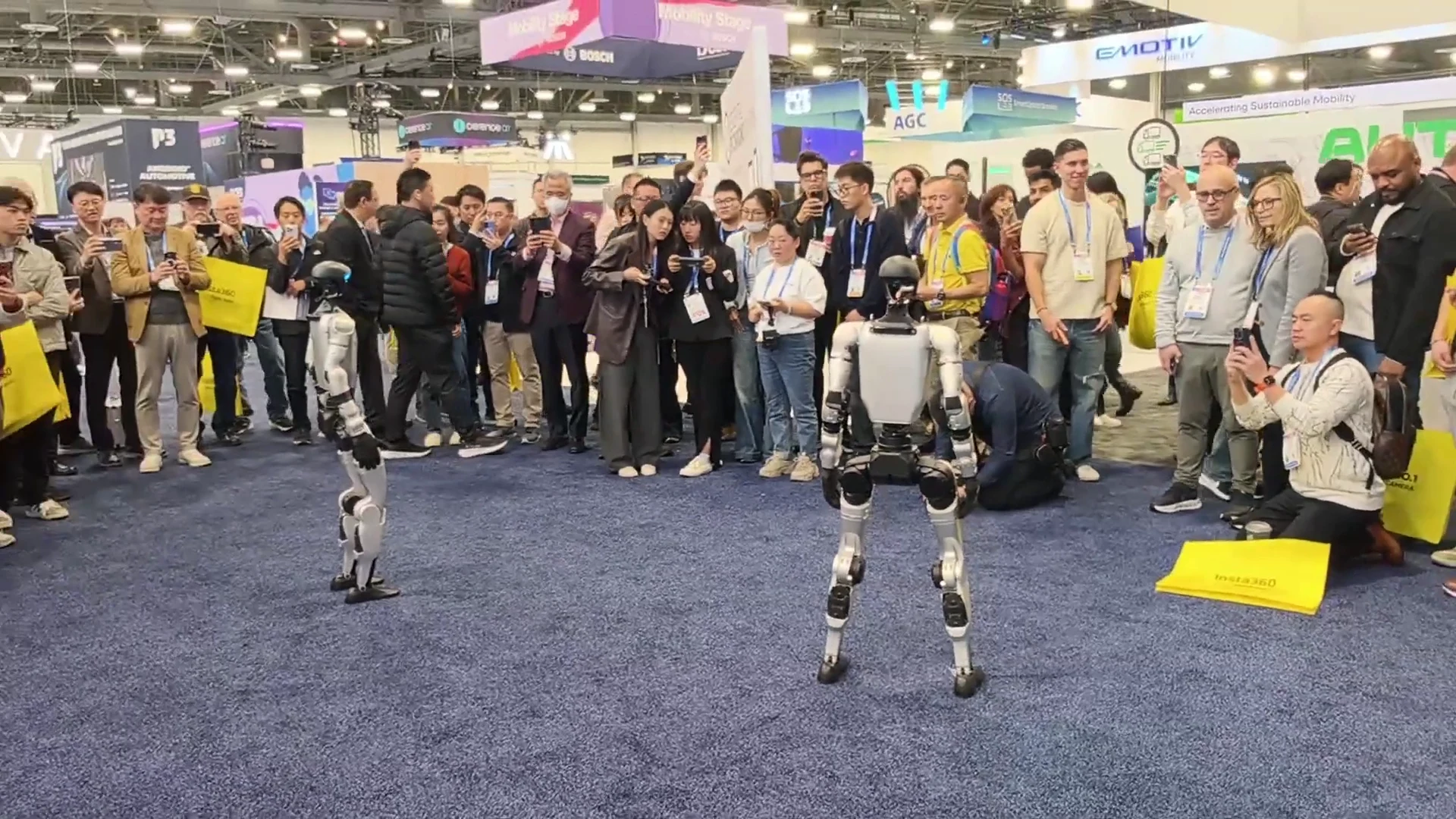
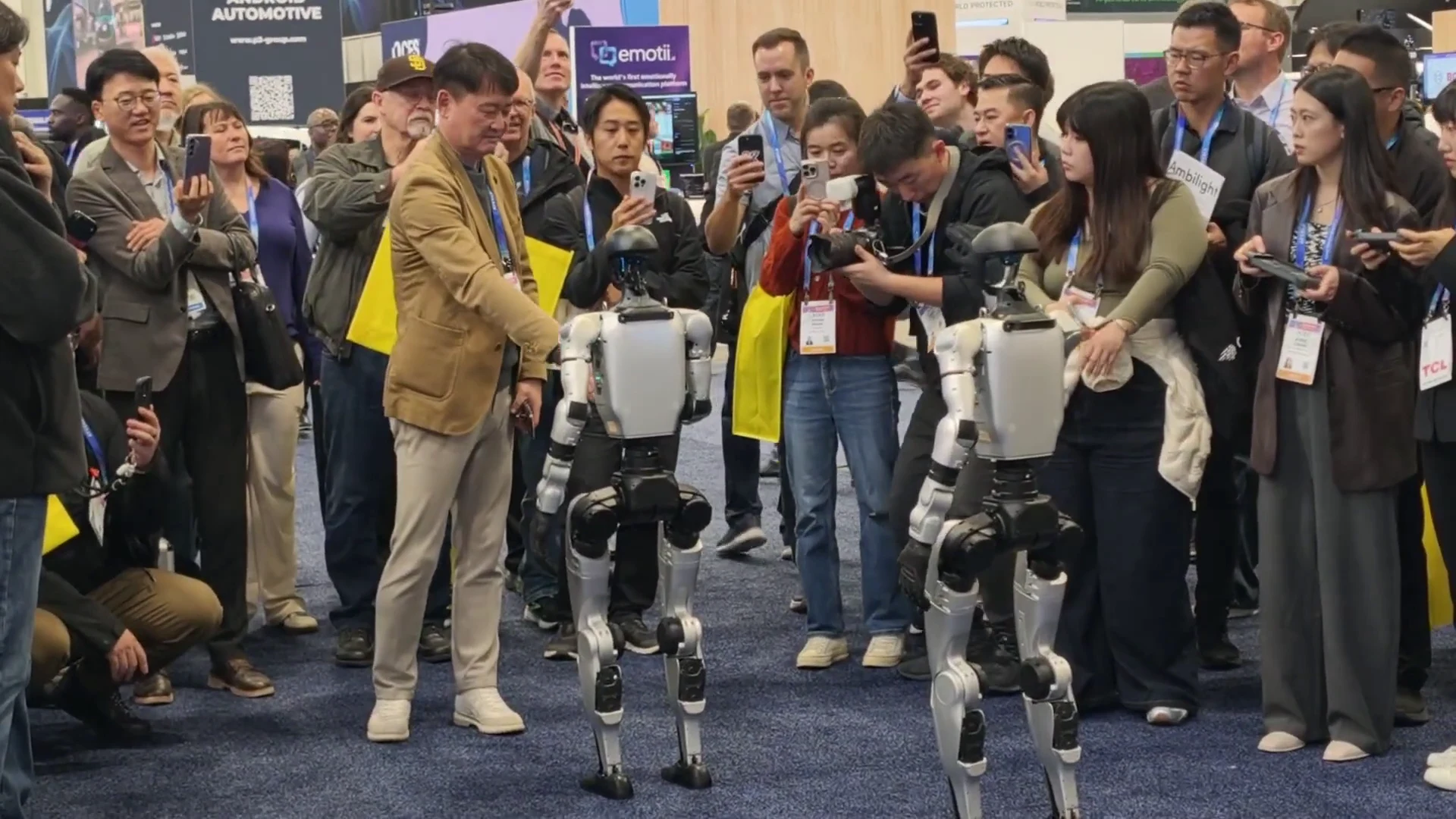
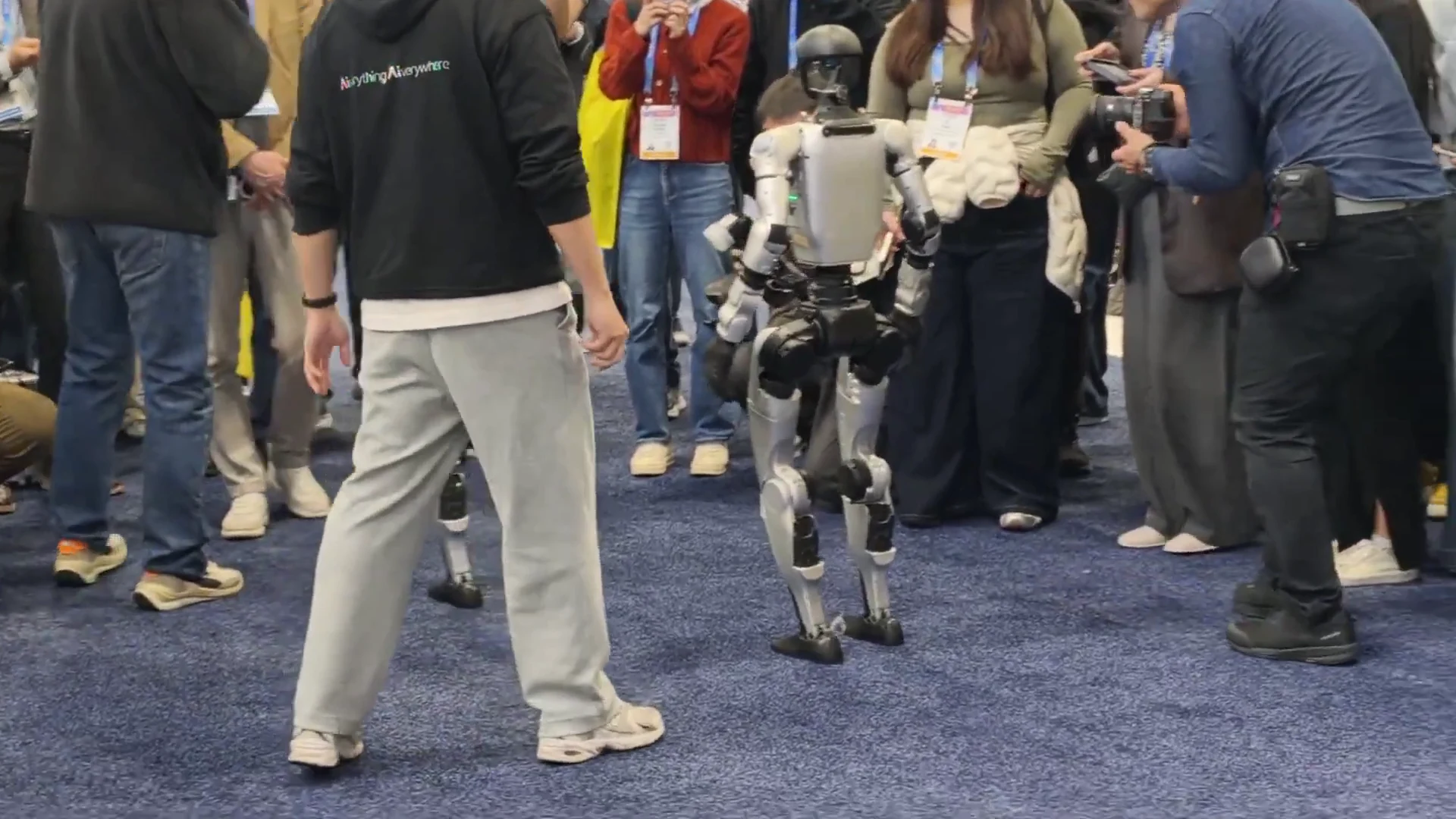
CES attendees are sophisticated. Many of them have seen humanoid robots before — at prior CES shows, at other trade events, or simply on video. That means the interaction bar is higher than at a standard corporate event. Our operators run a tighter interaction script at CES: the G1 leads with gesture sequences, transitions to handshake engagements, and responds to questions through a pre-loaded display panel rather than speaker audio that gets lost in convention floor noise. We have found this produces better crowd dwell times than a purely autonomous-looking demonstration, because attendees want to feel they are interacting with the robot rather than watching it perform.
Social Media Capture
The moments that earn booth traffic at CES are almost always driven by social posts from attendees who stopped by the day before. We designate one position in the booth as the photo position — consistent backdrop, consistent lighting if the client has brought any, and the G1 in a posture that works in a vertical phone frame. Attendees figure this out within minutes. The resulting social content drives more foot traffic to the booth than any other single variable we can control. For exhibitors who want to understand how this fits into a broader trade show strategy, Exhibitor Magazine publishes annual research on booth engagement drivers that puts this in a wider industry context.
Our full breakdown of trade show robot operations across show types — not just CES — is in the G1 robot at trade shows post, which covers NAB, AWS re:Invent, and mid-size industry shows in detail.
Hotel and Ballroom Events
Las Vegas hotel properties — the Bellagio, MGM Grand, Venetian, Wynn, and their peers — host a significant share of the corporate events our team runs. These are generally easier than CES from a credentialing standpoint but come with their own set of logistical requirements that catch clients off guard if they have not done this before.
Loading Dock Access
Every major Strip hotel has a loading dock, and every loading dock has its own check-in process. Some venues require a vendor equipment brief from our company before the G1 is allowed on property — we have a standard one-page document on file that covers our full operator network, but the client’s venue coordinator needs to request this at least five business days before the event, not the day before. We flag this on every hotel booking confirmation.
Freight Elevator Timing
The G1 is 35kg and 127cm — it fits in a standard freight elevator without issue. What does not fit is a last-minute request. Hotel freight elevators during corporate event setups are shared with every other exhibitor or vendor in the property. We request a dedicated window from the venue coordinator as part of our load-in planning, typically well ahead of the event start time. If the client’s venue coordinator has not confirmed the window, we follow up directly. This is part of what Full-Service Event covers.
Ballroom Power Setup
Hotel ballrooms almost always have power available, but the location of drops relative to the event floor plan matters. We ask for the floor plan at least two weeks before the event so we can identify the charge station position. In ballroom setups, the G1 typically operates in a dedicated activation zone rather than a full room roam — this concentrates the interaction, makes the photography cleaner, and avoids the logistics of managing a moving robot through a seated dinner setup.
Security Check-In
Some hotel properties require security to inspect equipment before it enters the event floor. This is more common at properties hosting high-profile corporate events. Our team carries a one-page technical brief on the G1 that satisfies most security inspection requirements — what it is, what it weighs, what it runs on, and that it does not contain cameras or recording equipment in the standard configuration unless the client has specifically requested that capability. We have never had a G1 turned away at a hotel security check.
For teams planning corporate events of this type in detail, the robot rental for corporate events post covers the full planning timeline from first inquiry to post-event debrief.
Brand Activations and Pop-Ups
Not every Las Vegas robot rental happens inside a convention hall or hotel ballroom. Brand activations — retail pop-ups, hotel lobby installations, outdoor experiential events during show weeks — represent a meaningful share of our Las Vegas work, and they come with a different set of logistics.
Indoor Pop-Ups and Lobby Activations
Hotel lobby activations are some of the most effective deployments we run. A humanoid robot in a hotel lobby during CES week, when the lobby is packed with tech-industry attendees, generates extraordinary foot traffic and organic social content. The logistics are simpler than a ballroom event — no freight elevator scheduling, typically a shorter setup window — but the robot is operating in a public-facing space with no fixed perimeter, which means our operator is managing crowd flow continuously rather than working within a defined activation zone.
Self-Service Rental is available for lobby activations where the client has a qualified operator. Self-Service starts from $299/day with a 3-day minimum. For teams without their own operator, Full-Service Event is the appropriate tier — our operator handles crowd management, battery rotation, and incident response throughout the activation.
Outdoor Activations
Outdoor activations in Las Vegas are logistically demanding for a different reason: the desert climate. Ambient temperature during summer months can exceed what is safe for sustained G1 operation. We assess outdoor activation requests on a case-by-case basis and require a shaded shelter with active cooling for any outdoor Las Vegas deployment between May and September. Winter show season — CES in January, for example — is generally suitable for outdoor work if the activation space is sheltered from wind.
Permit Considerations
Outdoor activations in public spaces in Las Vegas — the Strip sidewalk, Fremont Street, or other public-right-of-way areas — require a Special Events permit from the City of Las Vegas or Clark County, depending on the exact location. This is the client’s responsibility, but we flag it on every outdoor activation inquiry. Private property outdoor activations (hotel courtyards, parking structures repurposed as event space) typically do not require a city permit but do require property management approval.
The event industry publication BizBash covers brand activation trends and logistics in depth — their coverage of Las Vegas experiential events is useful context for teams planning activations outside the convention hall environment. For more on our operational approach to humanoid robot events of all types, the humanoid robot for events post covers the full deployment framework.
Venue-Specific Considerations
Las Vegas is not a single venue — it is a city with dozens of distinct event spaces, each with its own rules. Here is what our team has learned about the major ones.
Las Vegas Convention Center (LVCC)
The LVCC is the anchor for CES, SEMA, and several other major shows. The exhibitor services team at the LVCC is professional and responsive if you contact them in advance, and difficult to reach during setup week when everyone needs something at once. Key facts for G1 deployments: the West Hall and Central Hall have different freight access points; the South Hall loading dock fills early on first setup day; and the LVCC requires that moving technology displays be either stationary or operated by a certified technician during show hours. Our Full-Service operator fulfills the technician requirement.
Power at the LVCC is ordered through the official exhibitor services portal for the relevant show. Standard 20A circuit is sufficient for G1 charging. If you are ordering power through a third-party contractor rather than the official show provider, confirm the circuit is dedicated — shared circuits on a busy exhibit floor can cause charging interruptions.
Mandalay Bay Convention Center
Mandalay Bay hosts a different show calendar than the LVCC — SHOT Show, various medical and pharmaceutical conferences, and a strong corporate events program. The venue’s freight access runs through a dedicated exhibitor entrance on the south side of the property. Load-in timing for Mandalay Bay conventions tends to be more relaxed than LVCC’s compressed CES schedule, which makes it one of our smoother Las Vegas venues to work in.
MGM Grand Garden Arena and Conference Center
MGM Grand’s conference center is large enough for mid-size conventions and corporate events. The venue coordinator process here is thorough — they require equipment lists and operator credentials before issuing venue passes. We have run multiple G1 deployments at MGM Grand and the process, once the paperwork is in order, is reliable. The conference center’s power infrastructure is strong, with dedicated circuit drops available in most meeting spaces.
Venetian and Palazzo Convention Center
The Venetian Expo (formerly Sands Expo) is another major Las Vegas convention venue hosting ISE-adjacent shows and a range of tech conferences. Access here requires coordination with a dedicated exhibitor services contact — the Venetian Convention and Expo Center assigns a contact to each exhibitor for setup coordination. Our team initiates contact with this person two weeks before any show we are working at the Venetian.
For the full operational framework our team uses across all venue types — not just Las Vegas — the Unitree G1 rental operations playbook documents our standard procedures from booking confirmation through post-event debrief. If you are planning a Las Vegas deployment with a tight timeline, that post is the right starting point.
IEEE Spectrum has covered the broader context of humanoid robots operating in public and commercial environments — useful background reading for clients who want to understand where the technology stands and why venue operators are increasingly familiar with what we are asking permission to bring onto their floors.
People Also Ask
How far in advance do I need to book robot rental for CES?
For CES, we require a minimum of 4-8 weeks advance booking. CES is our highest-demand week of the year in Las Vegas — units are committed to clients well before the show opens, and the logistical coordination (badge credentialing, freight elevator windows, power ordering) cannot be done in the week before the show. If you are planning a January show, start your booking inquiry in October or November.
What does Full-Service robot rental include in Las Vegas?
Full-Service Event in Las Vegas includes the Unitree G1 robot, a trained ZMProbots operator for the full event day, transport to and from the venue, load-in and load-out labor, battery rotation management, and all venue coordination we have described in this post — freight elevator scheduling, security check-in, power setup. The rate is quoted per project based on event duration, location, and scope. You can request a quote on the robot rental for events page.
Can we run the robot on the LVCC convention floor without a ZMProbots operator?
Self-Service Rental requires a qualified operator on the client side. The LVCC and most Las Vegas convention venues require that moving technology displays be operated by a certified technician at all times during show hours. If your team includes someone who has completed G1 operator certification, Self-Service is available from 99/day with a 3-day minimum. If not, Full-Service is the appropriate path.
Are there outdoor robot rental options in Las Vegas?
Yes, with conditions. Our team assesses outdoor activations on a case-by-case basis. Summer months (May-September) require a shaded shelter with active cooling. Winter show season, including CES in January, is generally workable for outdoor deployments. Public-space activations require city or county permits that are the client’s responsibility to obtain. Private property outdoor activations need property management approval, which our team can help coordinate.
Does ZMProbots cover all Las Vegas venues?
We have run G1 deployments at the LVCC, Mandalay Bay Convention Center, MGM Grand Conference Center, the Venetian Expo, and multiple Strip hotel ballrooms. If you are booking at a venue not on this list, we will assess it as part of the booking process. Las Vegas is within our core US coverage area, and we have not turned down a venue in the city due to access limitations.
The Bottom Line
Robot rental in Las Vegas is not the same as robot rental anywhere else. The volume of concurrent events, the complexity of LVCC logistics, and the sophistication of Las Vegas audiences all require a higher level of preparation than a standard single-venue corporate booking. Our team has built those preparations into every Las Vegas engagement — the freight elevator windows, the power circuit checks, the CES badge credentialing, the hotel security briefs.
The place to start any Las Vegas deployment is our robot rental for events page. Fill in your event date, location, and deployment type and we follow up with availability and a quote. The earlier in your planning process you reach out, the more options we have. For multi-day bookings across show week, the multi-day humanoid robot rental post covers how we structure those engagements.