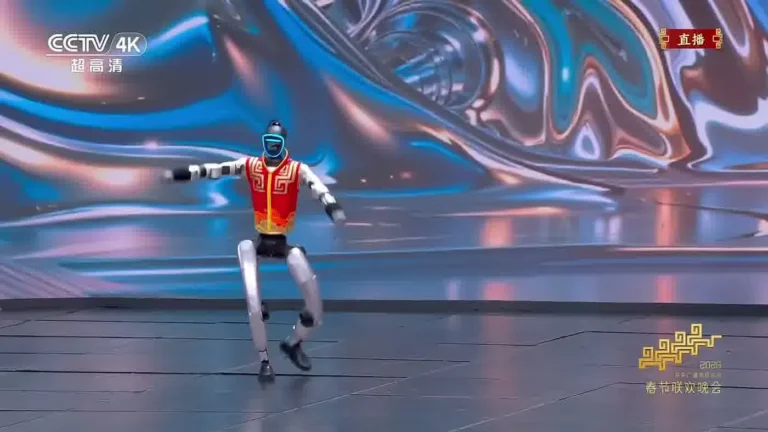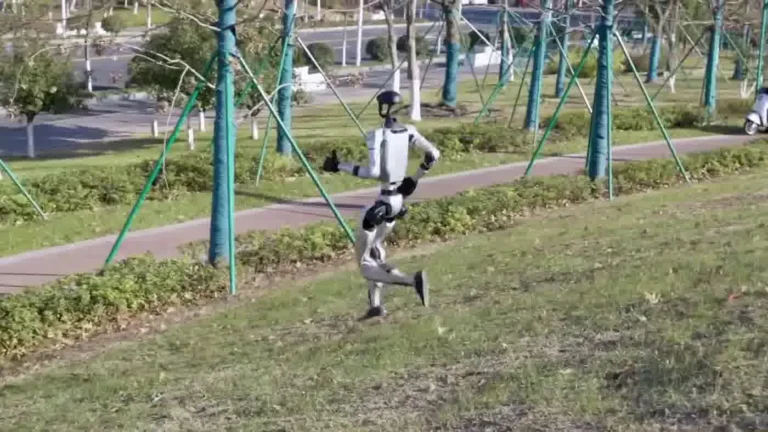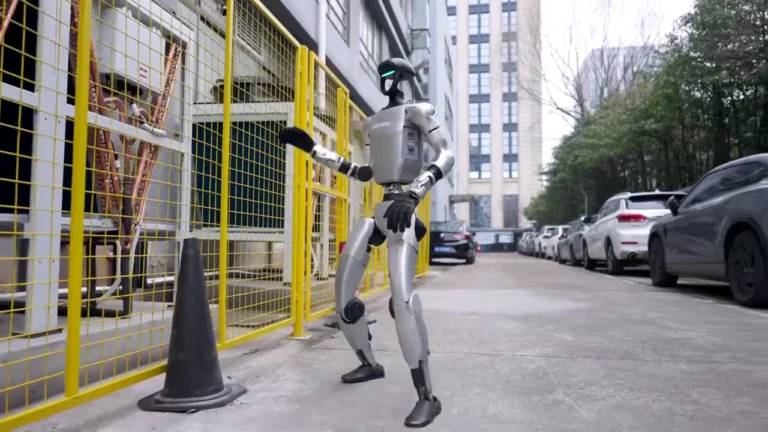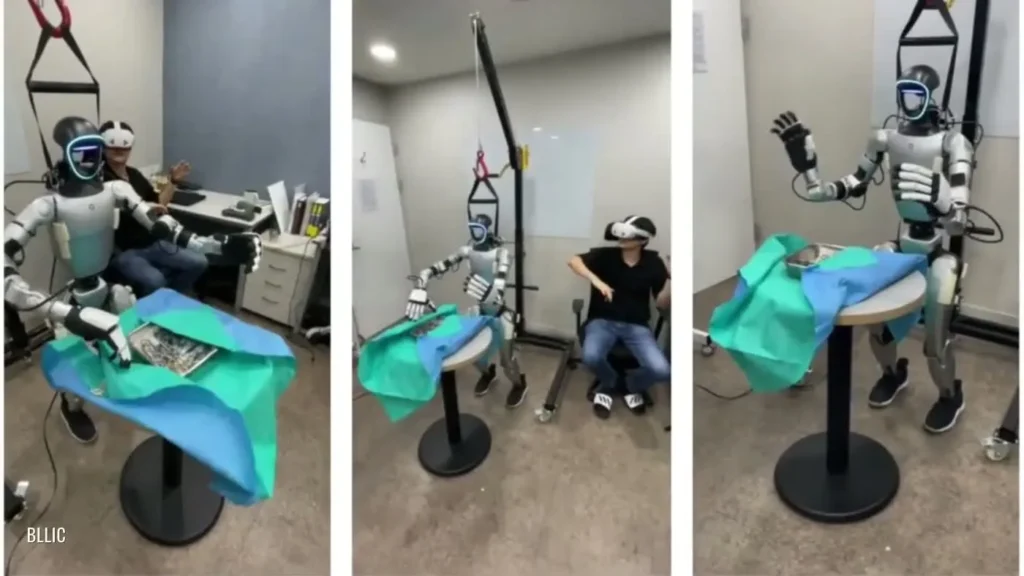
When our team works with film and video productions on unitree g1 film production in 2026, the first thing we establish is this: the G1 takes direction through a human operator, not a director standing off-camera. That distinction changes how productions plan shoot days. This guide covers what production teams need to know before booking — from on-set workflow to technical constraints — so shoot day runs the way you planned it.
Table of Contents
Fight Scene Filming Demo
Unitree G1 — At a Glance
- 127 cm tall | 35 kg
- 41 degrees of freedom
- Five-finger dexterous hands
- 2-hour operational battery
- Onboard NVIDIA Jetson Orin
- Available to rent from $299/day
What You Should Know
- The G1 is available for feature films, commercials, music videos, and documentary shoots
- An on-set ZMProbots operator handles all robot movements — directors give movement direction to the operator, not the robot
- The G1 can walk, gesture, pick up objects (up to 3 kg per arm), and perform scripted sequences
- Shot planning with the operator before filming is essential — spontaneous blocking rarely works with robotic performers
- The G1 is 127 cm tall and 35 kg — plan shots accordingly for scale and movement clearance
These five points define the operational shape of every film shoot we support. The G1 is not an autonomous performer that reads a script and hits its marks independently. It is a highly capable robotic platform whose movements are translated, in real time, by a trained operator who understands both the robot’s capabilities and the director’s intent. Productions that treat the operator as a core member of the performance crew — the same way they would treat a motion capture technician or a stunt coordinator — get the best results.
For technical background on what the G1’s hands can actually do on set, the Unitree G1 hands capabilities post covers grip strength, payload, and object handling in detail. If your production involves any walking sequences, the Unitree G1 walking demo post shows what the G1’s gait looks like across different surfaces and speeds — useful context before you plan camera angles and movement sequences.
What the G1 Can Do On-Set
The G1’s 41 degrees of freedom give it a substantial performance range for a robotic performer. Understanding what works well for camera and what requires careful planning is the most practical thing a director can do before a shoot day.
Scripted Walking Sequences
The G1 walks at a controlled pace across flat surfaces, steps over low obstacles, and can be directed to walk specific paths repeatedly with good consistency. For film, this makes it effective for approach shots, walk-and-turn sequences, and any scene that calls for the robot to enter a frame and stop at a predetermined mark. The operator controls direction and speed, and a well-rehearsed path can be repeated across multiple takes. Uneven terrain, stairs, and tight corridors with less than 80cm clearance are outside the G1’s operating range on a production set.
Gesture and Arm Performance
With BrainCo Revo 2 hands and 45cm shoulder width, the G1 can produce a range of arm movements that read well on camera: pointing, reaching, extending toward another performer, and holding positions for close-up shots. Gesture sequences are pre-programmed by the operator during the pre-shoot session and triggered on cue during filming. The arm payload is 3 kg per arm, which covers most props a production would ask the robot to handle — a tool, a tablet, a small device. Heavier props are outside this range.
Object Interaction
The G1 can pick up objects, hold them steadily, and place them — useful for scenes requiring the robot to hand something to a human performer, or to interact with set dressing in a scripted way. Object interaction sequences need to be rehearsed with the actual props on set before filming begins, because grip positioning and approach angles are set during rehearsal, not improvised on the day. According to IEEE Spectrum, dexterous manipulation in humanoid robots is one of the most technically demanding capabilities to operate reliably in unstructured environments — productions should plan object interaction sequences conservatively and allocate extra rehearsal time for them.
Gaze Direction and Head Movement
The G1’s head can be directed to face specific targets — another performer, a prop, a camera. For shots where the robot appears to be watching or responding to something in frame, gaze direction is one of the most effective tools for making the performance read as intentional. Like other movement types, gaze direction is operator-controlled and works best when the target is pre-defined during rehearsal.
What Requires Careful Planning
Any sequence that requires the G1 to respond in real time to an unscripted event — catching something thrown at it, reacting to a performer’s improvised movement, or changing direction mid-walk without a planned trigger — is outside what the operator can reliably produce in a single take. These sequences need to be either scripted tightly or replaced with a camera angle that makes the cut work without requiring real-time robot improvisation. For productions that want the G1 to appear reactive, the solution is almost always editing — not expecting the robot to generate spontaneous responses on set. The what humanoid robots actually do post is a useful pre-production read for directors who want an honest account of current robotic capabilities.
Director-to-Operator Communication
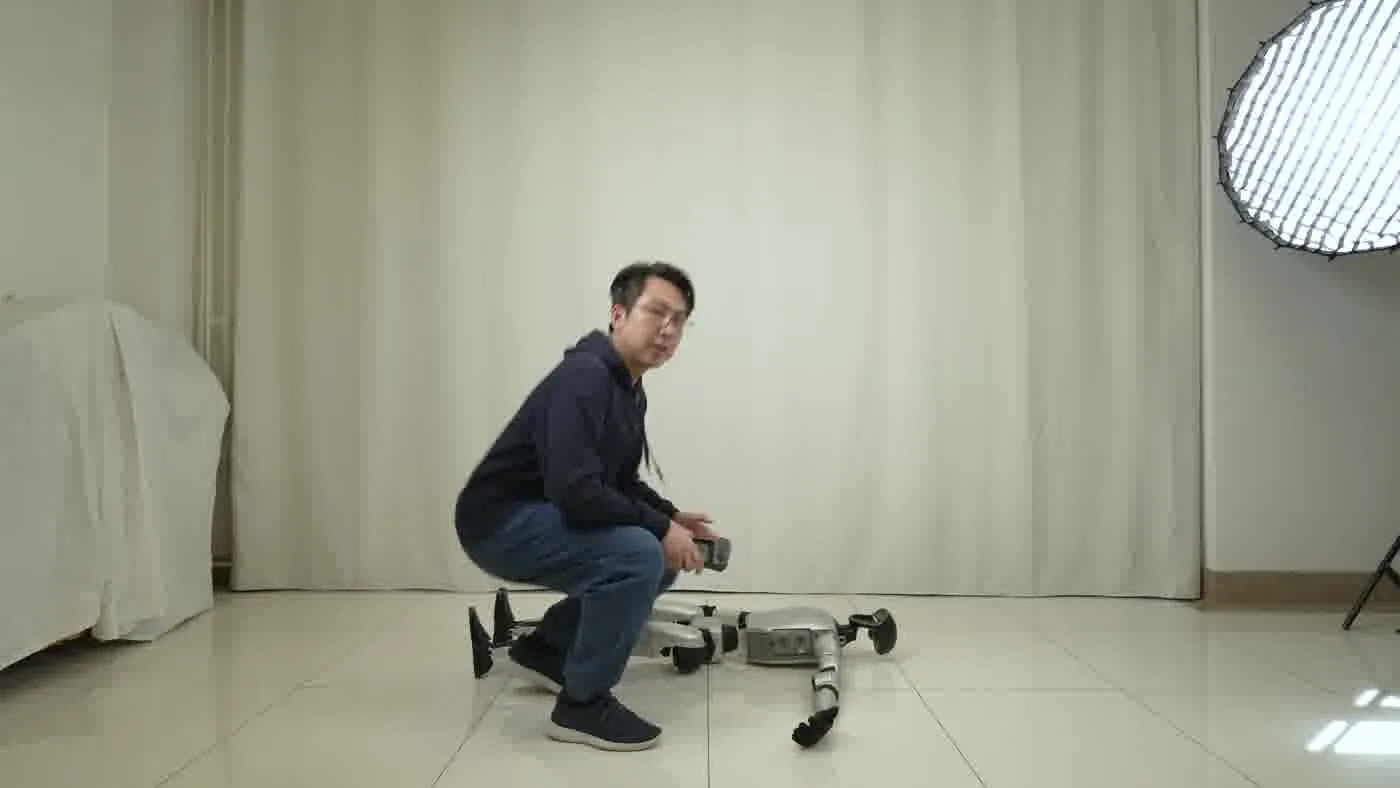
The operational structure of a G1 film shoot is straightforward once you understand the chain. The director gives movement direction to the operator in human terms. The operator translates that direction into robot controls in real time. The G1 performs. This is not a workaround — it is the correct workflow for this class of robotic performer, and it works well when the production team treats the operator as a skilled collaborator rather than a remote control button.
How to Give Direction to the Operator
Direct the robot the same way you would direct a human performer who speaks a different language through an interpreter: describe what you want in plain spatial terms, be specific about endpoints and timing, and give the operator a moment to set up the movement before calling action. Directions like “walk from the door to the table, pause at the chair, then turn to face camera” are exactly the kind of instruction the operator can execute precisely. Directions like “feel more hesitant” or “be more robotic” are harder to translate and typically need to be broken down into specific physical movements before the operator can act on them.
Pre-Shoot Rehearsal Is Not Optional
Every G1 film shoot requires a pre-shoot rehearsal session with the operator before cameras roll. This is not a formality — it is when the operator programs the specific movement sequences your production needs, tests them against the actual set layout and prop positions, and confirms that every scripted action is achievable within the G1’s operating parameters. Productions that skip or shorten this session spend the first hours of their shoot day discovering constraints that could have been resolved in pre-production.
For a detailed look at how ZMProbots manages on-set operations, the Unitree G1 rental operations playbook covers the standard deployment workflow, including pre-shoot preparation, battery rotation, and how the operator coordinates with venue or set staff. That playbook was written for event deployments but the operational principles apply directly to film productions.
Communication on the Day
On shoot days, treat the operator the same as any other department head: brief them at the start of each setup, give them the shot list for the day in sequence, and flag any changes to the movement plan before you get to that setup. The operator needs lead time to reprogram or adjust sequences between setups — this is typically five to fifteen minutes depending on the complexity of the change. Build that buffer into your schedule. MIT Technology Review has covered the broader trend of robotic performers in film production and the workflow adjustments productions are making to accommodate them — the operator communication model is consistent across productions using this class of robot.
Technical Considerations for Film Shoots
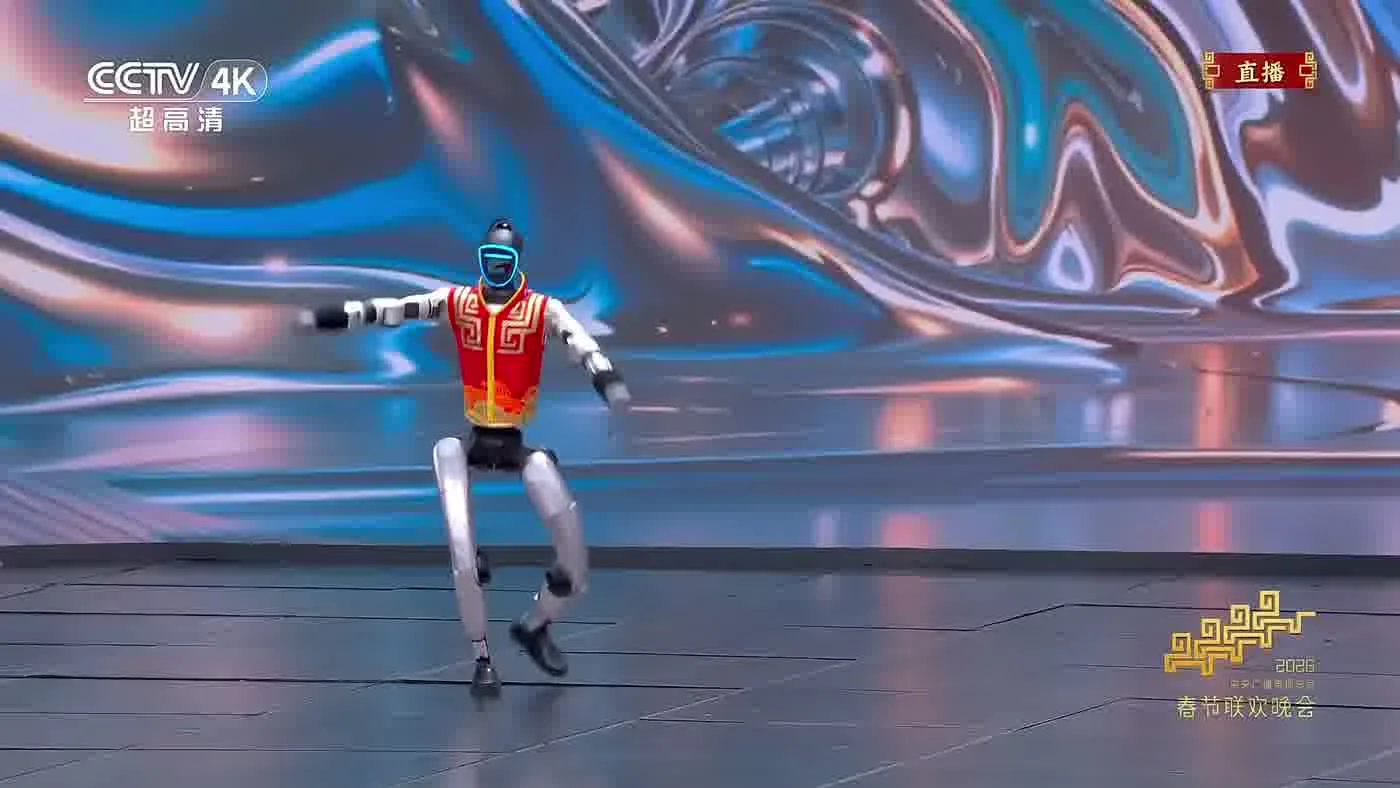
Film productions run on tight schedules and tighter budgets. The G1 has specific technical parameters that, if factored into the shoot plan early, cost nothing. Discovered on the day, they cost hours.
Battery Runtime
The G1 runs for approximately 2 hours per charge and recharges in 45 minutes. For a full-day shoot, the production schedule needs to account for at least one charge cycle. The standard approach is to plan the charge break to coincide with a lighting setup change or a lunch break — any period of 45 minutes or more when the robot would not be needed on set. The operator manages battery status throughout the day and will flag upcoming charge requirements in advance. For deeper context on battery performance in different deployment conditions, the Unitree G1 battery life post covers runtime under different usage intensities.
Lighting
The G1 handles standard studio lighting well. The robot’s surface materials respond to professional lighting setups without requiring special treatment — it photographs the way it looks. One area to plan around: strong infrared sources at close range can interfere with the robot’s depth sensors. This is rarely an issue in conventional film lighting setups but can be a factor in productions using IR-heavy practical effects lighting or certain LED rigs at very close proximity. Flag any unusual lighting elements to the operator during pre-shoot, and the team can assess whether positioning adjustments are needed.
Sound
The G1 generates mechanical sound during movement — a low-level hum and joint noise that is audible in quiet recording environments. For productions recording dialogue in the same setup where the robot is moving, this requires planning. The most common approach is to separate robot movement takes from dialogue recording: shoot the robot performance with camera only, then record the dialogue clean without the robot active. ADR covers dialogue recorded on set with ambient robot sound. For documentary and commercial productions where some ambient mechanical sound is acceptable or even desirable, this is not a constraint at all — it is a production decision to make deliberately rather than discover accidentally.
Set Dimensions and Clearance
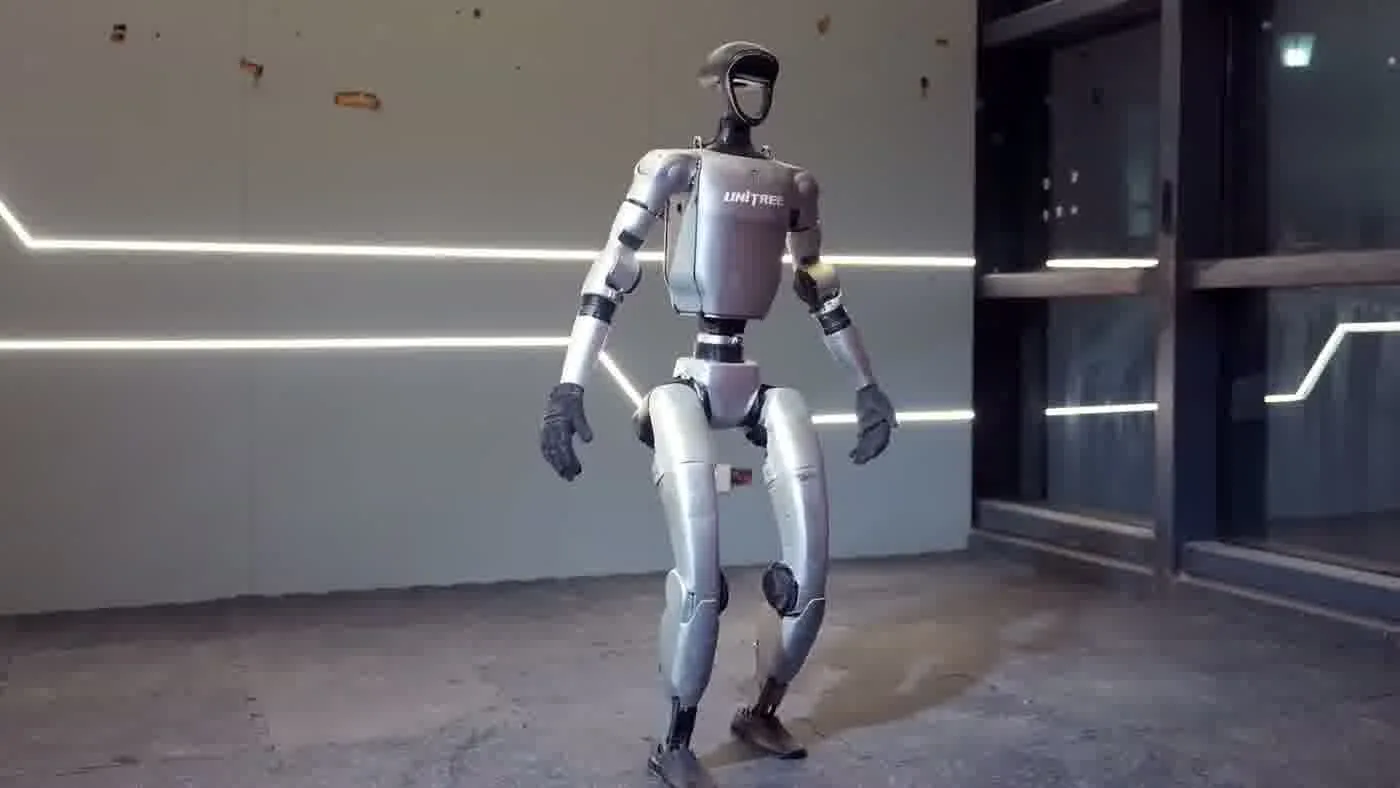
At 127cm tall and 45cm shoulder width, the G1 fits through standard doorways (minimum 80cm clear width). Plan movement sequences around these dimensions — the operator will flag any set elements that create clearance issues during the pre-shoot walk-through. Interior sets with low overhead elements, narrow corridors, or tight blocking around furniture need to be assessed during pre-production, not discovered when the robot arrives on set. For productions shooting on location rather than in a controlled studio, the Unitree G1 complete guide 2026 has the full physical specification table for location assessment. Additional background on the G1’s technical architecture and manufacturer specifications is available directly from Unitree.
People Also Ask
Can I hire the Unitree G1 for a film or commercial shoot?
Yes. ZMProbots makes the G1 available for film production, commercials, music videos, and documentary shoots through the Full-Service Event tier. Every booking includes an on-set operator who manages the robot through your scripted sequences. You can start the booking process through the robot rental for events page to request a quote for your production dates.
How does direction work on set with the G1?
Direction goes through the ZMProbots operator, not directly to the robot. You give movement instructions to the operator in plain terms — spatial directions, timing, endpoints — and the operator translates those into robot controls. This is the standard workflow for all G1 film productions. Pre-shoot rehearsal is where the specific sequences for your shoot are programmed and tested before cameras roll.
How long does the G1 battery last on a film shoot?
The G1 runs approximately 2 hours per charge with a 45-minute recharge time. For full-day shoots, production schedules should include at least one planned charge break — typically aligned with a lighting setup change or meal break. The operator monitors battery levels throughout the day and flags upcoming charge requirements in advance so there are no unplanned stops mid-setup.
Does the G1 make noise during movement?
Yes, the G1 produces low-level mechanical sound during active movement — joint noise and a mild hum. In quiet recording environments where dialogue is being captured in the same setup, the recommended approach is to separate robot movement takes from dialogue recording and cover set dialogue with ADR. For productions where some ambient mechanical character is acceptable or wanted, the robot’s sound is not an issue.
What can the G1 physically do on a film set?
The G1 can walk scripted paths, perform arm gestures, pick up and hold objects up to 3 kg per arm, direct its gaze toward targets, and hold still poses for close-up shots. At 127cm tall and 35kg, it fits through standard doorways (80cm minimum) and moves on flat surfaces. Improvised or spontaneous responses to unscripted events are not in the G1’s production range — sequences need to be planned and rehearsed. The why people film humanoid robots post covers what productions are actually booking robotic performers for in 2026.
The Bottom Line
The Unitree G1 is a capable film performer when productions are built around how it actually works. Direction through a trained operator, scripted sequences rehearsed before cameras roll, a schedule that accounts for the 2-hour battery runtime, and sound planning that separates robot movement takes from dialogue recording — these four conditions separate smooth G1 productions from difficult ones. All manageable in pre-production once the team understands the operational model.
Productions booking the G1 for film in 2026 use the Full-Service Event tier, which includes the on-set operator. Visit the humanoid robot rental page to request a quote for your shoot dates.