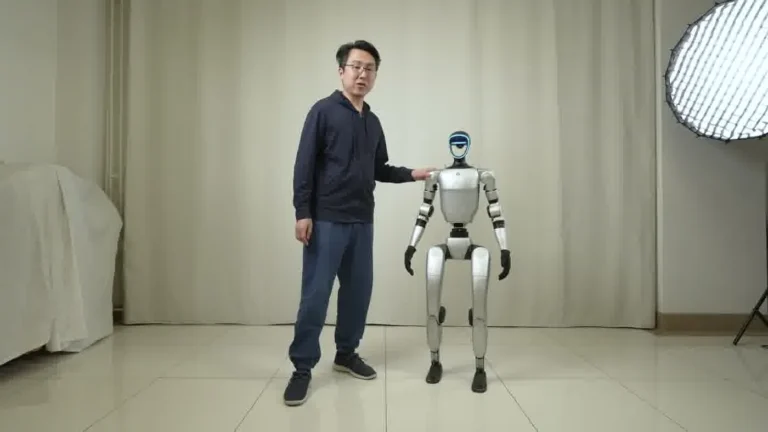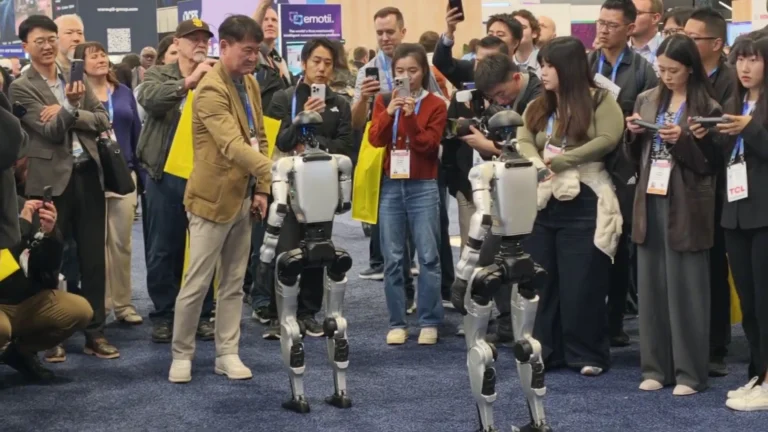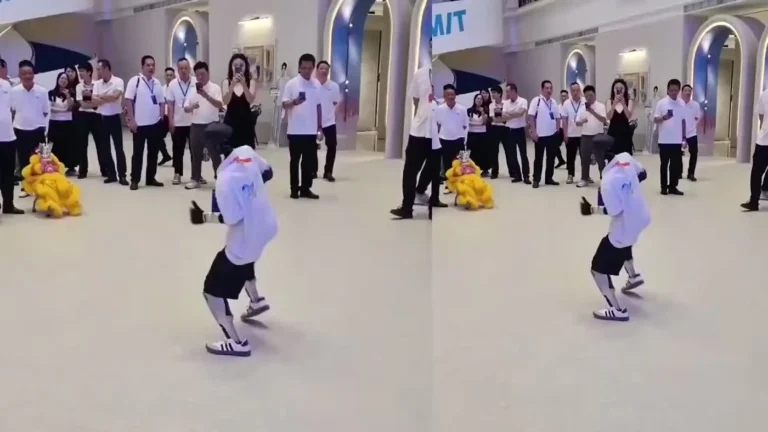
Here is what gets sold to you on social media: humanoid robots that backflip, fold laundry, hold philosophical conversations, and beat their human handler at chess. Here is what an actual humanoid robot does at your trade show next month: it walks across the booth, waves at people, hands a flyer to a kid, and stops every 90 minutes to charge.
Table of Contents
Both are real. Only one of them is bookable. This is the honest list of what a 2026 humanoid robot can actually do — the things you can show a client and not be embarrassed when reality lands shorter than the demo reel.
Kitchen Serve
Image source: Top3DShop / Unitree G1 humanoid robot dynamic movement demo
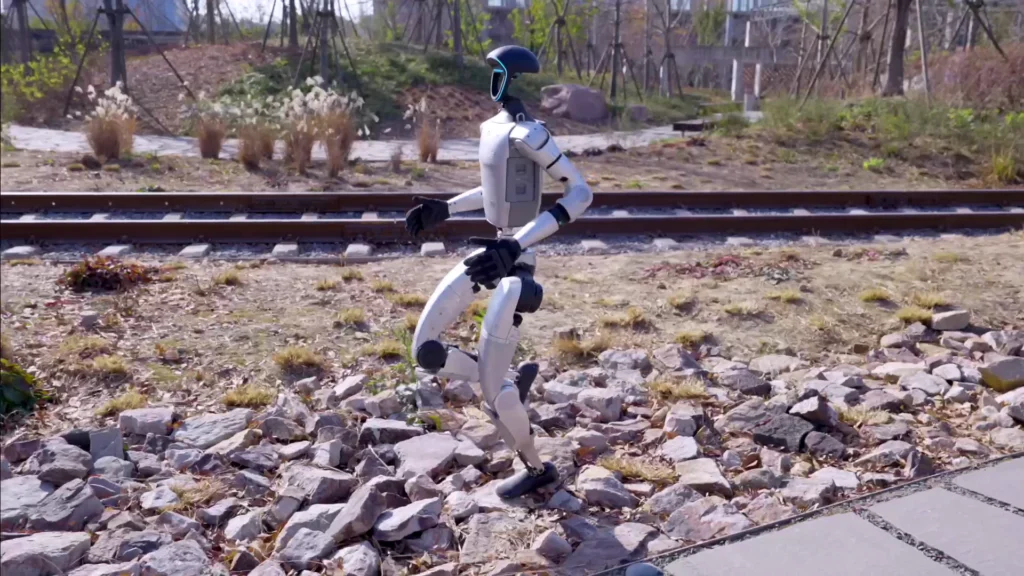
Walking is the headline. It is also the hardest thing a humanoid does, and the most overengineered. Modern humanoids walk on flat floors confidently. They handle minor irregularities — thin cables, low ramps, the join between two rooms — without falling.
What they do not do well: stairs above two or three steps, soft surfaces like sand or thick carpet, and crowds that close in faster than the operator can stop the robot. The Unitree G1 walks at a steady pace, around 2 km/h in supervised mode. It is not running across the venue. It is moving with intent, looking like a careful guest at a polite gathering.
If you watch a viral video of a humanoid sprinting or doing parkour, that is real footage of a real robot. It is also a research demo, not a deployment scenario. The robot you rent for an event is not going to outrun your dog. That is fine. Walking calmly across a floor is plenty when nobody else at the venue is doing it.
Gestures, Waves, and the Photo Loop
The thing humanoids are surprisingly good at is the small social gesture. A wave. A bow. A point. A high-five with a kid who walks up cautiously and leaves yelling about it for the rest of the day.
Most event-deployed humanoids have a library of pre-programmed gestures the operator triggers from a tablet. Wave. Greet. Pose for photo. Hand object. Bow. Point at signage. The Unitree G1 ships with a base set of these, and the trained operator at most rentals adds custom motion sequences for the specific event — entering through a doorway, gesturing at the new product, posing next to the CEO for the launch photo.
The reason gestures matter: a robot that just stands there is a $63,900 mannequin. A robot that waves is a $63,900 attraction. The line between the two is basically twelve frames of animation.
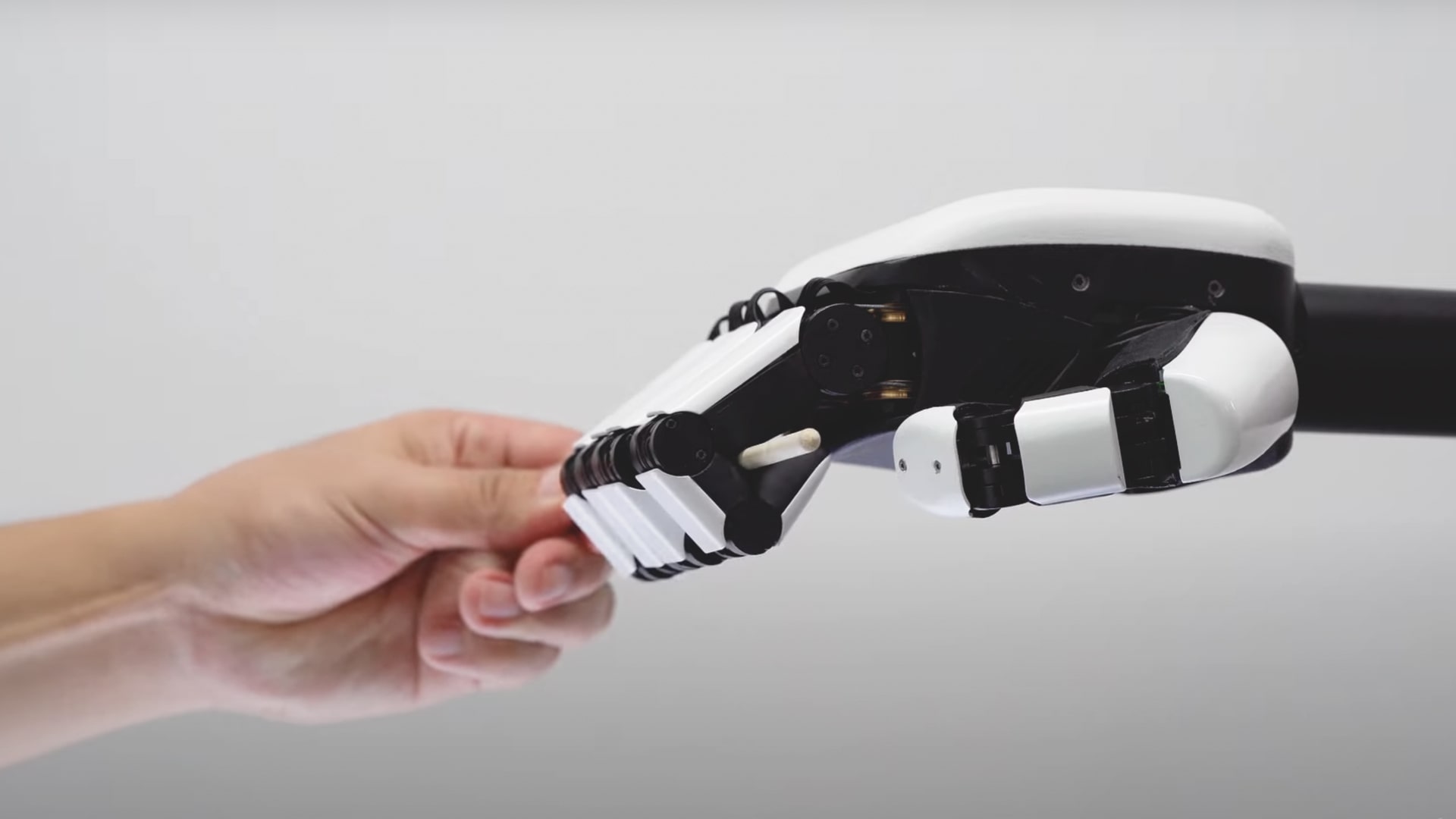
Image source: KR Asia / Dexcel Robotics Apex Hand reference image
The Unitree G1 ships with five-finger dexterous hands made by BrainCo. Each finger moves independently. Sounds simple. It is not.
What this hand does well: hold a microphone, hand a paper flyer to a guest, grip a small product like a phone or a perfume bottle, perform a gentle high-five. What it does not do well: pick up a car key, manipulate a doorknob, type on a keyboard, or stack glasses on a tray.
The honest framing for an event: think of the robot as having competent gross motor skills and unreliable fine motor skills. It can carry the prop. It cannot reliably button a shirt. The best events match the robot to its strengths — a brand activation where the robot hands a sample to a guest is gold. A demo where the robot is supposed to thread a needle on stage is a recipe for embarrassment.
If a vendor promises you a humanoid that will perform fine manipulation reliably across an 8-hour event, ask them to put it in writing. They will not.
Scripted Stage Routines That Look Like Personality
Most viral humanoid moments are scripted. That is not a criticism. It is the reason they look so good.
A 30-second routine that gets a crowd to gasp — the robot walks to a mark, points at the new product, turns to the camera, holds a 3-second pose, returns to the start — takes a robotics technician roughly 4 to 6 hours to choreograph the first time. After that the routine plays back identically on cue. Add a brand-specific intro, a custom pose, and a lighting trigger, and you have a 90-second showpiece you can run every 20 minutes for the duration of the event.
The personality your guests perceive is hours of careful motion design playing back. It is not the robot improvising. It is film, basically. And like film, it works because someone competent built it carefully.
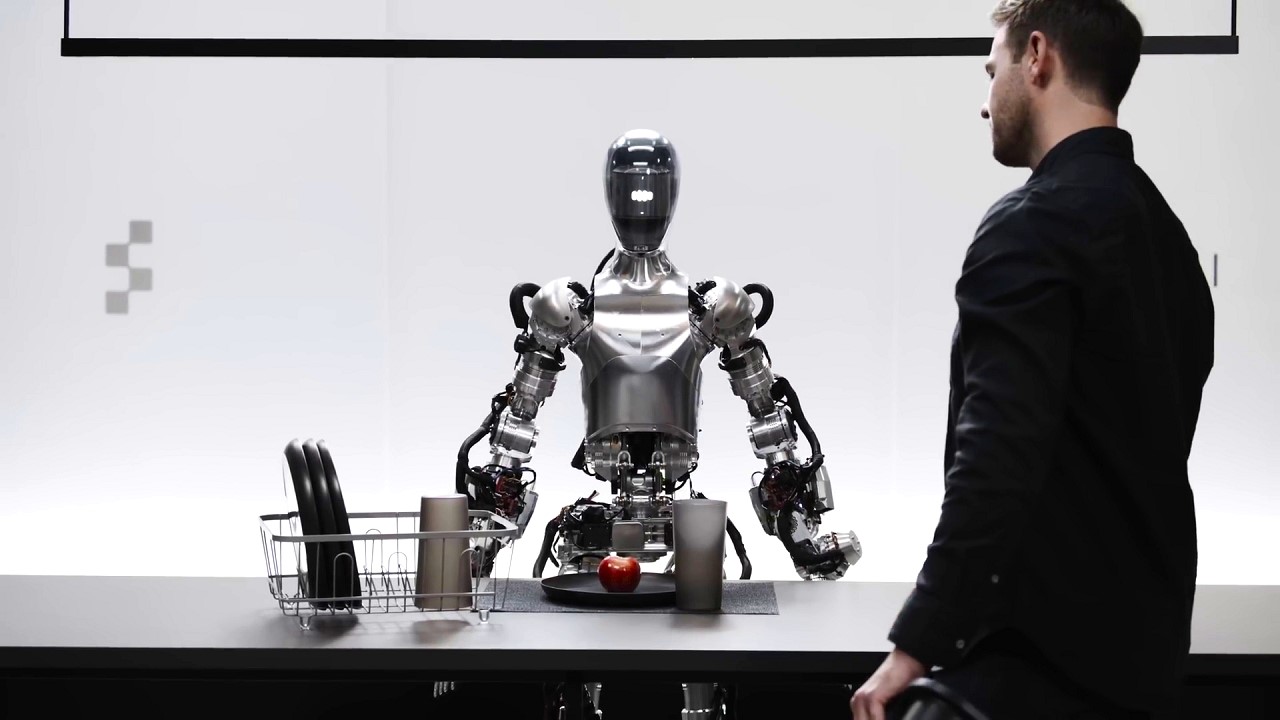
Image source: FavTutor / Figure 01 humanoid robot OpenAI voice interaction demo
This is where the marketing department gets too excited and you should slow down and ask questions.
Some humanoids include a real-time AI conversation layer. Engineered Arts Ameca is the famous one — guests speak into a microphone, the robot answers in a voice that lip-syncs to its expressive face. The Unitree G1 with the right setup can run scripted responses to common questions, and a few advanced configurations route guest speech through a language model and play back a synthesized response on the robot’s speakers.
What works reliably: 5 to 15 second exchanges. Predictable questions. Pre-warmed scripts. What does not: a 20-minute Q&A panel with unscripted topics, multilingual guests, or rooms with loud background audio.
Treat the AI conversation feature like a party trick that sometimes lands. Build the rest of your event around the visual presence of the robot, not its dialogue. That way when the AI works it is a delight, and when it does not, nobody notices.
Teleoperation: When a Person Is Driving the Robot
Most of the impressive things you see a humanoid do at a live event are teleoperated. A trained operator wears a control rig or a tablet and pilots the robot in real time. Wave. Turn. Walk forward three steps. Hand the prop. Pose.
This is not cheating. It is the reason live events with humanoids work. Full autonomy in a crowded room is still beyond what any commercial humanoid does reliably — you cannot trust a robot to navigate around 200 unpredictable guests without supervision. So a person drives. The guest experience is identical to autonomy, the safety profile is much better, and the show goes on.
Honest event teams will tell you this when you ask. The answer is “yes, the operator is driving” not “the robot is autonomous.” Both are fine. One is true.
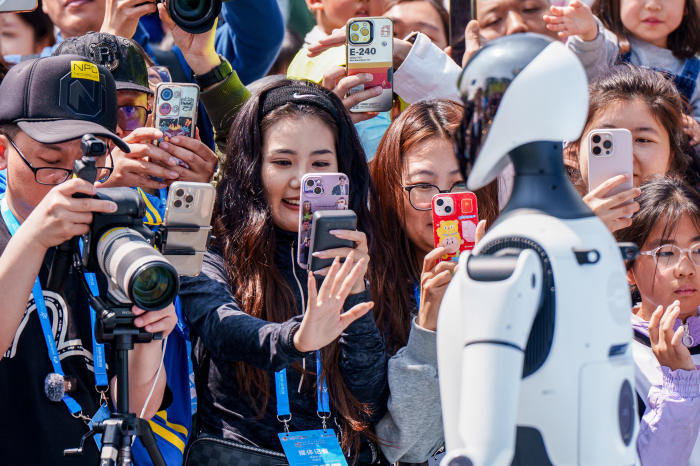
Image source: WSJ / China humanoid robot expo coverage
The thing humanoids do better than every other event activation is pull a crowd.
Brands that have deployed a humanoid at trade shows in 2025 and 2026 report 2.5x to 4x foot traffic at the booth compared to similar booths without one. Auto shows, fashion week, product launches, retail openings — the pattern repeats. People stop. They take out their phones. They post the video. The booth that booked a humanoid trended on TikTok within the hour.
According to BizBash coverage of the 2026 brand activation calendar, humanoid robot deployments are now standard at major launches in tech, fashion, and automotive. The novelty curve has not yet flattened, which means renting one in 2026 still gets a reaction. Renting one in 2028 might not.
If you want one this year while it still feels new, the most accessible option is the Unitree G1 through ZMProbots.
FAQ
What can a humanoid robot actually do at an event?
A humanoid robot at a 2026 event walks across the floor, gestures at guests, performs scripted routines, hands props or flyers to people, poses for photos, and runs short AI-driven interactions. It is teleoperated by a trained operator most of the time, with brief autonomous segments. Crowd magnetism is the strongest use case.
Can a humanoid robot have a real conversation?
Short exchanges, yes. Long unscripted conversations, no — not reliably. Most event humanoids handle 5 to 15 second back-and-forths with pre-warmed scripts or scoped AI prompts. Real-time multilingual debate or hour-long Q&A panels are still beyond reliable operation in 2026.
Can a humanoid robot pick things up?
Yes for gross objects — microphones, flyers, small products, light samples. No for fine manipulation tasks like buttoning a shirt, threading a needle, or stacking glasses. The Unitree G1’s five-finger BrainCo hand handles most event prop handling reliably.
Can humanoid robots dance?
Yes — as scripted routines. A robotics technician programs the dance ahead of time, and the robot plays it back on cue. The Unitree G1 has shipped dance demos that have racked up tens of millions of views online. These are real performances, but they are choreographed, not improvised.
Are humanoid robots autonomous at events?
Mostly no. Most live event humanoids are teleoperated by a trained operator standing within a few meters with a tablet or control rig. Some routines run autonomously, but anything involving navigation through unpredictable crowds is supervised. This is the safe and reliable way to operate a humanoid at a live event in 2026.
How long can a humanoid robot run at an event?
The Unitree G1 has roughly 2 hours of battery life per charge. Most event setups include hot-swappable batteries or a charging rotation, allowing continuous deployment with brief breaks. Atlas and Optimus have similar runtimes. Plan for charging logistics the same way you plan for stage lighting — it is a real consideration, not a footnote.
The Bottom Line
A humanoid robot in 2026 walks, gestures, picks up props, performs scripted routines, runs short AI conversations, and pulls crowds. It does not fold laundry, climb stairs, or replace a human host. Plan around what it actually does and the results are excellent.
Ready to put one in front of your guests? See availability on our humanoid robot rental page.