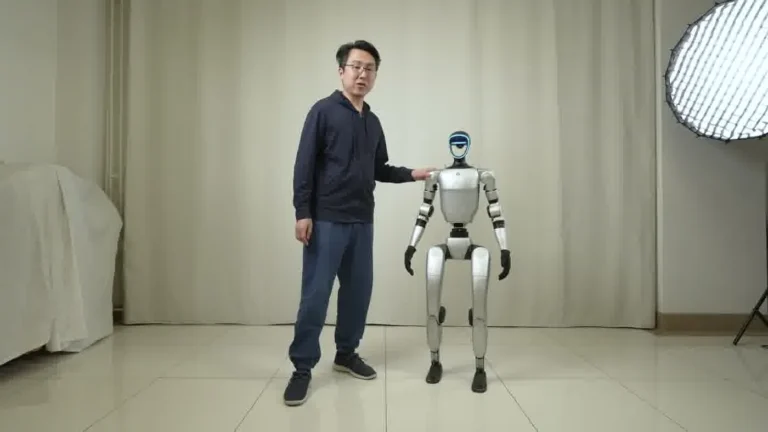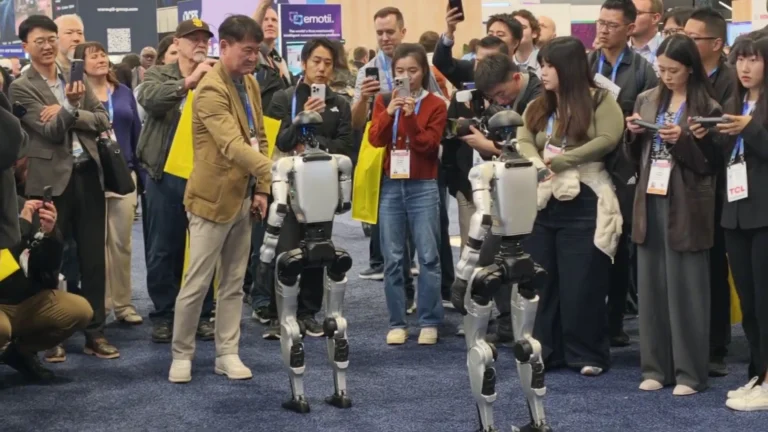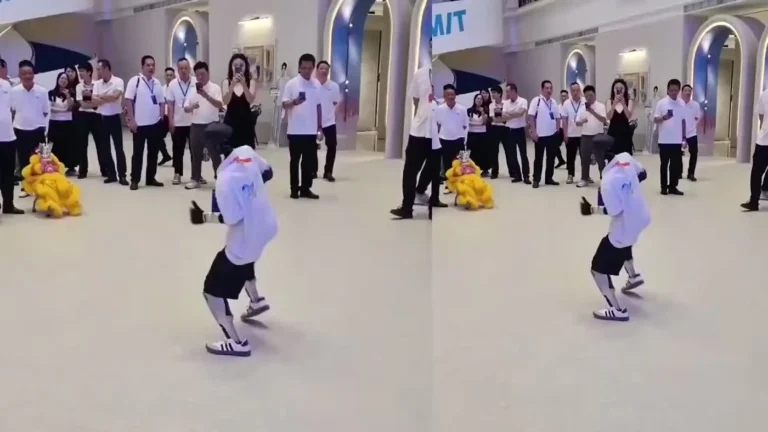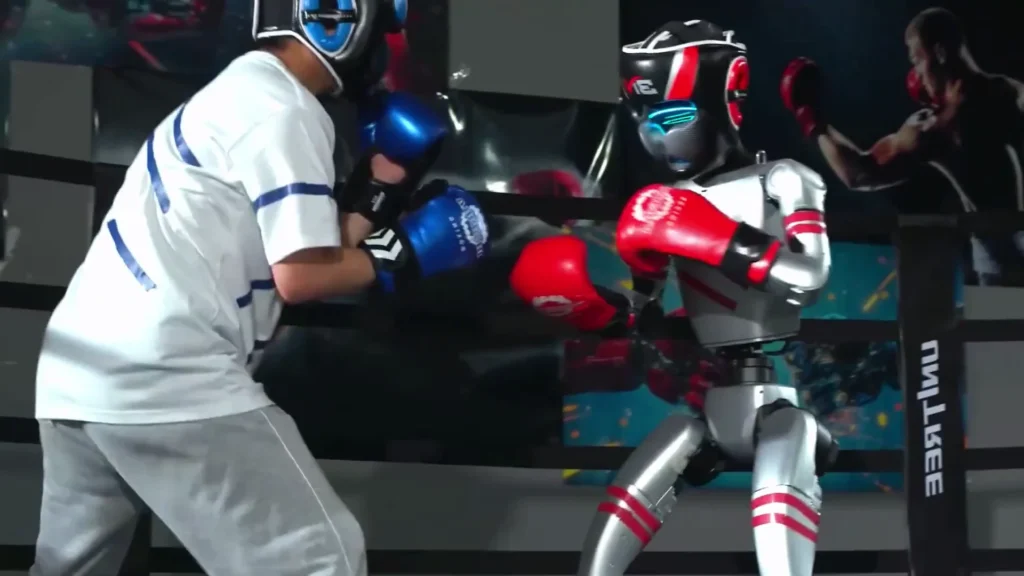
If you have read every breathless humanoid robot announcement of the last 18 months, you would think we are weeks away from robots running households, climbing the side of buildings, and replacing the kitchen staff at your favorite restaurant. We are not.
Table of Contents
The robots are real. The capabilities are not yet what the press releases claim. Here is the honest list of things a 2026 humanoid still cannot do — the things you should know before you book one for your event, your launch, or worse, for your home.
Recovery from Floor
Image source: Reddit / Honda ASIMO press demo footage
Stairs are the canonical robot weakness. The famous Honda ASIMO stair tumble at a 2006 demo is still the meme everyone reaches for when humanoids come up. Twenty years later, stairs are still hard.
Modern humanoids handle two or three steps in controlled conditions. They do not reliably handle a venue’s back stairwell, a curving staircase, or a stair with carpet that has been stretched unevenly. The problem is not the going up — robots can plan that. The problem is the recovery if a foot lands wrong, and the consequence is a $63,900 robot face-down on a step with a dented torso.
Practical event rule: if your venue requires the robot to climb more than three steps, plan a different route. Most event teams use elevators or load-in ramps for the same reason your AV crew never carts a console up the back stairs. It is not worth the risk.
They Cannot Walk on Soft Ground
Sand, thick carpet, gravel, freshly mopped tile, wet grass — a humanoid robot’s foot does not get the consistent feedback it needs from these surfaces, and the balance system overcorrects. The result is a slow, unsteady walk that often ends with an emergency stop.
This is why most event humanoid deployments specify the floor type ahead of time. Hardwood, polished concrete, low-pile commercial carpet — all fine. Beach activations and outdoor lawn events — problematic. The Unitree G1 setup checklist for ZMProbots includes a venue floor inspection, and the most common reason an event needs adjustment is a soft or slippery surface in the planned walking path.
If your activation is on a beach, the answer is to set up a hard platform for the robot to operate on. Not to expect the robot to handle the sand.
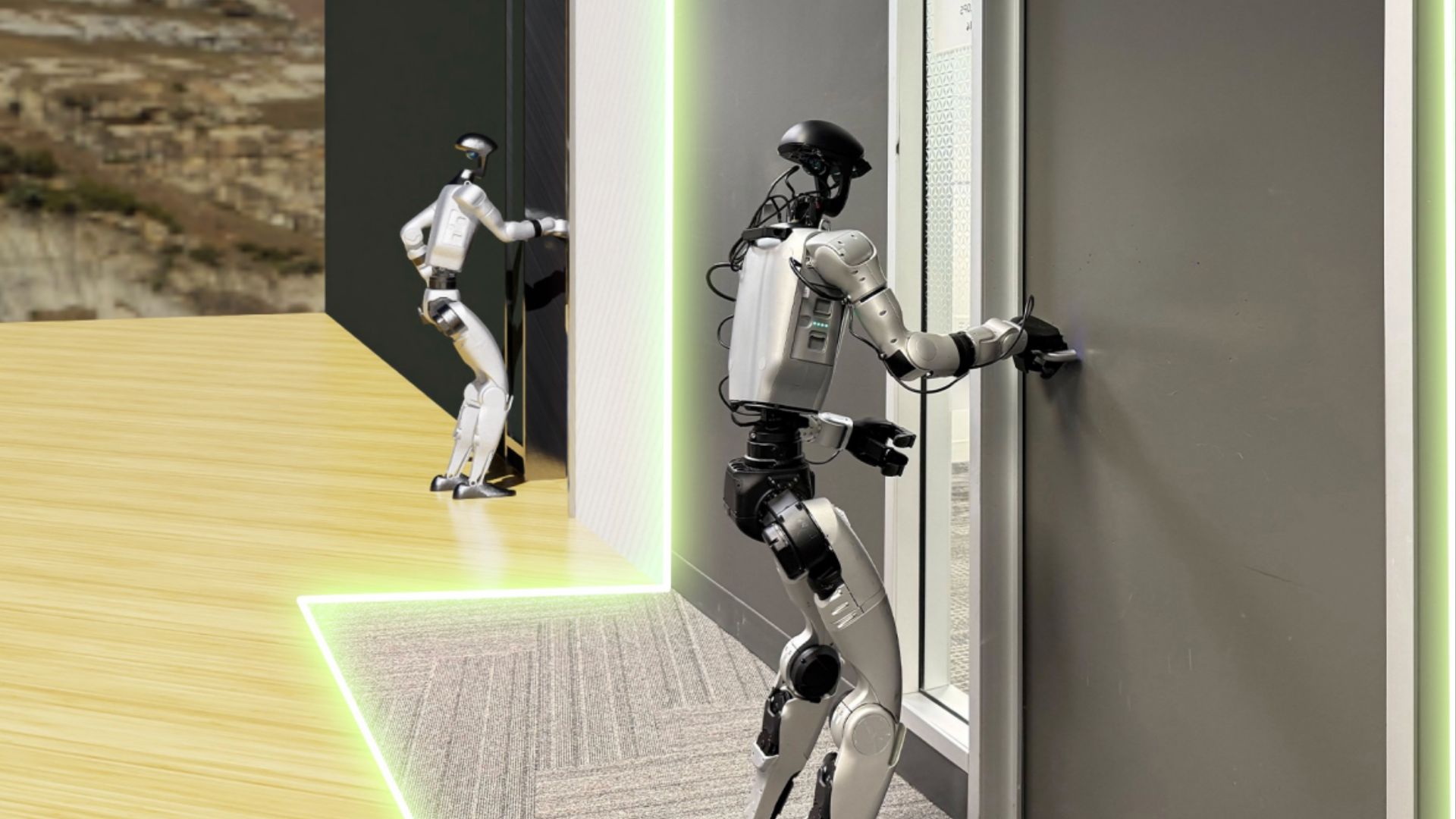
Image source: Interesting Engineering / NVIDIA GR00T humanoid robot at door handle
Doors are technically simple and operationally hard. A humanoid needs to recognize the handle, grip it, turn it correctly, push or pull at the right angle, and walk through without clipping the frame. Each step is a small problem. Stacking them is a large one.
Boston Dynamics Atlas has demoed door-opening sequences for years. They are real. They also take careful pre-staging — specific door, specific handle type, lighting calibrated for the cameras. Drop the same robot in your venue’s back of house and ask it to open the green room door, and the demo falls apart.
For events, the practical rule is: design the route so the robot never has to operate a door. Open it for the robot. Or rope it off so the robot stays in one room. The autonomy is not yet good enough to make door-handling a reliable feature.
They Cannot Hold a Long Unscripted Conversation
This one is going to disappoint you, and you should let it.
The viral videos of humanoid robots having philosophical debates with interviewers are demos. They are short. They are warmed up. They are running on top-tier compute, often with humans curating the prompts in real time. Drop the same setup into a 4-hour activation with thousands of guests asking unpredictable questions, and the AI conversation feature breaks within the first hour.
What works: 5 to 15 second exchanges around a known topic. “Hi, how are you?” “Tell me about this product.” “Can I take a photo with you?” That is the AI conversation envelope you can plan around. Anything longer, anything multilingual, anything in a noisy room with bad audio — expect failure.
Plan the event around the visual presence of the robot, not its dialogue. When the AI works it is a delight. When it does not, nobody should notice.
Image source: Engineered Arts press materials
The Unitree G1 has a battery rated at roughly 2 hours of active operation. Tesla Optimus is similar. Atlas runs about 90 minutes between charges. None of them are running for 8 hours straight without intervention.
What works at events: a charging rotation. Two robots alternating, with one charging while the other runs. Or hot-swappable batteries pre-charged offstage. Or a planned 20-minute charging break every 90 minutes built into the event flow. The Unitree G1 rental setup at most ZMProbots events includes spare batteries and a charging station as standard.
What does not work: assuming the robot can run from doors-open to doors-close uninterrupted. Plan around the runtime. The robot is a performer, not a piece of static infrastructure.
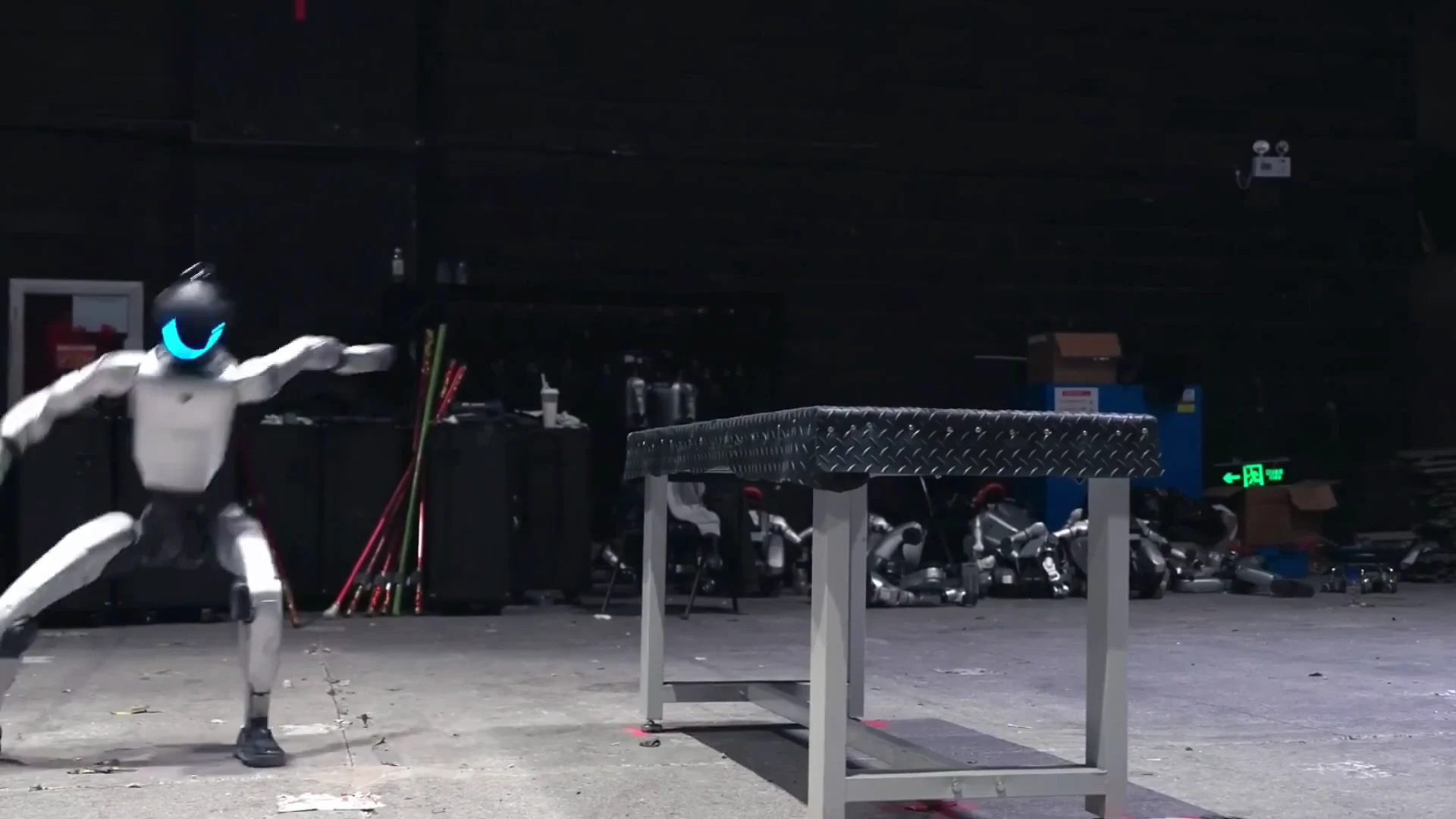
They Cannot Operate Outside in Real Weather
Rain. Snow. Direct hot sun. Strong wind. Humid coastal air. All of these break humanoids — some more dramatically than others.
The cameras and depth sensors that humanoids rely on for navigation get confused by glare, raindrops, and falling snow. The actuators do not love being wet. Direct sunlight on a black exterior in the middle of summer can push the robot’s compute past its thermal limits in 20 minutes. Wind gusts can knock a 35 kg humanoid off balance during transitions.
The honest framing: humanoids are indoor performers in 2026. Outdoor activations with humanoids exist, but they require shade, a dry floor, controlled lighting, and a backup plan. If you book a humanoid for an outdoor event, treat it like booking an outdoor concert — weather contingencies are not optional, they are core to the run-of-show.
Image source: OzRobotics / humanoid five-finger dexterous robot hand
Humanoid hands are remarkable hardware. The Unitree G1 ships with five-finger BrainCo dexterous hands. Atlas, Optimus, Figure 02 — all have similar mechanical capability.
What hands cannot reliably do in 2026: button a shirt, tie a shoe, pick up a credit card from a flat surface, open a sealed package, type on a normal keyboard, peel an apple, or stack drinking glasses. Demo videos exist for some of these. None work consistently across an 8-hour deployment.
The reason: dexterous manipulation requires sensing, hand-eye coordination, and motion planning at a level current AI does not yet match a 4-year-old human. The hardware is there. The software is not.
Build your event around tasks the hand can do reliably — handing flyers, holding microphones, shaking hands, gripping props on cue. Skip the tasks that require fine motor precision. The robot will thank you and your client will not be mad.
They Cannot Replace a Human Host
This is the limitation people most often miss because they want it not to be true.
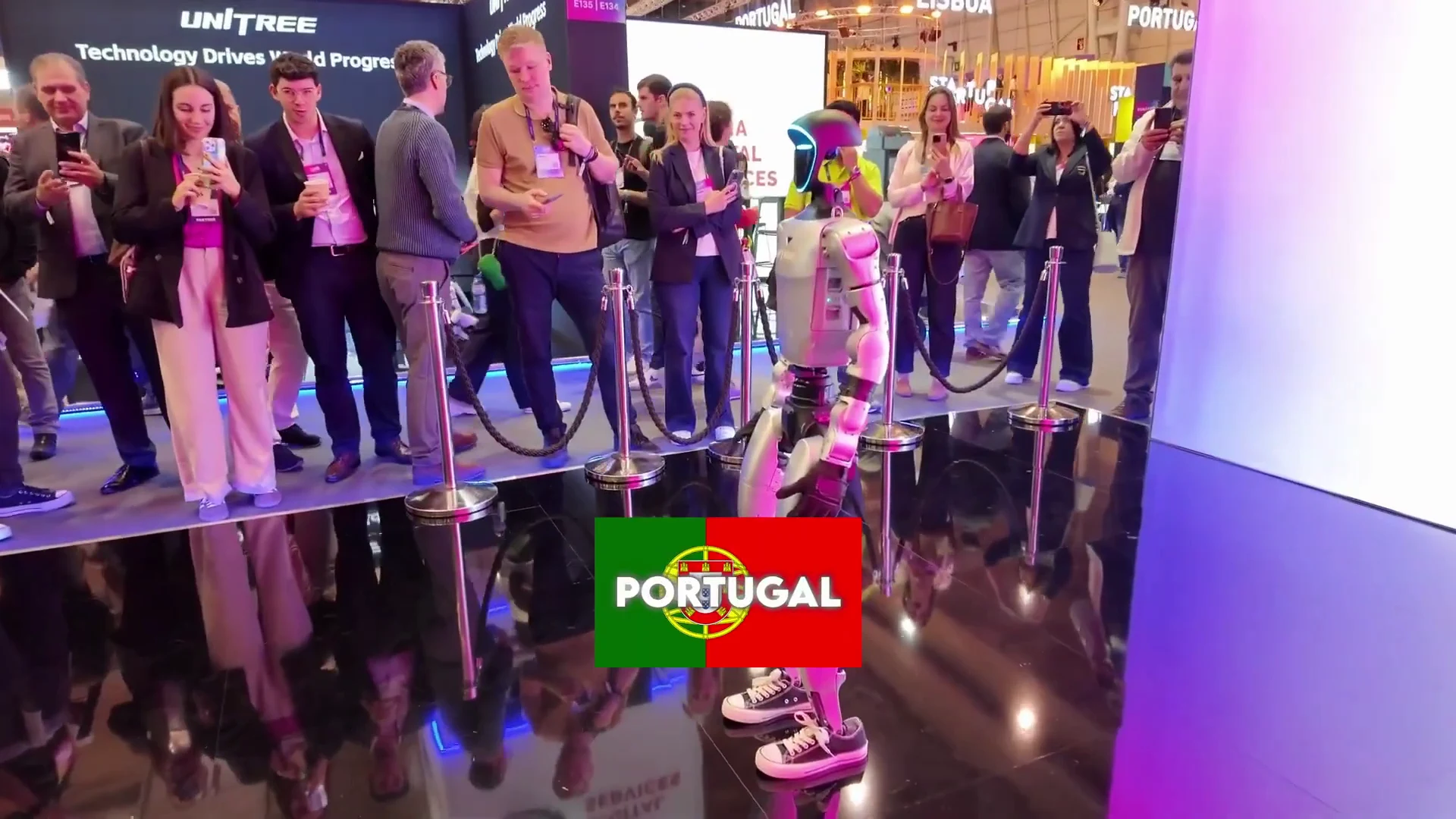
A humanoid robot at an event is a magnetic supplement to a human host. It is not a replacement. The robot does not read the room. It does not improvise when the keynote speaker runs over. It does not notice that the VIP at table four has been waiting too long for someone to greet them. It does what it was scripted or driven to do, brilliantly, for the duration it was scripted to do it.
According to Event Marketer reporting on 2025 brand activation trends, the highest-performing humanoid deployments pair the robot with a strong human host or operator — the robot draws the crowd, the human reads it. Replace the human and the activation falls flat. Keep the human and add the robot, and you get the 3x foot traffic numbers.
FAQ
Can humanoid robots climb stairs?
A few steps in controlled conditions, yes. A real venue staircase, no — not reliably. Most 2026 event humanoids handle two or three controlled steps but should not be trusted with longer or curving staircases. Plan routes that use elevators or ramps instead.
Can humanoid robots work outside?
Indoor operation is reliable. Outdoor is conditional. Direct sun, rain, snow, strong wind, or wet ground will all degrade or stop a humanoid robot. Outdoor events are possible but require shade, a dry hard floor, and weather contingencies built into the run-of-show.
Can humanoid robots load a dishwasher or fold laundry at home?
Not reliably in 2026. Several manufacturers including 1X and Tesla pitch household applications for late 2026 or 2027, but no commercially shipping humanoid robot today loads a dishwasher consistently across the variety of household conditions. The technology is impressive in demos and unreliable in homes.
How long can a humanoid robot run before recharging?
Roughly 90 minutes to 2 hours per charge for most current humanoids including the Unitree G1, Tesla Optimus, and Boston Dynamics Atlas. Event deployments use battery rotation or planned breaks to provide continuous coverage across longer runs.
Can humanoid robots have unscripted conversations?
Short scripted exchanges, yes. Long unscripted multi-topic conversations, no. Real-time AI conversation features are best treated as an occasional bonus, not a core feature. Plan the visual presence of the robot as the primary attraction.
Are humanoid robots safe around crowds?
Yes when operated with a trained handler within a few meters and supervised motion limits enforced. Humanoid robots in 2026 are far safer than common venue equipment such as forklifts. The risk profile is well understood and managed by certified operators at every reputable rental program.
The Bottom Line
Humanoid robots in 2026 walk, gesture, perform scripted routines, and pull crowds. They do not climb stairs reliably, hold long conversations, replace human hosts, or operate in real weather. Plan around what they actually do and you will get the result you want.
Want to see what a humanoid actually delivers at your venue? See availability on our humanoid robot rental page.