In 2026, our clients ask about humanoid robot cost in a very specific way: they want to know the purchase price. What they rarely ask about — and what this post addresses — is what happens to that cost over three years as the technology moves forward without them. We track this gap closely, because humanoid robot cost does not stop at the wire transfer.
Table of Contents
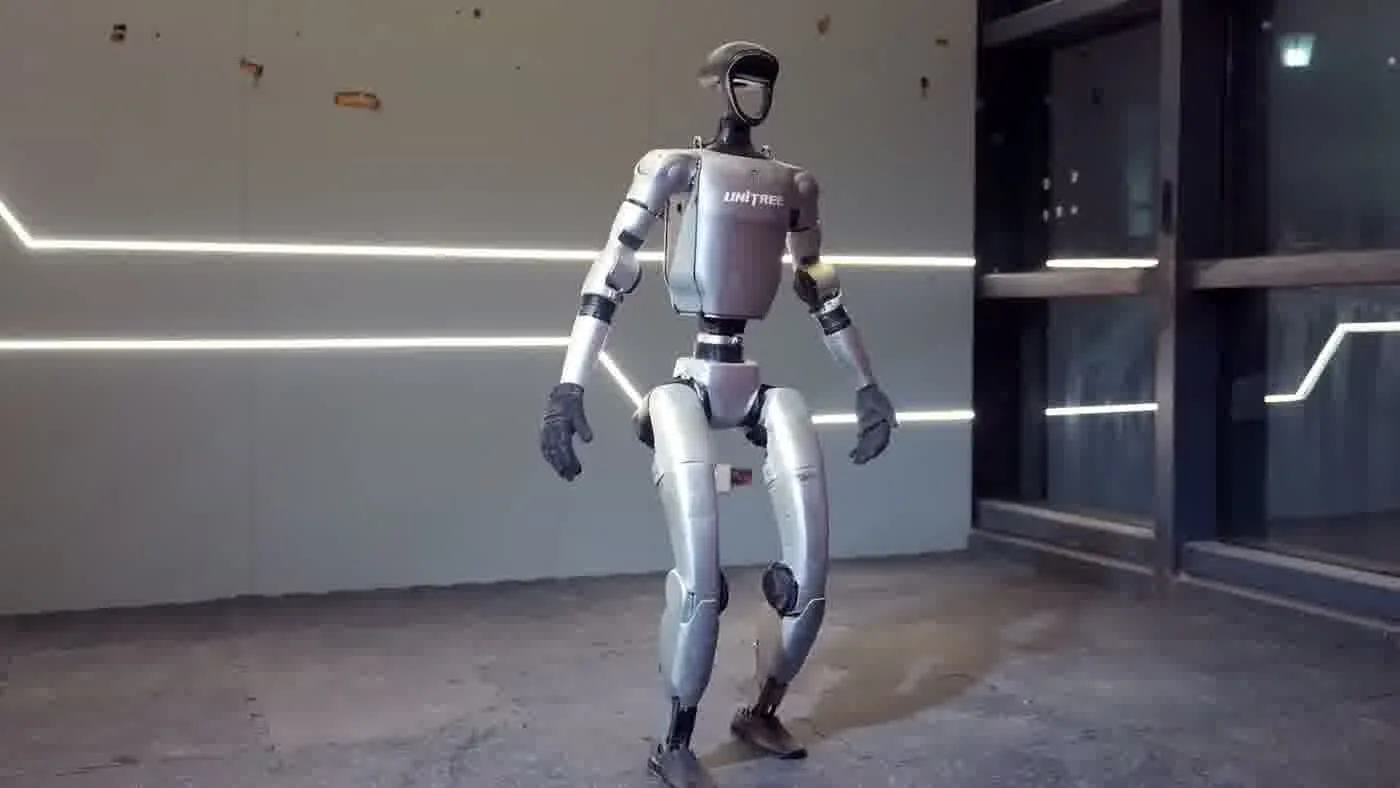
Walking in Mall Corridor
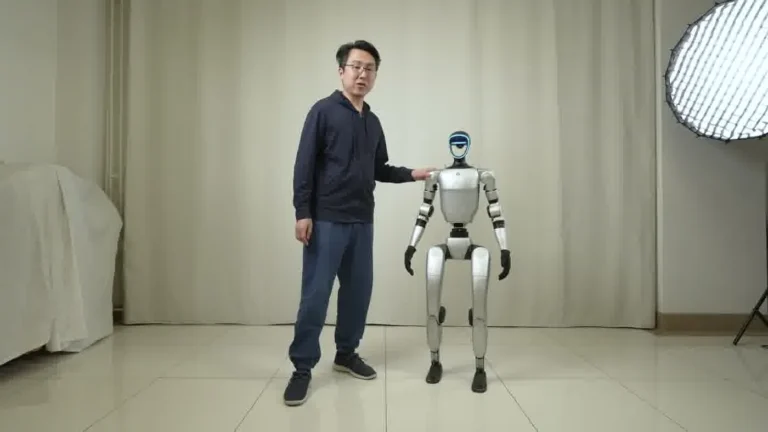
Unitree G1 — At a Glance
- 127 cm tall | 35 kg
- 41 degrees of freedom
- Five-finger dexterous hands
- 2-hour operational battery
- Onboard NVIDIA Jetson Orin
- Available to rent from $299/day
What You Should Know
- A $70,000 humanoid robot depreciates rapidly — humanoid robotics moves faster than automotive
- By year 3, a 2024-2025 G1 will face competition from significantly more capable models
- Depreciation in tech is driven by capability gaps, not just age or mileage
- Event buyers who own rather than rent absorb both depreciation and maintenance costs
- Renting keeps hardware cost predictable — you pay per day, not per year of ownership
Most buyers who reach out about purchasing the Unitree G1 have done the obvious math: purchase price divided by expected event days. What they have not modeled is the value erosion that happens in the background — the part where the $70,000 asset becomes worth considerably less as a new generation of humanoid platforms arrives and claims the same capability benchmark at a lower price. For a detailed look at the buy-versus-rent numbers, the humanoid robot buy vs rent 3-year cost analysis works through the full math across different event-day scenarios.
Why Robot Depreciation Is Different
When most buyers think about equipment depreciation, they reach for examples from industries they know: vehicles, construction machinery, industrial forklifts. In those categories, depreciation is real but gradual. A forklift bought today will still do the same job in year five, even if its book value has declined. The asset’s utility does not collapse because a newer model was announced.
Humanoid robots do not follow that model. They follow the technology curve — and technology curves are steep. The G1 at $70,000 in 2024 was a capable platform relative to what was commercially available at that price point. By 2027, it will sit in a very different competitive position. Newer platforms will offer greater payload capacity, more natural locomotion, improved battery endurance, and more sophisticated onboard AI — at prices that will pressure the secondary-market value of 2024-era hardware downward.
The Smartphone Comparison That Actually Fits
The depreciation curve for humanoid robots is closer to smartphones than to industrial equipment. A three-year-old smartphone still makes calls and runs apps, but its resale value is a fraction of its launch price — not because it broke, but because what you can buy new for the same money is substantially more capable. The same pattern applies to a $70,000 humanoid robot purchased in a period of rapid platform development.
This is not speculation. IEEE Spectrum‘s coverage of humanoid robotics has tracked the pace of capability improvement across major platforms and found that benchmark advances in locomotion, manipulation, and autonomy are happening on annual cycles — not five-year cycles. Buyers who model depreciation on the five-year industrial equipment assumption are working with the wrong framework for this asset class.
Capability Gaps Are the Depreciation Trigger
In the industrial equipment world, depreciation is driven primarily by time and physical wear. In the technology world, depreciation is driven by capability gaps: the moment when what you own is visibly outclassed by what is newly available. For event applications — where the robot’s job is partly to impress — a visible capability gap between your hardware and current-generation alternatives is a direct business problem. Clients who have seen a 2026-generation humanoid perform will notice when a 2024-era robot shows its age. That gap has a cost, even if it does not show up in a maintenance bill.
The humanoid robot total cost breakdown covers depreciation as part of the full ownership cost picture alongside storage, maintenance, and operator training costs.
The 3-Year Ownership Cost Arc
Owning a humanoid robot does not have a single cost — it has a cost arc. The financial picture in year one looks different from year two, and year three introduces cost pressures that were not fully visible at the purchase date. Here is how that arc typically looks for an event-use buyer.
Year One: Purchase, Setup, and the Learning Curve
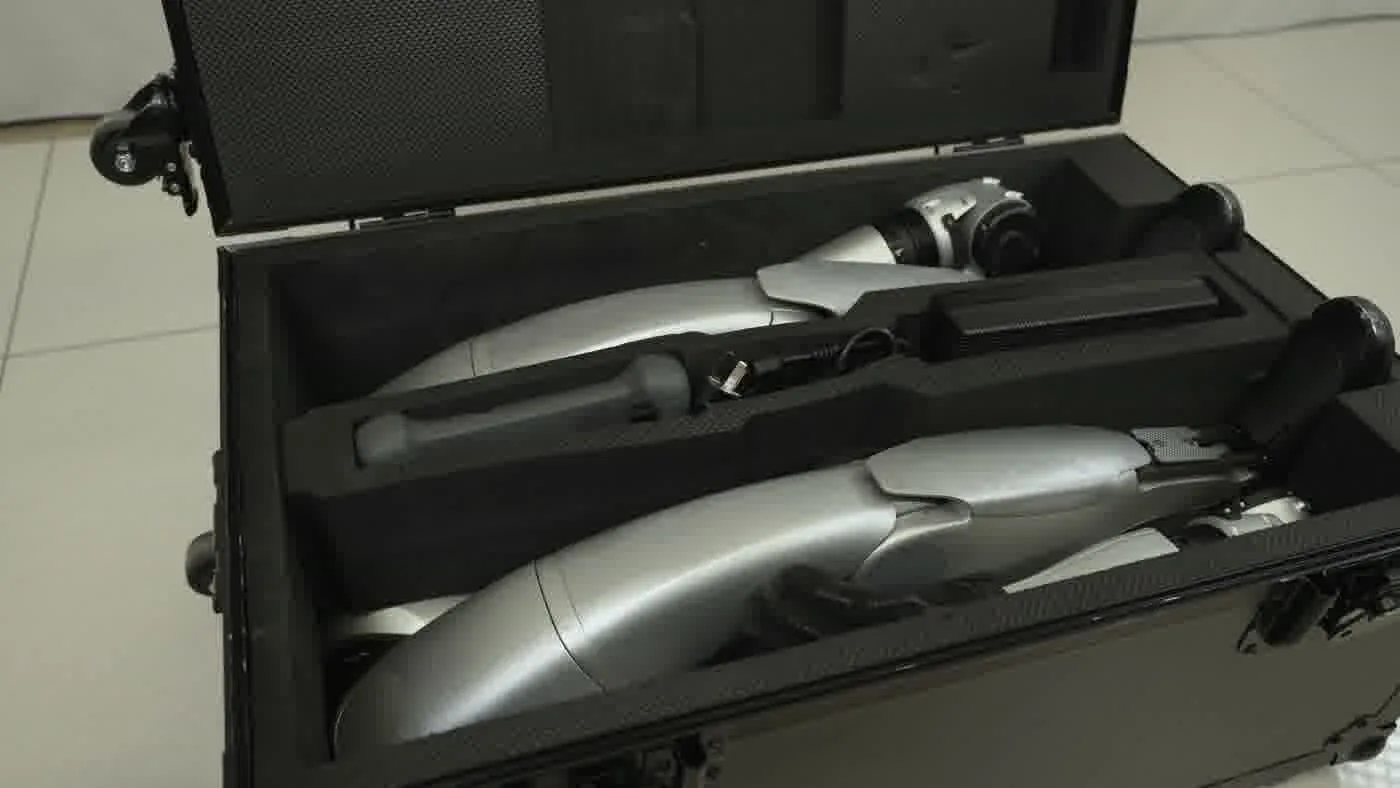
Year one carries the highest single-period cost because it includes the purchase itself. But the purchase price is not the only year-one expense. Buyers also absorb setup costs: appropriate storage for a 35kg precision machine, transport equipment, and whatever software work is needed to configure the robot for their specific use cases.
Operator training is a significant year-one investment that buyers frequently underestimate. The G1 is a capable platform, but capable event-level operation — consistent performance on uneven surfaces, crowd management judgment, graceful handling of the unexpected situations that live events reliably produce — takes time to develop. Most buyers who have run the robot through its first year report that they reached consistent operational confidence well into the year, not in the first weeks.
Year Two: Maintenance, Software, and the First Inflection
Year two is when the ongoing cost structure becomes visible. Routine maintenance catches up: the G1’s 41 degrees of freedom include mechanical components that wear with regular use, and Unitree’s recommended service intervals are not optional for a robot that is deployed at events where performance reliability is non-negotiable.
Software upkeep also becomes a line item in year two. Unitree releases firmware updates as the platform matures, and buyers who have invested in custom behavior development face compatibility questions when the base software advances. Custom interaction sequences, branded audio output, and third-party integrations may require rework. That rework has a cost whether it comes from internal developers or contracted robotics engineers.
By year two, the first generation of post-G1 humanoid platforms has also entered the market in meaningful volume. The capability gap that seemed theoretical at purchase is now visible in product comparisons and event industry conversations. TechCrunch‘s coverage of humanoid robotics has tracked how quickly ‘current generation’ shifts meaning in this sector — and the pace of that shift accelerated significantly in 2025 and 2026.
Year Three: The Capability Gap Becomes a Business Problem
Year three is where the depreciation math becomes most concrete. The hardware is still functional — the G1 does not stop working after 36 months — but its competitive position has shifted materially. Clients who book events in 2027 will be evaluating your offering against operators who have access to 2026-generation hardware. That comparison affects your ability to command the booking, the price, and the repeat business.
Secondary-market value for 2024-era G1 hardware in year three will reflect this competitive reality. Buyers who model resale value as a recovery mechanism for their initial investment should apply a conservative estimate — the same discipline that anyone reselling a three-year-old smartphone applies, not the discipline of someone selling a three-year-old excavator.
For a detailed comparison of the buy-versus-rent economics across three-year scenarios, the buy or rent humanoid robot decision framework covers this analysis with the full cost picture in view.
Renting vs Owning: The Depreciation Equation
The fundamental difference between owning and renting a humanoid robot, from a depreciation standpoint, is who holds the asset risk. When you own, the depreciation is on your books — in the sense that the hardware you paid for is worth less each year as the technology moves forward. When you rent, ZMProbots holds that risk.
What Renting Eliminates
When you rent the Unitree G1 through ZMProbots, you access current, maintained hardware without absorbing the ownership cost arc described above. You pay from $299 per day for Self-Service rental — a fixed, predictable cost that covers the hardware, maintenance, and the knowledge that the robot you deploy has been serviced and is operating at specification. For Full-Service Event deployments where our operator handles everything on-site, pricing is available on request.
There is no depreciation exposure on your books. The technology evolution that erodes the value of owned hardware does not affect a rental customer — as better platforms become available, the rental relationship allows movement with the market rather than against it. The robot you rent in 2027 will reflect what is operationally current in 2027, not what you purchased in 2024.
The Maintenance Offload
Ownership also means ownership of the maintenance burden. The 41 actuated joints, the battery system, the software update cycle — all of it lands on the buyer. Rental customers do not carry that operational overhead. ZMProbots maintains the hardware between deployments, manages the service schedule, and handles the logistics of keeping a $70,000 precision machine in event-ready condition. The cost of that maintenance is absorbed into the rental structure, not billed separately as an ownership surprise.
Who Should Actually Own
We are not arguing that ownership is always the wrong answer. Buyers with heavy deployment schedules — more than 20 event days per year — an internal technical team with robotics operations experience, and specific use cases requiring deep customization can build a compelling ownership case. For that buyer profile, the depreciation math is offset by the deployment volume and the operational control that ownership provides.
But that buyer profile is a minority of the people who inquire about purchasing the G1. For the event planner booking six to twelve robot days per year, the technology agency running quarterly brand activations, or the venue that wants a robot available for special events — the 3-year cost arc of ownership rarely beats the predictability of renting. The do not buy the humanoid robot post makes the direct case for that buyer, without softening the conclusion.
Buyers who want to evaluate the G1’s full specification before making either decision can find the technical details at Unitree’s official website. The for sale vs rental decision framework is also a useful structured tool for working through the economics before committing to either path.
People Also Ask
How fast does a humanoid robot depreciate in value?
Humanoid robots depreciate on a technology curve, not an industrial equipment curve. The pace of capability improvement in the humanoid robotics sector means that a platform purchased today will face meaningful competition from more capable models within 18 to 36 months. Secondary-market value reflects this — buyers who plan to resell a $70,000 G1 after three years should apply a conservative estimate of residual value, closer to consumer electronics than to heavy machinery.
What drives humanoid robot depreciation — age or capability gaps?
Primarily capability gaps. A humanoid robot that still runs reliably but has been outclassed by a newer generation platform faces depreciation pressure even if it has low operating hours. In event applications specifically, where the robot’s ability to impress is part of the product, the gap between current and prior generation hardware has direct commercial implications. Physical wear matters, but the technology cycle drives the larger part of the depreciation story.
Is it better to rent or buy a humanoid robot given the depreciation risk?
For most event-use buyers running fewer than 20 event days per year, renting eliminates the depreciation risk entirely while keeping the per-day cost predictable. Self-Service rental from ZMProbots starts at $299 per day with a 3-day minimum. Full-Service Event deployments are priced on request. Buyers who have modeled their full 3-year ownership cost and decided purchase makes sense can review the humanoid robot price 2026 overview first. The humanoid robot myths debunked post addresses common assumptions that lead buyers toward ownership before the full cost has been modeled.
What is the humanoid robot cost beyond the purchase price?
Beyond the $70,000 purchase price for the Unitree G1, buyers absorb storage, routine maintenance, parts replacement, operator training, software upkeep, logistics costs per deployment, and the carrying cost of technology depreciation as newer models arrive. The exact total depends heavily on deployment volume, staffing approach, and how much custom software development the buyer’s use case requires. The Unitree G1 complete guide 2026 covers the platform’s full specification and capability set, which provides context for modeling how long a given generation of hardware stays competitively current.
How does the 3-year depreciation arc affect the buy-vs-rent decision?
The 3-year depreciation arc is the financial argument that most often shifts buyers from ownership to rental when they model it honestly. In year one, the purchase looks manageable. By year two, maintenance and software costs accumulate. In year three, the hardware faces a capability gap versus current-generation platforms, and resale value reflects that gap. Rental sidesteps this arc entirely — you access maintained, current hardware without absorbing the depreciation that ownership carries. Tracking where market pricing lands in 2026 versus 2024 gives buyers useful context for modeling the full 3-year cost trajectory before committing.
The Bottom Line
Humanoid robot cost is not a one-time number. The 3-year ownership arc for a $70,000 Unitree G1 includes maintenance, operator training, software upkeep, and the technology depreciation that accumulates as the field advances. By year three, the asset sits in a materially different competitive position than at purchase.
Buyers who have confirmed the ownership economics work can review the full humanoid robot cost picture on our purchase page. Buyers whose numbers favor predictable costs — no depreciation, no maintenance overhead — will find humanoid robot rental starts at $299 per day for Self-Service, with Full-Service Event pricing on request. The right answer depends entirely on your deployment volume and whether you want the asset risk that ownership carries.