Race vs Runner — Suburban St
Table of Contents
- What Brands Are Actually Doing With Robots at Launches
- Patterns 1-2: The Reveal Moment and the Hands-On Demo Zone
- Patterns 3-4: Influencer Capture and Media Wall Talent
- Patterns 5-6: Retail Pop-Up and the Press Conference
- Patterns 7-8: Roadshow Mascot and VIP Suite Concierge
- What Determines a Strong Activation vs. a Flat One
- People Also Ask
- The Bottom Line
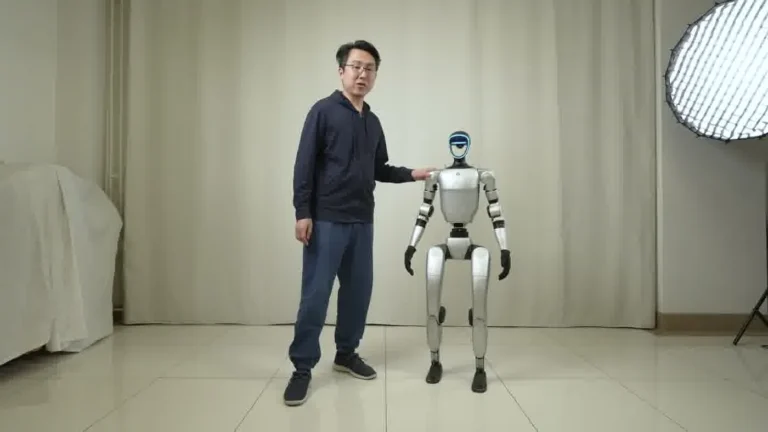
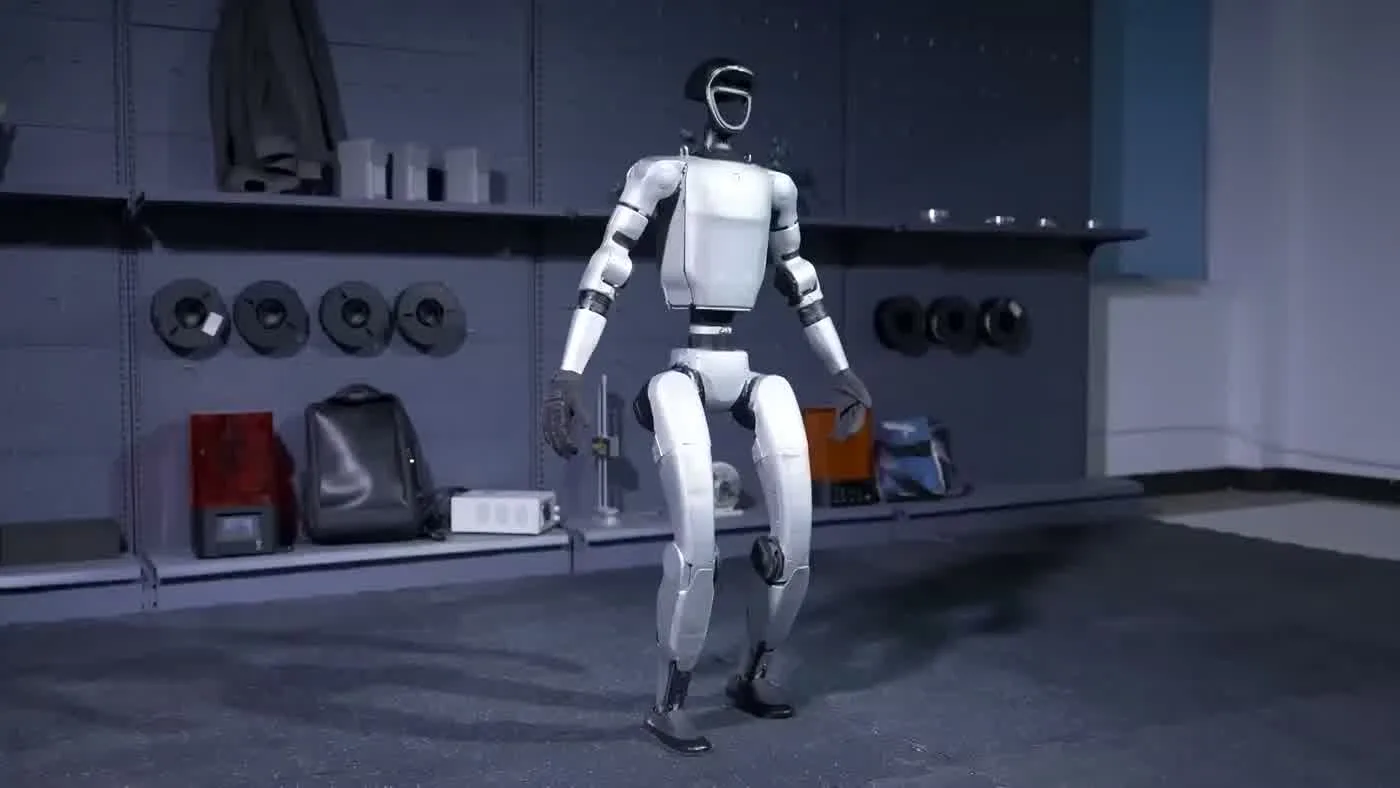
Unitree G1 — At a Glance
- 127 cm tall | 35 kg
- 41 degrees of freedom
- Five-finger dexterous hands
- 2-hour operational battery
- Onboard NVIDIA Jetson Orin
- Available to rent from $299/day
What Brands Are Actually Doing With Robots at Launches
What You Should Know
- The Unitree G1 is the platform behind almost every commercial product-launch activation in 2026 — 127 cm tall, 35 kg, 41 degrees of freedom
- Eight activation patterns cover almost every brief we receive: reveal, demo, influencer capture, media wall, retail pop-up, press, roadshow, VIP concierge
- Launches are time-bound and high-stakes — the Full-Service Event tier with a dispatched operator is the default booking
- Footage capture, not on-site attendance, is the dominant ROI driver for launch activations
- Self-Service Rental, from $299/day, is occasionally used by agencies with their own G1-trained crew for multi-day pre-launch rehearsals
Product launches buy the same robot for very different jobs. A consumer electronics brand books the G1 to be a co-presenter on a press stage. A streetwear label books it to roam a queue outside a pop-up. A pharma company books it to greet doctors at a closed-door product briefing. Same hardware, eight distinct creative briefs.
What unites all eight is intent. Each pattern has a defined role for the robot within the run-of-show, a defined audience, and a defined piece of footage or interaction that the brand wants to leave with. The activations that go flat are almost always the ones where the robot was added late, without a role, on the assumption that its presence alone would do work.
For the broader playbook on humanoids at events, the humanoid robot for events briefing covers operating windows, venue requirements, and what to budget for footage. This post focuses on the eight launch-specific patterns and what makes each one land.
Patterns 1-2: The Reveal Moment and the Hands-On Demo Zone
Pattern 1: The Reveal Moment
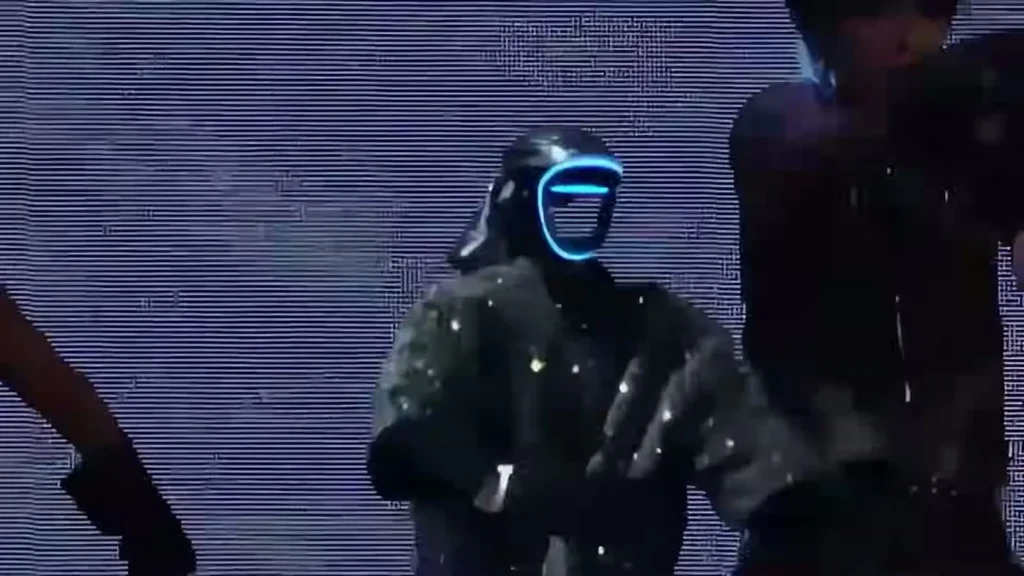
The reveal is the highest-stakes use of a humanoid at a launch. The lights drop, the stage clears, and the G1 walks the new product to centre stage — handing it to the founder, placing it on a plinth, or unveiling a cover. Done well, the moment travels: it becomes the primary clip cut into the press release, the social post, and the post-event recap.
Reveals require rehearsal time. The walk path is measured, the lighting is cued to the robot’s gait, and the operator scripts every transition. Most brands underestimate how much stage time it takes to make a thirty-second reveal feel inevitable rather than improvised. The rule of thumb we use: budget at least four rehearsal cycles on the actual stage before doors open. That is what separates a clip the press shares from one the press ignores.
Pattern 2: The Hands-On Demo Zone
The demo zone runs after the reveal, usually adjacent to the product display. Attendees walk up, the robot greets them by name (from a check-in tag), runs a short interaction, and hands off a sample or a co-branded photo card. This is where the G1’s five-finger dexterous hands earn their place in the production — pinching, holding, and passing objects with enough fidelity that the interaction feels designed rather than gimmicky.
The risk in a demo zone is repetition. After ninety minutes, the same loop becomes a queue killer. The fix is rotation: two or three scripted interactions sequenced so each attendee sees something different, and a short idle pose for the gaps between visitors. The brand activation breakdown covers what we have seen work across four real deployments — including how long a demo loop stays fresh before it needs a new sequence.
Patterns 3-4: Influencer Capture and Media Wall Talent
Pattern 3: Influencer Capture Setup
An influencer-capture activation is built around one output: shareable vertical video. The set is small — a branded backdrop, a marked floor cue, two lights, a phone tripod or a ring light at head height. The robot does a thirty- to sixty-second interaction with each creator: greeting, gesture sequence, fist bump, or scripted bit relevant to the launch.
The output volume matters more than any single piece. A good influencer-capture station produces fifty to a hundred unique short-form videos in a single afternoon. Each one carries the brand backdrop, the new product, and the robot — three elements that travel together when the creator uploads. According to Event Marketer reporting on launch activations, creator-led footage routinely outperforms paid promotion for first-week reach on consumer launches.
Pattern 4: Media Wall Talent
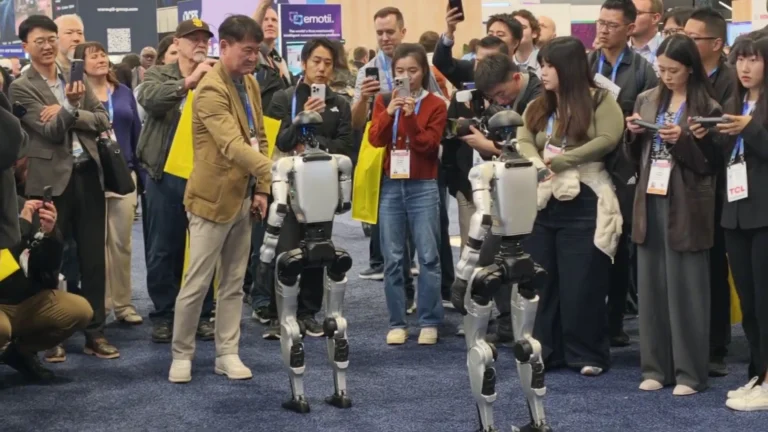
The media wall is the press-only photo line at a launch. Traditionally, a celebrity or the founder stands in front of the logo step-and-repeat for the photo cycle. Adding the G1 to the media wall puts a second body into every frame and gives every outlet a fresh image to file — one that does not look like every other launch from that week.
The catch with media-wall use is positioning. The robot needs a defined pose set that looks correct from the angles the press will shoot — not awkward, not actively in motion. We rehearse three or four poses that hold for the photo cycle, then transition between them on a measured cadence. The press get options; nobody gets a blurry shot of a robot mid-step.
Patterns 5-6: Retail Pop-Up and the Press Conference
Pattern 5: Retail Pop-Up Draw
A pop-up activation uses the robot to do what storefront windows used to do: stop foot traffic. The G1 stands inside a glass-fronted retail space (or a temporary pop-up build), runs scripted gestures on a loop, and produces a visible crowd outside. The crowd is the activation. Passers-by photograph the crowd, the queue length signals event-grade exclusivity, and the in-store conversion ratio rises because every person who enters has already been primed by the spectacle.
Pop-up activations also let you control the interaction more tightly than an open booth. Customers enter in small groups, receive a short scripted exchange, and exit through a buy or sample zone. The robot’s interaction is part of the choreography of the visit — not the whole visit. That balance keeps the dwell time productive rather than performative.
Pattern 6: The Press Conference Co-Presenter
Some launches run a formal press briefing — analysts, journalists, partner executives — and the robot is positioned as a co-presenter rather than as spectacle. The G1 brings the physical product on stage, sits on a stool during the announcement, or carries a slide-cued object to demonstrate a feature. The role is reserved, deliberate, and dressed in the brand’s visual language.
The press-conference use case demands precision. Every cue lines up with the speaker’s script. There is no room for an extra step, an unscripted gesture, or a moment that pulls focus during a quote that the analysts are recording. The G1 rental operations playbook covers how we walk a press script ahead of show day so the robot hits every cue cleanly.
Patterns 7-8: Roadshow Mascot and VIP Suite Concierge
Pattern 7: Roadshow Mascot
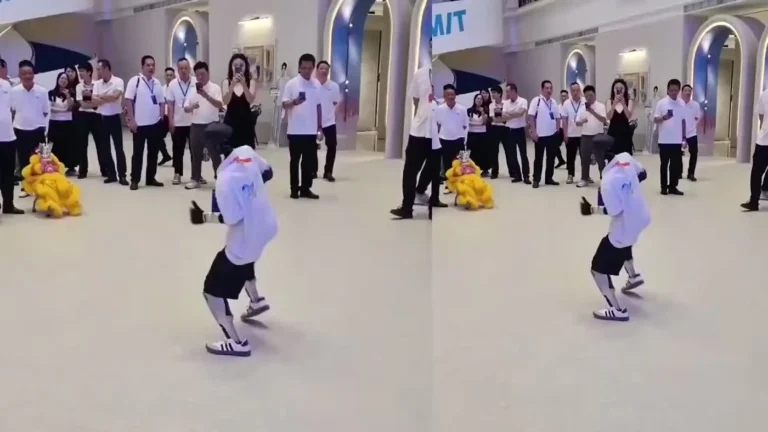
A roadshow takes one launch concept and tours it across multiple markets — usually three to six cities in a campaign window. Booking the same robot platform in every city is the easiest way to keep the activation visually consistent without freighting a custom build from city to city. The G1 becomes the through-line: same scripts, same poses, same hero shot, different audiences and backdrops.
Roadshow activations work especially well across our four served regions — United States, Canada, United Kingdom, and Europe — because the ZMProbots supplier network can hand the booking off to a local operator at each stop. That removes cross-border shipping from the critical path and shortens the on-site setup window in every market.
Pattern 8: VIP Suite Concierge
The most under-used pattern, and one of the most effective. At an enterprise launch, the VIP suite hosts buyers, distributors, or major media for closed-door briefings. The G1 sits in the suite as a concierge: greeting arrivals, handing over a personalised welcome packet, or running a short scripted feature demo on request. The audience is tiny — sometimes a dozen people across the evening — but each of those people is decision-grade.
VIP concierge use rarely produces public footage. That is the point. The activation is designed for the people physically in the suite, not for shareable output, and it converts to follow-up meetings at a rate no public-facing format matches. For launches with both a consumer reveal and a closed B2B side, running the robot in both contexts on the same day is straightforward — operator dispatch is included on Full-Service Event bookings.
What Determines a Strong Activation vs. a Flat One
The Run-of-Show Test
The single best predictor of activation quality is whether the robot appears on the production run-of-show with named cues. If the answer is yes — a specific time, a specific interaction, a specific exit — the activation almost always works. If the robot is on the venue layout but not on the timing document, expect a flat result.
Rehearsal Discipline
Rehearsal is the second predictor. The brands that schedule a full technical walk-through with the operator on the actual stage, with the actual lighting and audio cues, produce footage that is publishable on first capture. The brands that meet the robot in the loading bay on show morning produce footage they will spend the next week trying to salvage in edit.
Footage Plan Before Hardware
The third predictor is whether the brand has a defined footage plan before the booking is placed. What shots does the team want? Vertical for social, horizontal for the press kit, a wide-angle establishing shot for the recap video? Knowing the answers shapes camera placement, lighting, and where the robot needs to land within the frame. Industry coverage from Exhibitor Magazine consistently flags pre-event content planning as the line item most often skipped on first-time experiential builds — and the one most correlated with regret.
The Trade-Show Adjacent Lesson
Many of the same lessons apply across formats. The trade show robot rental breakdown covers how the same disciplines — defined role, rehearsal time, footage plan — show up in a recurring exhibition context. Launches compress those disciplines into a single day; trade shows stretch them across three to five. The underlying playbook is the same.
People Also Ask
How far in advance should I book a robot for a product launch?
Launches benefit from the longest lead time you can give. Three to six weeks ahead is comfortable for most markets in our network and lets rehearsal and script development run without compression. Same-week bookings are possible in some regions but limit creative scope.
Which service tier is right for a product launch?
Full-Service Event is the default for launches. The robot is dispatched with a ZMProbots-certified operator who runs the cues, manages the safety perimeter, and handles on-site changes. Self-Service Rental is occasionally used by agencies that have trained their own crew and want the robot on hand for rehearsal days in the lead-up.
Can the robot deliver a scripted speech at the launch?
The G1 platform is not a humanoid that talks expressively — it is a body-language platform. Audio plays from venue speakers; the robot performs the matched gestures and movement. That separation actually reads better on stage than a single source would.
Will the robot work outdoors at a launch venue?
Most launch activations are indoor. The G1 can deploy outdoors on flat, dry surfaces with stable lighting, but rain, uneven ground, and direct strong sun are limitations. Outdoor deployments are reviewed during the request stage.
How do we request pricing for our launch?
Submit the event date, location, expected duration, and a sketch of which patterns you are considering. We confirm operator availability and respond with a quotation against the brief. The request flow is short — most responses return within a working day.
The Bottom Line
Robot rental for product launches works when the robot has a defined job. Eight patterns — reveal, demo, influencer capture, media wall, retail pop-up, press conference, roadshow mascot, VIP concierge — cover almost every brief we see. The brands that win pick one or two of them deliberately and build the run-of-show around them.
The hardware is the easy part. The G1 walks, gestures, and holds objects with enough fidelity to look produced rather than novel. What changes the result is the work done before show day: script, rehearsal, and footage plan. Skip those and any platform will fall flat. Do them and the eight patterns above all deliver.
If you have a launch on the calendar, the next step is sketching which patterns fit the brief and getting an operator booked. Start at the event robot rental page to request a quote for your dates.