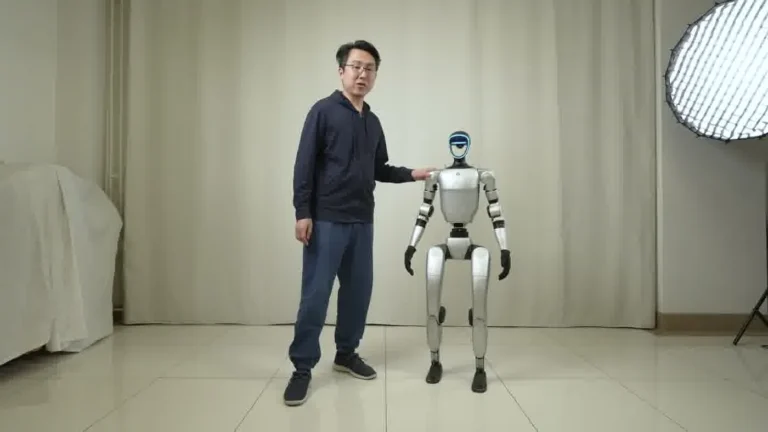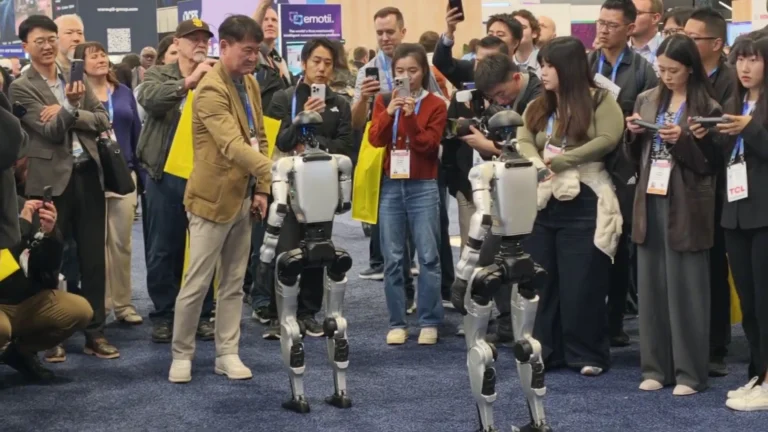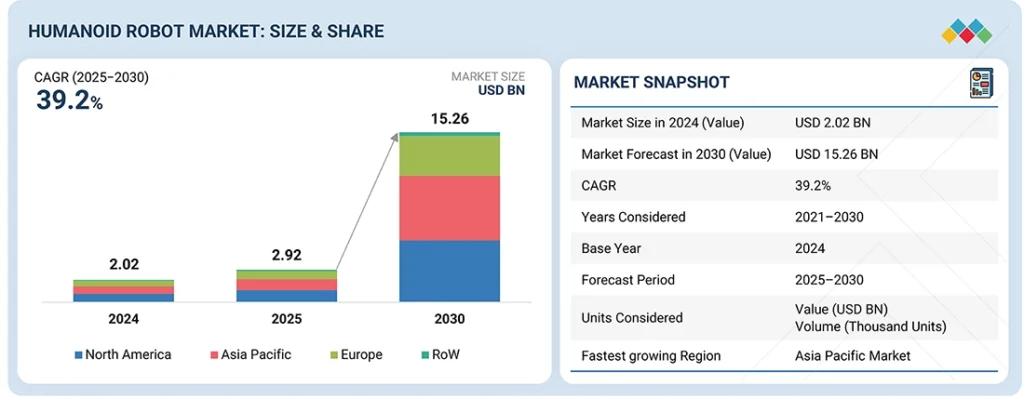
Chicago, January 2026. We fielded three purchase inquiries in a single week — each from a different industry, each with the same opening question: “what’s actually available to buy right now?” Most of what comes up in a search is either not for sale or isn’t priced for real commercial use.
Table of Contents
This post answers that question: what’s available, what the G1 includes, and the cost math buyers consistently miss before committing.
Flexibility Beyond Limits
What’s Actually for Sale in 2026
What You Should Know
- The Unitree G1 ($70,000) is the only capable humanoid robot available for general commercial purchase without an enterprise arrangement.
- Most other platforms — Agility Digit, Figure 02, Boston Dynamics Atlas, Tesla Optimus — are either enterprise-only or not commercially available yet.
- The Fourier GR3 is available to research institutions but has limited commercial deployment track record.
- For event, retail, and commercial demo use cases, the G1 is the default practical choice in 2026.
The humanoid robot market has more platforms in development than in commercial availability. Most coverage is either a research prototype, a pre-production announcement, or a product available only to large enterprise partners under negotiated contracts. Here’s the full breakdown:
Available for general commercial purchase:
- Unitree G1 — $70,000. Ships to most markets. No purchase restrictions for commercial buyers.
- Fourier GR3 — Available for purchase. Primary market is research institutions. Pricing available through Fourier’s sales channel.
Enterprise/institutional access only (not general purchase):
- Agility Robotics Digit — Available to enterprise manufacturing partners. Not available for event or commercial use cases.
- Figure 02 — Deployed with enterprise partners. Not available for general purchase.
- Boston Dynamics Atlas — Not available for commercial sale as of 2026.
- Tesla Optimus — Production stage. Not available for external purchase as of early 2026.
For buyers outside research or industrial manufacturing, the G1 is the practical starting point. IEEE Spectrum’s humanoid robot coverage tracks availability changes as new platforms move toward commercial release.
For a broader understanding of what humanoid robots can and can’t do before committing to a purchase, the humanoid robots explained post sets accurate baseline expectations.
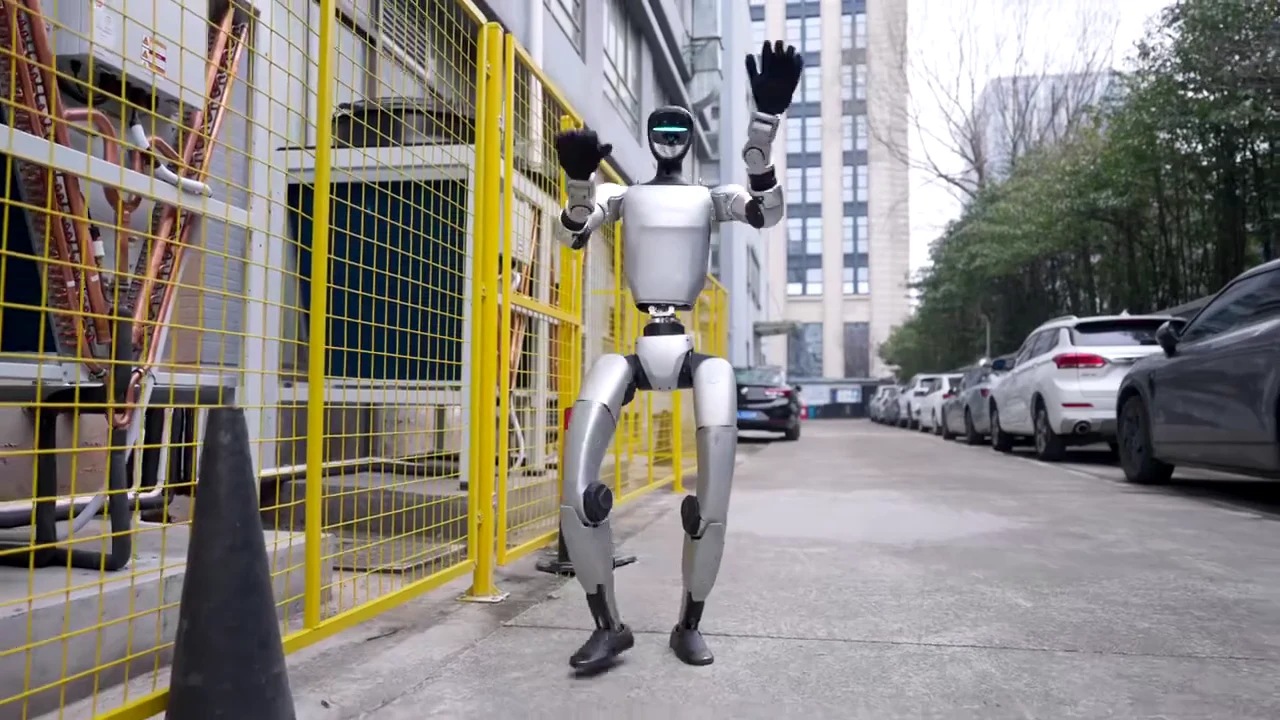
The Unitree G1: Specs and What They Mean for Buyers
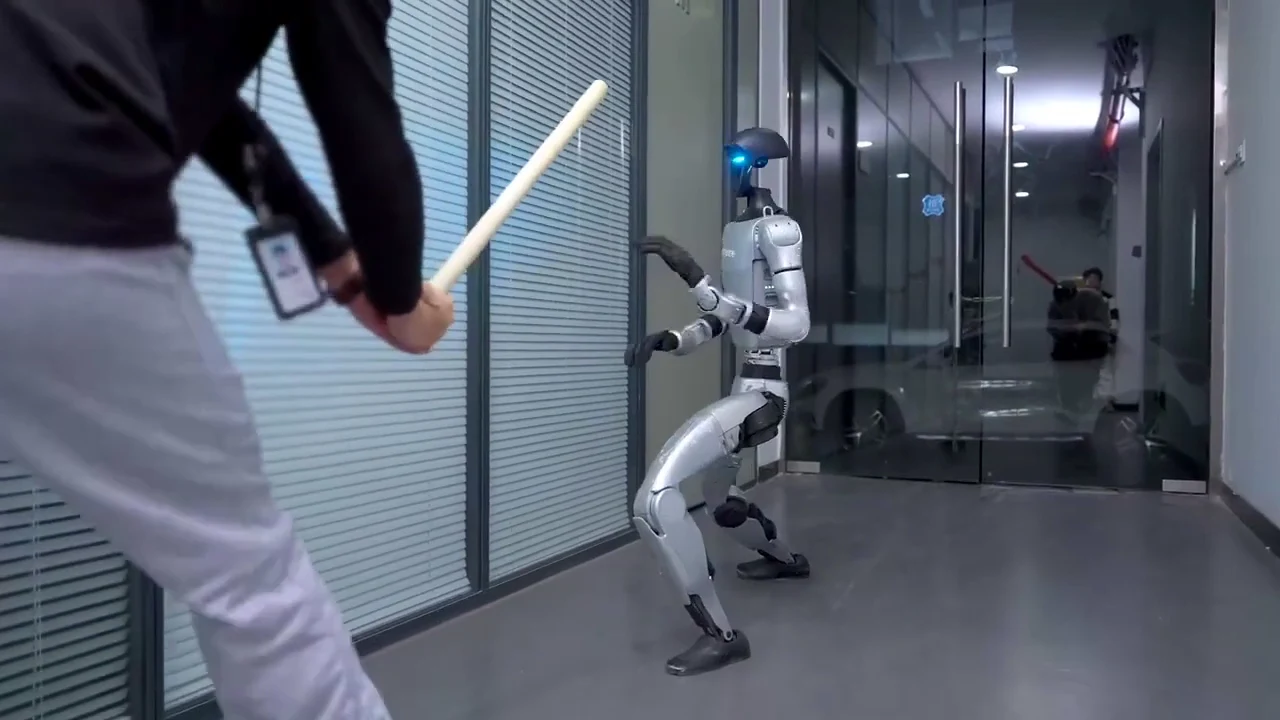
At $70,000, the G1 leads the market on price-to-capability ratio. Here’s what that figure gets you:
- Height and footprint: 1.27m tall, 35kg. One person can manage it on flat surfaces; two people for stairs and vehicle loading. Fits standard doorways and elevator cabs.
- Degrees of freedom: 41. Full-body coordination — legs, arms, torso, and five-finger dexterous hands. Capable of walking on uneven terrain, picking up and handing objects, and holding stable positions.
- Battery: approximately 2 hours of continuous active operation. Multiple charge cycles are standard for full-day deployments.
- Compute: Nvidia Jetson Orin 16G, onboard. 100 TOPS of AI inference. No cloud connection required for autonomous operation — demo loops run without wifi.
- Hands: BrainCo Revo 2 five-finger dexterous hands. Up to 3kg per arm. Handles object pick-and-place, button pressing, and prop interaction.
These specs make the G1 suitable for event activations, research programs, retail demos, and extended deployments where you need a robot that can move, interact, and operate without constant supervision. For a full annotated breakdown of every specification, the Unitree G1 specs breakdown covers each figure in depth.
The G1 is manufactured by Unitree Robotics. Their official G1 product page is the primary source for technical documentation and purchase inquiries direct from the manufacturer.
How the G1 Compares to Other Humanoid Robots
For buyers who need to justify the purchase decision internally, here’s how the G1 sits against the rest of the market:
Agility Robotics Digit: Built for warehouse logistics. Taller and heavier than the G1 — 175cm, 65kg. Designed for repetitive pick-and-place in structured environments. Not suitable for unstructured public-facing deployments. Enterprise pricing, no general availability.
Fourier GR3: Research-focused. 165cm, 71kg. Higher degree-of-freedom count than the G1 — designed for research applications that need fine manipulation data. Priced for institutional buyers. Limited commercial deployment track record.
Figure 02: Commercial stage, enterprise partners only. 168cm, 70kg. Strong funding backing but not available to general commercial buyers as of mid-2026. No announced public pricing.
Tesla Optimus Gen 2: 173cm, 57kg with 22-DOF hands. Not commercially available. Tesla’s stated target is internal manufacturing use first, external sales undefined timeline.
Boston Dynamics Atlas: 89kg, 56 joints. The most capable platform for raw physical movement. Not available for purchase — research program has been converted to internal development.
The G1 is the only platform where a commercial buyer can place a purchase order today without an enterprise partnership negotiation, a research institution affiliation, or an undefined waitlist. That access gap is the practical reason it dominates event and commercial deployment discussions in 2026. TechCrunch’s robotics section covers new platform announcements as availability changes.

The Honest Cost Math
The $70,000 purchase price is the starting number, not the complete one. Year-one ownership costs — maintenance, asset protection coverage, transport cases, operator training, and software customization — consistently run higher than the hardware price for buyers without existing robotics infrastructure.
The complete breakdown is in the buy a humanoid robot: real costs post. The short version:
- Buyers deploying 30 to 40 or more days per year typically justify ownership on the math
- Buyers deploying a few times per year typically don’t — rental beats the total cost calculation
- Buyers with in-house engineering and maintenance capacity close the math faster than those who need to outsource it
Renting through ZMProbots is the path many buyers take before committing. You run the G1 in your actual environment, understand the operational requirements, and make the purchase decision with real data instead of projections. For event and marketing use cases specifically, the humanoid robot for events post covers what operational deployment actually looks like.
For organizations with the frequency and internal capability to justify it, the G1 at $70,000 is the most defensible entry point in the category. The inside a humanoid robot post helps buyers understand what they’re maintaining after purchase — which directly affects the ownership cost model.
People Also Ask
Which humanoid robots are for sale in 2026?
The Unitree G1 ($70,000) is the primary commercially available humanoid robot for general buyers. The Fourier GR3 is available primarily to research institutions. Most other platforms — Agility Digit, Figure 02, Boston Dynamics Atlas, Tesla Optimus — are either enterprise-only or not yet commercially available.
How much does a humanoid robot cost to buy?
The Unitree G1 starts at $70,000 — the most affordable capable humanoid on the market. Other commercially accessible platforms range from comparable pricing up to significantly higher depending on capability and target market. Most platforms at the higher end require enterprise purchasing arrangements.
Can a business buy a humanoid robot without a special arrangement?
Yes — the Unitree G1 is available for direct commercial purchase in most markets. No enterprise partnership or research affiliation required. Some export regulations apply depending on country of purchase and intended use. Delivery and import logistics vary by region.
Is it better to buy or rent a humanoid robot?
Buying makes sense for sustained high-frequency use with in-house technical capacity. Renting typically wins for episodic deployments — a few events per year. The full cost comparison across three years is worked out in the buying vs renting post.
What’s included when you buy the Unitree G1?
The robot hardware, Unitree’s SDK and base motion library, and standard technical documentation. Delivery, import duties, extended warranty, operator training, and custom software development are separate. These add-on costs are where most buyers under-budget during the initial purchase decision.
Are there other humanoid robots for sale besides the Unitree G1?
The Fourier GR3 is the main alternative currently available for purchase, though its primary market is research. In practice, the G1 is the default choice for commercial buyers because of its combination of capability, price point, and actual purchase availability without negotiated enterprise terms.
What should I know before buying a humanoid robot?
Know your deployment frequency — it determines whether buying or renting makes financial sense. Know whether you have in-house technical capacity for maintenance and operator training. And model year-one ownership costs, not just the purchase price. Most buyers who run the full number end up with a different answer than they expected from the sticker price alone.
The Bottom Line
In 2026, the Unitree G1 is the realistic answer to “what humanoid robot can I actually buy?” — commercially available, the most accessible price point in the category, and capable enough for event, research, and commercial deployment use cases. Most other platforms require enterprise arrangements or are not yet available for general purchase.
Before committing, model the full ownership cost: purchase price plus year-one operational costs. For high-frequency users with internal technical capacity, the math works. For everyone else, extended rental is the better path to the same hardware. If you’re ready to move forward, the humanoid robot for sale page has current availability and pricing.