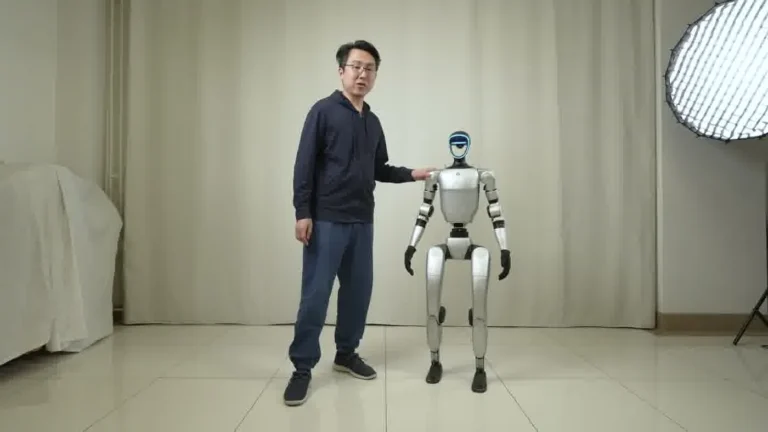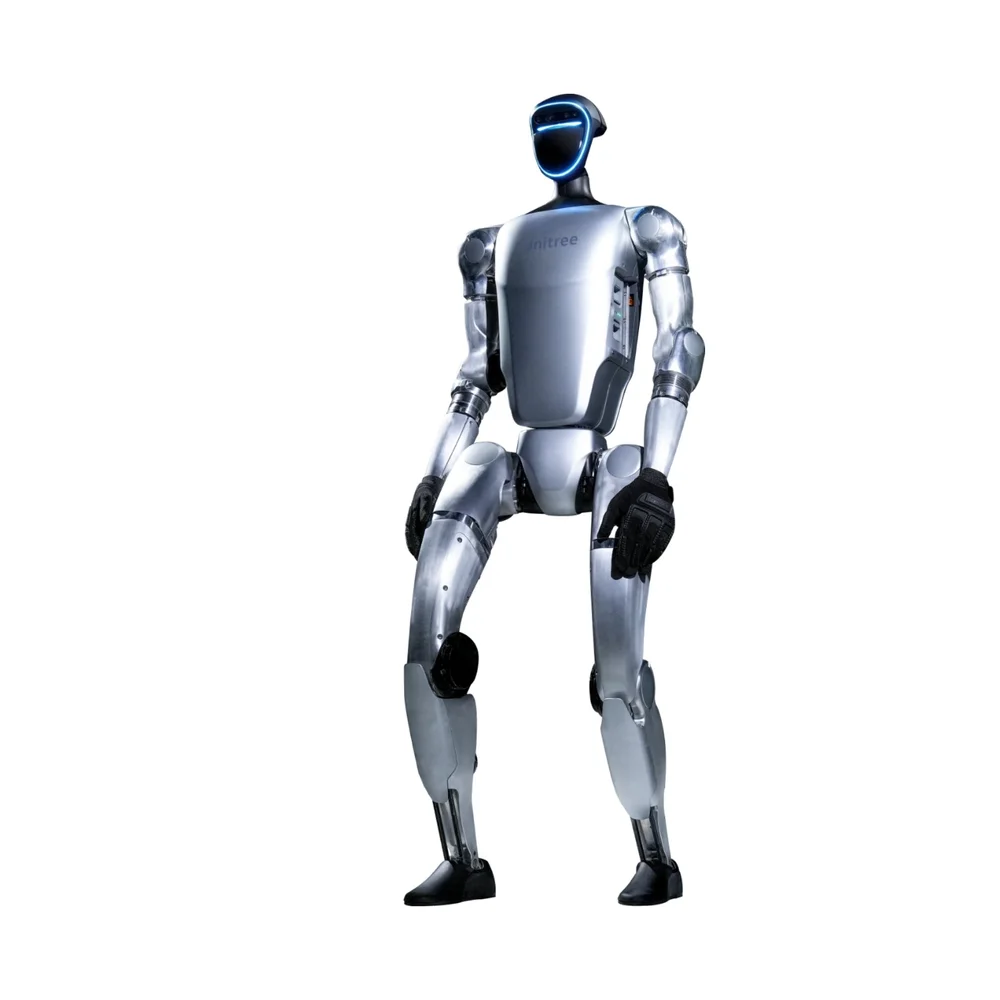
San Francisco, May 2026. We’ve shipped the Unitree G1 to research labs, content shoots, and corporate pilots since mass production began in August 2024. This guide pulls together every figure that matters — what Unitree publishes, what buyers learn the hard way, and the parts of the story not on the manufacturer’s site.
Table of Contents
- What You Should Know About the Unitree G1
- The Twelve G1 Configurations, Decoded
- Inside the Hardware: Every Spec That Matters
- Battery Life: The Two-Hour Reality
- What the G1 Can Actually Do
- The Software Stack You Inherit
- G1 vs the Field: A Brutal 2026 Comparison
- Where the G1 Falls Short
- Where the G1 Is Actually Being Used
- Unitree Robotics: From Garage to $7B IPO Filing
- Buy, Rent, or Wait? A Decision Framework
- People Also Ask
- The Bottom Line
Flexibility Beyond Limits
What You Should Know About the Unitree G1
What You Should Know
- The G1 ships in twelve configurations from $13,500 (basic, no SDK, demo only) to $73,900 (G1 EDU Ultimate D with 41 DOF and tactile five-finger hands).
- Real-world battery runtime is approximately 2 hours of active use — not the 5–10 hours of standby cited in marketing.
- The G1 has no published IP rating. Indoor use only unless you wrap it yourself, as Unitree did for its −47 °C Altay snow walk in February 2026.
- The robot has been the subject of a confirmed wormable Bluetooth security flaw (UniPwn, disclosed September 2025) that affects every Unitree humanoid and quadruped in the field. Fixes are rolling out.
- Unitree filed for an IPO on Shanghai’s STAR Market in March 2026 at a target valuation around $7 billion — context that matters if you’re betting on the platform’s longevity.
Most G1 buyers don’t need everything in this guide. But if you’re deciding whether to buy, rent, or wait for a competitor, every figure here changes the calculation. The G1 is the only capable bipedal humanoid commercially available below $20,000 in 2026 — and it’s also the only one you can put on a credit card and have shipped from Hangzhou in four to eight weeks. Those two facts shape every other decision.
The Twelve G1 Configurations, Decoded
Unitree’s G1 product line is wider than most buyers realize. The marketing copy talks about “the G1” as if it’s a single robot. There are twelve.
Three tiers, four hand options
The G1 lineup splits into three capability tiers — Basic, EDU Plus, EDU Pro, EDU Ultimate — with hand options layered on top. Each higher tier adds joints, software access, and compute headroom.
- G1 (basic): $13,500 direct from Unitree, $16,000–$21,600 from resellers with shipping. 23 degrees of freedom. Fixed gripper hands. 8-core ARM CPU. No SDK access — demo and educational use only. Eight-month warranty. The model that gets booked for events and viral content.
- G1 EDU Standard (U1): $43,900. Same 23 DOF, full Python and C++ SDK, ROS 2 support, 40 TOPS Jetson Orin. The entry point for serious research and developer use.
- G1 EDU Plus (U2): $53,900. 29 DOF (added arm and waist joints). Most academic papers using the G1 reference this configuration.
- G1 EDU Pro: low-to-mid-fifty-thousand range. 37 DOF. First tier with dexterous hands — either Unitree’s three-finger Dex3-1 or BrainCo’s five-finger Revo 2.
- G1 EDU Ultimate: the top tier ($60k+ depending on hand and tactile options). 41–43 DOF depending on hand choice. 100 TOPS compute. The top-tier research and manipulation platform.
The hand options matter more than the tier label
Three hand systems ship across the G1 line, and they behave differently:
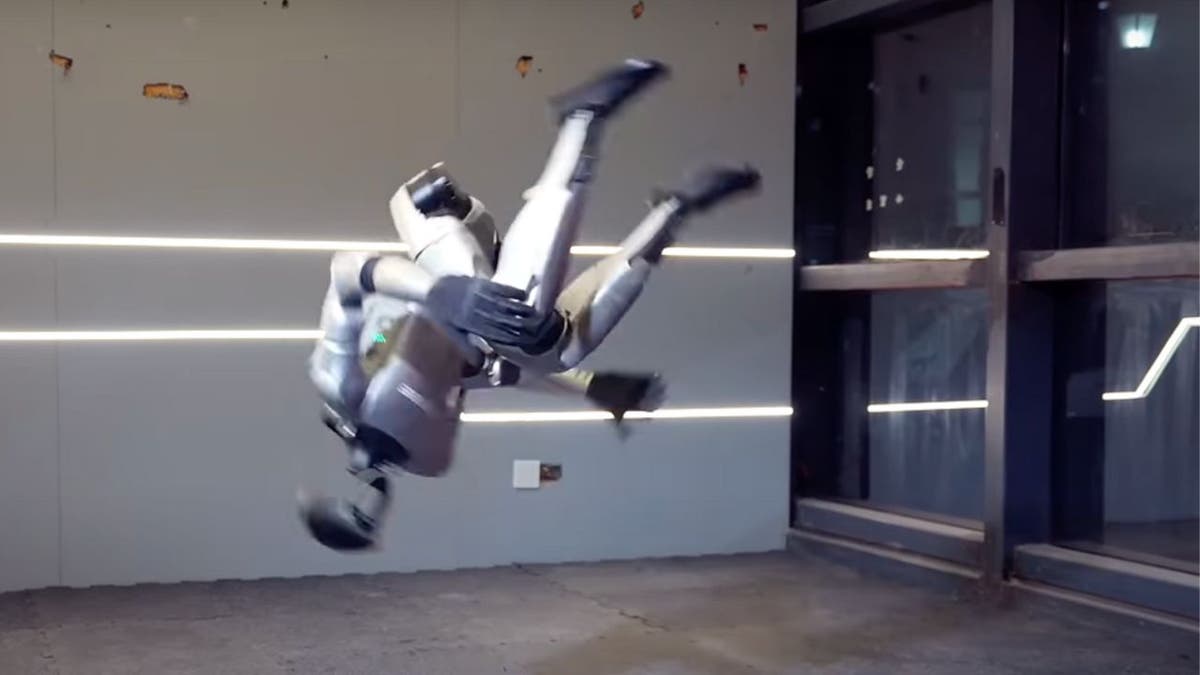
- Dex3-1 (Unitree, three-finger, 7 DOF total — three on the thumb, two each on index and middle): force-controlled, optional tactile sensing. Best documented in academic papers. Used in the VIRAL paper benchmark (54 of 59 success on real-world manipulation tasks).
- BrainCo Revo 2 (third-party, five-finger, 6 DOF per hand): C and Python SDK, exclusive to G1-D and select Pro and Ultimate variants. Two editions — Basic and Tactile, the Tactile version adding fingertip cameras and haptic sensing.
- Inspire FTP (third-party five-finger): supported through Unitree’s teleoperation stack but with documented motor-overheat issues when paired with the shoulder-pitch joint under load. A real GitHub issue, not a theoretical concern.
The wheeled variant
In November 2025, Unitree introduced the G1-D — a wheeled-base variant of the G1, 17 to 19 DOF on top of a wheeled chassis, top speed 1.5 m/s, payload 80 kg, 3 kg per arm. Pricing is still listed as TBD as of May 2026. Some retailers and aggregators list a “G1-R” wheeled robot — that listing is incorrect. The wheeled G1 is the G1-D.
What you actually get for $13,500
The basic G1 is genuinely capable for what it is — walking, simple gestures, demo loops, viral content. What you don’t get is the SDK, the dexterous hands, the higher compute, or the higher-DOF body. For event activations and content production, the basic model usually delivers what’s needed. For research, manipulation, or any application requiring custom programming, you’re starting at $43,900.
Unitree’s official G1 product page has the current configuration matrix and direct purchase options. Lead time is four to eight weeks via air freight from Hangzhou. Resellers in the US, EU, and UK add several thousand dollars but often hold inventory.
Inside the Hardware: Every Spec That Matters
Physical dimensions
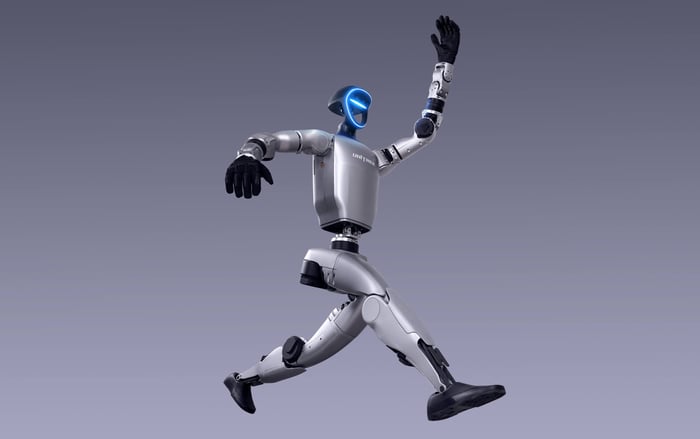
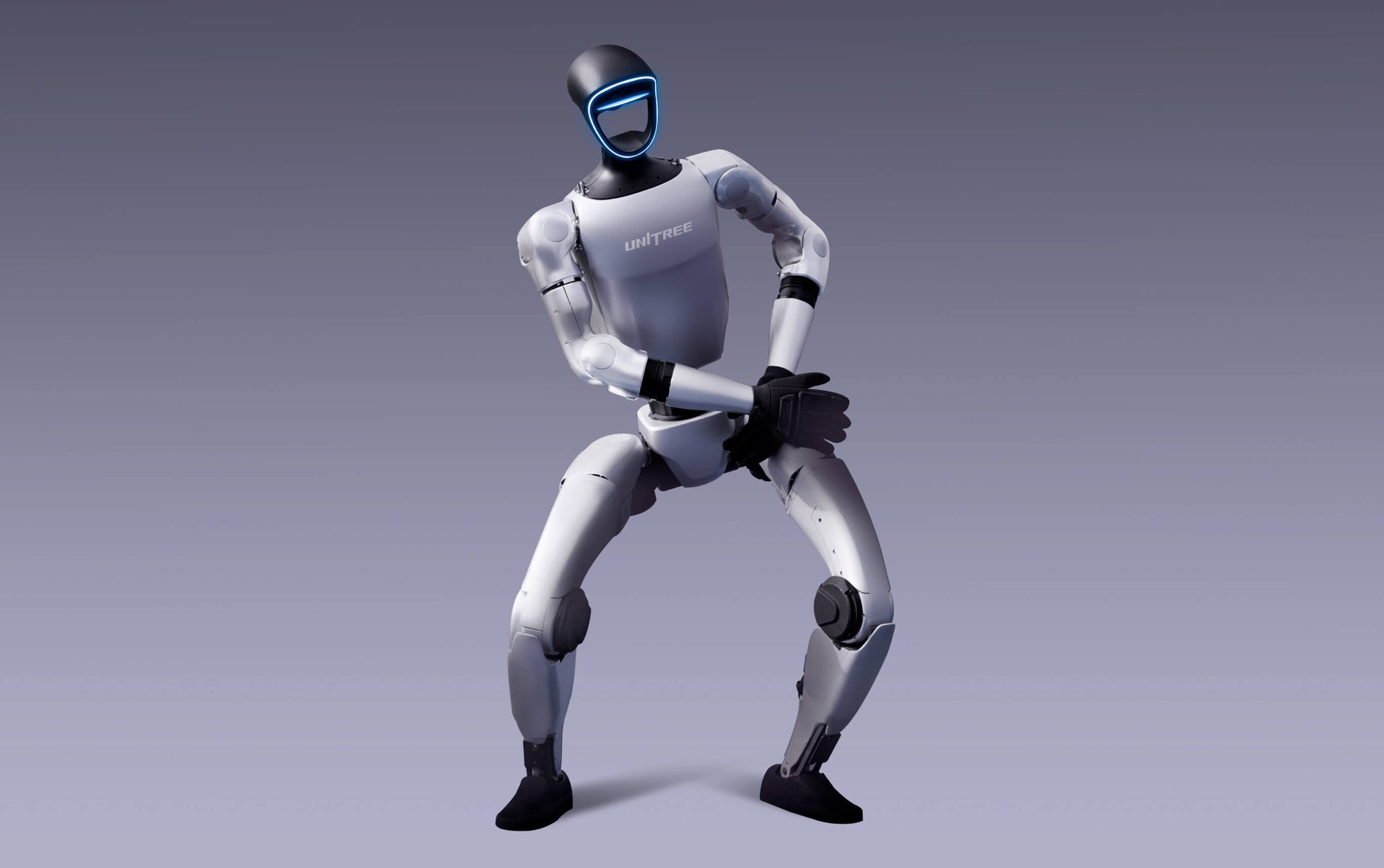
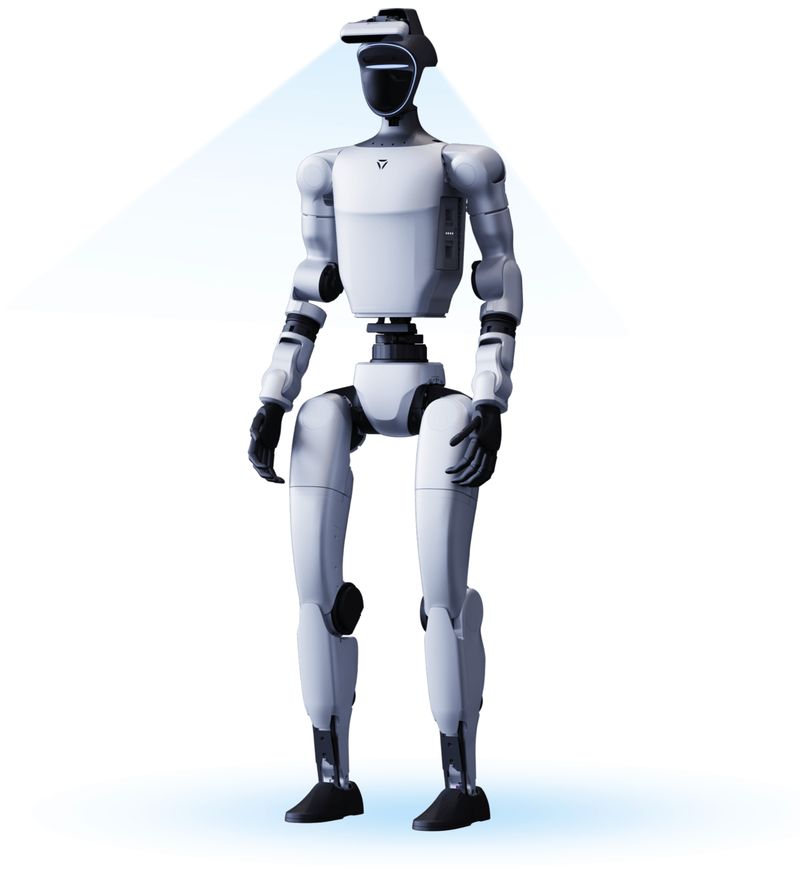
Standing height: 1.32 m (132 cm) — about the height of an average ten-year-old. Folded for transport: 690 mm — fits in a large suitcase. Footprint standing: 450 mm by 200 mm, widening to 450 by 300 mm when folded. Weight: 35 kg with battery installed. The Robot Report’s May 2024 launch coverage cited 47 kg, but that was a pre-production unit; the production robot is the lighter figure.
The 1.32 m height is a deliberate design choice. It’s tall enough to be visually present in a public setting and short enough to fit through elevator cabs, standard 0.8 m doorways, and typical event booth corridors without modification. The trade-off is reach — the G1 cannot work at standard adult workbench heights, which limits its use in industrial labor contexts.
Joints and degrees of freedom
The G1 family ranges from 23 DOF (basic and EDU Standard) to 43 DOF (Ultimate A and B with Dex3-1 hands). The most common research configuration is 29 DOF — used in the LeRobot Hugging Face documentation, the VIRAL benchmark, and the hierarchical visual-language paper.
Joint torque is the figure that matters for what the robot can lift and how aggressively it can move. Knee torque on the basic G1 is 90 N·m max; on EDU configurations it’s 120 N·m. Hip pitch joints reach 154°, knees extend 0–165°, and the waist rotates ±155°. These are not theoretical numbers — they translate directly into the side flips, kip-ups, and spinning kicks that show up in Unitree’s demo videos.
Compute
EDU configurations run an Nvidia Jetson Orin NX delivering 100 TOPS of AI inference compute, onboard. Some reviewer copy cites “275 TOPS” — that figure is incorrect for the G1; it confuses the Orin NX with the AGX Orin used in Booster T1 and other higher-end platforms. The basic G1 runs an 8-core ARM CPU only, with no Jetson and no SDK access. If your use case requires custom motion programming, autonomous navigation, or any kind of model deployment, the basic tier is not the right starting point.
The 100 TOPS figure matters because it means demo loops, teleoperation processing, and on-device inference all run without a cloud connection. Convention center wifi unreliability doesn’t stop the robot. IEEE Spectrum’s coverage of the G1 launch detailed the compute architecture and how it positioned the platform relative to the Atlas-class robots running far more expensive sensor and compute stacks.
Sensors
The G1 ships with a Livox MID-360 3D LiDAR, an Intel RealSense D435 (or D435i) depth camera, a four-microphone array, a 5W speaker, and an inertial measurement unit. The LiDAR provides 360° spatial awareness; the depth camera handles close-range manipulation and obstacle detection. Together they let the robot move through unfamiliar spaces and react to people in real time without colliding.
Hands and payload
Per-arm payload is 2 kg on the basic G1 and 3 kg on EDU configurations. That’s enough to hand someone a branded item, hold a microphone, or pick up most consumer objects. It’s not enough for industrial labor — moving boxes, working a production line, lifting equipment.
The hand options were covered in the variant section. Quick recap: Dex3-1 for academic-grade documentation, BrainCo Revo 2 for five-finger dexterity with a working SDK, Inspire FTP if you need a third-party five-finger option but accept the documented overheat issue.
Construction
The G1 is built from aluminum alloy frames and carbon-fiber composite shells. Industrial crossed-roller bearings in the legs, hollow-shaft permanent-magnet synchronous motors with planetary gearboxes, dual encoders per joint, force-position hybrid control at 500 Hz with 2 ms DDS communication. These are real-time control numbers — not aspirational. The motors are backdrivable, which is what allows the G1 to recover from unexpected pushes and to do the fall-recovery routines covered in the next section.
What’s not on the spec sheet
Unitree doesn’t publish an IP rating for the G1. Reviewers and resellers consistently note “indoor only” — no weather sealing for rain, dust, or extreme temperatures. The Altay snow demo used external insulation to make it work. Other Unitree products (the Go2 quadruped, the A2 quadruped) do publish IP67 ratings; do not assume those carry over to the G1, because they don’t. If your use case puts the robot outdoors in unpredictable weather, plan for protection.
For complete authority on the spec sheet, the Unitree G1 humanoid robot page covers the configuration we deploy. For a deeper look at the parts behind these specs, the inside a humanoid robot post breaks down what each component does.
Battery Life: The Two-Hour Reality
The single most common surprise for new G1 buyers is battery runtime. Unitree’s marketing mentions standby figures of 5 to 10 hours; the real-world active-use figure is approximately 2 hours. Multiple independent reviewers — robozaps, robot retailers, university researchers — converge on the 2-hour number under typical demo and active-use loads.
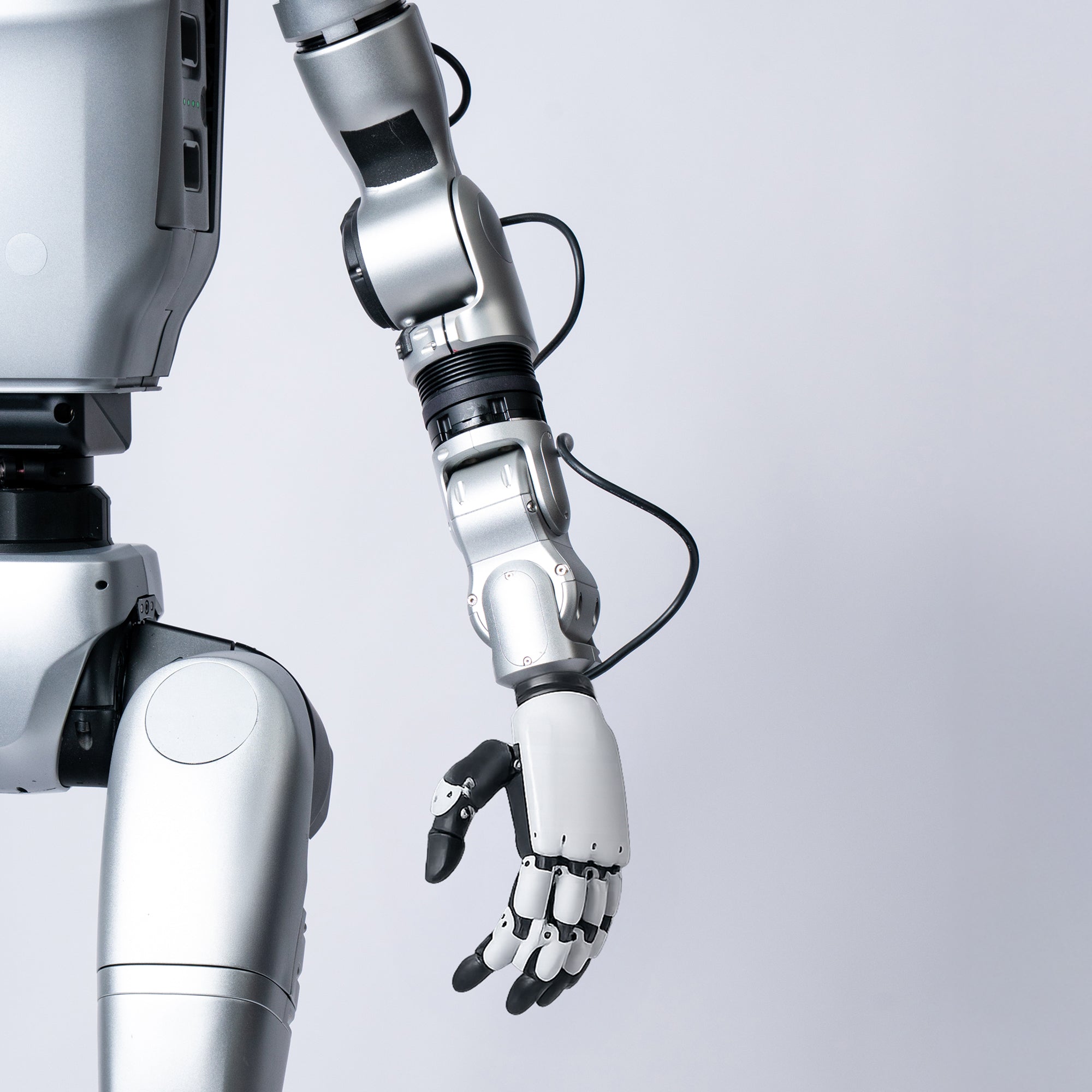
The pack itself is a 13S lithium configuration with 9,000 mAh nominal capacity. Some retailer listings cite 45 Ah (2,250 Wh, 58 V) — that figure refers to an extended-life pack option, not the standard battery. Quick-swap takes under 30 seconds. Charging time on the standard pack is roughly an hour and a half from a 54 V, 5 A charger.
What two hours actually looks like
For a full-day event deployment, plan on three to four charge cycles per robot per show day. For continuous demo loops (walking, gesturing, interacting), an hour and a half to two hours is a realistic block before the battery enters its low-power state. Static demos with minimal movement extend that. Sustained high-movement sequences — boxing demos, dance routines, the kind of viral content the G1 is best known for — can shorten the block to around an hour.
The shipping problem
The G1’s battery exceeds the FAA’s 100 Wh threshold for cabin-carriage and triggers the 160 Wh ban for commercial flights. In 2025, this caused what’s reported as the first humanoid robot flight delay incident — a G1 in transit triggered TSA review and was held back from a passenger flight. Air freight handles this fine; passenger air travel does not. If you’re planning to fly a G1 to your venue as luggage, that plan does not work.
For most buyers, the practical implication is that battery logistics need to be planned in advance. Spare packs, charging stations near the deployment area, schedule blocks for swaps. We handle this for rentals; for owners, it’s a recurring operational task that doesn’t go away.
What the G1 Can Actually Do
Unitree’s social channels and YouTube uploads have shaped public expectations of the G1 — sometimes accurately, sometimes not. Here’s what the robot actually does, broken down by capability category, with the published research that backs each figure.
Walking and movement
The G1 walks at 2 m/s in normal operation — about 4.5 mph or 7.2 km/h. That’s faster than a casual human walking pace and slower than a jog. EDU configurations with refined gait control have demonstrated up to 12 km/h in sprint demos. Walking on uneven terrain, recovering from pushes, and traversing surface transitions like carpet-to-tile happen automatically with the active balance system.
The 130,000-step walk in Altay, Xinjiang in February 2026 — at temperatures down to −47.4 °C — was a deliberate stress test. The robot wore a custom puffer jacket and improvised plastic leg sleeves; the underlying hardware itself isn’t weather-rated. The robot traced a 186 m by 100 m Olympic emblem using Beidou positioning. It worked, which says something about the gait control. It worked with custom insulation, which says something about the practical limits.
Acrobatics
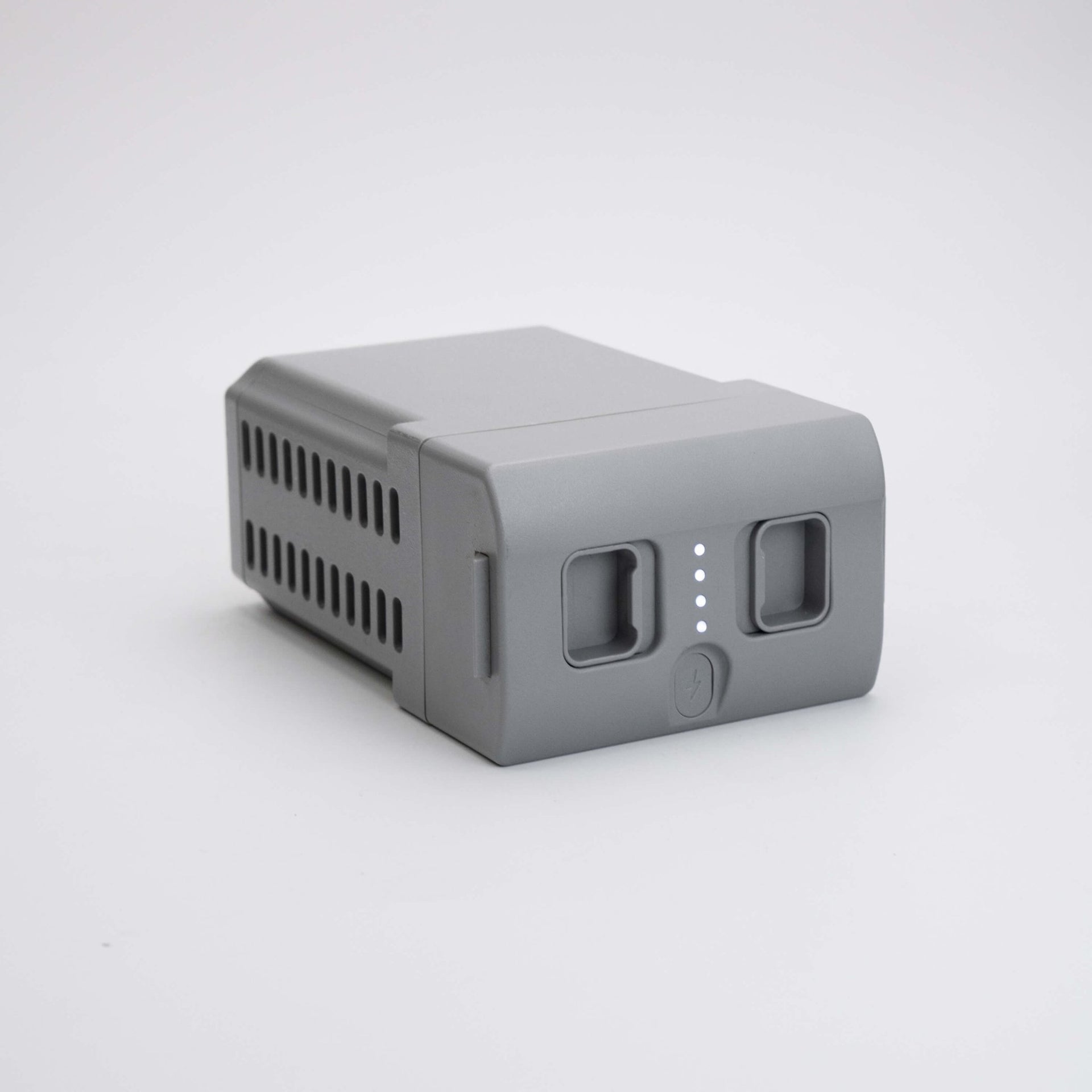
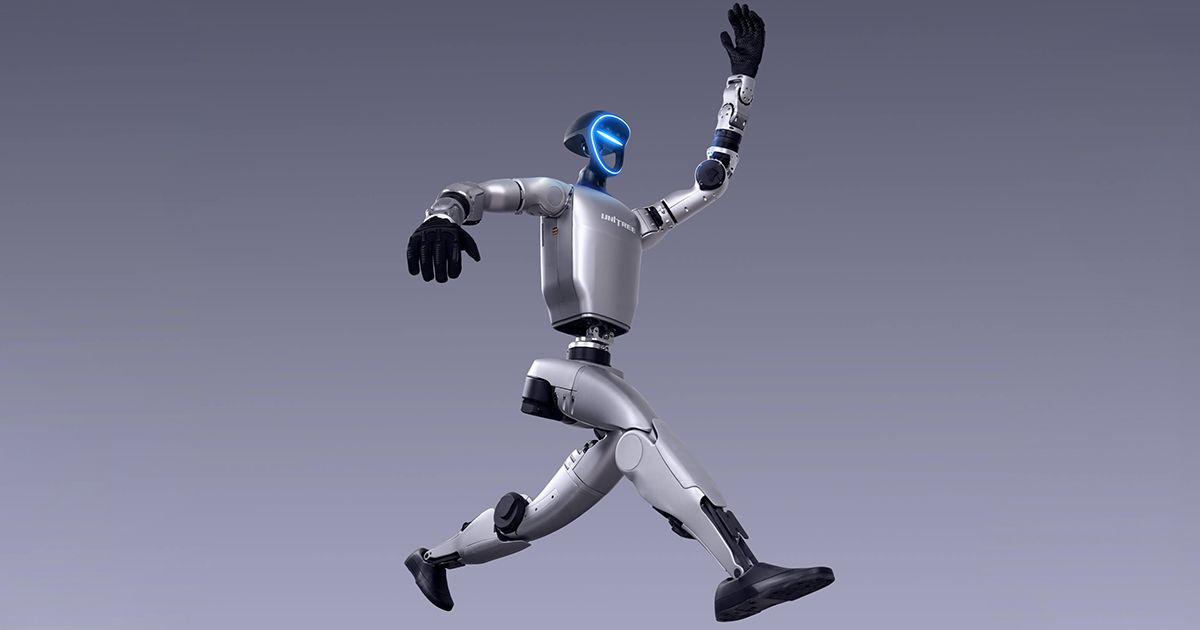
The G1’s standing side flip, first publicly demonstrated by Unitree in March 2025, was billed as a “world first” for an electric humanoid. No counter-example has surfaced in the year since. The kip-up — the move where the robot returns to its feet from a supine position in a single motion — followed shortly after. Spinning kicks, 720° spin-kicks, and a “drunken fist” kung fu routine appeared in the 2026 Spring Festival Gala broadcast.
One important attribution correction: the dance performance at the 2025 Spring Festival Gala (January 2025) used Unitree’s H1 humanoid, not the G1. CGTN, Global Times, and humanoidsdaily all confirm this. Many secondary sources have misattributed it. The 2026 Spring Festival Gala is when the G1 took center stage with parkour and the kung fu routines.
Manipulation
The VIRAL paper (arXiv 2511.15200, late 2025) reports a 29-DOF G1 with 7-DOF Dex3-1 hands achieving 54 of 59 successful task completions on real-world loco-manipulation benchmarks — picking up, transporting, and placing objects under varying conditions. The hierarchical visual-language paper (arXiv 2506.22827) reports roughly 72 percent success across forty multi-step pick-and-place trials. The HumanoidVLM benchmark hits 93% retrieval accuracy on 14 visual scenarios.
These are research-grade results. They show what the platform is capable of with current research models. Out of the box, with stock Unitree software, manipulation behavior is much more limited — closer to repeatable demo loops than autonomous task completion.
Fall recovery
The G1’s ability to get itself back up from a fall has been the subject of multiple academic papers — HumanUP (UIUC, RSS 2025), HoST, VIGOR, FIRM. The robot reliably recovers from supine and prone positions on grass, snow, slopes, and indoor floors. This isn’t a Unitree marketing line; it’s been independently verified across multiple research groups. TechCrunch’s coverage of the April 2025 Beijing humanoid half-marathon noted that fall recovery was the differentiator that let robots finish the course at all.
Voice and multimodal interaction
Firmware version 3.2 and later, on EDU configurations, include large language model support. Unitree’s UnifoLM-VLA-0, released open-source in March 2026 (CC BY-NC-SA 4.0), is built on Qwen 2.5 VL 7B and provides a single-model 12-task manipulation foundation model. The accompanying UnifoLM-WBT-Dataset is, per Unitree, the largest open humanoid teleoperation dataset — though that figure should be read alongside Hugging Face’s LeRobot dataset releases for context.
For event and content applications, the practical capability set is: walking, gesturing, picking up and handing objects, holding photo poses, simple voice interactions, and the acrobatic routines when they’re useful. We deploy the G1 across the US, UK, and EU for trade show and event work. The humanoid robot for events post covers the operational side of these deployments — most clients use a small subset of the full capability list and that’s exactly what an event audience responds to.
The Software Stack You Inherit
Buying a G1 EDU means inheriting a software stack that has matured significantly between the May 2024 launch and May 2026. This is one of the underappreciated reasons the G1 dominates research and education deployments — the tooling around it is real and getting better.
Core SDKs
Unitree maintains both unitree_sdk2 (C++) and unitree_sdk2_python. Communication uses DDS — the same real-time messaging protocol used in industrial automation. Control loops run at 500 Hz; DDS round-trip is roughly 2 ms. The SDKs are open-source on GitHub under the unitreerobotics organization.
ROS 2 and simulation
unitree_ros2 supports ROS 2 Foxy and Humble distributions. For simulation: unitree_mujoco (MuJoCo-based, used heavily for sim-to-real transfer) and unitree_sim_isaaclab (Nvidia Isaac Lab integration, using the same DDS messages as the physical robot). Reinforcement learning training environments (unitree_rl_gym, unitree_rl_lab) are public.
Imitation learning and teleoperation
unitree_IL_lerobot is Unitree’s fork of Hugging Face’s LeRobot framework, focused on dual-arm imitation learning. xr_teleoperate and televuer give you Apple Vision Pro, Meta Quest 3, and PICO 4 teleoperation directly out of the box. The OpenWBT project from Galaxy General Robotics extends this to whole-body teleoperation through Vision Pro.
In March 2026, Hugging Face released LeRobot v0.5.0 with full G1 support across both 23-DOF and 29-DOF configurations. That release included compatibility with ACT, Diffusion, Pi0, Pi05, and GR00T model architectures. The integration with Nvidia Isaac GR00T N1.7 ships from the same release window — meaning a buyer in mid-2026 has dramatically more pre-built capability than a buyer in late 2024 had.
Datasets
Unitree has open-sourced several manipulation datasets through Hugging Face — G1_Pouring_Dataset, G1_Dex3_ToastedBread_Dataset, others. These are training material for imitation learning and a reference for what tasks the platform has been validated against.
UnifoLM-VLA-0
The March 2026 release of UnifoLM-VLA-0 is the most consequential software news for the platform in 2026. It’s a vision-language-action foundation model, single model, 12 manipulation tasks, built on Qwen 2.5 VL 7B and licensed CC BY-NC-SA 4.0 — non-commercial use only, but freely available for research and evaluation. The accompanying UnifoLM-WBT-Dataset is, per Unitree, the largest open humanoid teleoperation dataset. For research and education buyers, this represents serious value bundled with the hardware.
What you don’t get
Out of the box, the G1 does not autonomously walk through unfamiliar spaces, complete novel manipulation tasks, or follow complex multi-step instructions. The platform supports those capabilities through the models and datasets above, but you have to bring them together yourself or hire someone who can. For deployment-ready behavior — event demos, trade show activations, content production — the SDK gets you there with custom motion programming. For autonomous task completion in unstructured environments, you’re at the research edge, not buying a finished product.
The community side of the platform matters too. The unitreerobotics GitHub organization has dozens of public repositories, active issue trackers, and a steady flow of community contributions. MIT Technology Review’s robotics coverage tracks the broader humanoid AI software space if you want context for where the G1’s tooling sits relative to the field.
G1 vs the Field: A Brutal 2026 Comparison
Most G1 comparisons get one number wrong — they cite competitor specs from an old press release and miss what’s actually shipping. Here’s the May 2026 picture, with figures sourced to the most recent published data for each platform.
Boston Dynamics Atlas (electric)
1.50 m, 89 kg, 28 DOF, payload up to 50 kg. Estimated platform price in the $420,000 range based on industry reporting. Currently in pilot deployments with Hyundai and a small number of Fortune 500 partners. Not generally available for commercial purchase. The G1 is roughly 26 times cheaper at the basic tier, and you can buy one today.
Figure 02 and Figure 03
Figure 02 is in active production deployment at BMW (Spartanburg, South Carolina), reported to have handled over 90,000 parts and 30,000 vehicle assemblies as of early 2026. Figure 03 was announced in late 2025 with a $20,000 target retail price for late-2026 home shipments — 44 DOF, 1.2 m/s top speed, 20 kg payload. TIME named it one of 2025’s Best Inventions. Both Figure platforms are not available for general commercial purchase as of May 2026.
Tesla Optimus Gen 3
1.73 m, 57 kg, 22 DOF in the hand alone (Gen 3 hand), 8 km/h walking speed, payload around 20 kg. Target consumer price reported in the $20,000 to $30,000 range. Currently only deployed in Tesla’s own factories. No external sales as of May 2026.
Agility Digit
The first commercially deployed humanoid in U.S. logistics — initial GXO deployment June 2024, ongoing rollout at Mercado Libre’s San Antonio facility. Designed specifically for warehouse pick-and-place. Pricing by enterprise contract; no published consumer price. Not available for event, education, or general research use.
Apptronik Apollo
1.73 m, 72.6 kg, 71 DOF, 25 kg payload. Active pilots at Mercedes-Benz. $5 billion company valuation, $935 million in funding. Not available for general commercial purchase.
1X NEO
Targeting Q3–Q4 2026 home consumer shipments at $20,000 outright or $499 per month subscription. Combination of teleoperation and learned autonomous behaviors. Pre-orders only as of May 2026; no shipping reviews yet to verify the marketing.
Booster T1
1.18–1.20 m, 30 kg, 23 to 41 DOF depending on configuration, $33,949 list. Won the RoboCup adult-size humanoid league in 2025. Comparable price band to G1 EDU Standard with smaller stature and more limited deployment track record.
Fourier GR-1
well over $130,000 list price. Available for purchase, primary market is research institutions. Higher DOF count than the G1; less deployment volume; no event or commercial deployment story to speak of.
The G1’s siblings
Within Unitree’s own lineup: H1 is taller (1.80 m) and faster (3.3 m/s sustained, briefly demonstrated to 10 m/s in 2026), priced around well above $90,000. H2 launched October 2025 at $40,900 commercial / $68,900 EDU with a bionic face and 2,070 TOPS of compute. R1, launched July 2025 at $4,900, is now actively cannibalizing the G1’s entry tier — it’s smaller and less capable, but for many demo and educational use cases it’s a better fit at the price.
What this means
The G1 wins decisively on three axes: it’s available for purchase today (most competitors aren’t), it’s roughly an order of magnitude cheaper than the platforms it most resembles, and it has the most mature software tooling in the sub-$100k tier. Where it loses: payload, height, and weather resistance. If your use case requires industrial labor, adult-workbench reach, or outdoor deployment, you’re shopping in a different bracket.
Where the G1 Falls Short
This is the section most G1 coverage skips. We don’t, because every limitation here is a real factor in whether the platform fits your use case.
Security: the UniPwn vulnerability
On September 20, 2025, security researchers Andreas Makris and Kevin Finisterre disclosed UniPwn — a wormable Bluetooth Low Energy attack against Unitree’s Go2, B2, G1, and H1 platforms. The root cause was a single hardcoded AES key reused across every shipping unit, where encrypting the literal string “unitree” was sufficient to obtain root access. Once one robot was compromised, it could spread to other Unitree robots over BLE without further authentication.
Unitree’s September 29, 2025 LinkedIn statement said “the majority of fixes” were complete and rolling out. As of May 2026, we recommend buyers verify firmware version on receipt and apply any available updates before connecting to networks containing sensitive data. IEEE Spectrum’s coverage of the disclosure remains the best independent reference.
The Beijing marathon fall
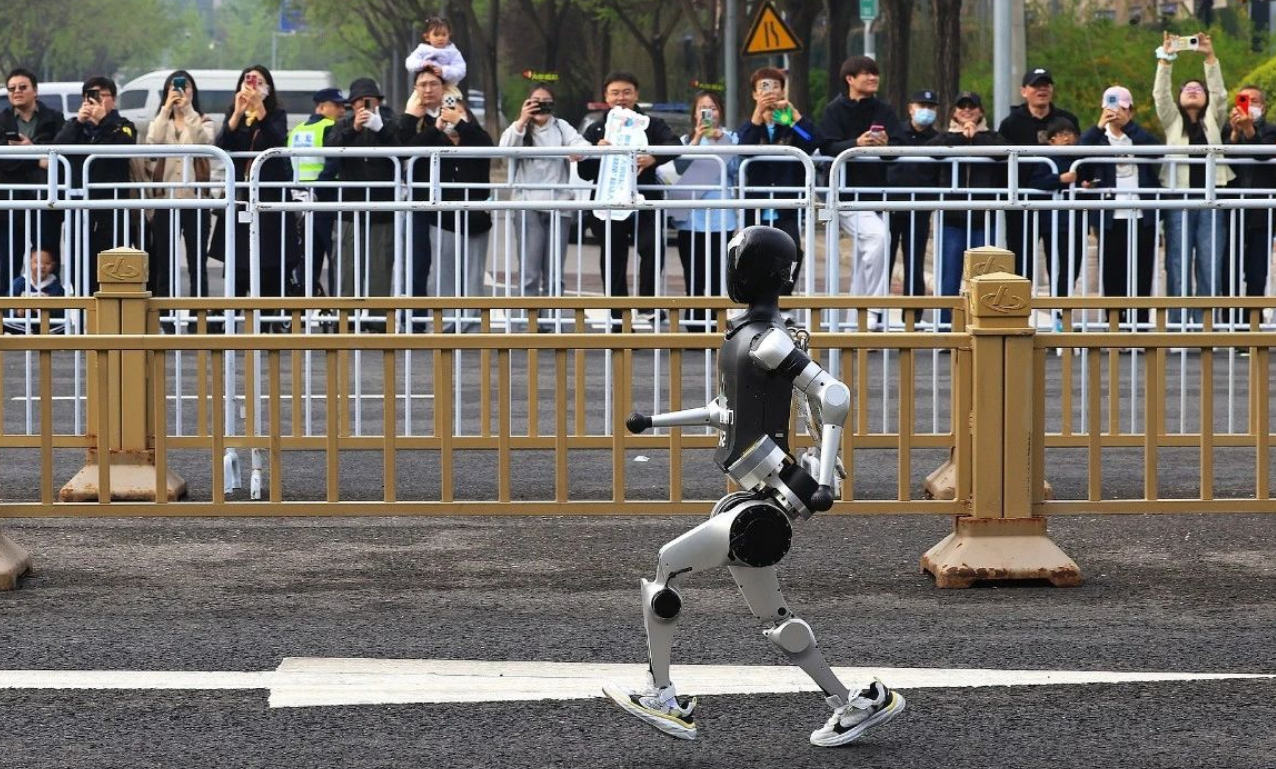
April 19, 2025 — at the start of the world’s first humanoid half-marathon in Beijing, a G1 entered by a third-party team fell at the starting line. Unitree publicly distanced itself from the incident, attributing the failure to the third party’s custom algorithms rather than stock Unitree firmware. The robot was not Unitree’s H1 race entry, which performed competitively. The episode is a reminder that the G1’s behavior depends heavily on the software stack running on it — and the gap between research-grade models and stock firmware is real.
The IP rating gap
The G1 has no published ingress protection rating. Indoor use only. The −47 °C Altay snow walk worked because the robot was wrapped in custom insulation; out of the box, snow, rain, dust, and humidity are unsupported. Compare to Unitree’s own Go2 quadruped, which publishes IP67 — that rating does not transfer to the G1.
Battery and shipping friction
The 9,000 mAh pack exceeds the FAA’s 160 Wh cabin ban. Air freight handles this; passenger air travel does not. For buyers planning to bring the G1 with them by plane, that plan needs to change. We deliver via ground freight or commercial air freight depending on region — for renters, this is invisible; for owners, it’s a recurring logistics decision.
Why renting changes the risk profile
Each of the issues above has a different weight depending on whether you own or rent. A buyer who pays roughly fifty thousand dollars for an EDU Pro carries firmware update obligations, IP rating workarounds, and shipping constraints for the lifetime of the unit. A renter pays a daily rate, runs the deployment, and walks away. The platform-level risks — security disclosures, regional firmware rollouts, the shipping math — all stay with us. For organizations that want to put a humanoid robot in front of an audience without absorbing the platform-level uncertainty, renting through a vendor that handles all of the above is the lower-risk path. We see this calculation made repeatedly by event teams, content studios, and corporate marketing groups every quarter.
Where the G1 Is Actually Being Used
The G1’s deployment story across 2025 and 2026 is broader than most coverage suggests. The viral content channels show one slice — kung fu, side flips, dance routines — but the platform is operating in research, manufacturing, education, retail, and entertainment in parallel.
Research and education
Stanford, MIT, UT Austin, Tsinghua, CMU, UIUC — multiple top-tier research groups are running G1 platforms for locomotion, manipulation, and behavior research. Tsinghua’s LATENT team demonstrated G1 table tennis with sim-to-real reactive control in late 2025. UIUC’s HumanUP team published the leading fall-recovery model at RSS 2025. CMU’s Tairan He thesis covered whole-body imitation learning on the G1.
Manufacturing pilots
Multiple Chinese EV makers — including names that don’t show up in English-language coverage — are running G1 and H1 platforms on production lines for material handling, inspection, and quality control. The deployments are pilots, not full production, but they’re real. Comparable Western platforms (Figure 02 at BMW, Apptronik Apollo at Mercedes-Benz) cost an order of magnitude more.
Entertainment and live events
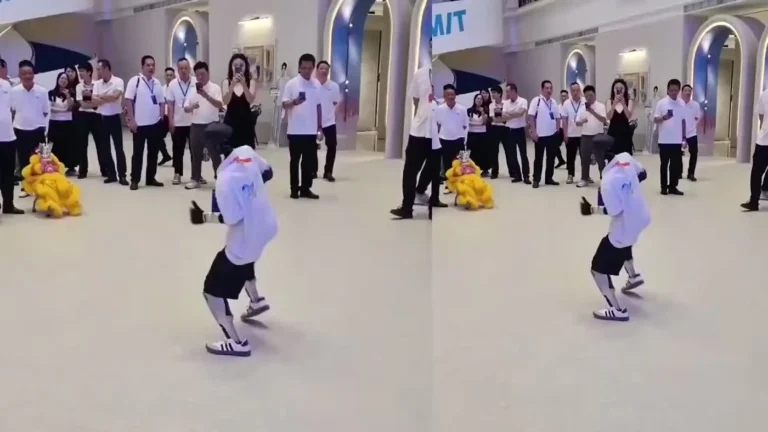
Wang Leehom’s “The Best Place” tour Chengdu performance in December 2025 used multiple G1 robots as backup dancers, including front-flip choreography. The 2026 CCTV Spring Festival Gala featured the G1 in parkour, drunken fist, and nunchaku routines (note: the 2025 Gala used H1, not G1). These broadcasts reached audiences in the hundreds of millions and shaped public expectations of what the platform can do.
Viral creator content
“Jake the Rizzbot” — a G1 dressed in costumes and walked through Austin, San Francisco, and West Hollywood — accumulated more than 45 million TikTok views since July 2025. Streamer Kai Cenat’s unboxing video included a now-controversial moment of him kicking a $70,000 G1 unit. Streamer IShowSpeed was sued in December 2025 for assaulting “Jake the Rizzbot” during a West Hollywood appearance. These are not Unitree marketing campaigns; they’re independent creators using the platform.
Trade shows and corporate events
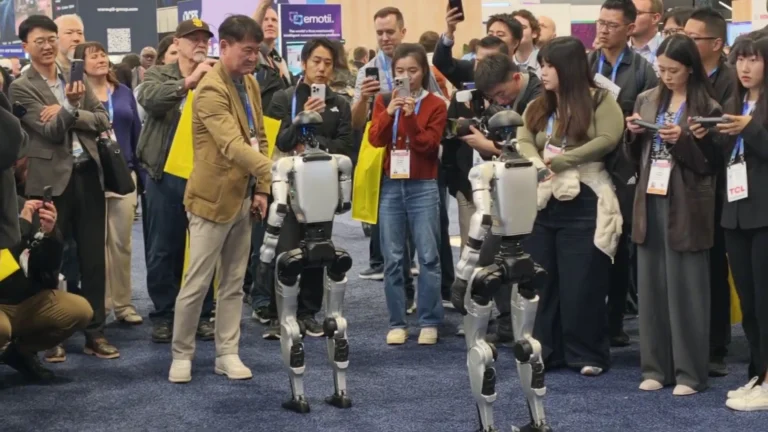
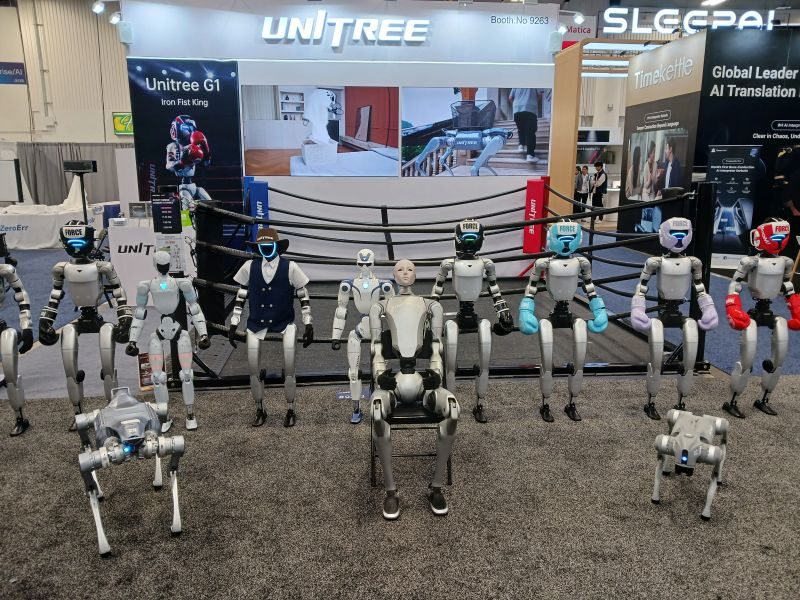
The G1 has appeared at CES 2025, CES 2026 (boxing demos and robot-vs-human matches), the World Robot Conference 2025, multiple regional trade shows, and corporate events. TechCrunch’s CES coverage tracks the humanoid robot category as a whole, where the G1 sits as the price-accessible volume option. Trade show deployment is the most common use case we see for G1 rentals — clients want a humanoid robot for booth presence, not a research platform.
Unitree Robotics: From Garage to $7B IPO Filing
Buying or renting any robot is also a bet on the manufacturer. Unitree’s company arc matters because it determines whether the G1 you buy in 2026 will still have firmware updates, parts availability, and developer support in 2028.
Founding and founder
Unitree Robotics (Yushu Technology / 宇树科技) was founded August 26, 2016 in Hangzhou by Wang Xingxing. He was 26. Wang built his first ¥200 bipedal robot as a freshman at Zhejiang Sci-Tech University, completed his master’s at Shanghai University with the XDog quadruped as his thesis project, and worked at DJI for roughly two months before leaving to start Unitree with about ¥2 million in angel funding.
Wang holds approximately 24 percent direct equity and roughly 69% voting rights post-IPO structure. He was named to the TIME 100 AI list in August 2025 and was the youngest attendee at Xi Jinping’s January 2025 business symposium.
Product timeline
Quadruped era — Laikago, A1, B1 (2017–2021), then Go1 in 2021, Go2 and B2 in 2023. Humanoid era began with the H1 in 2023 (first Unitree humanoid, first electric humanoid backflip in March 2024). The G1 was announced May 13, 2024 at ICRA in Yokohama at the $16,000 base price. Mass production launched August 20, 2024. R1 launched July 29, 2025 at $4,900. A2 quadruped August 2025. H2 humanoid October 2025 with a bionic face and 2,070 TOPS of compute. G1-D wheeled humanoid November 2025.
Production and finance
2025 production: 6,500+ total units, more than 5,500 of which were G1 humanoids. Unitree reports the #1 global humanoid shipment position. Omdia reports 4,200 G1 shipments — methodology differs. Either way, this is volume.
2026 production target: 10,000 to 20,000 units, a roughly 4× capacity expansion. Series C in June 2025 valued the company at $1.7 billion. Investors include HongShan, Matrix Partners China, Shunwei, Meituan (~9.6%), Tencent, Alibaba, Ant Group, Xiaomi, ByteDance, BYD, Geely, and China Mobile. South China Morning Post covered the IPO filing in detail.
The IPO itself: filing accepted on Shanghai’s STAR Market March 20–23, 2026, seeking ¥4.2 billion (approximately $608 million USD) at a target valuation up to $7 billion. Some observers project north of ¥100 billion post-IPO. SCMP described the company as “profitable while peers burn cash.” The platform’s longevity bet is, by most reasonable measures, in good shape.

Buy, Rent, or Wait? A Decision Framework
The G1 is the most accessible capable humanoid on the market, but accessibility does not mean the right choice for every buyer. Three questions resolve most of the decision.
How often will you actually use it?
Sustained daily use — research labs, R&D programs with multi-year timelines, education programs running cohorts year-round — justifies ownership on the math. Episodic use — a few events per year, a single content production cycle, a board demonstration — usually doesn’t. The break-even point depends on your specific cost model, but most organizations doing fewer than 30 to 40 active deployment days per year come out behind on ownership versus rental over a three-year horizon.
Do you have the technical capacity to operate it?
The G1 EDU configurations are research platforms. Operating them at any depth requires Python or C++ engineering, ROS familiarity, and ideally some background in real-time control or reinforcement learning. If your organization does not have this in-house and is not prepared to hire it, you are buying a platform you cannot fully use. The basic G1 (no SDK) is an event prop with a charging routine; it works, but at $13,500 to $21,600 you should check whether rental is a better fit before committing.
How quickly does the field move?
The G1 you buy today will be a generation behind by 2027. Figure 03’s $20,000 home target, 1X NEO’s $499/month subscription, Tesla Optimus Gen 3 in volume — the price-accessible bracket is shifting fast. Renting keeps you on whatever the current best-fit hardware is without writing off depreciation when the next generation lands. The why brands rent humanoid robots post covers the strategic case in more depth.
For organizations weighing the purchase decision, the buy a humanoid robot page has current pricing and configuration availability. For everyone else, rental is usually the answer — and we run that program across the US, Canada, UK, and EU.
People Also Ask
What is the Unitree G1 humanoid robot?
The Unitree G1 is a 1.32 m, 35 kg bipedal humanoid robot manufactured by Unitree Robotics in Hangzhou, China. It launched in May 2024 at a base price of $13,500. Twelve configurations span $13,500 to $73,900, with degrees of freedom ranging from 23 to 43 depending on tier and hand options.
How much does the Unitree G1 cost in 2026?
Direct from Unitree: $13,500 for the basic G1 (demo only, no SDK), up to $73,900 for the EDU Ultimate D with five-finger tactile hands. Most resellers add several thousand dollars in shipping, taxes, and import handling. EDU Standard starts at $43,900.
How does the Unitree G1 compare to Boston Dynamics Atlas?
The G1 is roughly 26 times cheaper at the basic tier (~$16,000 versus ~$420,000 estimated for Atlas), commercially available today (Atlas is in pilot deployment only), and lighter and shorter at 1.32 m versus 1.50 m. Atlas has higher payload and more sophisticated sensor and compute hardware. Most buyers comparing these platforms are not comparing them directly — they’re choosing between a buyable platform and a non-buyable one.
What programming languages does the Unitree G1 support?
EDU configurations support Python (unitree_sdk2_python) and C++ (unitree_sdk2). ROS 2 (Foxy, Humble) integration, MuJoCo simulation, and Nvidia Isaac Lab simulation are all supported. Hugging Face’s LeRobot v0.5.0 (March 2026) added full G1 support including ACT, Diffusion, Pi0, and GR00T model compatibility.
Is the Unitree G1 safe to operate around people?
The G1 is not certified for autonomous operation around uncontrolled groups. Joint torques of 90 to 120 N·m mean direct contact at speed can cause injury. Public-facing deployments require trained operators, supervised interaction protocols, and physical distance management. We handle all of this for rental deployments; for owners, this becomes an internal training and procedural task.
What’s the difference between the G1, H1, H2, and R1?
R1 ($4,900) is the entry-level: smaller (1.20 m), 25 kg, 26 DOF, demo-focused. G1 ($13.5–73.9k) is the workhorse: 1.32 m, 35 kg, 23–43 DOF, full SDK at EDU tier. H1 ($90–150k) is taller and faster: 1.80 m, 47–70 kg, 27 DOF, 3.3 m/s. H2 ($40.9–68.9k, Oct 2025) is the next-generation H1: 1.80 m, 70 kg, 31 DOF, 2,070 TOPS compute, bionic face. Most event and commercial use cases land on the G1.
Can I rent the Unitree G1 for an event?
Yes. We rent the G1 across the United States, Canada, the United Kingdom, and the European Union, with Self-Service Rental from $299/day and Full-Service Event with operator dispatch (request a quote). Both services include delivery, collection, and damage cover. The rental pricing post breaks down what you get at each tier.
The Bottom Line
The Unitree G1 is the humanoid robot that defines the price-accessible bracket in 2026. It’s the only bipedal platform you can put on a credit card, ship from Hangzhou in four to eight weeks, and put in front of an audience the same month. Twelve configurations, $13,500 to $73,900, 23 to 43 degrees of freedom, two-hour real-world battery, Nvidia Jetson Orin compute, mature software tooling, a $7 billion IPO filing behind the manufacturer.
For sustained daily users with technical capacity, ownership makes sense. For everyone else, renting through ZMProbots takes the platform-level risks off your plate while still delivering the experience.