The best humanoid robot for a trade show is one that fits your booth footprint, holds an audience for six hours, and draws a crowd without needing to be babysat. For most exhibitors, that means the Unitree G1.
Table of Contents
We have run humanoid robots at trade shows from CES in Las Vegas to auto shows in Detroit. The format works. What separates a clean deployment from a frustrating one comes down to five decisions: robot model, battery plan, floor surface, wifi setup, and staffing. This guide covers all five.
What Makes a Humanoid Robot Good for Trade Shows
A humanoid robot earns its booth spot by doing things a banner stand cannot: walking toward visitors, holding a product, reacting, waving, and generating photos people actually post. But not every humanoid does that reliably at a convention center.
Stability on hard floors
Convention center floors are typically polished concrete or carpet over concrete. Both are manageable, but polished concrete without traction pads caused slipping issues at the Detroit Auto Show in January 2026 — three robots, two operators, four-day run. The Unitree G1 handles both surfaces when prepped correctly. Traction pads are included in standard delivery kits.
Battery duration vs. booth hours
A trade show day runs eight to ten hours. Most humanoids run two to three hours per charge. That means you need a rotation: one robot active, one charging, one on standby if you have two units. Single-robot bookings need a break schedule built into your booth timeline before the show opens.
Script-ability
Looping the same demo every 20 minutes is how robots perform best at trade shows. The Pfizer product launch in Boston, September 2025 — two Unitree G1 units, one operator, demo loop every 20 minutes — worked because the script was tight and rehearsed. Open-ended interaction drains operator attention and breaks down by day two.
Visual scale
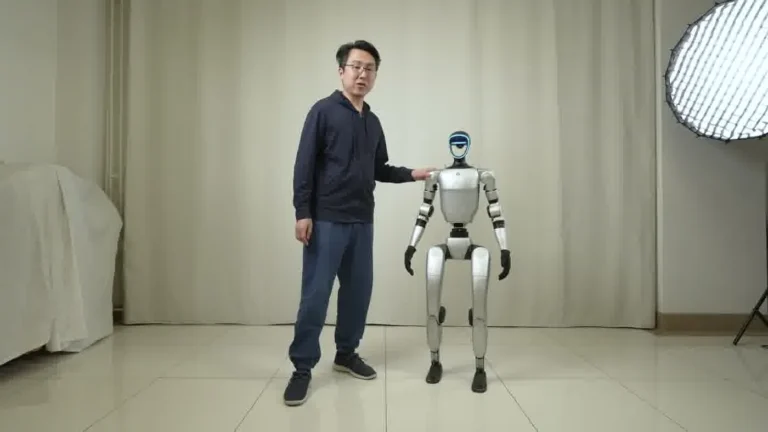
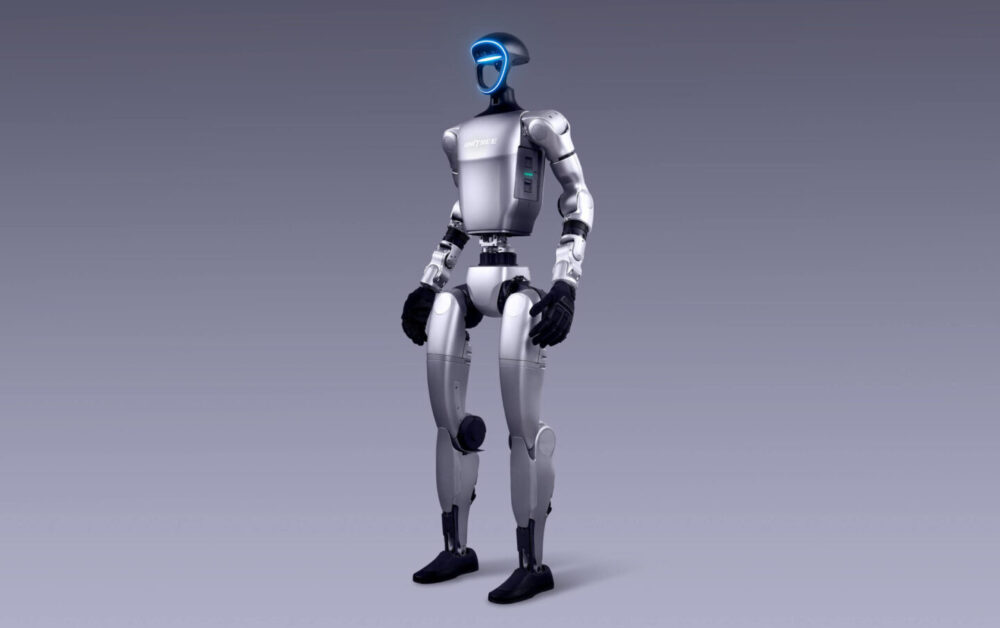
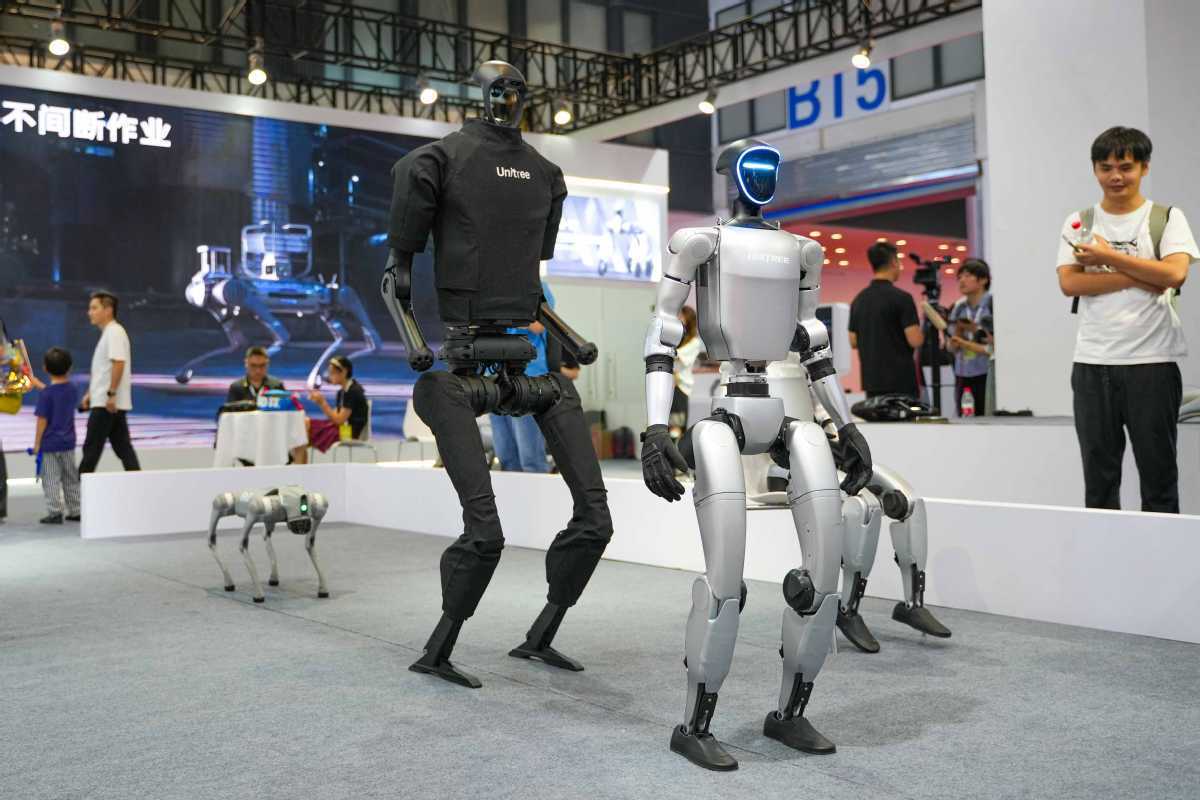
The Unitree G1 stands 130cm (about 4 foot 3) and weighs 35kg. Across a packed show floor, it is unmistakable. That height matters for crowd-from-a-distance impact. The R1 works better for close-range demos but loses the stop-and-stare factor the G1 creates at distance.
What Trade Show Setups Work Best
Humanoid robots outperform other booth activations in specific formats. Here is where they have a real track record.
- Product launch activations: Robot greets visitors, delivers a scripted intro about the product, hands over a brochure or sample. Scalable with one to two operators.
- Demonstration booths: Robot runs a looped 3-5 minute demo with arm movement, walking, and voice. High crowd draw, minimal operator intervention once calibrated.
- Photo opportunities: Robot poses with attendees. Generates social content for both the exhibitor and guests. At CES 2026 in Las Vegas, we averaged 4-6 photos per visitor group across a five-day run.
- Traffic screening: Robot at the booth entrance, greeting passersby and directing them inside. Keeps foot traffic moving without a human greeter standing there all day.
- Brand storytelling: Robot narrates a feature or product story via scripted audio. Works at quieter exhibition formats — healthcare, automotive, aerospace — where a talking robot is a feature, not a distraction.
These formats work because the robot has a defined role. Booths where the robot is just present — no script, no operator actively running it, no defined interaction — are wasting the rental. That is a prop, not an activation.
When a Humanoid Robot Is the Wrong Choice
Humanoid robots are not the right choice for every trade show booth. Here is where they consistently underperform.
- Booths under 10×10: A full humanoid needs walking space and a clearance zone. A 10×10 booth with heavy foot traffic is too cramped for a G1. The R1 fits tighter setups, but even then, operator positioning becomes awkward when the crowd pushes in.
- Multi-day shows without a dedicated operator: You cannot leave a humanoid robot running unattended at a trade show. Without someone managing interaction flow, it becomes background noise by the afternoon. Budget for at least one operator per robot per shift — that is not optional.
- Outdoor events or expos with weather exposure: Current Unitree models are not rated for outdoor use in rain or direct sun for extended periods. If your event is tented or has weather exposure risk, this is not the right rental for that format.
- Booths with no reliable power: Convention center power is frequently inadequate. Without at least two 15-amp circuits, battery rotation becomes a logistical problem. This is one of the most common reasons a deployment underperforms on day two.
What Matters Most at a Trade Show Booth
Five factors determine whether a robot deployment at a trade show is worth the booking or a headache by noon on day two.
Visual impact
Impact comes from movement, not from being switched on. A stationary robot at a booth is roughly as compelling as a mannequin. A walking G1 with arm movement draws attention from 30 feet away. If you are booking a robot for trade show presence, confirm it walks — or at minimum performs regular visible arm and torso movement on a scheduled loop.
Ease of transport and setup
The Unitree G1 ships in a flight case. Setup takes under 30 minutes for a trained operator. If you are running multiple cities back-to-back on a product launch tour, same-day-travel shipping adds roughly 40% to base cost. Build that in if you are doing more than two cities. For single-show bookings, standard ground shipping handles it cleanly.
Battery planning
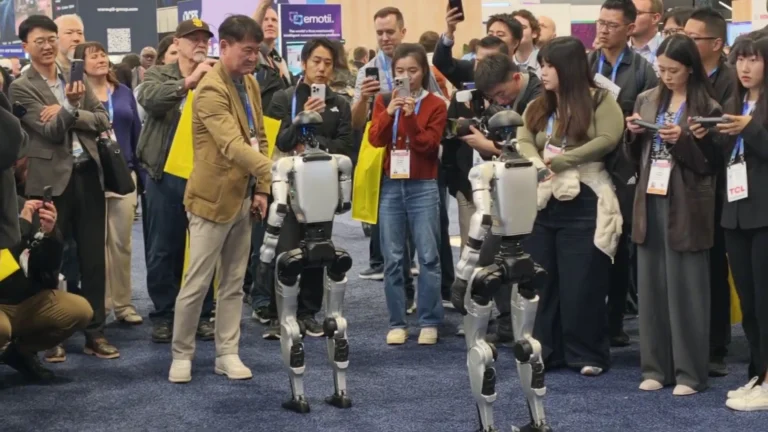
At CES in Las Vegas, January 2026, we ran four robots with three operators across five days. Convention center power was, as expected, borderline. We brought spare batteries for all four units. Every exhibitor who asked us about it mid-show had no backup plan. Two spare batteries per robot is standard practice at convention centers — not a premium option.
Interaction design
The script matters more than the robot model. A tight 90-second interaction loop — greeting, demo move, invitation to photograph, goodbye — runs more smoothly than an open-ended setup every time. Design the interaction before you arrive on-site. Humanoid robot rental packages include operator support, but the exhibitor brief still defines the interaction flow.
Operator coverage
Plan for one operator per robot per shift. A single operator managing two active robots at a packed show will run into coverage issues by hour three. If you are booking two units, either book two operators or plan staggered active periods so one unit charges while the operator is fully on the other.
Which Trade Show Setup Fits Your Booth
The Unitree G1 fits most trade show formats. What changes is how you deploy it. Booth size and interaction style determine the right operating mode, not the robot.
| Booth Setup | Operating Mode | Why It Works | Watch-outs |
|---|---|---|---|
| Large booth (20×20+), crowd-drawing presence | Walking plus scripted interaction | Five-finger dexterous hands, full walking range, visual impact at distance | Plan a charging rotation if peak hours exceed two hours of active deployment |
| Mid-size booth (10×20), product demo loop | Stationary or short-walk demo | Tight motion path, repeatable scripted sequences, controlled power draw | Operator must reset position between cycles in tight floor space |
| Compact booth (10×10), close-range interaction | Stationary greeter with voice and gesture | Five-finger hands enable handshakes, gestures, scripted greetings | Walking demos are not practical — clearance is too tight for crowd safety |
| Multi-day show, all-day demo schedule | Two G1 units in rotation | One active, one charging — covers full booth hours without gaps | Multi-unit bookings are case-by-case; contact us before locking dates |
For most trade show bookings, a single Unitree G1 with a trained operator handles the full day. Unitree G1 rental runs from 3 to 30 days with free delivery and collection across the US (48 contiguous states), Canada, UK, and EU.
Common Mistakes When Booking a Robot for an Exhibition
Most deployment problems at trade shows come from the same five missteps.
Not checking venue power before arrival
Convention center power is the most underestimated logistics problem in humanoid robot rentals. At CES 2026 in Las Vegas, the circuits at our client booth were borderline from day one. We managed it because we brought spare batteries on-site. Exhibitors who assume standard 15-amp circuits will cover charging rotation plus active operation typically find out otherwise on day two, when the crowd is largest.
Skipping floor assessment
Polished concrete needs traction pads. Carpet over uneven subfloor can cause gait instability. Both are manageable — but only if you check the floor during setup, not after the show opens. Ask your venue contact for the floor spec at your booth location before your operator arrives.
No interaction script
Operators manage the robot. They do not write the script. The interaction design — what the robot says, when it moves, how it handles a crowd surge — needs to come from the exhibitor. Brief your operator at least 48 hours before the show, not during setup morning.
Underestimating wifi requirements
Most humanoids can operate in semi-autonomous mode with degraded wifi. But for real-time control or live audio scripting, you need consistent 5GHz coverage. Convention center wifi is frequently unreliable for exhibitor use. Plan for autonomous mode as the fallback, not the exception.
One robot for a 10-hour show day
A humanoid will not run for 10 hours straight. Build a rotation schedule into your booth plan, or book a second unit. Active-charging rotation is not a workaround — it is standard operating procedure for full-day trade show deployments.
FAQ
How much does it cost to rent a humanoid robot for a trade show?
Day rates start at $199/day for the Unitree G1 on 8–30 day bookings, $259/day on 4–7 days, and $299/day on the 3-day minimum. Delivery and collection are included on every booking. Pro Setup & Training is an optional $100 add-on. ZMP Protection (covers accidental damage during Approved Use) is included free with every rental.
Do I need an operator at the booth?
Yes. Running a humanoid robot at a trade show without a dedicated operator is a mistake — not just for safety, but for interaction quality. An unattended robot cycling through a loop with no one managing the crowd is background noise. One operator per active robot per shift is the standard.
Can the robot walk around the booth floor freely?
Yes, within a defined area. The operator pre-programs the walking zone and monitors movement. The Unitree G1 typically works within a 6 to 10 foot active radius at trade shows, not the full show floor. Open-floor wandering with a crowd around is not a standard deployment format.
What is the minimum booth size for a humanoid robot?
A 10×20 booth is a comfortable minimum for the Unitree G1 with walking demos. A 10×10 is workable for a stationary or limited-movement setup. Smaller than that and you face crowd clearance problems operators cannot fully manage during peak hours.
How far in advance do I need to book?
For CES, NAB, or major national trade shows, four to six weeks minimum. For regional shows, two to three weeks is usually enough. Same-week bookings are possible but carry expedited logistics costs and limited unit availability.
Can the robot interact in multiple languages?
Yes. Audio interaction can be scripted in any language — it is pre-recorded, not generated live. If your show has international attendees and you want multilingual greetings, include that in your brief when booking. Scripts must be configured in advance, not at the venue on setup day.
What happens if something goes wrong mid-show?
The on-site operator handles it. Minor issues — a calibration reset, a wifi drop, a battery swap — are part of daily operations. ZMP Protection covers accidental damage during Approved Use, capping exposure at the Refundable Deposit. Serious hardware faults are uncommon, and a replacement unit can be dispatched if inventory allows.
Next Step
If you are planning a trade show booth and want to confirm whether a humanoid robot fits your setup, the fastest way is to look at what is available and when.
The Unitree G1 rental page shows current day rates, specs, and availability. Most trade show bookings are confirmed within 48 hours of inquiry.
If your show has specific requirements — multi-city routing, custom scripting, unusual power setup, or specific operator credentials for the venue — contact us before booking. The details matter more than the paperwork, and working through them in advance is faster than troubleshooting on-site the morning of setup.