Unitree G1 Walking Demo: What Booth Visitors Actually See
Most people who search “G1 robot” have seen a clip — the robot jogging in a park, doing a backflip in a warehouse, performing martial arts on a gala stage. What they have not seen is what it looks like up close, in a convention hall, with a crowd around it.
Table of Contents
This post covers that. What the Unitree G1 does during a live walking demo, what booth visitors do when they see it, and what consistently surprises people who have only watched it on a screen.
MoCap Flips
What the G1 Robot Is
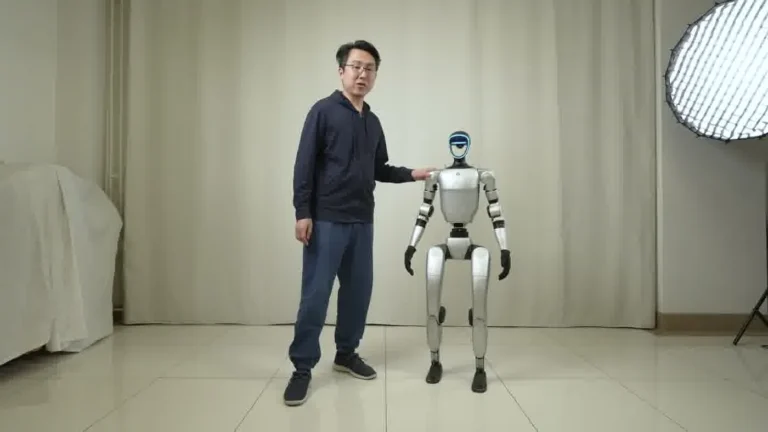
The Unitree G1 humanoid robot is made by Unitree Robotics, a Chinese manufacturer known for the Go2 quadruped and B2 industrial dog. The G1 is their first full humanoid: bipedal, 127 cm tall, 35 kg, 41 degrees of freedom.
The version ZMProbots rents is the G1 Edu Ultimate E — the top-spec variant. It runs on an NVIDIA Jetson Orin 16GB for onboard compute, carries five-finger dexterous hands from BrainCo (Revo 2 Basic), and uses a 3D LiDAR for spatial awareness. Battery life is approximately 2 hours of active operation per charge.
The customer-facing market value is approximately $70,000. Most clients who see it live are surprised by two things: how human the proportions feel in person, and how quietly it moves.
What Happens During a Walking Demo
The demo starts before the robot leaves the crate. Startup takes about 5 minutes: power on, self-calibration, connectivity check. The robot runs through a brief joint verification sequence — each limb confirms its range of motion. Then it stands up.
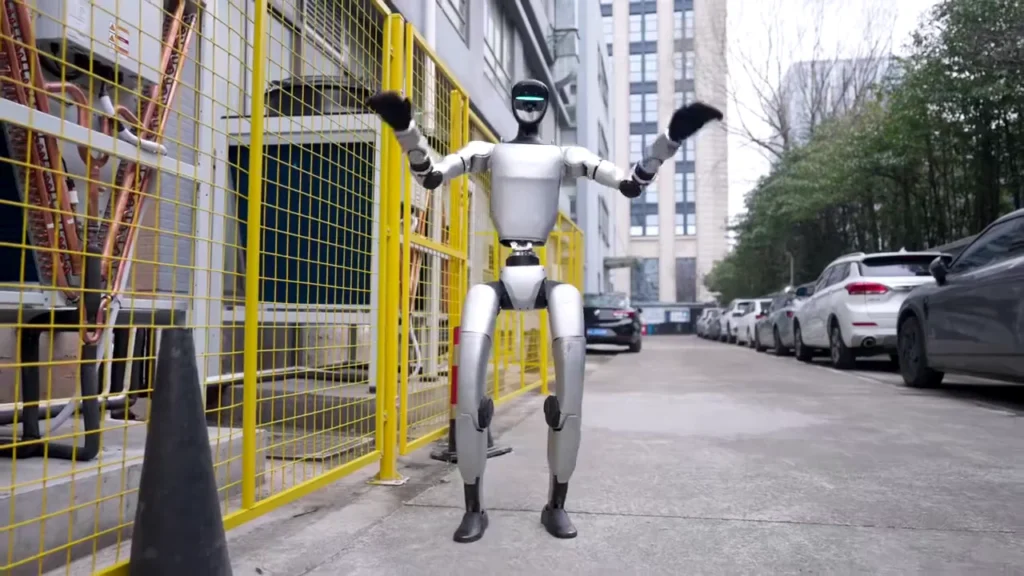
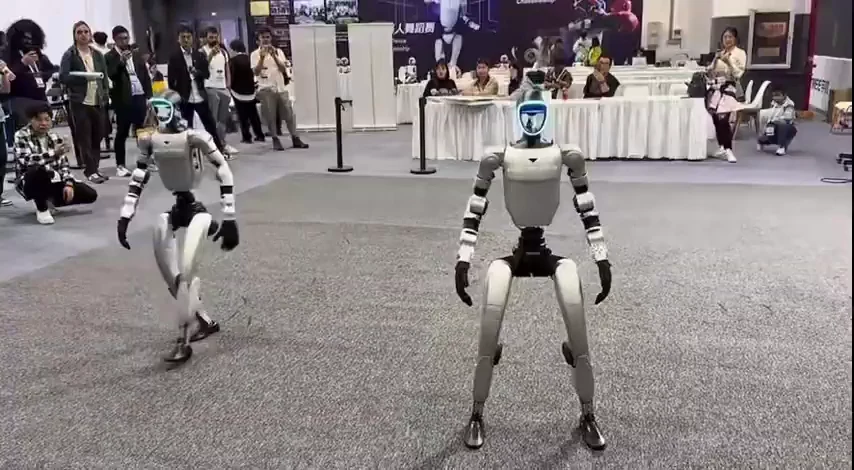
From standing, the walking demo follows a consistent pattern. The robot moves at roughly human walking pace — about 1.5 meters per second in standard mode. It navigates the booth footprint: a 3 to 5 meter corridor is enough. It stops, turns, responds to operator commands, and resumes.
The hands are the detail most visitors miss until they are close. The five-finger configuration means the G1 can grip objects, point, and gesture — not just wave in a fixed pattern. In demos with a scripted interaction routine, the robot can hand objects to visitors, accept them back, and track faces using the onboard vision system.
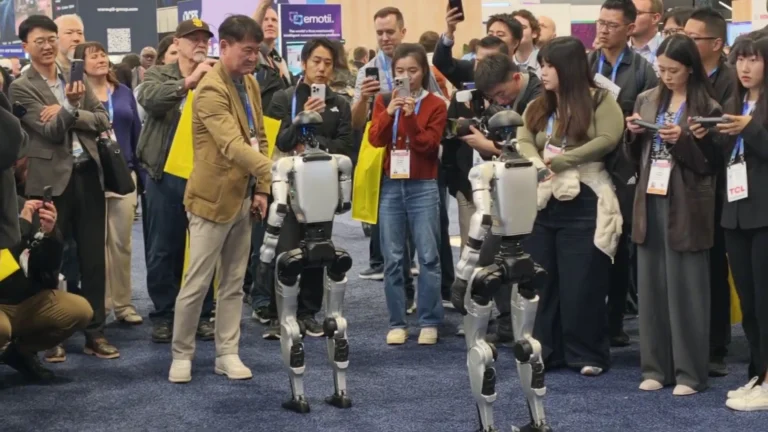
A full walking sequence, including startup and any scripted interaction, runs 15 to 20 minutes. Between runs the robot goes to standby. At CES 2026, the standard rhythm was a 20-minute demo loop with 10-minute standby breaks between cycles, running all day across the 5-day show.
What Visitors Actually Do
The reaction at most live demos follows the same arc.
First 30 seconds: people stop moving. This happens consistently across trade show floors, grand openings, and press events. The G1 walking gait is close enough to human that it registers as unusual rather than clearly mechanical. That cognitive dissonance holds attention before the crowd even processes what they are looking at.
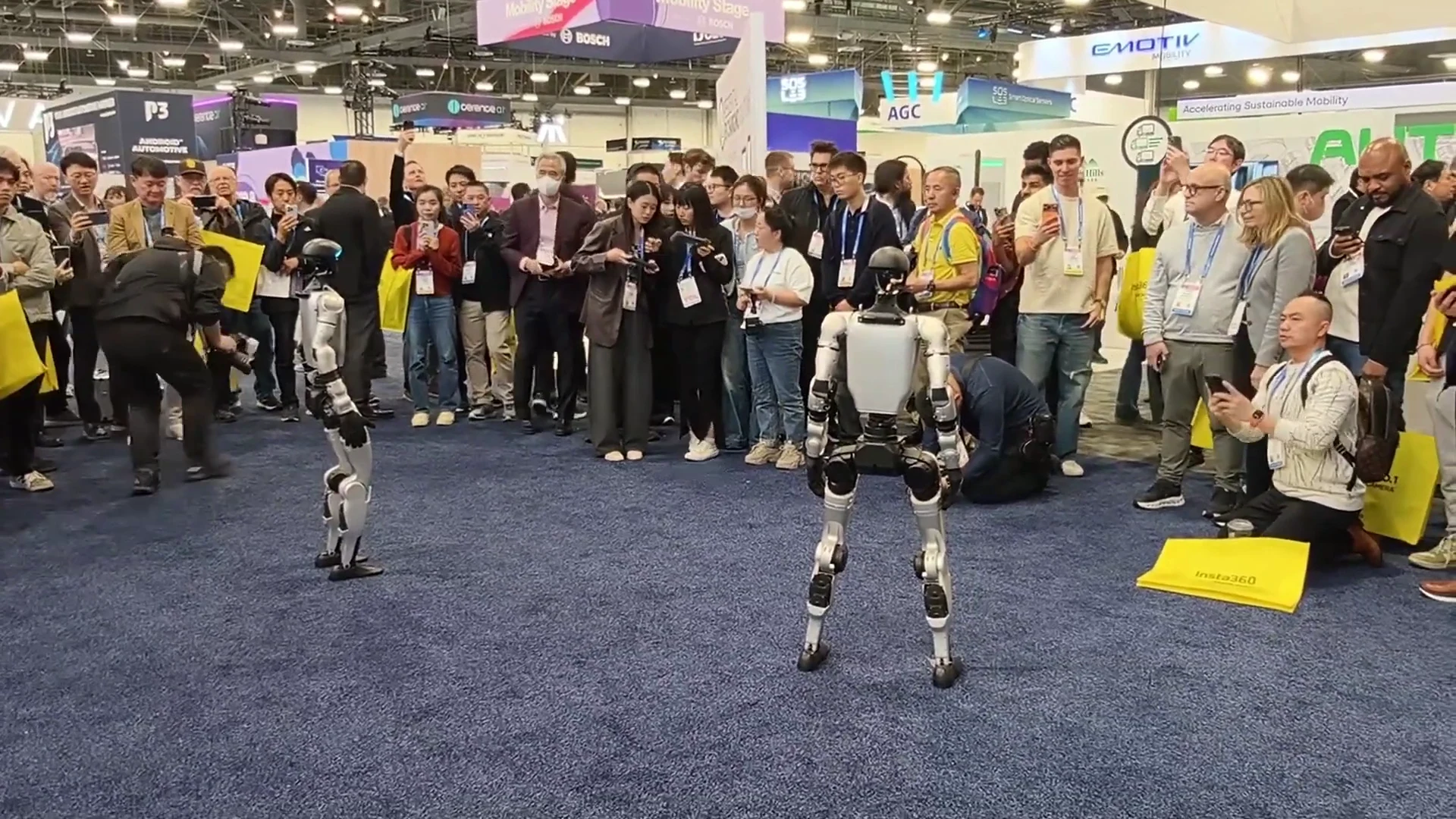
Next 60 seconds: phones come out. Every time. The most common behavior is backing up to get a wider shot, then moving in for a close-up of the hands or face. Groups cluster around the robot. Individual visitors stay longer than expected — average dwell time in booth demos runs 4 to 6 minutes per person, which is long for a convention floor where most interactions last under 90 seconds.
The questions people ask, in order of frequency: Is it autonomous? Can it talk? What does it cost to buy? How do I book it for my event? That last question is asked more often than most event teams expect before the first demo.
Autonomous vs Operator-Controlled Modes
The G1 runs in two modes: operator-controlled and autonomous.
Operator-controlled means a human sends commands via controller in real time — directing walking patterns, triggering interactions, adjusting speed. This is the standard demo mode. The operator is typically positioned to the side, visible but not the focal point. Most visitors assume the robot is fully autonomous until they notice the person with the controller.
Autonomous mode runs pre-programmed sequences without live input. It is used when connectivity is unreliable — convention centers with saturated 5GHz bands are the most common scenario — or when the operator needs to step away briefly. The sequences loop reliably but do not react to unexpected inputs in real time.
Most demos blend both. The robot walks autonomously between fixed points while the operator takes direct control for visitor interactions: handing objects, responding to gestures, or recovering from an unexpected floor obstacle. The blend is invisible to visitors unless they know to look for it.
Where the G1 Has Appeared Live
The Unitree G1 has been running live demos since late 2024. A few notable reference points:
CES 2026, Las Vegas. The G1 ran a 5-day booth activation with 4 units and 3 operators. Convention center wifi was borderline throughout; most of the demo ran in autonomous mode. Dwell times peaked on day 2. This remains the largest multi-unit G1 deployment in a public trade show context.
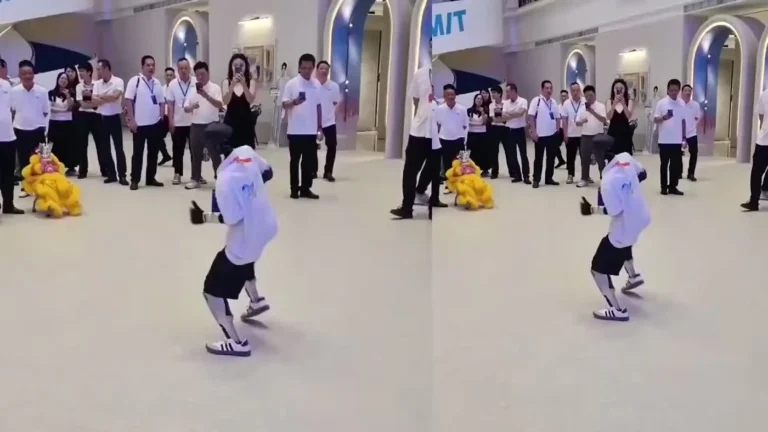
Chinese New Year Gala, 2025. Dozens of G1 units performed synchronized martial arts routines on stage — the sequence that became known as “robot dragon” or “robo kung fu.” That performance drove a significant international spike in searches for the G1 and for humanoid robot demos generally. If you have seen a clip of humanoid robots doing choreographed martial arts, this is the one.
UFC press day, 2025. The G1 appeared at a UFC media event in custom boxing gear. The clip circulated broadly across sports and tech social media, reaching audiences well outside the robotics community.
FAQ
What is the Unitree G1 robot?
The Unitree G1 is a full-size humanoid robot made by Unitree Robotics. It stands 127 cm tall, weighs 35 kg, and has 41 degrees of freedom. ZMProbots rents the top-spec G1 Edu Ultimate E variant with five-finger dexterous hands and NVIDIA Jetson Orin compute.
How fast does the G1 robot walk?
Approximately 1.5 meters per second in standard demo mode. It can move faster, but most event demos run at a pace that lets visitors approach safely and operators maintain easy control.
Can the G1 robot speak or interact verbally?
The top-spec G1 has speaker and microphone capability. Voice interaction routines depend on how the activation is programmed. Standard demos focus on movement and gesture. Custom interaction scripts are available for specific events.
Is the robot safe around crowds at trade shows?
Yes. The G1 has onboard LiDAR and vision systems that detect obstacles including people. Operators maintain direct supervision during all live demos. A 1.5 to 2 meter safety perimeter is standard for high-traffic floor activations.
How do I book the G1 for a trade show or event?
Bookings are fully online, minimum 3 days, starting from $299/day. Check availability and confirm your Reservation on the ZMProbots website. Fleet availability varies by date, so earlier is better for peak event windows like CES and trade show season.
Conclusion
What visitors actually see: a 127 cm robot walking at human pace, turning on command, gripping an object in a five-finger hand, taking a photo with a guest. The reaction is the same whether it is a trade show floor in Las Vegas or a corporate retreat in Napa. The live demo is what converts event planners from curious to booked.
For how to put the G1 to work at your specific event type, the humanoid robot for events guide covers use cases, logistics, and what different activations look like in practice. The robot is available now.