A humanoid robot is not the same thing as a robot dog. It is not a factory arm. It is not Wall-E and it is not Skynet. Most of what you have read about humanoid robots online is wrong, exaggerated, or sold to you by someone with stock in a company.
Table of Contents
This is the honest version. Plain English. No hype. By the end you will know what a humanoid robot actually is, what makes it different from every other robot, and why it has become the most-talked-about category in tech right now.
Workshop Intro
The 30-Second Definition
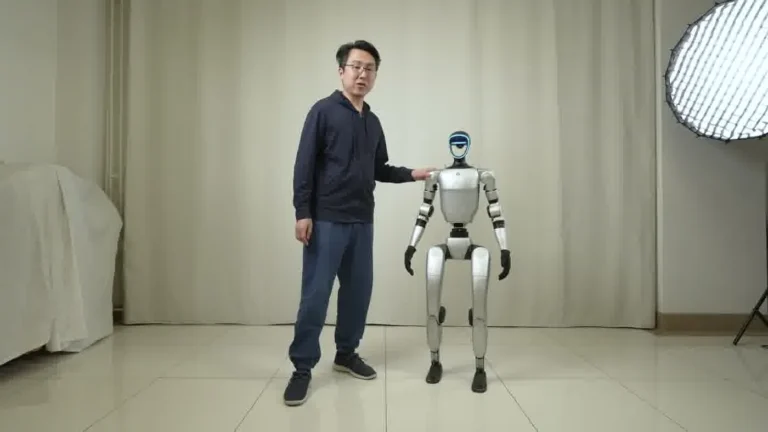
A humanoid robot has a head, a torso, two arms, and two legs that walk. That is it. That is the whole definition.
The legs matter because they make the robot work in spaces designed for humans. Stairs. Elevators. Trade show floors. The arms matter because they let the robot pick things up, gesture, hand a flyer to someone, or pose for a photo. The face matters because people respond to faces. They smile at faces. They hand them their phone.
If a machine has all four — head, torso, arms, legs that walk — it is humanoid. If it is missing one of them, it is something else. That is the line.
Image source: Boston Dynamics / bostondynamics.com
Three families of robot get talked about together and they have almost nothing in common.
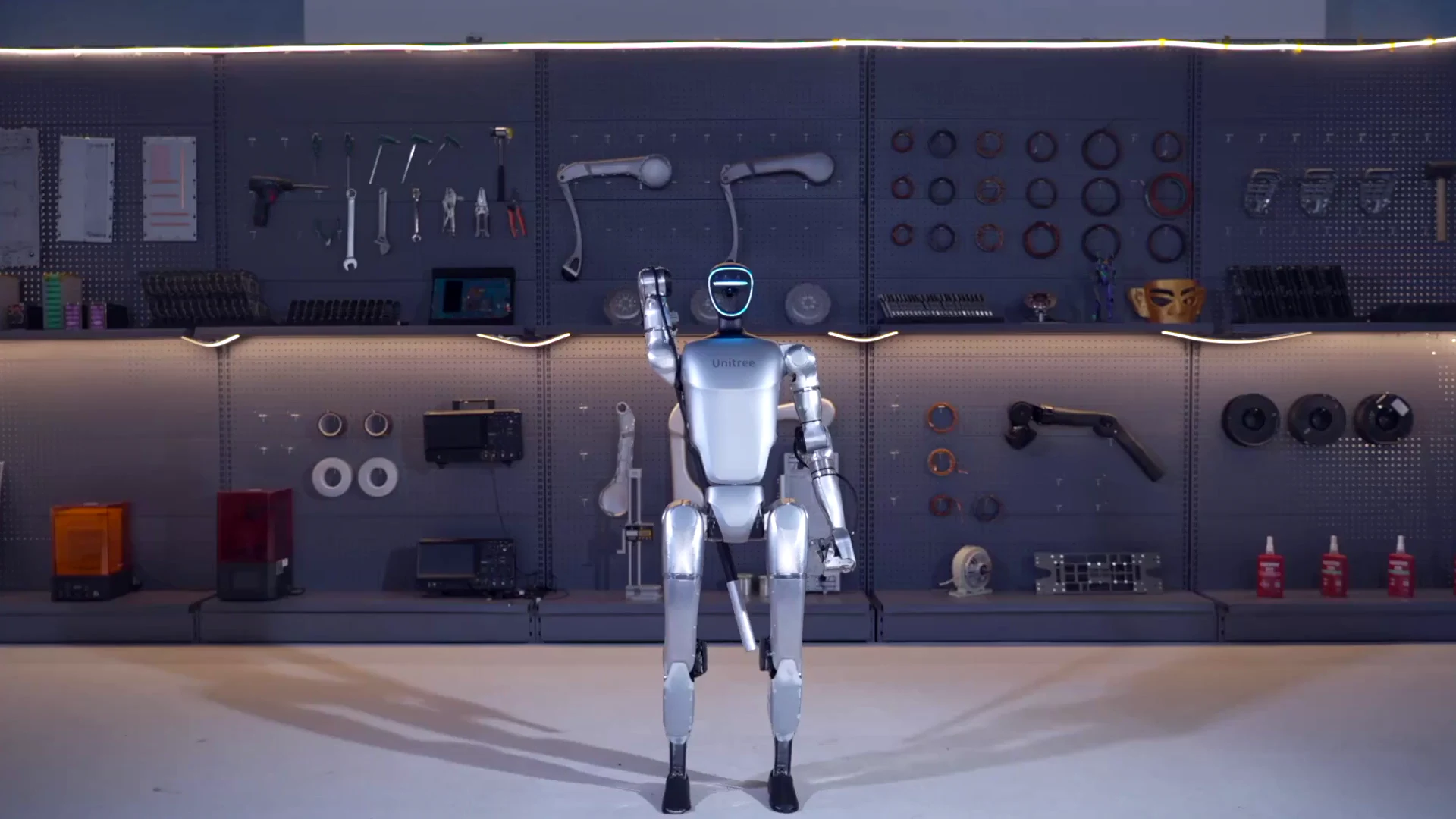
Humanoid robots walk on two legs and have hands. The Unitree G1, Tesla Optimus, Figure 02, Boston Dynamics Atlas, AgiBot X2 — all humanoids.
Robot dogs walk on four legs and have no hands. Boston Dynamics Spot is the famous one. They are quadrupeds. Useful for inspection, security patrols, and looking cool on a podcast set. They are not humanoids and they cannot do most of what a humanoid does.
Industrial robot arms are bolted to a factory floor. They do one job at high speed — weld, paint, pick parts — and they do it for years. Brands like FANUC, ABB, KUKA. They have one arm, no legs, no face, and they are extraordinary at what they do. Calling them “robots” in the same sentence as a humanoid is like calling a forklift a sports car.
If you mix these up, you will spend money on the wrong thing. Be honest about which family solves your problem.
What Makes a Robot Humanoid
The shape is the easy part. Two arms, two legs. The hard part is what happens underneath.
A humanoid has a balance system. Sensors in the body track tilt and acceleration in real time, and motors in the legs adjust faster than you can think. Without that, the robot falls down. With it, the robot walks across uneven floors, dodges cables on a stage, and stays upright when someone bumps into it.
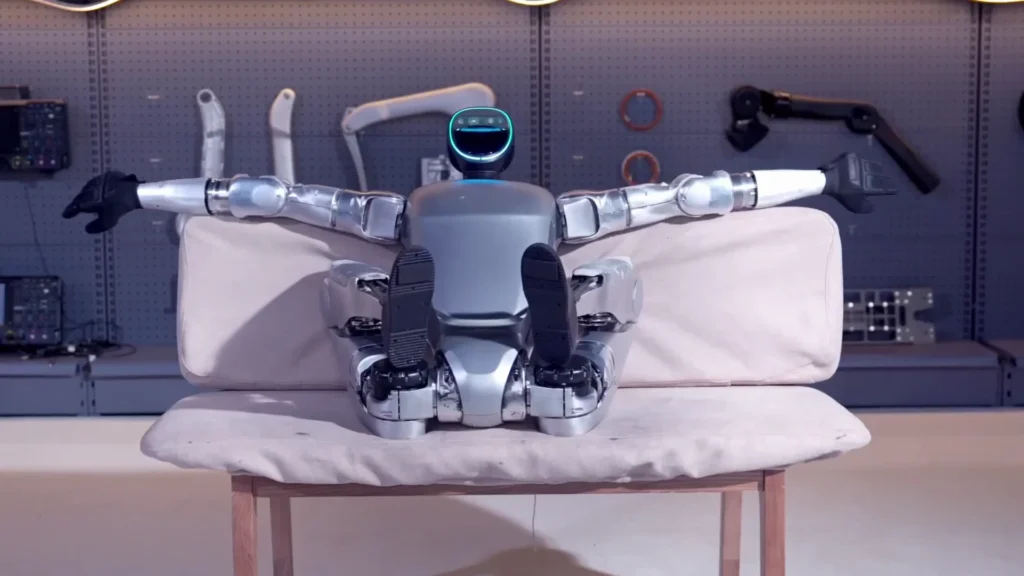
A humanoid has hands. Real hands — with fingers that move independently. The Unitree G1 ships with five-finger dexterous hands made by BrainCo. That is not a marketing line. It is the difference between a robot that can grip a microphone and a robot that knocks the microphone off the table.
A humanoid has cameras and microphones in the head. It hears you, it tracks you, it turns to face you. The result is an interaction that feels like a conversation, not a machine.
That is what makes it humanoid. Everything else is decoration.
Image source: NBC News / Boston Dynamics press release (April 2024)
You have probably already seen at least three of these in your feed.
Boston Dynamics Atlas — the parkour robot. Backflips, dance routines, retired in 2024 and replaced with a new electric version. About $420,000 each. Not for sale to you.
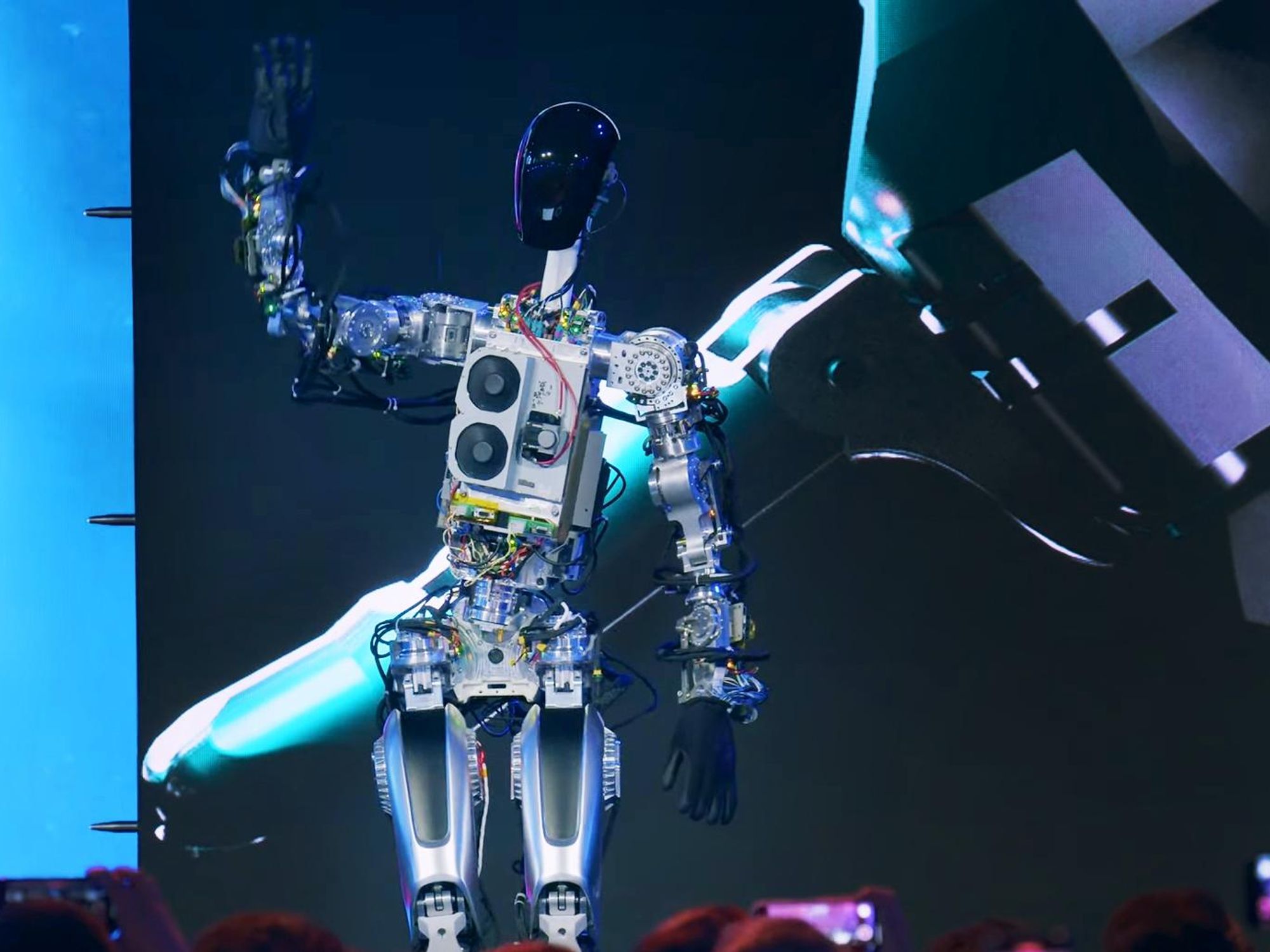
Tesla Optimus — the one Elon Musk keeps unveiling. Folds shirts, walks slowly, currently lives in Tesla factories. No public sales channel.
Figure 02 — the one you saw lifting parts at BMW. Backed by OpenAI and Microsoft. No external rentals.
Unitree G1 — the affordable one. Roughly $63,900 to buy, or you can rent it for $199 a day. The only walking humanoid in this list with a real, online-bookable rental program in the US.
Engineered Arts Ameca — the expressive grey-skinned one with the face that looks at you. Famous from viral demos. UK-based, rents for thousands per day with engineers on-site.
That is the canon. Sophia gets mentioned a lot too, but Sophia does not walk — she sits on a wheeled base.
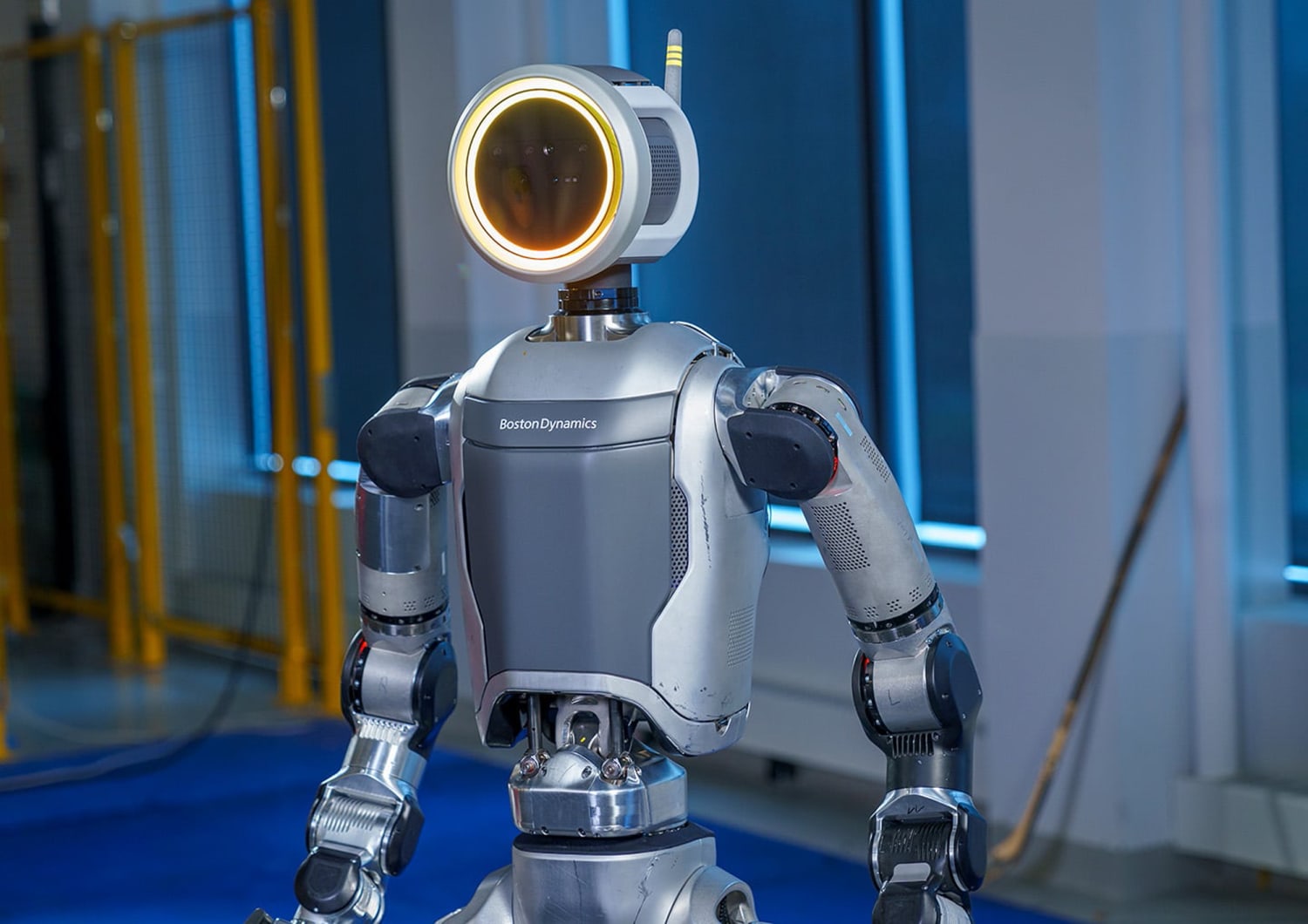
Image source: Robots.com industrial robot arm reference photo
Let’s clear out the things people think a humanoid robot is, and is not.
It is not a household assistant. Not in 2026. The marketing materials for some pre-order models hint at this future, but no humanoid robot you can rent or buy today will reliably load your dishwasher.
It is not general-purpose AI in a body. Most humanoids run pre-programmed routines, teleoperated motion, or constrained AI behaviors. The “robot starts thinking on its own” videos you see are stitched edits.
It is not dangerous to be near at events. Modern humanoids run with multiple safety layers — emergency stops, soft motion limits, a trained human operator within a few meters. They are far less risky to share a floor with than the forklift in a warehouse.
It is not a single product category. Every manufacturer makes very different design choices. Two humanoids you compare side by side may have nothing in common except the silhouette.
Who Builds Them and Why It Matters
The companies in the humanoid race fall into two camps, and you should know which one is which before you trust their roadmap.
Camp one: hardware-first. Unitree, AgiBot, Fourier, Engineered Arts, Boston Dynamics. They built robots first, AI second. Their robots ship today. They have warranty programs, replacement parts, and known specifications. If something breaks, you can fix it.
Camp two: AI-first. Figure AI, 1X, Apptronik, Tesla Optimus. They are pitching the vision of an autonomous robot that learns its environment. The hardware is real. The autonomy is mostly aspirational. None of them have a meaningful external rental or sales channel as of April 2026.
Why this matters: if you want a humanoid for an event next month, camp one is your only option. If you want to buy a humanoid for daily warehouse work in 2028, camp two might be where the money is. Conflating the two is how event planners end up disappointed and venture investors end up rich.
Image source: IEEE Spectrum / Tesla AI Day press materials
Today, in 2026, you actually see humanoid robots in three places.
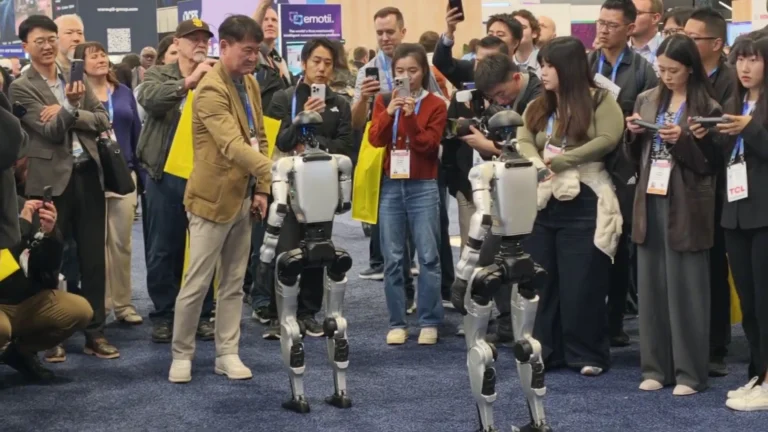
Trade shows and brand activations. A G1 at a Pfizer launch. An AgiBot at fashion week. A robot at a CES booth pulling a 3x crowd compared to the booth next door. This is the use case that pays the bills for almost every walking humanoid you have heard of.
According to IEEE Spectrum reporting on commercial humanoid deployment, the marketing-and-events application is the largest revenue category for humanoid manufacturers outside of pre-funded R&D contracts.
Factories. Figure 02 at BMW. Apptronik with Mercedes. Optimus at Tesla. Closed B2B partnerships, not open rental programs.
Research labs. University programs, robotics PhDs, R&D divisions. The G1 is also the most popular research platform here — not because it is the most advanced, but because it is the most affordable to put on a lab bench.
If you are reading this because you are planning an event, you are in category one. The robot you want is the Unitree G1, and the only thing left to figure out is how many days you need it.
FAQ
What is a humanoid robot in simple terms?
A humanoid robot is a machine with a head, a torso, two arms, and two legs that walk. The shape is what makes it humanoid — it is built to operate in spaces designed for people, including stairs, elevators, and crowded floors. The Unitree G1, Tesla Optimus, and Boston Dynamics Atlas are all humanoid robots.
Is Boston Dynamics Spot a humanoid robot?
No. Spot has four legs and no arms. It is a quadruped robot, sometimes called a robot dog. Boston Dynamics also makes a humanoid called Atlas, which is separate. Mixing the two up is one of the most common errors when people start researching the category.
What is the difference between a humanoid robot and a factory robot?
Factory robots are usually single-arm machines bolted to one spot, optimized for repetitive industrial tasks like welding or part assembly. They cannot walk and they have no general-purpose use. Humanoid robots walk on two legs, have hands with fingers, and operate in human spaces.
Can a humanoid robot really do what humans do?
Not yet, and you should be skeptical of any company claiming otherwise. In 2026 humanoids walk reliably, gesture, follow scripted routines, and run constrained AI interactions. They do not reliably load dishwashers, climb ladders, or hold full unscripted conversations across hours of use.
How much does a humanoid robot cost?
The Unitree G1 sells at a market value of roughly $63,900. Boston Dynamics Atlas costs about $420,000. Tesla Optimus has no public retail price. Renting a humanoid for an event in the US starts at $199 per day for the G1 through ZMProbots, with most other models in the thousands per day or unavailable to outside clients.
Are humanoid robots safe at events?
Yes, when operated by a trained operator and used within their design envelope. Modern humanoids include emergency stops, soft motion limits, and supervised modes. Most event-deployed humanoids in 2026 have a trained handler within a few meters at all times. They are statistically safer to share a floor with than common venue equipment like forklifts or scissor lifts.
The Bottom Line
A humanoid robot is a walking, two-armed, two-legged machine built to work in human spaces. It is not a robot dog. It is not a factory arm. It is not a household assistant. In 2026 the only one most event teams can actually book is the Unitree G1.
If you want to put a humanoid in front of guests at your next event, see availability and pricing on our humanoid robot rental page.