Honest guide for buyers
Thinking of Buying a Humanoid Robot? Read This First.
Before you spend $20,000 to $100,000 on a humanoid robot, here's what the sellers don't tell you — and the one question almost no buyer asks first.
Before you buy
You searched "buy humanoid robot". Good — but read this before you click order.
Humanoid robots are the fastest-moving consumer-tech category on the market right now. New models ship every few months. Prices are all over the place. Resellers are marking up aggressively. And most people searching for "humanoid robots for sale" or "android robots for sale" don't realise that renting one is an option — let alone the smarter option for 95% of real-world use cases.
This page isn't here to stop you buying a humanoid robot. If you're running a research lab, a 24/7 production line, or building software on top of one, buying probably makes sense. We'll tell you exactly when it does.
But for almost every other use — events, exhibitions, content, launches, trade shows, one-off projects — buying a $20,000 to $100,000 robot is a mistake most buyers regret within 6 months. Here's why, with sources.
Fact #1 — the price tag lies
The real cost of buying a humanoid robot
The sticker price is not the price. US buyers pay a documented 40–57% markup over China retail — before maintenance, insurance, or repairs.
All competitor prices below are quoted in USD — international wholesale references from the manufacturers' own published pricing. Use the flag in the header to see our rental in your local currency.
| Model | Direct / China price | US reseller price | Markup |
|---|---|---|---|
| Unitree G1 (base) | ~$13,500 | $17,990–$21,600 | ~33–57% |
| Unitree G1 EDU (top) | up to $73,900 | same range + reseller margin | varies |
| Unitree H1 | ~$90,000 | "Contact for price" | varies |
| 1X Neo | $20,000 outright or $499/month subscription | — | |
| Figure 02 | Not sold to consumers — lease only (~$1,000/month RaaS) | — | |
| Agility Digit | ~$250,000 | primarily RaaS at $30/hour | — |
| Boston Dynamics Atlas | Not publicly priced. 2026 production committed. New customers onboarding in 2027. | — | |
| Tesla Optimus | Not yet on sale. Target: end of 2027. Musk target ~$20,000. | — | |
Sources: SCMP — Walmart G1 listing at $21,600; Unitree official shop; 1X Neo pricing; The Robot Report — Figure 02; The Robot Report — Digit.
What the sticker price hides
- Shipping: $300–$1,200 to North America
- Customs broker fee: $125–$300 per formal entry
- Section 301 tariffs: 7.5–25% on Chinese imports (higher in strategic categories)
- Lithium-battery hazmat handling (Class 9)
- Annual maintenance: 10–20% of purchase price
- Spare battery: ~$750 per pack
- Commercial insurance if used at events
- Storage + climate control for lithium packs
Renting with ZMP Robots
- One transparent price per day
- Delivery and collection included in the daily rate
- Zero customs, zero tariffs, zero import friction
- All maintenance on us
- Fresh battery packs every rental
- Event-grade robots kept in rental-ready condition
- No storage burden
- Cancel future rentals, no long-term commitment
Fact #2 — obsolescence in months, not years
Unitree iterates faster than buyers can amortize.
H1 launched in 2023. G1 in August 2024. Continuous firmware upgrades follow — including the OmniXtreme backflip policy and UnifoLM-VLA-0 model rolled out in March 2026. New configurations and capability releases drop on a near-quarterly cadence, not yearly.
Unitree's 2025 output was about 5,500 units. The 2026 target is 20,000 units — nearly 4× more. The manufacturer is actively flooding the market with newer, cheaper, more capable models. The G1 bought in 2024 is competing with that flood.
The resale market hasn't formed yet. When it does, prices are going to be ugly — and the owner who paid reseller-markup retail on a now-last-gen model absorbs the loss.
Sources: Unitree product history; Robozaps — Unitree G1 review & 2026 production targets.
Fact #3 — the warranty doesn't save you
Read the warranty before you buy. Nobody does.
A $20,000 humanoid with a 12-month warranty sounds safe. Here's what "warranty" actually means in this category.
Drops and "violent use" are not covered
Unitree's warranty explicitly excludes damage from falls, squeezing, immersion, and "violent use." A humanoid robot that falls over — which happens — is on you.
You pay shipping to return it
To claim warranty, the customer pays outbound shipping. The manufacturer pays return shipping only if the defect is confirmed as covered — otherwise you pay both ways.
US repairs are not covered
Out-of-warranty repairs through US distributors like RoboStore are fully billable and explicitly not covered by the manufacturer warranty. Repair pricing is quoted case-by-case, not published.
Maintenance runs 10–20% per year
Industry estimates put annual humanoid maintenance at $1,000–$10,000 — roughly 10–20% of purchase price. A $20,000 G1 costs $2,000–$4,000/year to keep running, before any serious repair.
Sources: Unitree warranty policy; RobotShop community — warranty shipping; RoboStore repair policy.
Fact #4 — it doesn't "just work" out of the box
The Unitree G1 is a developer platform, not a ready-to-use robot.
Out of the box, a G1 performs pre-programmed demonstrations: walking, dancing, basic gestures, scripted routines. That's it. Anything beyond that — custom interactions, autonomous behaviors, event-specific choreography, integrations — requires custom C++ or Python programming by the owner.
This is the single biggest source of buyer regret in this category. Reviewers repeatedly describe owners whose robots "sit unused because they're too complex," and there's already viral content — a widely-shared post titled "Man immediately regrets buying $80,000 humanoid robot", and a Wall Street Journal video literally called "I Tried the First Humanoid Home Robot. It Got Weird."
If you want a robot to actually do things at your event, shoot, or activation — you need it operated, maintained, and configured. That's what our rental service includes. A buyer starts from a box.
Sources: Robozaps — G1 is a developer platform; Keyi Robot — buyer regret patterns; WSJ — "I Tried the First Humanoid Home Robot".
Fact #5 — the industry already knows
The companies building humanoid robots don't sell them. They rent them.
This is the tell. If the most advanced humanoid builders in the world refuse to sell units outright and instead lease by the month or the hour — what does that tell you about owning one?
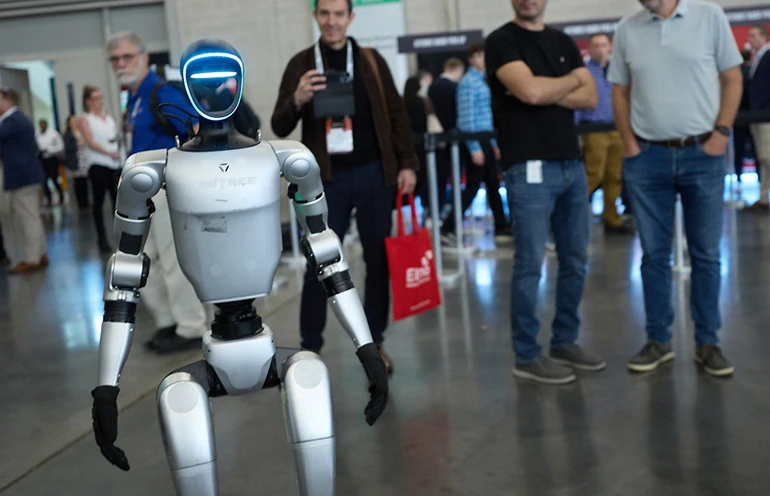
Figure AI — lease only
Figure 02 is not sold to consumers at all. The company deploys units exclusively via Robot-as-a-Service leasing at roughly $1,000 per robot per month to paying enterprise customers like BMW.
Agility Digit — $30/hour RaaS
Agility Robotics' Digit is offered primarily as Robot-as-a-Service at $30/hour all-inclusive — hardware, software, maintenance, updates. Purchase price is ~$250,000, but the company itself pushes the service model.
1X Neo — subscription option
1X offers Neo at $20,000 outright or $499/month subscription. They built a subscription tier into the core product offer because they know full-price ownership doesn't make sense for most buyers.
Sources: The Robot Report — Figure 02; The Robot Report — Digit $30/hour; 1X Neo order page.
Fact #6 — regulatory earthquake coming
Your Chinese humanoid robot might be a regulatory problem soon.
The US opened a Section 232 national-security investigation into robotics imports in October 2025. A bipartisan Senate bill proposes blocking federal procurement of Chinese-made humanoids. The FCC has been formally asked to add certain Chinese internet-connected robots to the Covered List.
None of these have passed yet. But any one of them would add tariff surcharges on future imports, restrict federal and contractor use of Chinese humanoids, or in the worst case restrict private-market sales entirely. Any of those outcomes would crater the resale value of already-purchased units.
Renting is insulated from all of this. You use the robot for your event and hand it back. We carry the regulatory risk.
Sources: FDD — Section 232 investigation; The Hill — federal procurement bill; Fox News — FCC Covered List proposal.
The honest counterpoint
When buying a humanoid robot actually does make sense.
We run a rental service — we'd obviously like you to rent. But in a small number of situations, buying is the right call. Here they are, honestly.
Research labs & universities
You need daily, hands-on access for months or years. You have software engineers on staff. You have repair capacity. You're extracting research output from the robot. Buying makes sense.
24/7 production deployments
You're running a humanoid on a factory floor or warehouse as part of production operations, 5+ days a week. High utilization is the only scenario where purchase-cost amortization beats rental rates.
Builders & integrators
You're developing software, hardware accessories, or integrations on top of the platform and shipping them as a product. The robot is your development target, not your output.
Production studios with constant use
If you're a studio shooting humanoid content weekly, not monthly or one-off, the per-day cost crosses over. For everyone else making campaigns, launches, or event content — renting is categorically cheaper.
If none of these describe you — and for most people reading this, none will — renting gets you the exact same robot, the exact same outcome, without the $20,000+ mistake.
The smart move
Rent before you buy. Actually use one first.
A humanoid robot is the single biggest tech purchase most people will ever make outside of a car. Nobody buys a car without driving it first. Almost nobody buys a humanoid robot without ever touching one. That's how $20,000 mistakes happen.
Book a rental for your next event, shoot, or demo. Spend real time with the robot. See what it does, what it doesn't do, what it takes to operate. At the end you'll know — with certainty — whether buying one is actually right for you. And if it is, you'll know which one.
Available to rent now
The same robot — without the $20,000 commitment.
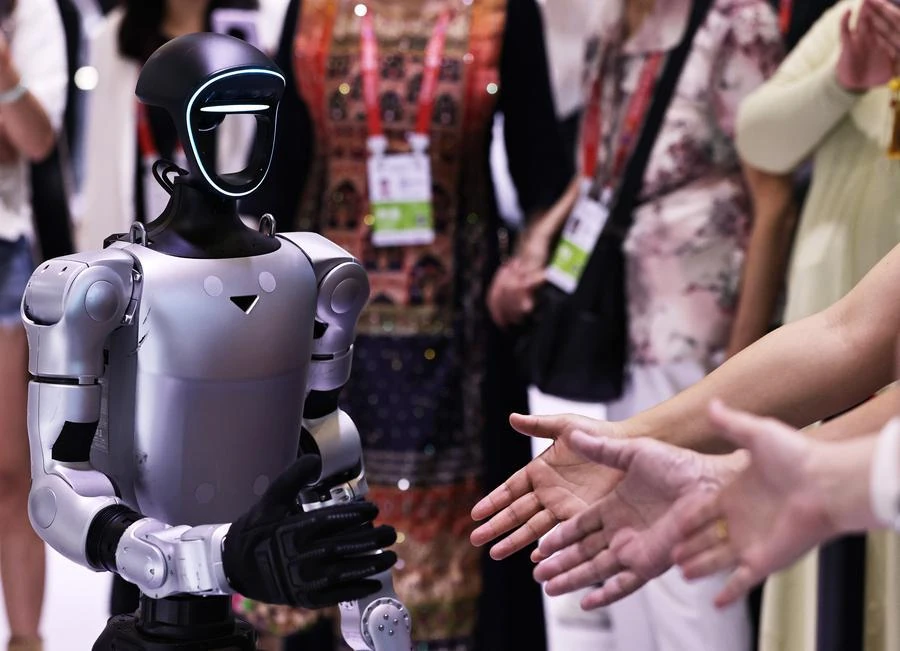
We rent the Unitree G1 with delivery and collection included. Instant online booking.
Humanoid Robot
Unitree G1
The robot most buyers are comparing. Rent one first — experience the real thing before committing.
from $159 / day
Rent the G1What you're about to object to
The arguments for buying — and why they usually don't hold up.
"But I want to own it."
Understandable. But ownership of a rapidly-obsoleting piece of technology is a liability, not an asset. You're not buying a Rolex — you're buying a 2024 laptop in a world where 2026 laptops are already shipping.
"Renting long-term costs more."
Only if you use it nearly every day. For 95% of use cases — events, shoots, exhibitions, one-off projects — you'll spend a fraction of the purchase price on rentals across years, and never touch maintenance, insurance, or obsolescence.
"What about resale value?"
The secondhand market for consumer humanoids barely exists. Unitree is scaling 2026 production nearly 4× — cheaper, newer units will dominate listings. Counting on resale to recover your investment is wishful thinking.
"I want it for a specific event in 3 weeks."
Direct-from-China orders take 4–8 weeks plus customs. US resellers quote 3–8 weeks. If your event is in 3 weeks and you haven't ordered, it's already too late to buy. Rental delivery is same-day on your start date.
"I'll learn to program it myself."
Maybe. But the time cost is real — C++ robotics is not a weekend project. Most buyers underestimate this, then the robot sits unused. Renting outsources the operation to us; you focus on your event.
"Can I rent-to-own?"
Not through us today — we're a pure rental service. But multiple rentals build real experience, so if after several you know you want to own, you'll know exactly which model and configuration to pick.
See it in action first
The robots you're thinking of buying — see what they actually do.
Smooth Criminal Dance Demo
Jogging in Paris Street
Boxing Crowd Demo
University of Plymouth Demo
Blue Mat Dance Demo
Tornado Kick Training Demo
Kip Up Outdoor Demo
Walking in Mall Corridor
Handshake at CES
Voice Control Closeup Demo
Indoor Dance Showcase
Fight Scene Filming Demo
Race vs Runner — Suburban St
Yard Lawncare Joke Clip
Kung Fu Expo Demo
Stage Backup Dancers
Stand Up Recovery — Living Room
FAQ
Buying a humanoid robot — the questions worth asking first
Where can I buy a humanoid robot online?
Consumer-facing humanoid robots can be purchased from Unitree directly, from US and EU resellers (RoboStore, Top3DShop, RobotShop, Quadruped.de, Walmart), from 1X for the Neo model, and from AliExpress. However, before buying online, compare the direct-China price against local reseller pricing — markups of 40–57% over China retail have been publicly documented on the Unitree G1.
Can I buy a humanoid robot in 2026?
Yes. The Unitree G1, Unitree H1, and 1X Neo are available for public purchase. Tesla Optimus is not yet on public sale (target: end of 2027). Figure 02 is not sold to consumers — it ships only via Robot-as-a-Service leasing. Boston Dynamics Atlas is not publicly priced and new customers begin onboarding in early 2027.
How much does it cost to buy a humanoid robot?
Real pricing ranges widely. Unitree G1 base from $16,000 direct, $17,990–$21,600 at US resellers. Unitree H1 around $90,000. 1X Neo $20,000 or $499/month subscription. Figure 02 commercial-only at roughly $1,000/robot/month RaaS. Agility Digit purchase ~$250,000. Add shipping, customs, tariffs, insurance, and maintenance on top.
Is it legal to buy a humanoid robot?
Yes, there is no consumer licensing requirement today. However, the US opened a Section 232 national-security investigation into robotics imports in October 2025, a bipartisan Senate bill proposes blocking federal purchases of Chinese-made humanoids, and the FCC has been asked to add certain Chinese internet-connected robots to the Covered List. Future restrictions on imported Chinese humanoids are plausible.
Can I rent a humanoid robot instead of buying one?
Yes. ZMP Robots rents the Unitree G1 with delivery and collection included. For most use cases — events, exhibitions, content creation, brand activations, one-off projects — renting delivers the same outcome at a fraction of the total cost, with zero maintenance and zero obsolescence risk.
How long does it take to receive a humanoid robot after buying?
Direct-from-China orders typically take 4–8 weeks, plus customs and lithium-battery hazmat clearance. US and EU resellers quote 3–8 weeks depending on configuration. Renting takes zero weeks — we deliver on your rental start date.
What are the hidden costs of owning a humanoid robot?
Electricity ($0.40–$4.60/hour of operation), replacement batteries (~$750+ per pack), annual maintenance (industry estimate: 10–20% of purchase price), commercial insurance for event use, storage (climate-controlled for lithium packs), and repair shipping. US resellers like RoboStore charge for all out-of-warranty repair labor and parts — these are not covered by the manufacturer warranty.
Do humanoid robots come ready to use out of the box?
No. Most consumer humanoid robots — including the Unitree G1 — are developer platforms. Out of the box they perform pre-programmed demonstrations. Anything beyond that (custom tasks, interaction, autonomous behavior) requires custom C++ or Python programming by the owner. This is a common source of buyer regret.
Will my humanoid robot hold its value?
Probably not. Unitree iterates fast — H1 launched in 2023, G1 in 2024 — and is scaling 2026 production to 20,000 units versus 5,500 in 2025, a flood of cheaper, newer stock competing with used inventory. Industrial-robot depreciation baselines are 10–15% per year; fast-iterating consumer humanoids will depreciate faster.
Are android robots for sale the same as humanoid robots?
In common search usage, yes — "android robots for sale" and "humanoid robots for sale" are often used interchangeably for bipedal, human-shaped robots. Technically, "android" implies closer resemblance to a human (face, skin), while "humanoid" describes any human-form robot. All models discussed on this page are humanoid; almost none are true androids.
One decision
Try it. Don't buy it. Yet.
Rent a humanoid robot for your next event, shoot, or demo. If afterwards you still want to buy one, you'll know exactly which. If not, you just saved yourself $20,000.
Delivery & collection included • Instant online booking