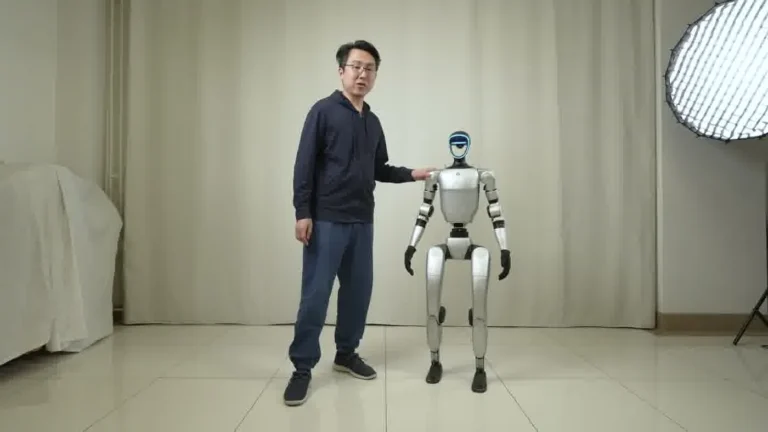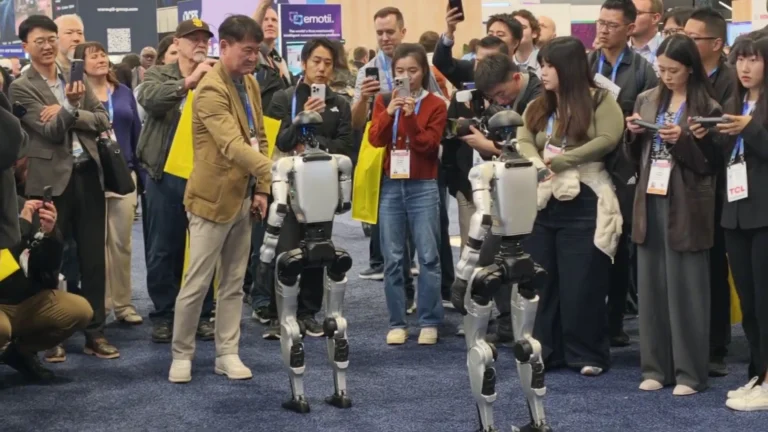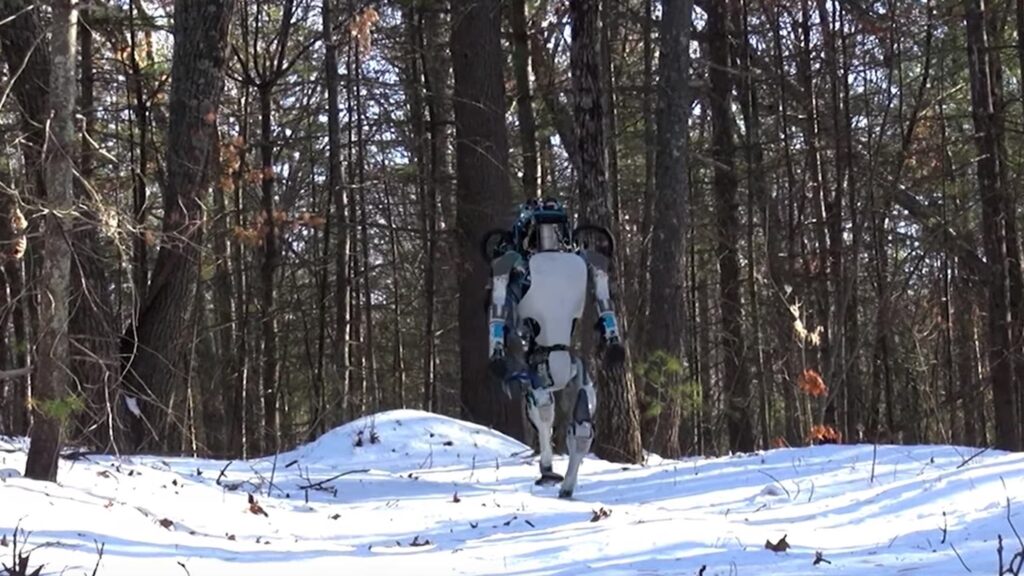
Self-driving cars are hard. Drone autonomy is hard. Humanoid robotics is one of the few fields where the hardest single problem is the one a 12-month-old child solves accidentally on a Tuesday afternoon.
Table of Contents
Walking on two legs without falling is a problem roboticists have been working on since the 1970s. Honda spent 15 years on it. Boston Dynamics spent 25. Unitree, Figure, Tesla — all currently working on it. Walking is solved enough to demo. It is not solved enough to deploy unattended in your kitchen. Here is why that gap exists, and what closing it requires.
Park Path Jog
Image source: ResearchGate / biped robot walking phase reference
Walking on two legs is mathematically a controlled fall. You lift one foot. The body starts to topple forward. Before it falls, the foot lands. The body’s momentum is recaptured. Then you do the same thing with the other foot. That is it. That is walking.
The math is brutal. At any single moment when you are mid-step, your entire body weight is balanced on one foot, and the center of mass is over a small area called the support polygon. Move outside that polygon by even a few centimeters and you are falling. Recovery has to happen within milliseconds because gravity does not give you time to think.
You handle all of this without thinking because you spent the first 18 months of your life training the underlying control loop. The robot does not have that head start. It has to be taught the same skill from scratch. Every step it takes is the result of hundreds of hours of engineering plus millions of simulated falls.
Why Four Legs Is Easier Than Two
This is why Boston Dynamics Spot — the famous robot dog — works reliably and was sold commercially for years before Atlas could be trusted unattended. Four legs is a fundamentally easier balance problem than two.
With four legs, the support polygon is large. You can lift one foot and the other three keep you balanced trivially. Falling is no longer the default state. The control problem becomes “where do I put the next foot” rather than “how do I avoid falling in the next 200 milliseconds.”
Spot’s success in security patrols, inspection, and industrial work is not a fluke. It is the result of starting from the easier hardware problem. The same engineering team’s humanoid — Atlas — took an additional decade and a major hardware redesign to ship at the same level of reliability.
Quadrupeds are easier. The reason humanoids are still being built anyway is that human spaces — stairs, elevators, doorways, chairs, retail aisles — were designed for two-legged occupants. The humanoid shape pays a balance tax to fit human environments.
Image source: ResearchGate / biped robot ZMP center of mass diagram
The center of mass is a single point that represents where all your weight is balanced. Engineers tracking robot stability spend most of their time tracking this point.
For a stable static stance, the center of mass needs to project down inside the support polygon — the area covered by your feet. For dynamic walking, a related concept called the Zero Moment Point (ZMP) tracks the same idea over time, accounting for momentum. Keeping the ZMP inside the moving support polygon is the core stability constraint of bipedal walking.
Modern humanoids estimate their ZMP hundreds of times per second using inertial sensors and force sensors in the feet. They adjust ankle, hip, and knee angles in real time to keep the ZMP where it needs to be. When this works, the robot walks fluently. When the estimate is wrong by a few centimeters, the robot falls.
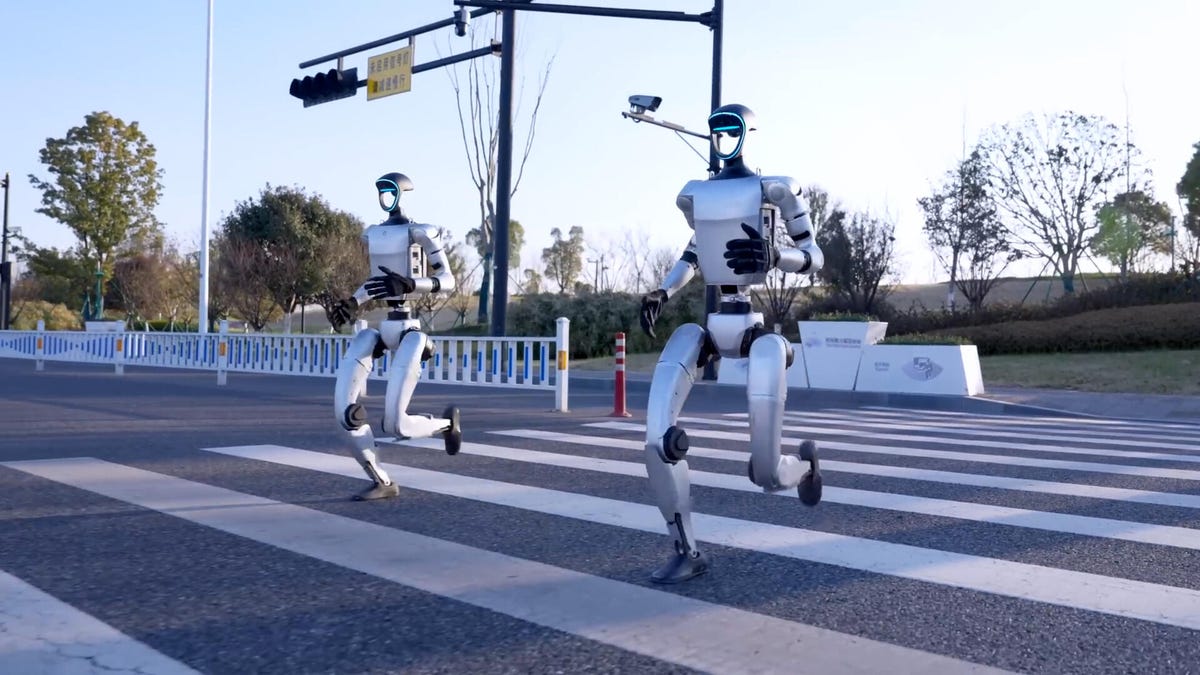
The Unitree G1, Atlas, and Optimus all run continuous ZMP estimation as part of their balance loop. The faster and more accurately they can do it, the more disturbances they can recover from before falling.
What Your Inner Ear Does That Robots Have to Replicate
Your inner ear contains a balance organ that detects rotation and acceleration in three axes. The signals go to your brain hundreds of times per second. Without it, you would fall down stairs constantly and would not know which way is up in the dark.
Robots replicate this with an inertial measurement unit (IMU) — a small chip in the chest or head. The IMU measures rotation and acceleration on three axes, and reports the data to the controller fast enough that balance corrections happen before the robot tips over.
What is hard about this: the IMU drifts. The reported orientation slowly diverges from the truth. To correct the drift, the controller fuses IMU data with camera data, foot force data, and joint angle data, running a sensor fusion algorithm that produces a continuously accurate estimate of where the robot’s body is in space. Get this fusion right and you walk steadily. Get it wrong and you fall in the same direction repeatedly.
This is one of those engineering problems that sounds boring and is actually responsible for whether your trade show goes smoothly.
Image source: Reddit / robot fall down stairs compilation
Now imagine a guest at your event walks past the robot and accidentally bumps it.
What happens in the next second is the difference between a viral video of the robot recovering gracefully and a $63,900 robot face-down on the venue floor. The recovery problem — responding to an unexpected disturbance and staying upright — is the single hardest thing a 2026 humanoid does, and the area where the most engineering effort has been spent in the last 5 years.
Modern humanoids handle small bumps — a bag brushing the leg, a kid tapping the arm — without breaking stride. Bigger disturbances — a hard shoulder check, a large object falling against the torso — are still hit or miss. Atlas demos famously include the engineering team intentionally pushing the robot to show off recovery. Those demos are real, but they are also tuned for the disturbance type the robot was trained on. A novel disturbance pattern still puts the robot at risk.
This is why event-grade humanoids run with a trained operator within a few meters at all times. The operator’s job is partly to prevent the disturbance from happening in the first place.
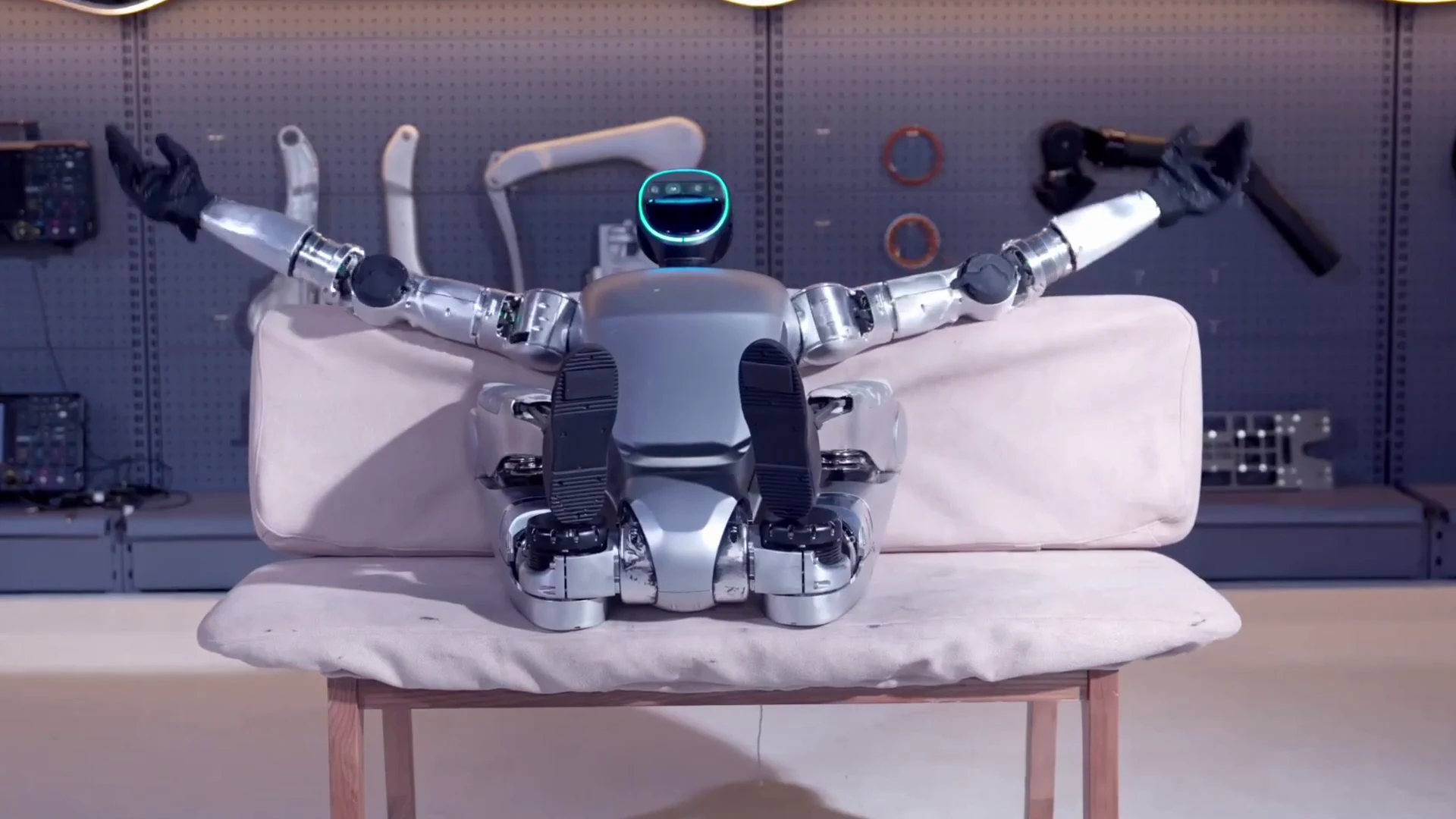
Why Soft Surfaces Make It Worse
Hard floors give a humanoid the consistent feedback its balance system depends on. Soft surfaces — thick carpet, sand, mud, wet grass — do not.
When the foot lands on soft ground, the surface compresses unpredictably. The contact force ramps up slowly instead of immediately. The robot’s IMU reports a different orientation than the foot force sensors expect. The sensor fusion gets confused. The balance loop overcorrects.
The result is the unsteady walk you see in viral fail compilations of humanoids on grass or sand. The robot is doing exactly what it was trained to do — but the training data assumed a hard floor. Out-of-distribution surfaces break the model.
This is why event teams specify floor type ahead of every humanoid deployment. Hardwood, concrete, low-pile commercial carpet — all fine. Beach activations and lawn events — bring a platform.
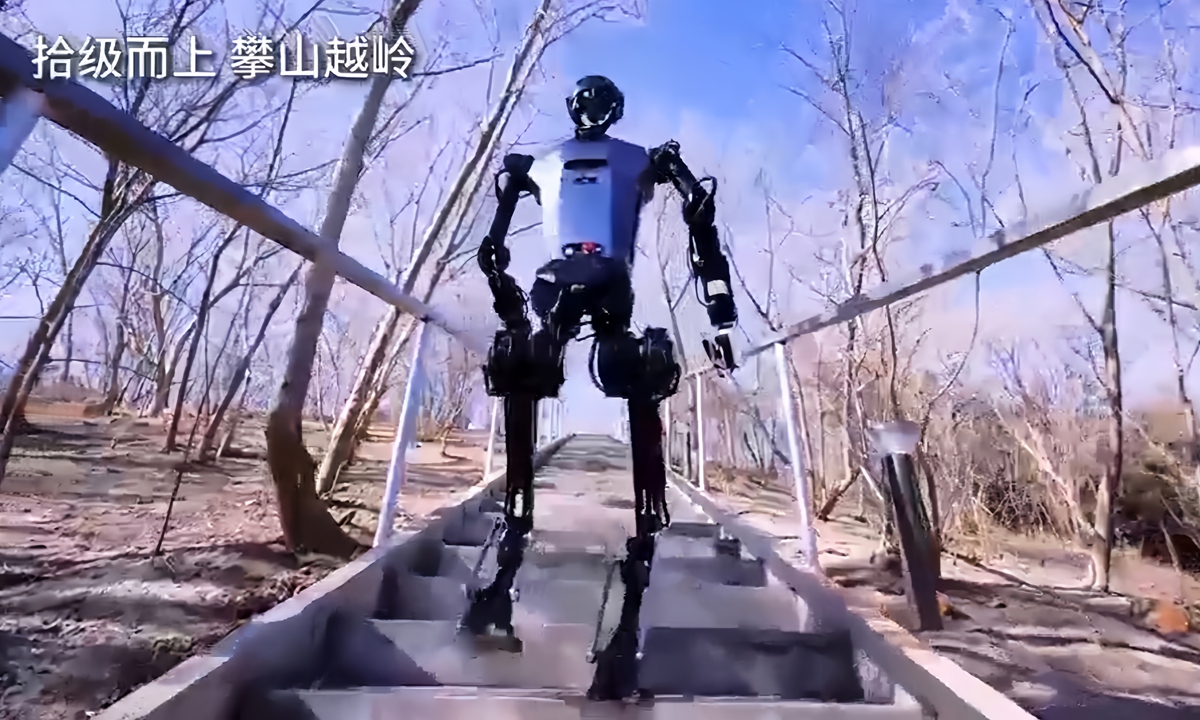
Image source: Global Times / humanoid robot bipedal stair climbing 2025
Stairs are the canonical robot challenge for a reason. Every constraint that makes walking hard gets worse on stairs.
The support polygon shrinks because each foot is on a narrower surface. The center of mass has to shift forward and up at the same time. The recovery options after a misstep are limited because there is nothing flat to fall onto. And every step has to be planned with the next two steps already calculated, because once you commit to climbing, you cannot stop halfway up.
Honda ASIMO falling down stairs in 2006 became the meme it deserved to be — not because the engineering was bad, but because stairs are genuinely the hardest walking environment robotics has tackled. Twenty years later, modern humanoids handle stairs in controlled conditions but cannot be trusted with arbitrary venue staircases. According to IEEE Spectrum reporting on humanoid mobility, stair handling remains a high-priority research focus and a known limitation in commercial deployments.
If your event needs the robot to climb stairs, plan around it. Use the elevator. Stage the robot at the top.
What Modern Humanoids Actually Solved
None of the above is meant to suggest current humanoids cannot walk. They can. The reason 2026 humanoids work commercially is that the engineering ecosystem has solved enough of the walking problem to make events, demos, and constrained deployments viable.
Modern humanoids walk reliably on flat indoor floors at 1 to 3 km/h. They handle minor obstacles. They recover from small disturbances. They handle slight slopes and ramps. They walk for hours without falling, as long as the environment stays inside the conditions they were trained for.
The Unitree G1 you can rent through ZMProbots for $199 a day represents 30 years of cumulative progress on this exact problem. The fact that you can rent a competent walking humanoid for a few hundred dollars in 2026 — a capability that cost hundreds of millions to develop in the 1990s — is the actual story.
FAQ
Why is walking on two legs harder than walking on four?
Two-legged walking is a continuous balance problem. At any moment in mid-step, your full weight is on one foot and the center of mass is over a small support area. Four legs gives you a much larger support polygon, so balance is rarely the default failure mode. Quadruped robots like Boston Dynamics Spot work reliably for this reason.
What is the Zero Moment Point in robotics?
The Zero Moment Point (ZMP) is a calculated point on the floor that represents where the robot’s dynamic forces are balanced. For stable bipedal walking, the ZMP must stay inside the moving support polygon — the area covered by the foot or feet on the ground. Modern humanoids estimate ZMP hundreds of times per second to maintain balance.
Can humanoid robots climb stairs reliably?
In controlled conditions, yes. In arbitrary venue staircases, no. Stair handling shrinks the support polygon, demands precise center-of-mass shifts, and limits recovery options after a misstep. Most commercial humanoid deployments avoid stairs in favor of elevators or ramps. This will improve over time but is a known limitation in 2026.
How do humanoid robots recover from being pushed?
Modern humanoids run continuous balance estimation using inertial sensors, force sensors in the feet, and joint angle data. When a disturbance is detected, the controller can step out, shift the center of mass, or extend an arm to recover. The recovery range depends on the size of the disturbance and how similar it is to disturbances seen in training. Small bumps recover gracefully. Large shoves still cause falls.
Why do robots fall on grass and sand?
Soft surfaces compress unpredictably under the foot. The contact force ramps up slowly instead of immediately, and the sensor fusion that the balance loop depends on gets confused. Robots trained mostly on hard floors do not generalize well to soft surfaces — a known problem called distribution shift. Outdoor deployments require a hard platform or careful surface preparation.
How fast can a humanoid robot walk?
Most current humanoids walk at 1 to 3 km/h in supervised mode. Unitree G1 cruises at around 2 km/h. Atlas can run faster but is rarely deployed at speed in events. Walking speed is constrained by stability margins and operator safety more than by motor capability — the robots could go faster, but at higher risk.
The Bottom Line
Walking on two legs is the hardest thing a humanoid robot does. The math is brutal. The recovery is hard. The surface matters. The operator’s job is to keep the environment inside the conditions the robot was trained for. When all of that comes together, the robot walks calmly across your floor and your guests cannot stop watching.
Want to see 30 years of robotics progress walking through your venue? See availability on our humanoid robot rental page.