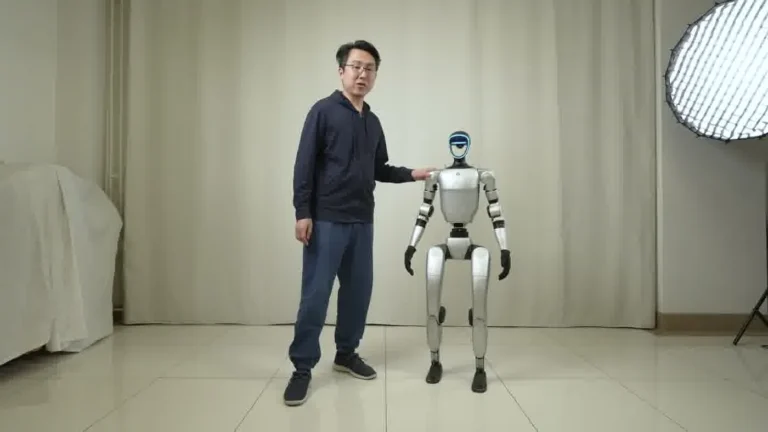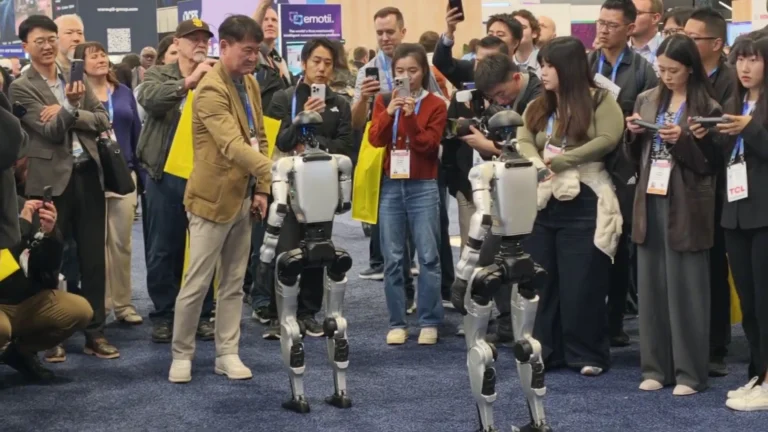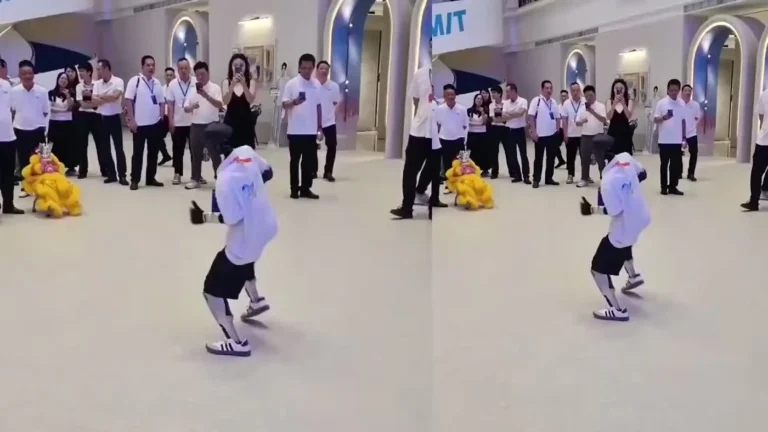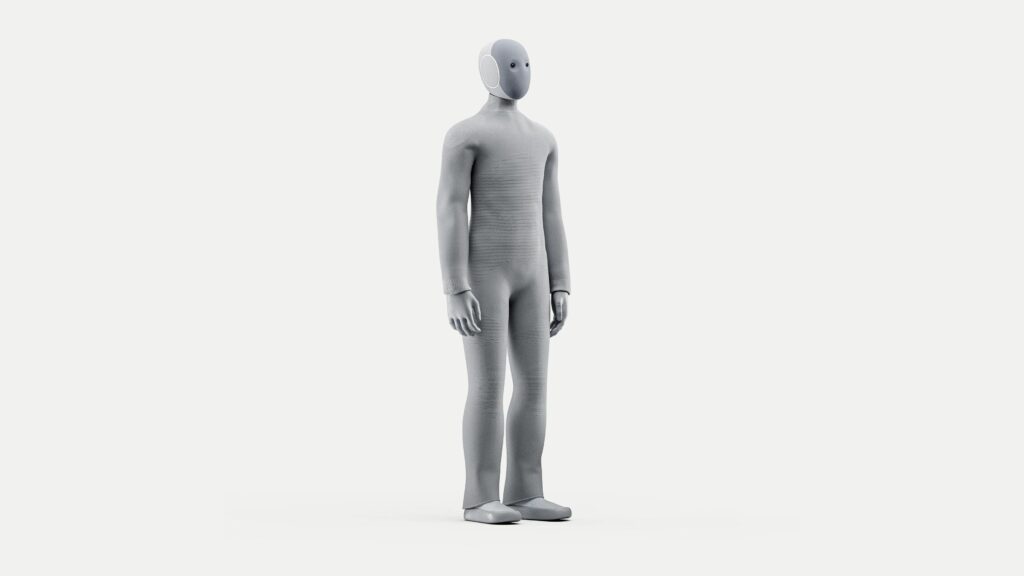
Most people learning about humanoid robots in 2026 are getting their information from social media, viral demo clips, and marketing departments at companies that need to keep raising venture capital. As a result, the average person walks around with a head full of myths.
Table of Contents
Here are the ten most common ones I have heard from event organizers, brand teams, and curious friends. Each one is wrong in a specific way. Each one matters because believing it leads to a wrong decision — about a purchase, a booking, a strategy, or a story you tell at your next dinner party. Let’s clear them out.
Pair Power Dance
Image source: 1X Technologies / NEO home robot product page
This is the myth marketing departments push hardest because the household market is where the trillion-dollar TAM lives. The reality in April 2026 is that no humanoid robot you can rent or buy today reliably loads a dishwasher, folds laundry across multiple fabric types, makes a bed, or handles unstructured kitchen tasks.
1X Technologies is shipping NEO with home use cases as the pitch, with consumer deliveries targeted for Q3 to Q4 2026. Tesla has hinted at a consumer Optimus for 2027 or later. None of these are commercially available for the household scenario as of today.
If a vendor or influencer tells you a humanoid will be running your home in the next 12 months, ask for the demo where it operates unattended in a stranger’s house for 8 hours straight. They will not have one. The technology is not there yet.
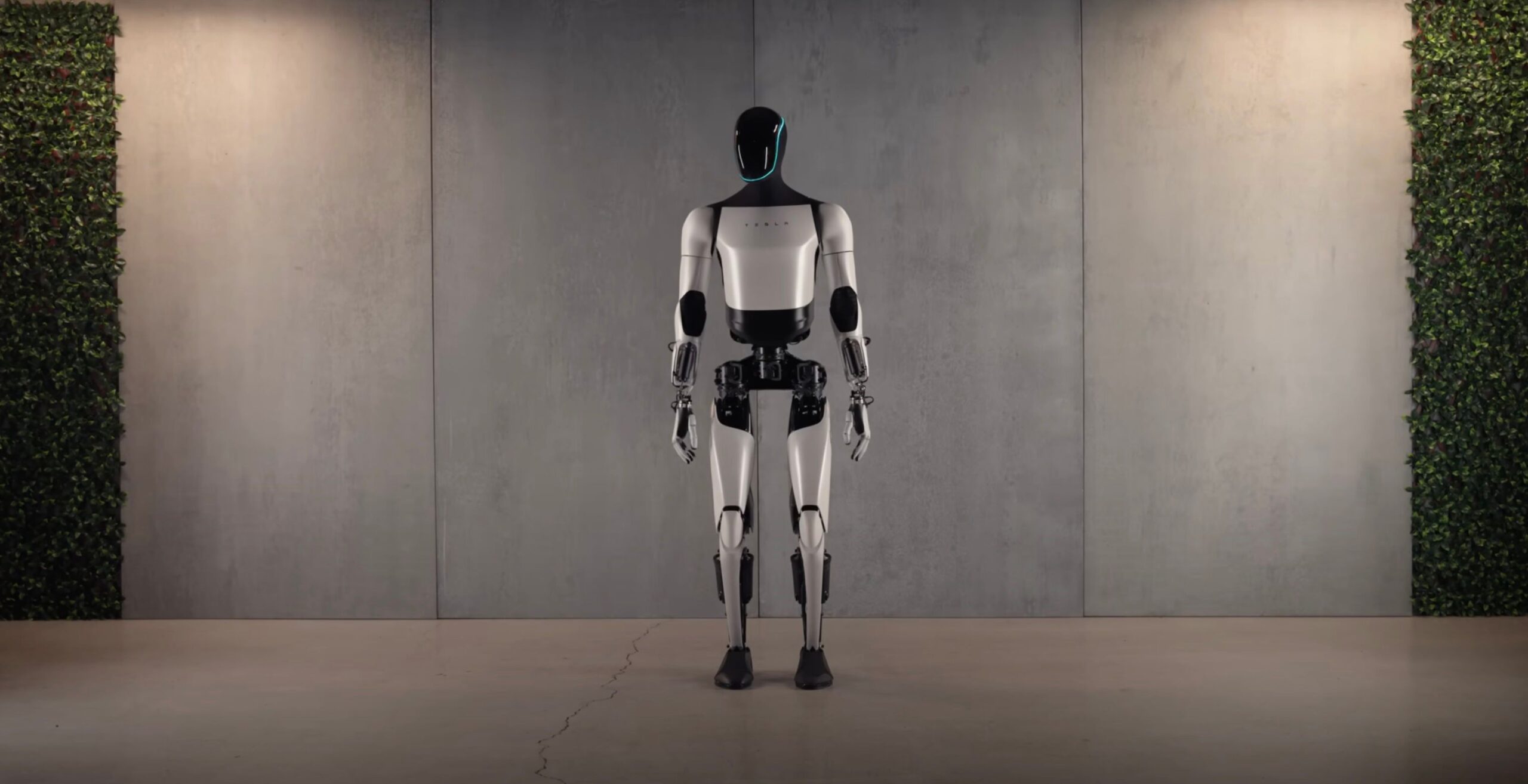
Image source: Robots Guide / Tesla Optimus reference photo
Tesla Optimus has the most marketing reach of any humanoid robot in 2026. It is also one of the least accessible robots you can think of. As of April 2026, every Optimus unit is deployed internally at Tesla factories. There is no rental program. There is no public sales channel. There is no waitlist.
External B2B sales are targeted for late 2026 at industrial scale. Consumer access is even further out. If you want a humanoid robot for your event next month, Optimus is not an option no matter how many of its dance videos you have watched.
The current 2026 humanoids that you can actually book or buy are different machines. The Unitree G1 is the most accessible. AgiBot X2 has a quote-based program. Engineered Arts Ameca is bookable for large corporate budgets. Tesla Optimus is none of these. Famous is not the same as available.
Myth 3: Humanoid Robots Are Dangerous Around People
Modern event-deployed humanoids run with multiple safety layers — emergency stops, soft motion limits, supervised modes, and a trained operator within a few meters at all times. The risk profile is well understood and far lower than common venue equipment.
The 2025 Chinese expo incident where a humanoid lunged toward a visitor went viral, but it was a control software failure on a non-event-grade research unit at an unmanned demo. Event-grade humanoids in the US — Unitree G1, AgiBot, Ameca — have not produced a comparable incident at any major commercial deployment.
Statistically, your guests are more likely to be injured by a venue staircase, an audio cable, or the catering buffet than by the humanoid robot at your booth. The fear is not fact-based. The marketing departments of competing event activations would love for you to believe otherwise.
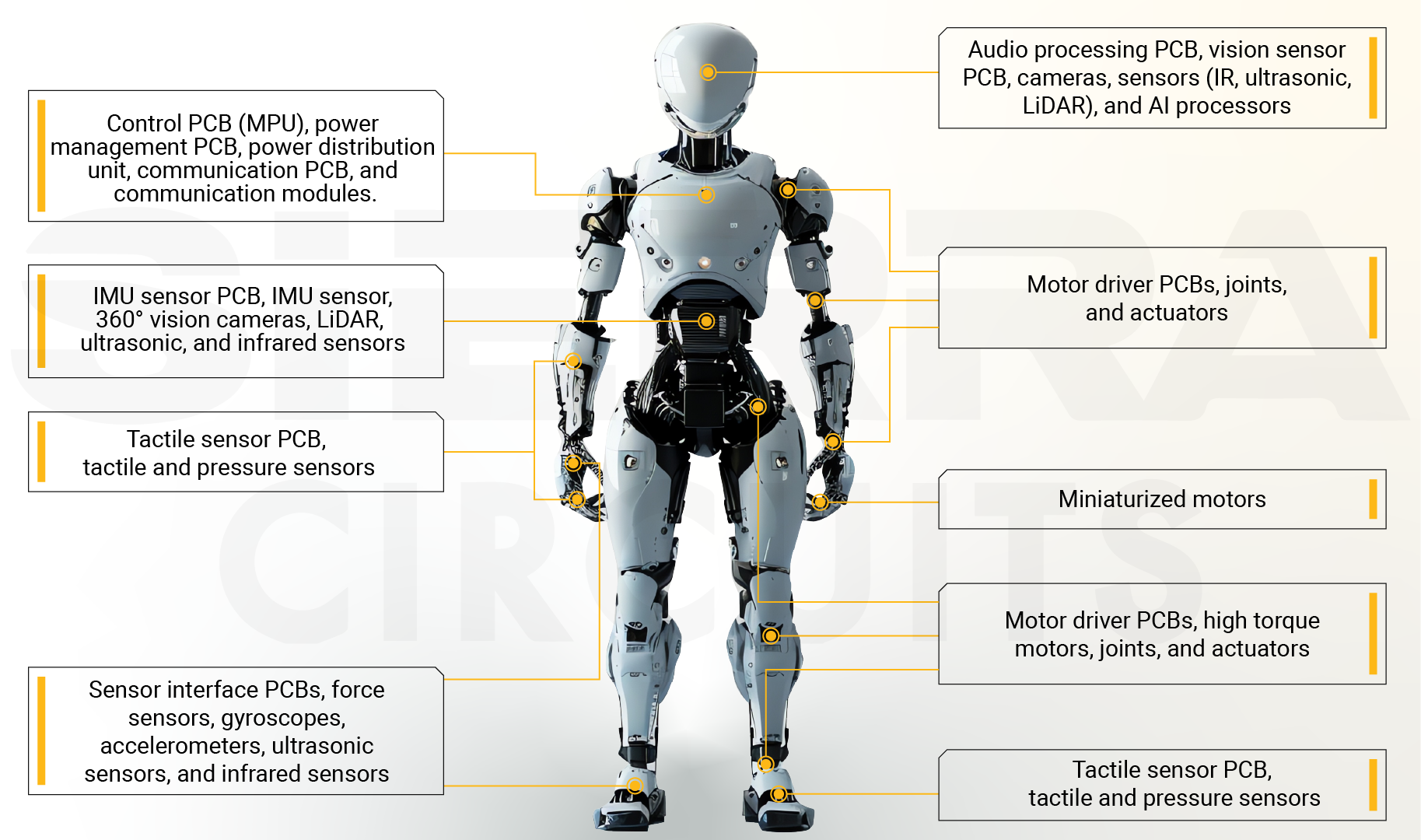
Image source: Sierra Circuits / humanoid robot PCB onboard compute reference
This one is a misconception I have heard from technical people who should know better. The robot does not stream itself to a cloud server every second to function.
The brain is on the robot. The Unitree G1 has an NVIDIA Jetson Orin module on board running 16 trillion operations per second of edge AI. Atlas, Optimus, Figure 02 — all run their balance, vision, and behavior loops locally. If the robot lost its wifi connection mid-event, it would keep walking, keep gesturing, keep responding to the operator’s tablet. The connection is for telemetry and operator commands, not core operation.
This matters at events because venue wifi is unpredictable. The good news: it does not matter to the robot. Modern humanoids are designed for venues with bad wifi because the engineering teams know venue wifi is bad. The local-compute architecture is intentional.
Myth 5: They Will Replace All Human Workers Soon
This is the AI doomer myth and the AI utopian myth at the same time, depending on who is selling it. The reality is more boring. Humanoids are replacing structured task labor in factories at a measurable but limited rate. They are not replacing event hosts, customer service workers, retail staff, healthcare workers, or any role that requires unstructured social interaction.
According to MIT Technology Review coverage of humanoid commercial deployment trends, the realistic 2026 to 2030 outlook is that humanoids will quietly take over a small set of factory tasks (load this part, move that crate) while the broader claims about general workforce replacement remain marketing.
For event teams, the practical implication is that a humanoid is not a replacement for a host or a brand ambassador. It is a magnetic supplement. Pair the robot with strong human staff and the activation outperforms either alone.
Image source: Daily Mail / Hanson Robotics Sophia robot at press conference
Sophia by Hanson Robotics is the most-recognizable face in the humanoid category. She has been on talk shows, panels, and magazine covers for nearly a decade. She also does not walk. The version of Sophia used for public appearances sits on a wheeled base or is fixed at a table.
This is the cleanest example of why “famous” and “capable as a humanoid” are not the same thing. Sophia’s value is the realistic facial expression, the AI conversation, and the celebrity status — not bipedal locomotion. Booking Sophia for an event costs $100,000 to $125,000 per US appearance through agencies like Gotham Artists.
If your event needs a humanoid that walks across a stage, Sophia is not the answer. The Unitree G1 walks. AgiBot X2 walks. Engineered Arts Ameca does not walk in event configurations. Atlas walks. Optimus walks. Sophia, despite the resume, does not.
Myth 7: All Humanoid Robots Cost Half a Million Dollars
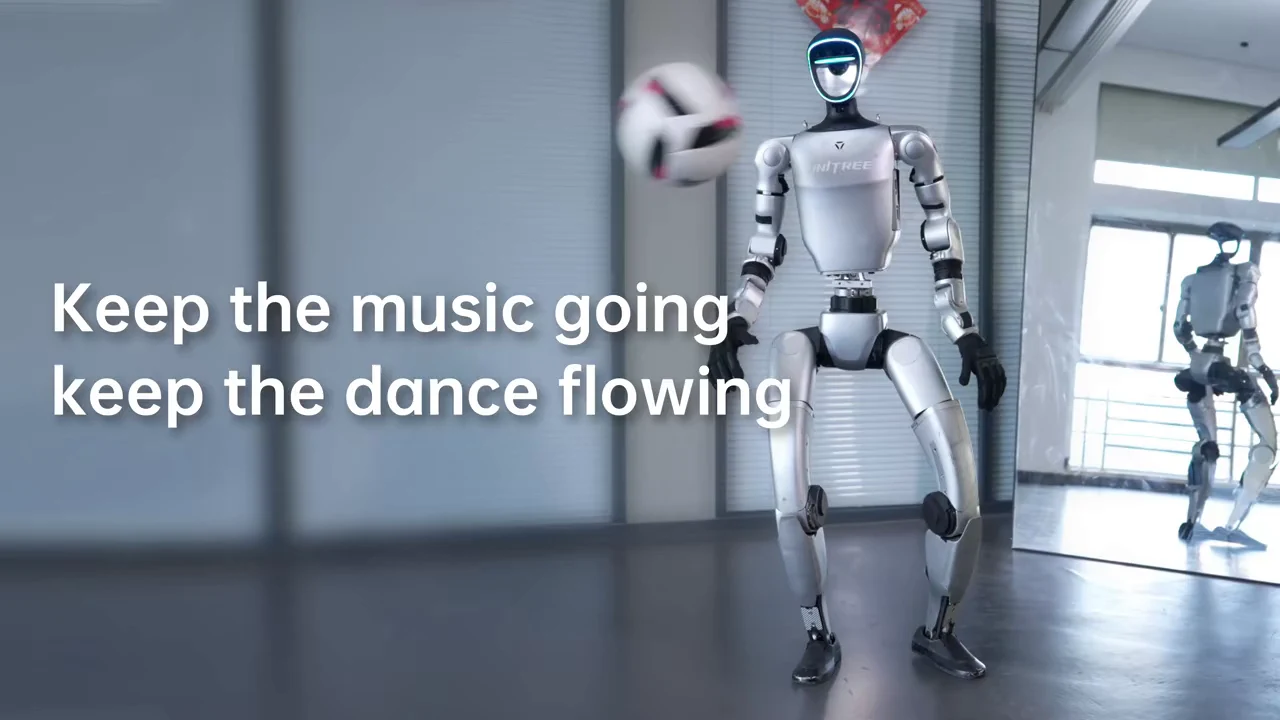
The 2018 framing was correct. The 2026 framing is wrong. Humanoid robot prices have collapsed in the last 24 months thanks to a Chinese supply chain in compact actuators and the entry of cost-conscious manufacturers like Unitree.
The Unitree G1 lists at roughly $63,900 — not $500,000. AgiBot X2 is in a similar tier. Boston Dynamics Atlas at $420,000 represents the high end, and that price reflects the engineering provenance and the U.S. manufacturing premium more than the underlying components.
For the rental market, the same effect cascades. The Unitree G1 rents from $199 per day in the US through ZMProbots. The pricing is genuinely accessible to event budgets that would have been laughed out of the room as recently as 2023. According to The Robot Report coverage of humanoid pricing trends, the cost curve is still flattening downward as supply increases.
Image source: Engineered Arts / Ameca expressive face humanoid
This is the science fiction myth. The viral video of a humanoid robot saying something philosophical in an interview convinced a generation that the robot is “almost conscious.” That is not what is happening.
What is happening: a language model running on the robot’s onboard compute generates responses based on the question. The voice is synthesized. The expression is choreographed by motion-capture or scripted. The robot is not contemplating its existence. It is producing the next likely token in a conversation, the same way ChatGPT does, with a body attached.
This is not a criticism. It is the honest description. The result is impressive. The capability is also nowhere near sentience. Confusing the impression of consciousness with actual consciousness is the easiest mistake to make watching a 2026 humanoid demo, and the one that leads to the worst expectations going into a real deployment.
The robot does not get bored. It does not have feelings about the brand it is representing. It executes the routine and goes back to charging.
Myth 9: They Will Look Human-Realistic Soon
This one is intuitive and wrong. The trajectory of humanoid design is mostly away from photorealistic human appearance, not toward it.
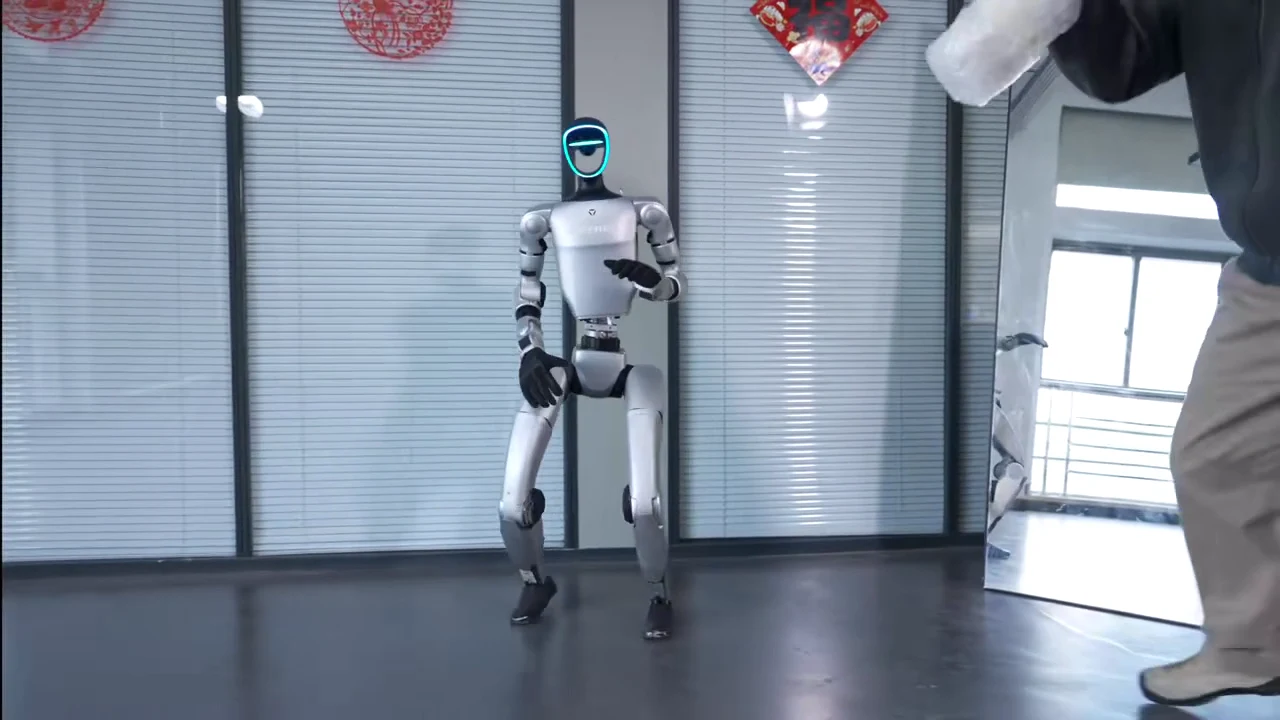
The reason is the uncanny valley. A robot that looks too close to human without being fully human creates discomfort in viewers. The Unitree G1, Atlas, Optimus, and Figure 02 all lean intentionally robotic — visible joints, mechanical heads, no synthetic skin. They look futuristic, not human, and that is by design.
Engineered Arts Ameca is the exception. The expressive face with realistic skin is the Ameca product. It works because Engineered Arts has invested deeply in the lip-sync and micro-expression details that pull the design out of the uncanny valley. Most other manufacturers do not pursue this — it is expensive, the engineering is hard, and the audience response is mixed.
Expect 2030 humanoids to look more capable than 2026 humanoids. Do not expect them to look more human.
Myth 10: There Is No Way to Actually Get One Today
This is the myth that costs event teams the most actual money, because it leads them to skip the booking entirely.
The truth: you can rent a humanoid robot for your event next month. The Unitree G1 rents through ZMProbots starting at $199 per day, with free delivery in 48 US states, a trained operator included, and base damage protection at no charge. Three-day minimum booking. Multi-day rates drop to $259 per day at 4 to 7 days and $199 per day at 8 to 30 days.
The booking process runs entirely online. No phone calls. No multi-week sales negotiations. The same booking experience as renting a high-end camera or AV equipment. According to ZMProbots data and reporting in BizBash, this is the only walking humanoid in the US with a fully online-bookable rental program in 2026.
If you assumed humanoids were inaccessible, that assumption is the most expensive myth on this list.
FAQ
Are humanoid robots actually replacing human workers in 2026?
In a small set of structured factory tasks, measurably yes. In broader workforce categories, no. Figure 02 at BMW, Apptronik with Mercedes, and similar pilots represent the realistic deployment pace — limited tasks in controlled environments. Predictions of broad workforce displacement are marketing, not data.
Can I rent a humanoid robot for my event?
Yes. The Unitree G1 rents through ZMProbots starting at $199 per day with free delivery, a trained operator, and base damage protection included. The booking is entirely online. Three-day minimum. Most event teams book 3 to 7 days. Other manufacturers (AgiBot, Engineered Arts, Hanson Robotics for Sophia) operate quote-only programs with significantly higher pricing.
Is Tesla Optimus available to rent or buy?
No. As of April 2026 every Optimus unit is deployed internally at Tesla factories. No rental program, no external sales channel, no public price. External B2B sales are targeted for late 2026 at industrial scale. Famous does not mean available.
Are humanoid robots safe at public events?
Yes when operated by a trained handler with supervised motion limits enforced. Modern humanoids include emergency stops, soft motion bounds, and on-site operators. Statistically, the risk to guests is far lower than common venue equipment such as forklifts or scissor lifts. Event-grade humanoid deployments have an excellent safety record across thousands of activations.
Why do humanoid robots not look more human?
Intentional design choice. A robot that looks too close to human without being fully human creates the uncanny valley discomfort. Most modern humanoids — Unitree G1, Atlas, Optimus, Figure 02 — lean intentionally robotic with visible joints and mechanical heads. Engineered Arts Ameca is the exception that proves the rule, having invested specifically in expressive face technology to clear the valley.
Are humanoid robots intelligent in any meaningful sense?
They run language models, computer vision models, and balance controllers. They produce responses, behaviors, and motions that look intelligent in narrow situations. They are not conscious. They do not have continuous self-awareness. They do not develop opinions, preferences, or boredom. They execute scripted and learned routines and stop when the task ends.
The Bottom Line
Most of what you have read about humanoid robots online is exaggerated, marketing, or science fiction. The honest 2026 picture: humanoids walk well, gesture well, perform scripted routines, pull crowds at events, and rent for less than most people assume. They do not replace humans, do not run households, and are not sentient.
If you want to see one in person at your event, see availability on our humanoid robot rental page.