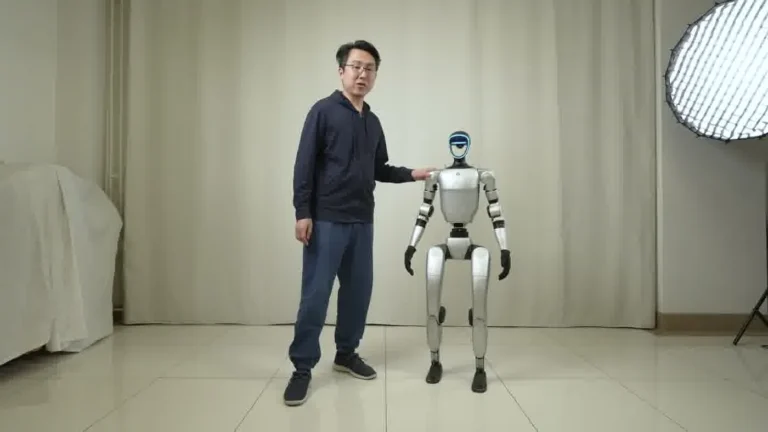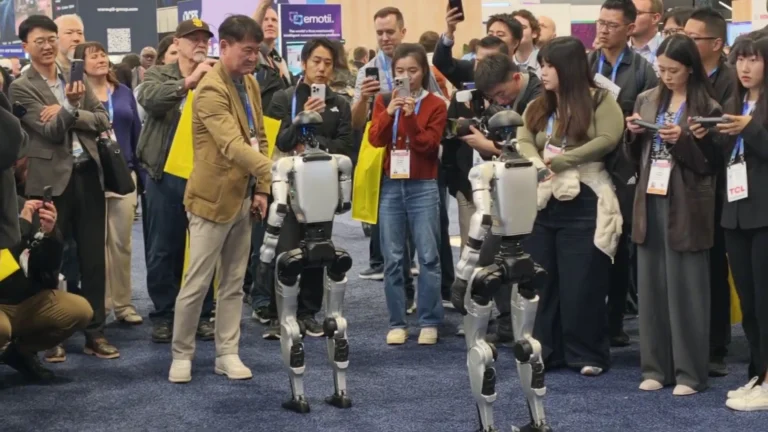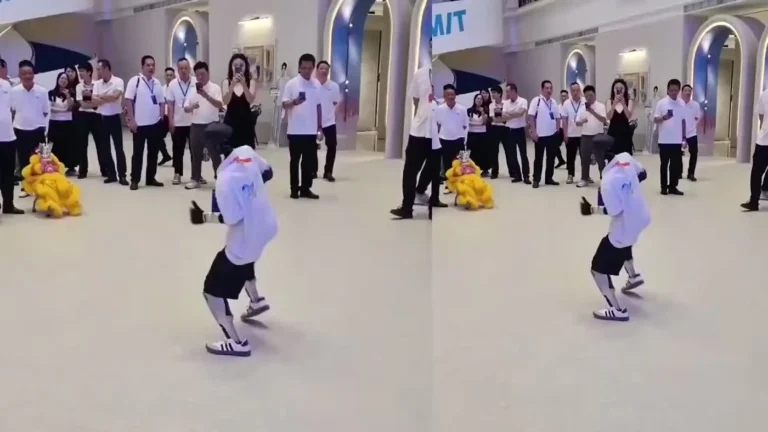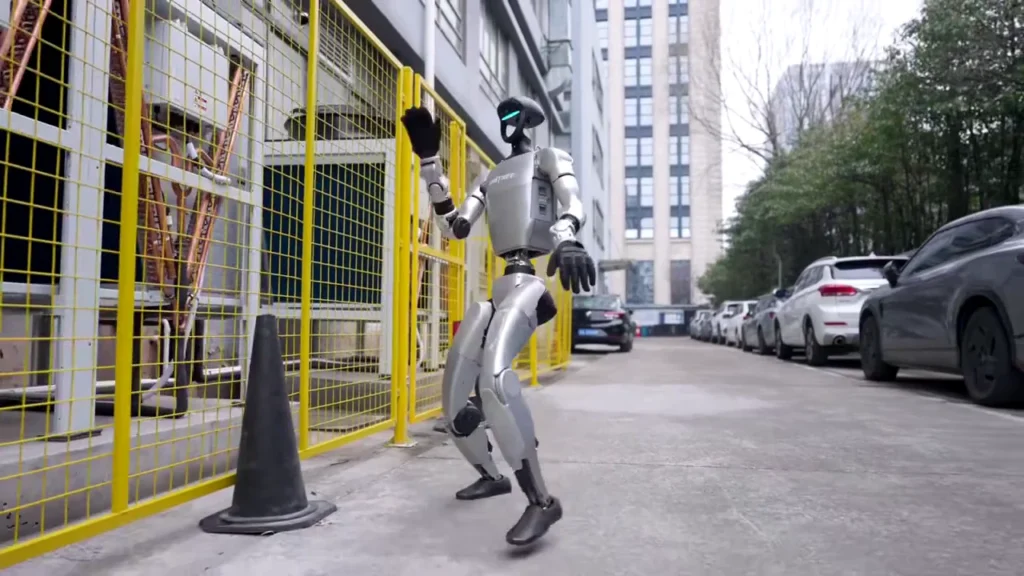
The Unitree G1 lists at a market value of $63,900. That number is on every spec sheet. It is not the number that matters.
Table of Contents
- The Operator Problem: $400 to $500 a Day, Every Day You Use It
- Maintenance, Software, and Repairs in Years 2 and 3
- Light Use (6 Events Per Year): Buy or Rent?
- Medium Use (12 Events Per Year): Buy or Rent?
- Heavy Use (24+ Events Per Year): Where the Math Gets Closer
- When Buying Actually Makes Sense
- The Bottom Line
The number that matters is what you actually spend over three years to put a humanoid robot in front of guests at a real event — including the operator, the storage space, the protection costs, the maintenance, the transport to and from each venue, and what the robot is worth when you eventually try to sell it. We ran the math three ways: light use, medium use, and heavy use. Renting wins in all three. Here is exactly why.
Staff Training
The Unitree G1 Edu Ultimate E (sometimes called the U7) carries a market value of $63,900 in the United States. That price covers the robot itself: 41 degrees of freedom, five-finger dexterous hands, NVIDIA Jetson Orin 16G compute, 3D LiDAR, depth camera, stereo speakers, and a roughly two-hour battery.
It does not include shipping from the manufacturer. It does not include the carrying case, replacement batteries, charging accessories, or the developer software licenses some advanced features require. It does not include training — the G1 is not a consumer device, and operating it safely at a public event takes practice. And it does not include any of the recurring costs that begin the moment the robot lands at your front door.
The sticker price is the cost of acquiring the robot. The total cost of ownership, as anyone who has bought one will explain, is a different number entirely.
Let’s break Year 1 down line by line, assuming a buyer who plans to use the robot at events 12 times in the first year (a medium-use scenario).
- Hardware acquisition: $63,900
- Shipping and inbound logistics: $1,200 to $2,000 depending on origin
- Accessories and spare batteries: $800 to $1,500
- Asset protection costs (damage and loss): $1,500 to $3,000 for a $60K specialty robotics asset
- Climate-controlled storage (per month): $200 to $400 for a secured space large enough for the carrying case and charging station
- Charging and electricity: ~$200 per year (this part is not the problem)
- Per-event operator fees: $300 to $500 per day for someone trained to run a humanoid robot safely in a public setting — 12 events at 3 days each is 36 days, or roughly $14,400 in operator costs alone
- Per-event transport: $300 to $600 round-trip for local events, more for out-of-state — another $5,000 to $10,000 across 12 events
Year 1 total, assuming you handle scheduling and logistics in-house: roughly $90,000 to $97,000. The robot itself was the cheap part.
The Operator Problem: $400 to $500 a Day, Every Day You Use It
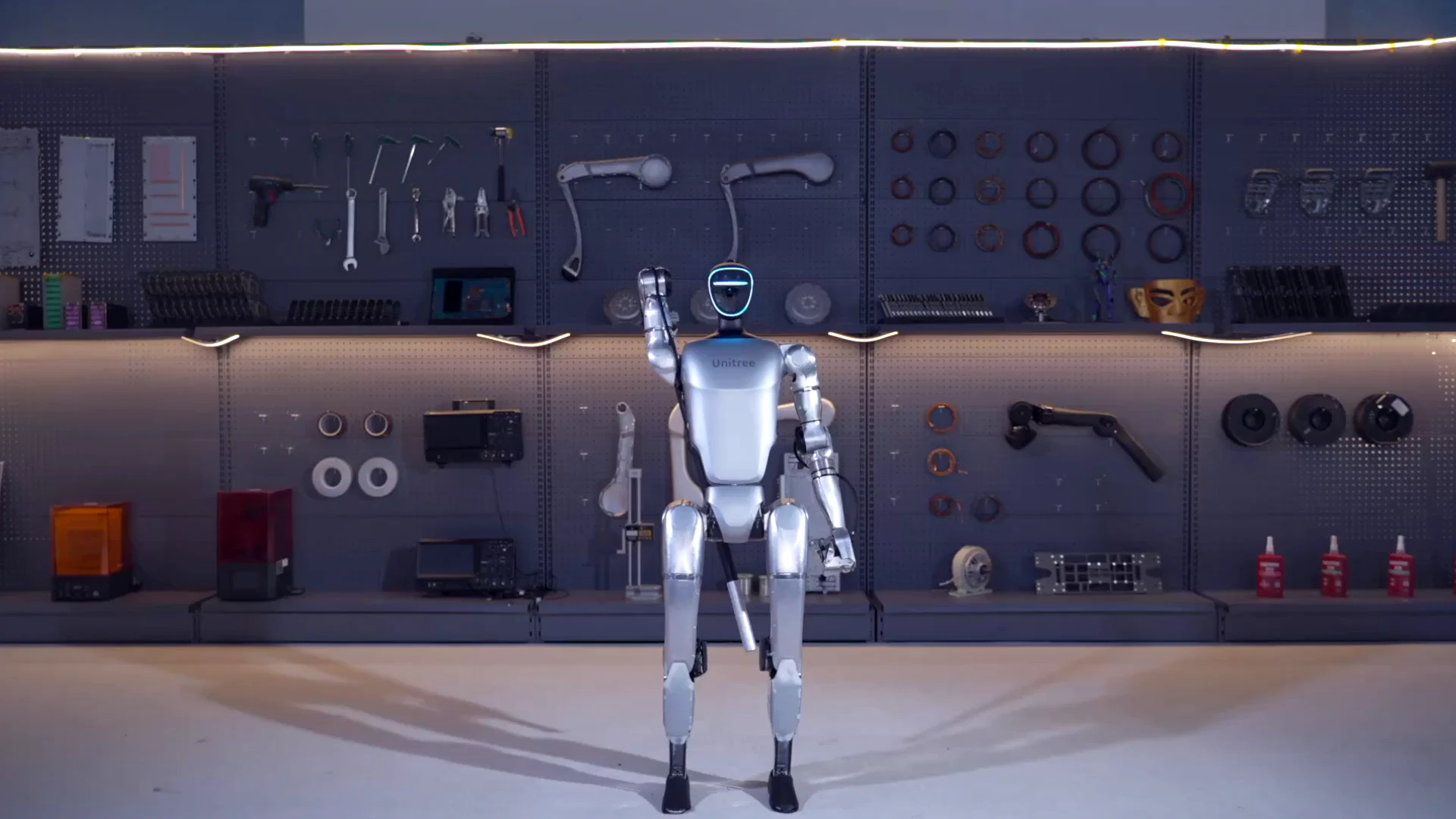
This is the cost most prospective owners underestimate. The Unitree G1 is not a Roomba. You do not press a button and walk away. At a live event with the public present, the robot is being run by a trained operator — watching for crowd interactions, monitoring battery state, handling unscripted moments, and stopping motion the instant something unexpected happens.
The going rate for a certified humanoid robot operator at events in the United States runs $300 to $500 per day, plus travel and per diem for out-of-town engagements. A 3-day event therefore costs $900 to $1,500 in operator fees alone — and the operator is required whether you own the robot or rent it.
The difference: ZMProbots includes a Pro Setup & Training as a $100 one-time fee, with the operator already trained on the specific G1 unit being deployed. If you own the robot, you either keep an operator on staff (full salary, full benefits, year-round) or hire a freelance operator per event at the going rate — which is roughly the same as a 1-day rental.
The Unitree G1 carrying case is roughly 80 by 60 by 50 centimeters and weighs over 50 kilograms when packed. You cannot store it in a closet. Climate-controlled, secured storage runs $200 to $400 per month in most US metros — $7,200 to $14,400 over three years.
The charging station needs a dedicated outlet on a stable circuit. Power draw is modest (about $200 per year in electricity) but the robot’s batteries degrade if stored at full charge for long periods between events, which means a maintenance protocol — charging, partial discharge, and rotation — if you plan to use it intermittently.
Transport adds the line item buyers most often forget. Shipping a humanoid robot to and from each venue runs $300 to $600 for local events and $800 to $1,500 for cross-state moves. Twelve events per year at an average $400 round-trip is $4,800 in transport every year — $14,400 across three years. This cost is built into a rental day rate. It is not built into ownership.
Maintenance, Software, and Repairs in Years 2 and 3
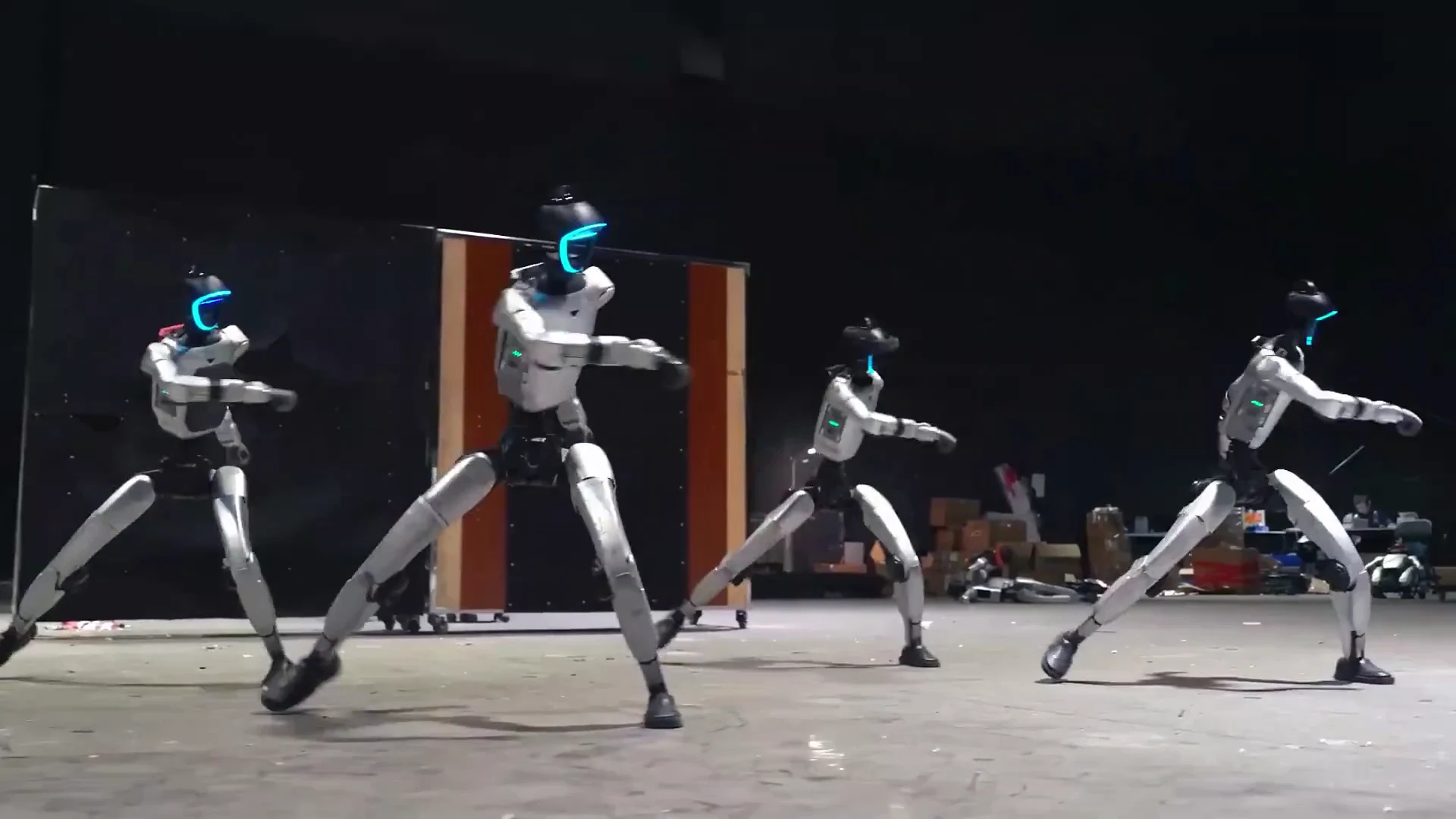
The Unitree G1 is a precision robotic platform with 41 actuators, multiple LiDAR and depth sensors, dexterous hands, and high-rate compute. Industry rule of thumb for advanced robotics is 8% to 15% of hardware value per year in maintenance and repair costs after the first warranty period — $5,000 to $9,500 per year for a $63,900 robot.
Most G1 owners report at least one significant repair in the first 24 months: a damaged finger linkage, a sensor calibration issue, or a leg actuator replacement after a fall. Parts ship from China. Lead times run two to six weeks. During that window, the robot is not available — which is the same as a 100% loss of any planned event days.
Firmware and software updates from Unitree are typically free, but advanced behaviors, custom motion profiles, or integration with third-party event systems often require external development support at $100 to $200 per hour. A custom event sequence (entrance, demo, photo loop, exit) runs $2,000 to $5,000 to commission once — per use case.
Humanoid robotics is a fast-moving market. The model you buy this year will not be the latest model 12 months from now, and the depreciation curve reflects that.
Used Unitree G1 listings on secondary markets in early 2026 show 12-month-old units selling at roughly $38,000 to $42,000 — a 35% to 40% loss in the first year. Two-year-old units list closer to $28,000. Three-year-old units, when they appear, list in the $20,000 to $25,000 range, depending on condition and included accessories.
That means a buyer who acquires the G1 at $63,900 today and sells it in three years will recover roughly $22,000 to $25,000. The hardware itself, after residual value, will have cost you $39,000 to $42,000 over three years. That is before any of the operating costs above.
The robot does not hold its value. The market replaces it faster than office equipment, and the prices on used units reflect that.
Now compare against renting. ZMProbots prices the same Unitree G1 on a tiered day rate:
- 3-day booking: $299/day = $897 per booking
- 4 to 7 days: $259/day = $1,036 to $1,813 per booking
- 8 to 30 days: $199/day = $1,592 to $5,970 per booking
The day rate already includes free delivery, free collection, a trained operator, base damage and loss protection, and a fully charged unit. The only additional cost is a $1,000 refundable deposit — which is returned in full after the booking ends.
That changes the math at every usage level. Twelve events per year at three days each, all booked at the 3-day tier, comes to $10,764 per year — $32,292 over three years. Twelve events per year at five days each, booked at the 4-7 day tier, comes to $15,540 per year — $46,620 over three years. The most expensive realistic rental scenario for medium use stays well under $50,000 over three years, with no maintenance, no storage, no operator hiring, and no depreciation risk.
Light Use (6 Events Per Year): Buy or Rent?
This is the easy case. Six events per year at three days each is 18 rental days annually — 54 rental days over three years.
Rental cost (all 3-day bookings): 18 bookings x $897 = $16,146 over three years. Total. No other costs.
Ownership cost over three years for the same usage: hardware ($63,900) less residual value ($25,000) = $38,900 in net hardware cost, plus $30,000+ in operator/transport/storage/maintenance = roughly $68,000+. The robot sits unused 94% of the calendar year. Buying makes no economic sense at this usage level. Rent.
Medium Use (12 Events Per Year): Buy or Rent?
Twelve events per year at three days each is 36 rental days annually — 108 rental days over three years.
Rental cost (all 3-day bookings at the $299 tier): 36 bookings x $897 = $32,292 over three years. With longer bookings you save more: 18 events at six days each at the $259 tier is $27,972.
Ownership cost over three years for the same usage runs $130,000 to $145,000 once you include hardware net of residual value, operator fees, transport, storage, asset protection, and maintenance. Renting saves roughly $100,000 over three years for medium use. The robot still sits unused 87% of the calendar year if you own it.
Heavy Use (24+ Events Per Year): Where the Math Gets Closer
Twenty-four events per year at three days each is 72 rental days annually — 216 rental days over three years.
Rental cost (all 3-day bookings): 72 bookings x $897 = $64,584 over three years. With smart booking patterns — combining adjacent events into 5- or 8-day windows — the same usage runs $48,000 to $55,000.
Ownership cost at this usage level rises with the operator and transport line items. Real total: roughly $150,000 to $175,000 over three years. Renting still wins by $90,000 to $120,000. Even at heavy use, owning a humanoid robot does not pencil out for events — because the per-event costs (operator, transport) scale with usage whether you rent or buy.
Here is the full 3-year cost comparison side by side. All numbers reflect medium use (12 events per year at 3 days each, 108 total event days over 3 years).
| Cost Line Item | Buy | Rent (ZMProbots) |
|---|---|---|
| Hardware (G1 market value) | $63,900 | $0 |
| Inbound shipping + accessories | $2,500 | $0 (free delivery) |
| Asset protection (3 years) | $6,000 | $0 (base included) |
| Storage (36 months) | $10,800 | $0 |
| Maintenance + software (3 years) | $22,000 | $0 |
| Operator fees (108 event days) | $43,200 | Included |
| Transport (36 events) | $14,400 | $0 |
| Rental day rate (108 days @ $299) | — | $32,292 |
| Less: residual sale value at 36 months | -$25,000 | — |
| 3-year total | ~$137,800 | $32,292 |
The gap is roughly $105,000 over three years. That gap exists at every usage level we modeled. According to IEEE Spectrum reporting on commercial humanoid robotics economics, the dominant cost in deploying these robots is rarely the hardware itself — it is everything that surrounds the hardware over time.
Here is the cleanest version of the question: how many event days per year would you need to use the robot before owning makes financial sense?
The hardware-only break-even is roughly 320 rental days at the $199/day tier. That is 107 event days per year — nearly one in three days of the calendar year. Once we add storage, asset protection, maintenance, and the depreciation hit, the real break-even moves higher: somewhere between 380 and 450 rental days over three years to come out ahead by buying.
That works out to roughly 130 to 150 event days per year — something only true production-scale operators ever reach. Most event organizations, brand activation agencies, and content studios run between 6 and 24 events per year with a humanoid. None of them hit the break-even threshold. The math says rent.
When Buying Actually Makes Sense
There is one scenario where buying is the right call: continuous, daily, year-round use cases where the robot is generating value every working day. That includes:
- Research labs and universities — the robot is in use as a research platform 5 to 7 days per week, year-round
- Manufacturing facilities — continuous deployment in factory automation, where the robot is on the line for 200+ working days per year
- Robotics R&D companies — developing software, firmware, or behaviors that require constant access to the hardware
- Healthcare and care research — platform deployed in clinical or care research running daily protocols
If you are renting a humanoid for events, brand activations, trade shows, or content production — the use cases that drive the vast majority of inquiries we receive — the math says rent. Every time. If you are reading this in a research lab planning to deploy a G1 daily for a doctoral program, the math says buy.
FAQ
How much does a Unitree G1 humanoid robot cost to buy?
The Unitree G1 Edu Ultimate E carries a market value of approximately $63,900 in the United States as of April 2026. That figure is the hardware acquisition cost and does not include shipping, accessories, asset protection costs, storage, or any of the recurring expenses required to actually deploy the robot at events.
What does it cost to rent a Unitree G1 instead of buying one?
Renting a Unitree G1 through ZMProbots starts at $199 per day for bookings of 8 days or more. Three-day bookings cost $299 per day. The day rate includes a trained operator, free delivery and collection, base damage protection, and a fully charged unit. A $1,000 refundable deposit is returned in full at the end of the booking.
How long would I need to use a humanoid robot for buying to make sense?
The hardware-only break-even point against the lowest rental tier is roughly 320 days. Once you factor in storage, maintenance, asset protection, operator costs, and depreciation, the real break-even rises to 380 to 450 rental days over three years — equivalent to using the robot 130 to 150 days per year. Most event-focused users do not approach that level.
Does the robot lose value if I buy it?
Yes, significantly. Used Unitree G1 listings on secondary markets show 12-month-old units selling at $38,000 to $42,000 — a 35% to 40% loss in the first year. Three-year-old units typically resell in the $20,000 to $25,000 range. Humanoid robotics is a fast-moving category, and the market replaces models faster than most office equipment.
What hidden costs do humanoid robot buyers most often forget?
Storage costs ($200 to $400 per month for climate-controlled space), per-event operator fees ($300 to $500 per day), per-event transport ($300 to $600 per round trip), and asset protection costs ($1,500 to $3,000 per year) are the four most commonly underestimated line items. Together they add roughly $35,000 to $50,000 of recurring cost over three years on top of the hardware itself.
Is renting always cheaper than buying for event use?
For nearly every event organizer, brand activation agency, content studio, or trade show team using the robot 6 to 24 events per year, yes. Renting wins by roughly $90,000 to $120,000 over three years. Buying only makes sense for continuous daily use cases such as research labs, manufacturing facilities, or R&D programs that need access to the hardware 130+ days per year.
The Bottom Line
The Unitree G1 sticker price is $63,900. The real 3-year cost of ownership for medium event use is roughly $138,000. The 3-year cost of renting the same robot for the same use case is about $32,000. The math is not subtle.
If your goal is to buy a humanoid robot for daily research or factory deployment, the numbers work. If your goal is to put a humanoid robot in front of guests at events, see availability and pricing on our humanoid robot rental page.